
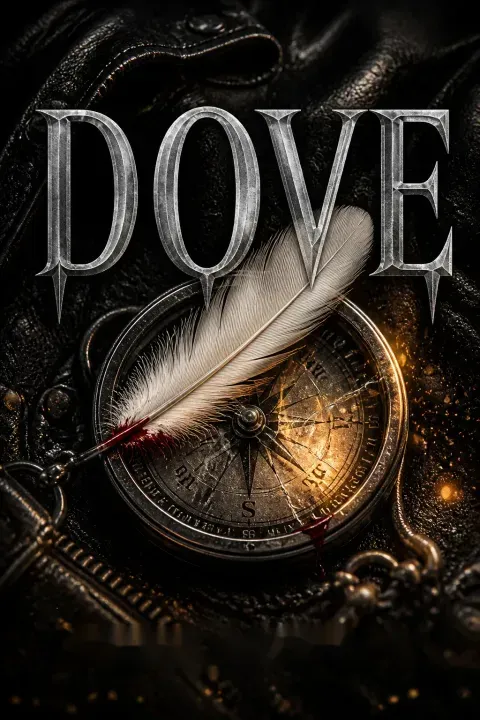


Plot Summary
Prologue
Sean Hunter1 is fifteen when his father forces him to kill a man who hurt his mother.3 In a back room, his father's bloody hand on his neck, Sean1 calculates the force needed and pounds his fists into the thief's skull until the body goes still. His father calls it 'altering the compass ', a truth Sean1 carries into war and outlaw life.
Years later, that compass points him toward Layla Monroe's2 house after a panicked call. He finds a man6 pinning her to the living room wall, whispering that she has her mother's eyes. Sean's1 monster takes over. He drags the intruder6 outside, pummels him, and only stops when Layla2 calls his name. Then she picks up a jagged rock and slams it into the man's6 face, proving she is stronger than he knew.
The prologue establishes the story's core moral argument: that morality is a construct and true north is negotiable. Sean's father performs a ritualized corruption, framing murder as a necessary inheritance. This shapes Sean into a man who compartmentalizes killing, but also into someone who will protect what is his without hesitation. By bookending the prologue with the rescue of Layla, the narrative foreshadows the collision of these two compasses: Sean's altered one and Layla's buried rage. Her striking Ramos completes the prologue's circle, hinting that she is not just a victim but a counterpart with her own capacity for violence, and that their bond will be built on mutual recognition of darkness.
Green Eyes and Leather
Layla Monroe2 works the dinner shift at The Palm Club in Harmony, Georgia, struggling to afford her massage therapy tuition while grieving her mother's murder two years ago. When the glass doors fly open, three men in leather cuts enter, soaked from the storm.
The one in front, Sean Hunter,1 wears a black bandana and a Sergeant at Arms patch. He pulls the fabric down, revealing a sharp jaw and vivid green eyes that lock onto Layla2 and hold. She should feel fear or anger: a biker like the one who killed her parents.
Instead, her knees weaken and her pulse races. Sean1 walks past her toward a booth, but his gaze keeps returning, and every time it does she feels the pull deepen. She whispers to herself that she can handle it, but she has already lost her footing.
This is an inciting incident engineered to feel like a trap door swinging open. Layla's life is defined by control: surviving her father's abuse, her parents' deaths, and poverty. Sean's arrival is a force of nature that bypasses her logical defenses. The storm outside mirrors the internal disruption, and the instant, wordless connection challenges the idea that love requires time. The narrative frames their attraction as an almost chemical inevitability, which both justifies Sean's future possessiveness and asks whether free will can coexist with such magnetism.
The Cooler's Claim
After the dinner rush, Layla2 slips into the back to grab limes. Inside the dark walk-in cooler, strong arms wrap around her from behind, a hand clamps over her mouth, and a deep voice calls her 'little dove '. She knows it is Sean.1
He presses her against the freezing wall, his leather cut grazing her nipples, and growls that he can smell her arousal. She fights, but her hips rock back against him. He slides his hand between her legs and finds her soaked. She orgasms on his thick fingers, refusing to cry out the name he offers: Sean.1
Afterwards, he tells her she will know him, and she pushes him away, furious at herself but unable to deny that she has never felt so alive. She leaves the cooler with a shattered sense of control and a new, terrifying craving.
The cooler scene crystallizes the dark romance contract: desire is expressed through violation that is paradoxically desired. Layla's body responds before her mind consents, and Sean's ability to 'read' her reflects a fantasy of being fully known without the vulnerability of confession. The setting, a freezing box where light barely functions, strips away social norms. Sean's monologue about instinct and fear frames this as a therapeutic rupture: he is not taking but liberating a repressed self. Layla's refusal to say his name is her last anchor to autonomy, but it only intensifies his obsession.
A Sergeant's Vow
In the chapel of the Hounds of Hell clubhouse, Sean1 tells his brothers about the woman who has bewitched him. President Wolfe4 and the others mock his sudden obsession, but Sean1 silences them with a threat. Later, he tasks Kai,5 the enforcer, with digging into Layla Monroe's2 past.
Kai's5 report reveals her parents were murdered at a gas station, her father was a gambling addict, and the case remains open with only a police sketch of a biker-like suspect.
Sean1 memorizes every detail: her class schedule, her dead mother's Lincoln rusting in the garage, her unpaid tuition. He does not yet understand why this woman feels like his future, but he knows he will protect her, and he will bring her parents' killer to club justice, whether she asks or not.
Sean's response to attraction is data acquisition and violence. Unable to process emotion through introspection, he routes it through actionable commands: investigate, protect, hunt. This chapter reveals the club as a surrogate family that supports his obsessive tendencies rather than curbing them. The investigation into Layla's background is a violation of privacy that the narrative reframes as devotion. It also plants the central mystery: who killed the Monroes? In a traditional romance, the hero might woo with flowers; here, the courtship gift is a corpse-to-be.
Tuition for Touch
Sean1 waits outside Layla's2 college campus, leaning against his matte black Harley. When she sees him, she marches over, furious that he stalked her. He responds by lifting her over his shoulder and placing her on his bike.
At a bistro, he orders her a burger and coconut water for himself, then presents his proposition: she will work as his personal massage therapist to heal his combat-injured back, and he will pay the $2,400 tuition balance she desperately needs.
Layla2 bristles at the assumption she can be bought, but she sees it as a way to afford school and stay close to a man she cannot stop thinking about. She shakes his hand, and Sean1 tells her she belongs to him now. She knows he means it, and the knowledge terrifies her less than it should.
The job offer functions as a carefully constructed net. It gives Layla a veneer of agency while binding her to Sean through debt and proximity. Sean's argument that it is a legitimate business arrangement allows her to rationalize the deepening connection. His willingness to pay without hesitation signals not generosity but investment: he is acquiring access to her body and time. Layla's acceptance is her point of no return, the moment she stops pretending she can walk away. The handshake is a mockery of professionalism, a ritual that really seals an unspoken pact of mutual ownership.
Sweeping Through
While Layla2 is in class, Sean1 enters her home through the flimsy back door he will later replace. He deep-cleans every room, reorganizes her kitchen cupboards so the glasses sit beside the sink, and mails her scattered letters into a neat basket. He tows her mother's dead Lincoln to the club's mechanic and body shop for restoration.
When he picks her up that night, he drives her straight to the Hounds of Hell compound. Inside, Layla2 meets his tiny, puzzle-assembling mother Shelly3 and the club family. The women accept her without judgment, and for the first time since her mother's death, Layla2 feels she might belong somewhere. Sean1 watches his dove fit in, knowing he has already decided she will never leave.
This turning point dramatizes Sean's compulsive need to control environments as a proxy for controlling the chaos of memory. The house cleaning is a physical manifestation of his psychological state: everything must be ordered, secured, perfected. His decision to bring Layla into the clubhouse is a profound claim of intent; in outlaw MC culture, presenting a woman to the matriarch is a prelude to making her an old lady. Layla's ease in the gritty, familial clubhouse suggests that her upbringing in a church community disguised a similar hunger for unconditional belonging, and that Sean's world, for all its violence, offers a kind of honesty her parents' never did.
Drunk and Denied
After whiskey and dancing with the club women, Layla2 finds Sean1 in a dark corner. Drunk and bold, she reaches into his jeans and strokes him to climax while they kiss, then demands he take her home and fuck her. He drives her to her house, but when she climbs into his lap on the sofa and pulls off her shirt, he stops her.
Though he is aching for her, he insists she will be sober for their first time. She will remember every second of him filling her. Furious and rejected, she stomps to bed. He wipes her face with a warm cloth, removes her shorts, and tucks her in, leaving water on the nightstand. He sleeps beside her, guarding her, and falls for her completely.
Sean's refusal at this moment is his most significant act of self-restraint and a narrative reversal: the outlaw proves more chivalrous than the law-abiding men who have failed Layla. It redefines his obsession not as mere lust but as a reverence for the full experience of possession. He wants her consent to be conscious and unassailable. The aftercare, wiping her face and arranging her slippers, reveals a tenderness that his violence obscures. Layla's drunken begging is her subconscious breakthrough: she admits what she cannot yet speak sober. The power dynamic shifts here; she is not being taken but being prepared for a claiming that will be mutual.
Eggs and Grief
The scent of bacon and coffee pulls Layla2 from a nightmare. Sean1 stands at her stove, flipping pancakes, his knuckles still healing from club business. He has worn his dog tags since he first shipped out, and the phoenix on his throat moves as he speaks.
They eat together, and he asks what she misses most about her mother. The dam breaks. Layla2 reveals that her mother was leaving her father the night she died: a secret bank account, a teaching resume, bags packed in the trunk.
She was supposed to meet Layla2 at a campus apartment after a work dinner. The police said a man in a biker cut shot them for four hundred dollars, but Layla2 always suspected there was more. She weeps, and Sean1 listens without judgment, already cataloging how he will find the answer.
This breakfast is the true first date, a domestic sacrament where secrets are exchanged like food. Layla's confession about her mother reframes the murder as a story of attempted liberation, not simple tragedy. It mirrors her own trajectory: a woman trying to escape a cage. Sean's silent receipt of this information demonstrates his role as both protector and detective. The scene also humanizes Layla's father's abuse, establishing that the real villain in her life was not just the killer but the system that kept her mother trapped. Sean, the outlaw, becomes the agent of freedom she has been waiting for.
The Massage Table Mistake
Layla's2 next scheduled client at the wellness clinic is a new patient named Sean Hunter.1 He has miraculously gotten a cancellation. In the treatment room, he strips to his boxers while she waits outside, and when she returns, his scarred, tattooed body tests every boundary she has. She works his tight back muscles with coconut oil while explaining the technical process, but her voice trembles.
When he flips over, the bulge in his boxers is unmistakable. After the session clock winds down, she kisses him. He locks the door, pushes her onto the table, and buries his face between her thighs until she comes, his hand clamped over her mouth to muffle her cries. She stumbles out to her staff meeting, weak-kneed and furious at herself.
The clinic scene literalizes the metaphor of healing: Layla's professional touch becomes erotic, and Sean's injured body becomes a site of mutual vulnerability. The therapeutic frame only heightens the transgression, turning a place of healing into a place of surrender. Sean's insistence on prolonged eye contact while he pleasures her reintroduces the 'being seen' theme. Layla's subsequent shame reflects the internalized judgment of her conservative upbringing, but her body's response is beyond morality. The sequence argues that true intimacy cannot be contained by professional or social scripts.
Bathroom Baptism
Sean1 brings Layla2 to Lush, a strip club owned by a rival MC, to meet a contact. When a club woman named Trina touches Sean1 and offers him time, Layla's2 jealousy surges. She drags him into the bathroom, tells him not to lock the door, and begs him to fuck her. He lifts her onto the marble counter, pushes her dress up, and sinks into her with punishing thrusts.
Trina walks in and freezes, watching them. Layla2 locks eyes with her and moans louder. Sean1 growls that everyone will know who owns her. She climaxes screaming his name, and he fills her, uncaring that she is not on birth control. Afterwards, she knows she has crossed a line from which there is no return, and she does not regret it.
This is the book's sexual climax and a pivotal identity shift for Layla. The public sex is not just exhibitionism but a territorial display. By inviting Trina's gaze, Layla asserts her status and sheds the demure church-girl persona entirely. The unlocked door is an act of trust and provocation. The risk of pregnancy is introduced casually but underscores the totality of their union; Sean's refusal to care about contraception is an assertion that a child would be a fulfillment, not a consequence. The scene collapses the distance between desire and identity, and Layla emerges as a woman who has chosen her outlaw without reservation.
Initials in Skin
After a late-night yoga session meant to heal his back, Layla2 asks Sean1 about his sins. He tells her in stark detail: when someone steals from the club, he takes their hands; when someone betrays them, he takes their tongue. He describes watching the life drain from a man's eyes and feeling only satisfaction. Then he pulls out his knife and asks if she still wants him.
She says yes. He presses the blade into her stomach and carves a tiny S, then hands the knife to her, the dull side now against his skin. She slices an L into his hip, their blood mingling as he pushes inside her on the kitchen table. He growls that her blood is now his, and hers is his, and if she betrays him, he will slit her throat.
The blood ritual is the darkest consummation of their bond, a voluntary scarification that mirrors Sean's father's 'altered compass' lesson. It is a sacrament of mutual ownership that transgresses every norm of healthy relationships and instead creates a new moral order. The threat to kill her for betrayal, spoken during sex, is the ultimate dark romance contradiction: it terrifies and arouses. Layla's participation, cutting him back, equalizes the exchange. They have created a private religion of two, sealed in flesh. This moment is the fulfillment of Sean's earlier promise to worship her; here, worship looks indistinguishable from violence.
The Wounded Hero
Sean1 rides Layla2 to the John R. Mackie VA Hospital and Rehabilitation Center on the outskirts of Savannah, a sprawling campus he helped fund and design. He has a reserved parking spot and a staff badge. Inside, he greets Connie at reception and picks up a brown paper bag of fries before leading Layla2 to the long-term care wing.
There sits Private First Class Buckman, Buck,9 paralyzed from the neck down since their Humvee rolled over an IED in Kandahar. Sean1 feeds him fries and reads from a book of Rosalía de Castro poems. When Buck9 sleeps, Sean1 covers him with a blanket and kisses his head. Layla2 watches, tears streaming, and realizes Sean's1 club violence funds this gentle work. She loves him completely.
This sequence recontextualizes the entire novel's violence by revealing its alternative purpose. Sean's outlaw activities are not for greed but to fill the gaps left by a government that abandoned its soldiers. Buck is the living reminder of Sean's survivor's guilt and the reason his compass points toward protection. The dove that landed on the Humvee becomes the dove inked on Layla's shoulder, tying his past salvation to his present. By bringing Layla here, Sean offers her the final piece of his identity: the man he could have been and the man he chooses to be. Her acceptance of this is the emotional climax before the external plot resolves.
A Sketch and a Snitch
With Deputy Frankie Steadman's help, Sean1 obtains the police sketch of Layla's2 parents' killer: a man with a joker playing card tattoo on his neck. Kai5 matches the image to Alex Ramos,6 a patched member of the Wretched Souls MC from a neighboring county. The club plans to grab Ramos6 at a known hangout, but before they can move, Ramos6 receives a note on his bike with Layla's2 address, tipping him that Sean1 is coming.
He decides to reach her first. That evening, while Layla2 primps for a party, she hears the back door open. The man from the sketch stands in her bedroom doorway. He clamps her against the living room wall, telling her he loved her mother and must explain before Sean1 kills him.
The introduction of a potential club traitor deepens the plot and externalizes the threat. Someone inside or close to the Hounds of Hell has betrayed them, adding paranoia to the already volatile environment. Ramos's decision to confront Layla personally reframes him from pure monster to tragic antagonist, driven by a twisted form of devotion. The revelation that he is not a random robber but a man who loved her mother complicates the revenge narrative. Layla's confrontation with him will be not just about punishment but about rewriting her own history.
Mother's Lover
Sean1 bursts in and beats Ramos6 nearly to death before dragging him to the clubhouse for interrogation. In a concrete room, Ramos6 admits he was Layla's2 mother's lover. They met at Gamblers Anonymous, where she sought help for her husband.
He loved her, and she was leaving her abuser the night she died. But Ramos6 went to the gas station to kill only the father, to free her. When he shot the father, the mother lunged, and the gun went off. Layla2 screams and swings a baseball bat into his broken body until Sean1 restrains her.
She looks at the man who stole her mother, breathes through the rage, and decides not to kill him. She wants him to live every day with the memory of what he did. After she leaves, Sean1 and Kai5 cut off both of Ramos's6 hands and dump him at a hospital.
The confession is a brutal reframing of the novel's central mystery. It turns a random act of violence into a crime of misguided passion, mirroring the dark romance's own logic: love can kill. Layla's choice to spare Ramos is not moral squeamishness but a form of cruelty; living with guilt is worse than death. It also distances her from being a murderer, preserving a thread of her former self. Sean's subsequent mutilation of Ramos honors her wish while satisfying his own code. The justice is asymmetrical but complete, and Layla's integration into the club's world of violence is sealed.
Doves and Diamonds
Two months later, Sean1 rides Layla2 to Tybee Island's Lighthouse Landing. He kneels on the bluff before a line of uniformed men holding cages. He tells her he has been breathing for over a hundred thousand minutes since meeting her, and living without her would stop his lungs. He opens a ring box. Behind him, the cages open and dozens of white doves ascend, wings catching the dying sun.
Layla2 says yes. The club and her brother Dell7 emerge from hiding, celebrating with food and music. That night, in the inn, Sean1 finally takes her in the way he promised, completing their bond. She thinks of her mother, of cages and freedom, and knows she has found the life she was always meant to live.
The proposal ritual repurposes the dove symbol into a visual benediction. The doves' release represents Layla's liberation and the fulfillment of Sean's desert vision. Dell's presence signals an unlikely reconciliation with her past, suggesting that even the most rigid moral frameworks can stretch. The proposal is both a romantic climax and a structural resolution: it answers the inciting question of whether two broken compasses can point toward a shared destination. The epilogue, set nineteen years later with three children, completes the arc, showing that Sean's altered compass has found a new true north in family.
Epilogue
Nineteen years later, Sean1 and Layla2 Hunter live in the same Craftsman home with their three children: Rhys, seventeen; Calli, fifteen; and Max, four. Sean1 has just gifted Rhys a rebuilt Dodge Ram for graduation. Layla,2 still copper-haired and fierce, runs her own wellness clinic in Harmony.
Buck9 lives at home now after life-changing surgery. The club thrives under Wolfe's4 continued presidency, its wars settled into an uneasy peace. Sean1 still wears his cut, but the demons in his head have been replaced by memories of his family.
Layla2 still wears the dove on her shoulder, now with his name scrawled below it. When Sean1 corners her in the cold cellar during Rhys's graduation party, his hands sliding over her hips, she knows she will never stop running, and he will never stop catching her.
The epilogue closes the loop on the novel's central concern: whether a man who has lived by violence can build a peaceful future. Sean's peace is not the absence of his past but its integration. His children embody the hope that the cycle of trauma can be broken; Rhys will be a doctor, not an outlaw. The cold cellar moment echoes the cooler scene, transforming a space of first claiming into one of playful, enduring desire. It suggests that their relationship has not lost its edge, only softened its blade. The epilogue affirms the dark romance thesis: that love can be both savage and sustaining across decades.
Analysis
Dove operates as a case study in dark romance's central paradox: how to make domination feel like liberation. Sean Hunter1 is not redeemed by Layla's2 love; he is validated by it. The narrative never apologizes for his violence, instead constructing a world where his particular brand of moral calculus is not only necessary but righteous. The club's illegal drug and weapons trade funds VA hospitals and recovery clinics, a logic that mirrors Sean's1 personal code: an eye for an eye, a life for a life, hands for trespass. The book argues that institutional morality has failed everyone, from abandoned veterans to abused wives, and that outlaw justice is the only kind that works. Layla's2 arc from victim to active participant is the vehicle for this argument. She does not tame Sean;1 she joins him. By the end, she has wielded a baseball bat, accepted a knife cut, and chosen to spare a life. That she can be both merciful and complicit is the book's final, unsettling truth. The story's relentless pace and immediate, obsessive connection are engineered to feel fated rather than forced, using symbols (doves, compasses, blood) to construct a mythology of inevitability. The unresolved subplot of the traitor and the ongoing Gator hunt signal that this peace is temporary, and that the cycle of violence will continue. For readers, Dove offers a fantasy of being so completely wanted that all choice is removed, a fantasy in which submission to a dangerous man is not defeat but ascension.
Review Summary
Dove by Paisley Hope receives an overall rating of 4.26 out of 5 stars. This motorcycle club romance follows Layla and Sean's instant, fated connection. Reviewers praised Sean as an obsessed, protective MMC who cooks, cleans, and tattoos Layla's name on his face. The chemistry is intense with abundant spice. While many loved the insta-love dynamic, some felt the week-long timeline was rushed with repetitive internal conflict. The book features dark elements, found family vibes, and emotional depth, serving as a prequel to Wolf.e that readers found addictive despite pacing concerns.
People Also Read




Characters
Sean 'Ax' Hunter
Hounds of Hell Sergeant at Arms, Marine veteran, Layla's obsessionSean was made a killer at fifteen by his father, who taught him that morality is personal. With a photographic memory and a genius-level intellect, he could have become anything, but the military and the outlaw life fit his need for order and violent purpose. His war trauma manifests as chronic pain and nightmares; his club work allows him to channel his demons into protection. Meeting Layla2 triggers an instantaneous, irrational certainty that she is his destiny, rooted in the dove that kept him alive in Iraq. His love language is acts of service and absolute possession. Beneath the lethality is a man who reads poetry to a paralyzed friend9 and funds a VA hospital. He sees in Layla2 a matching darkness and a chance at the peace he has never known.
Layla Monroe
Massage therapy student, orphan, Sean's 'little dove'Layla survived an abusive father and the murder of her mother on the very night they planned to escape. She carries the guilt of not being there and the burden of financial ruin. Working as a waitress and studying to be a massage therapist, she is exhausted, defiant, and fiercely independent. Her tattoos, including a dove for her mother, signal a rejection of her conservative upbringing. She is drawn to danger and ashamed of her own dark desires, which Sean1 immediately recognizes and cultivates. Her arc traces a journey from caged good girl to a woman who embraces her own capacity for violence and pleasure. She is not a passive recipient of his obsession but an equal partner who learns to wield her own power.
Shelly Hunter
Sean's mother, club den motherShelly is a tiny, platinum-haired woman with a smoker's rasp and a fierce love for her son. She has been through her own trauma, bearing a faded scar on her nose, and stayed with the club after her husband Kurt's death. She assembles risqué puzzles and crochets in the clubhouse, providing maternal stability for the entire MC. She recognizes Layla2 as 'the one' immediately and embraces her without reservation. Her approval is the final seal on Layla's2 acceptance into the family.
Gabriel Wolfe
President of Hounds of Hell, Sean's commanding officer and brotherWolfe is a massive, long-haired gladiator with command presence. He was Sean's1 corporal in Iraq and now runs the club with calculated authority. He inherited the gavel from his uncle and has expanded the club's legitimate business fronts, including custom body shops and recovery clinics. He is deeply loyal, rarely smiles, and is the only man who can tease Sean1 about Layla2 and live. His blessing is required for Layla2 to join the club family, and he gives it with a kiss on her cheek in the interrogation room.
Kai
Club enforcer, tech expert, and smiling sadistKai is a handsome blond with a megawatt smile and a deeply twisted side. He is a tech genius who can find anyone's secrets, and he genuinely enjoys torture. His own grim backstory fuels his violence, and he approaches wetwork with the glee of a child with a new toy. Despite his darkness, he is fiercely loyal to Sean1 and immediately adopts Layla2 as a sister. He serves as comic relief and a reminder that the club houses many varieties of monster.
Alex Ramos
The killer, member of Wretched Souls MC, Layla's mother's loverRamos is a tall, lanky man with a joker card tattoo on his neck. He met Layla's2 mother at Gamblers Anonymous and fell in love. He killed her husband to free her, but when she lunged at him, she died in the struggle. He has lived with the guilt for two years, often holding a gun to his own head. He finds Layla2 to explain himself before Sean1 can kill him. His confession shatters Layla's2 image of her parents and forces her to confront the gray landscape of love and violence. He is not a cartoon villain but a broken man whose love was as destructive as it was genuine.
Dell Monroe
Layla's older brother, a churchgoing architectDell is six years older than Layla2 and lives in denial about their father's abuse. He is pious, judgmental, and uncomfortable with Layla's2 choices, but he loves her in his limited way. His initial hostility toward Sean1 masks genuine fear for his sister. By the end, he attends her engagement party, signaling a tentative acceptance of her new life.
Mason and Jake
Club VP and treasurer, Sean's brothersMason is the club treasurer whose teenage sister Nicola was assaulted by a rival club member, driving the subplot of revenge. Jake is the vice president, a reckless and often irritating womanizer. Both are loyal soldiers who tease Sean1 about Layla2 but respect his claim. They participate in the hunt for Gator and the disposal of Ramos6, representing the collective enforcement arm of the club.
Private Buckman (Buck)
Sean's paralyzed brother-in-armsBuck was Sean's1 bunkmate in Iraq, crippled when their Humvee hit an IED. He is paralyzed from the neck down, communicates via tablet, and lives in the VA hospital until later surgery allows him to return home. He represents Sean's1 survivor's guilt and his deepest commitment to brotherhood. Layla2 meeting Buck9 is her final understanding of who Sean1 is beneath the violence.
Plot Devices
The Dove
Symbol of fate, salvation, and Layla's identityA dove appears to Sean1 after his Humvee is destroyed in Iraq, keeping him conscious and alive. Years later, he sees a matching dove tattoo on Layla's2 shoulder, and the song 'Layla' that played during the attack cements his belief that she is destined for him. The dove becomes his nickname for her and the symbol of their bond. At the proposal, a flock of doves is released, visually completing the motif. It represents both peace and the inescapable tether between their souls.
The Altered Compass
Moral framework for outlaw lifeSean's1 father taught him that morality is personal and a man's compass can be 'altered' by the necessity of killing. The compass tattooed on Sean's1 hand, with a dagger-cross and dove, visually encodes this philosophy. He lives by a code that justifies his violence, and he passes this understanding to Layla2 when she confronts Ramos6. The compass motif frames the entire novel as a journey toward a new moral north defined by loyalty and love rather than law.
The Police Sketch
Clue that drives the revenge plotA composite sketch of Layla's2 parents' killer features a distinctive joker playing card tattoo on the neck. Layla2 has carried the image in her mind for two years. Sean1 obtains the sketch through Deputy Frankie Steadman, and Kai5 uses it to identify Alex Ramos6 of the Wretched Souls MC. The sketch is the physical link between Layla's2 past tragedy and Sean's1 present mission, and its accuracy after two years is explained by the killer's distinctive ink.
Sean's Knife
Instrument of blood oath and punishmentSean1 carries a ten-inch tanto knife that is sharp enough to sever fingers in a single slice. He uses it first in the blood ritual with Layla2, carving his initial into her skin and allowing her to cut him in return. Later, he uses it to sever Ramos's6 hands as punishment for touching Layla2. The knife bridges the personal and the punitive, symbolizing that the same commitment that bonds them is also the source of his lethal protection.
The Note on the Bike
Hint of a traitor within the clubBefore Sean1 can capture Alex Ramos6, someone leaves a note on Ramos's6 motorcycle warning him that Sean1 is coming and providing Layla's2 address. This note allows Ramos6 to strike first, driving the climax. It also introduces an unresolved mystery: someone in or close to the Hounds of Hell is leaking information to rivals. Although not solved in this book, the note plants a seed of paranoia and sets up future conflict in the series.
About the Author
Other books by Paisley Hope


Download PDF
Download EPUB
.epub digital book format is ideal for reading ebooks on phones, tablets, and e-readers.








































