


Key Takeaways
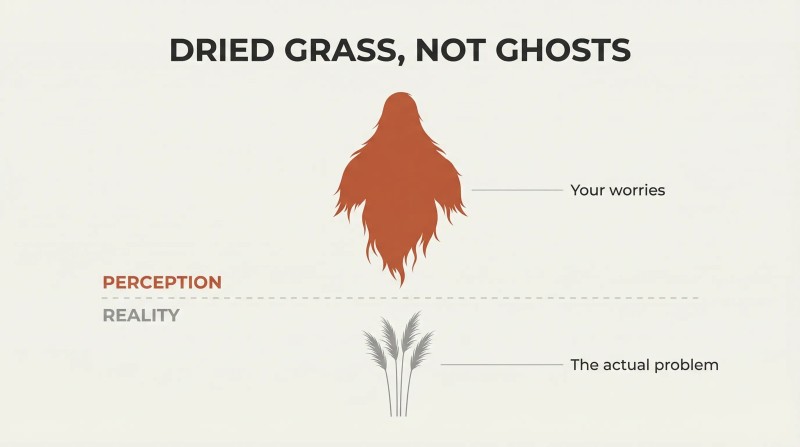
Most of your worries are dried grass you've mistaken for ghosts
Masuno has heard it all. As head priest of a 450-year-old Zen Buddhist temple in Japan, he has counseled countless people about their anxieties — and concluded that nearly every worry lacks substance. He invokes a Japanese proverb about seeing a ghost in a field when it's really just withered susuki grasses. The things tying us in knots are shadows that aren't actually there.
Zen defines "delusions" broadly — not just imaginary monsters, but anything that lodges in your mind and constrains your heart: envy, self-doubt, selfish desires, attachments. The book's central promise is that by adopting Zen principles of simplicity, presence, and non-attachment, you can strip away most of these phantom fears and live with a dramatically lighter spirit.
Stop comparing yourself to others — it creates most of your anxiety
Binary thinking is the engine of misery. We set up oppositions — winning and losing, rich and poor, lucky and unlucky — then bleed a single experience into our whole identity. "She always wins; I never catch a break" becomes a life sentence of envy and self-condemnation. The founder of Soto Zen, Dogen Zenji, taught that "the actions of others are not my own" — someone else's success is simply unrelated to yours.
Zen teaches that every person's existence is absolute, without comparison. When we attempt to compare things for which no comparison exists, we become preoccupied by what is irrelevant — and that preoccupation is what manufactures anxiety, worry, and fear. Drop the comparison, and the weight lifts almost immediately.

Take off your 'colored glasses' before judging anyone
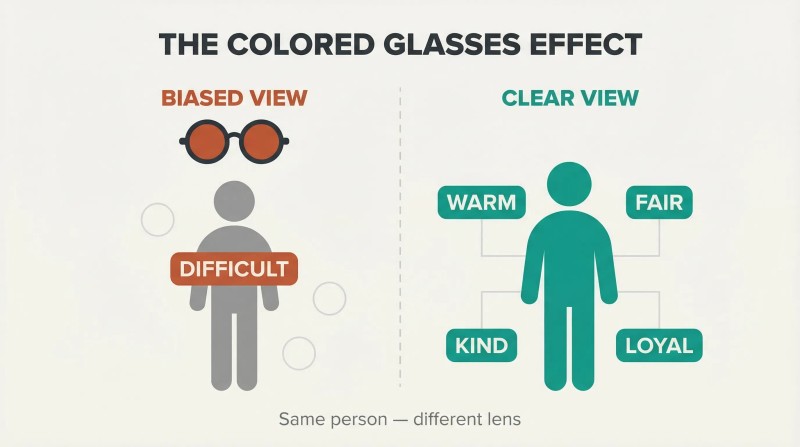
One negative impression warps everything. Masuno calls preconceived notions "colored glasses" — a Zen metaphor for the bias that forms from a single data point. Someone tells you a new colleague is "difficult," and no matter how warm he actually is, you can't see past the label. A minor clash with your boss becomes proof she's impossible. The unreliable friend gets reduced to his worst trait.
The antidote is the Buddhist teaching that all beings possess inherent Buddha nature — kindness, warmth, and understanding beneath the surface. When you actively look for someone's good qualities instead of fixating on one bad facet, the irritation and relationship anxiety dissolves. The boss reveals her fairness, the forgetful friend shows his warmth, and you realize the problem was never them — it was your glasses.
Let anxious thoughts drift like clouds — don't wrestle them
Forcing calm only creates more turbulence. The Zen state of mushin — "no-mindedness" — isn't about emptying your brain on command. That's like calming a pond's ripples by shoving your hand in the water. Instead, let thoughts appear and disappear naturally. A cloud changes shape with the wind, drifts where it's bidden, yet never ceases to be a cloud. That's mushin.
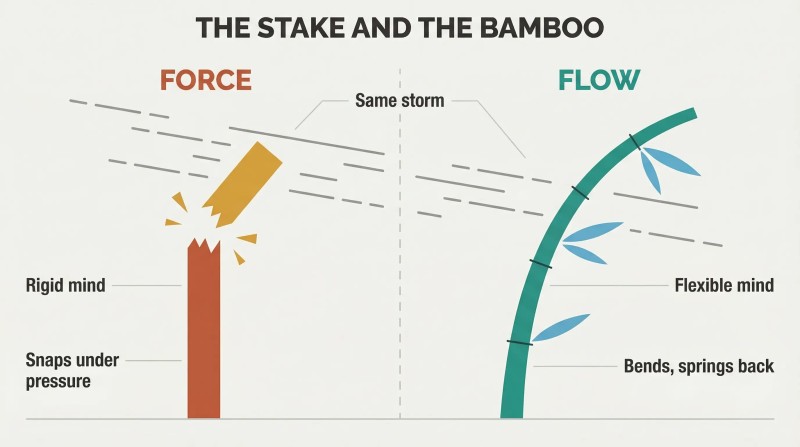
Masuno contrasts a wooden stake — rigid, fixed, eventually snapping in a gale — with bamboo that bends and springs back. When anger or worry floods your mind, don't drive it down like a stake. Notice the emotion, let the tension slacken, and refocus on "now." Your mind will settle on its own, returning to mirror-stillness like a pond after the ripples fade.
Pare down your belongings to create space in your mind
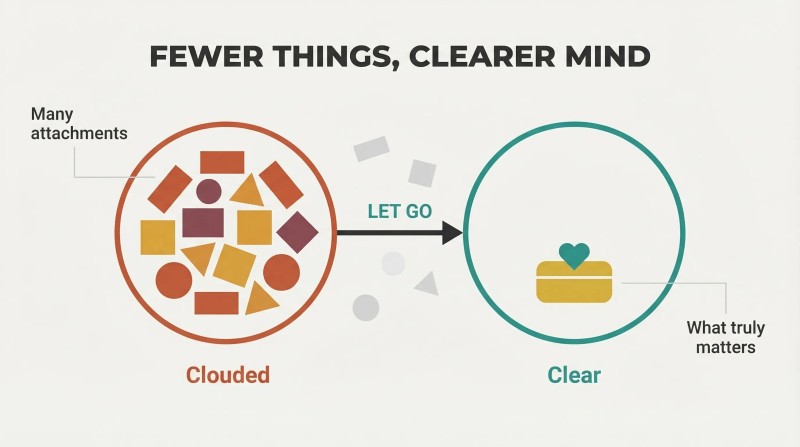
The Zen concept of kisha — joyful almsgiving — means gladly giving something up without regret. Tossing coins at a temple works the same principle: by releasing a possession, you release an attachment. Haven't worn it in three years? Haven't opened that bag in five? The excuse "I'll use it someday" is almost always a lie. Donate it, gift it, or sell it.
But not everything should go. Items that stir memories and warm your heart when you hold them — a grandparent's keepsake, a family memento — aren't clutter. They're intimate connections to your life. Masuno calls this "walking hand in hand" with your essential self. Find a beautiful box, keep those tokens safe, and let everything else go.
Own your morning and the rest of your day follows
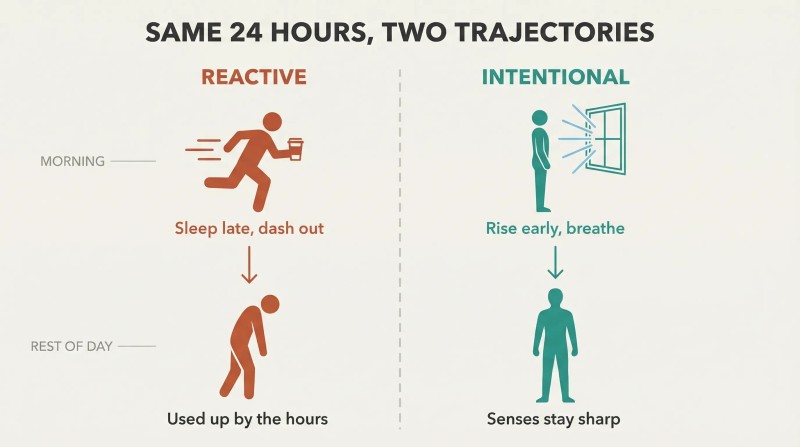
Rise early, same time, every day. Masuno cites Tang dynasty Zen master Zhaozhou, who observed that most people are "used up by the hours in their day," while a disciplined monk uses his hours to the fullest. Sleeping late, gulping coffee, and dashing to the train puts you mentally on the run — prone to mistakes, with no room to breathe. Rising early, letting fresh air in, noticing the changing season over breakfast — same 24 hours, radically different quality.
The stakes rise at retirement. Without a career to structure your days, it's easy to putter aimlessly, watch television you don't care about, and let anxiety fill the void. Masuno warns that formerly dauntless corporate warriors can age rapidly once morning discipline vanishes. Cherish the morning, and your senses stay sharp.
Shine where you are — there will never be a better time
Dogen Zenji's pivotal encounter. While training in China, the young Dogen saw an elderly temple cook drying shiitake mushrooms in blazing heat — no hat, no shade. "Why not wait until it's cooler?" Dogen asked. The old cook replied simply: "There is no time but now." If you wait for perfect conditions to fully engage, the moment never arrives.
The zengo "Change the great earth into gold" means wherever you stand, give your all, and the ground beneath you will glimmer. Feel like your job doesn't suit you? Put your own spin on it anyway. When you engage wholeheartedly with what's in front of you, doubt and anxiety vanish — and others start noticing someone who transforms the ordinary into something distinctly their own.

Cordial silence builds deeper trust than eloquent speech
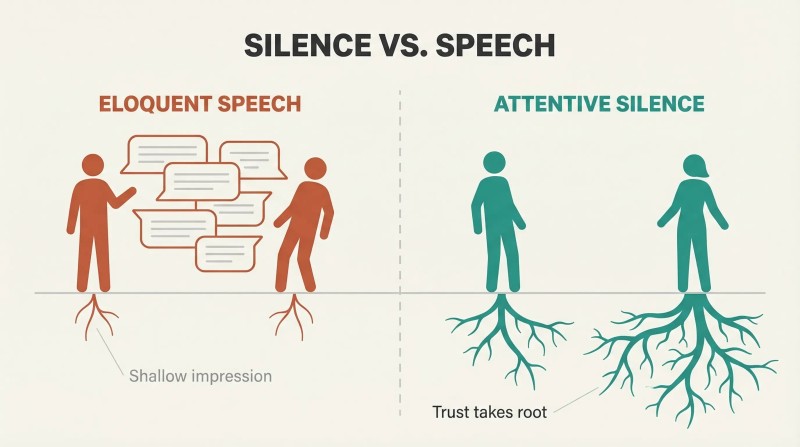
In Zen garden design, the empty space between rocks and sand is what generates the profound stillness visitors feel. Masuno, himself an award-winning garden designer, explains that what you leave out matters as much as what you include. He invokes "Vimalakirti's thunderous silence" — a Buddhist layman who answered a deep question with no words, and the silence hit like rolling thunder.
The principle applies directly to communication. Smooth-talking salespeople scratch only the surface; clients sense performance, not listening. True results come when you listen attentively and factor in the other person's needs. Once someone feels genuinely heard, trust takes root: "I believe what this person says." For those who dread public speaking, Masuno offers unexpected reassurance — there's no need to worry.
Daily repetition eventually outperforms talent that coasts
Even icons insist on this. Baseball legend Ichiro Suzuki said a "prodigy" succeeds precisely because of effort, not despite it — anyone who thinks his batting skill requires none is wrong. In Zen, seichu are rigorous 100-day training intensives where monks repeat the same routine — zazen meditation, chanting sutras, performing chores — until the body learns and remembers.
The story of Zen master Kyogen Chikan makes the point unforgettable. Praised as brilliant before entering the priesthood, he couldn't answer a single koan from his teacher. In despair, he burned all his Zen books and spent months silently sweeping a gravesite. One day his broom sent a shard of tile clanking against bamboo — and the sound triggered his enlightenment. Steady, humble effort broke through where intellect alone couldn't.

In love, aim for 80% understanding — mystery sustains the spark
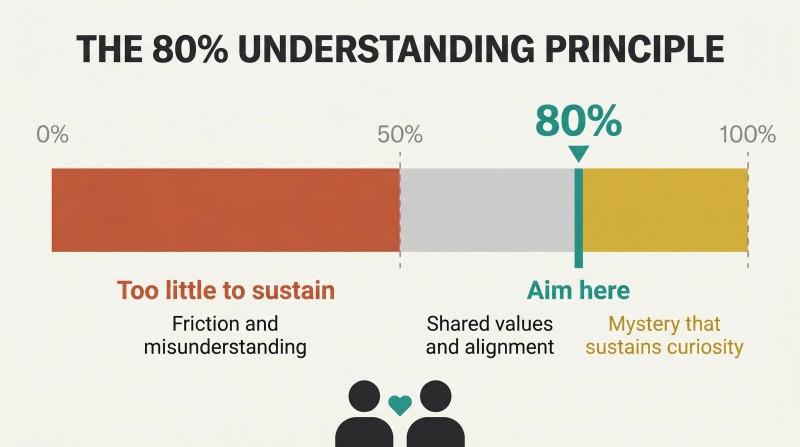
Masuno borrows Hara hachi bun me — the Confucian principle of eating until 80% full — and applies it to romance. Don't expect to know 100% of your partner. Two people with different upbringings, education, and social circles will never fully comprehend each other, and the attempt creates frustration. Accept that 20% will remain uncharted territory — and be glad for it. That mystery and intrigue sustains curiosity and affection.
But below 50% understanding, the gap becomes destructive. If one partner saves obsessively while the other spends freely, or one craves quiet evenings while the other wants restaurants and crowds, friction is guaranteed. Appearance may ignite a relationship, but aligned values — around that 80% mark — sustain it. The remaining 20% keeps things fresh.
Analysis
Masuno's book occupies a distinctive niche in the self-help landscape: it is neither clinical psychology nor motivational platitude, but a curated transmission of Zen oral culture repackaged for modern anxious minds. The 48-lesson structure — each chapter averaging only 600 words — mirrors the zengo tradition itself: short phrases meant to be absorbed through repetition rather than argument. Western readers may find this repetitive; Zen practitioners would call it training.
What separates this from cognitive-behavioral approaches to anxiety is its metaphysical starting point. CBT asks: 'Is this thought accurate?' Masuno asks: 'Why are you generating this thought at all?' His answer — comparison, attachment, information overload — derives from the Buddhist doctrine of non-self, though he never uses that term. This is strategic accessibility: by avoiding doctrinal vocabulary and substituting workplace anecdotes and domestic metaphors, he makes 2,500 years of Buddhist psychology feel like common sense.
The book's quietly radical claim is that anxiety is not primarily something to be treated, managed, or optimized — it's something you largely stop manufacturing once you recognize the mental habits producing it. In an era that pathologizes worry and monetizes its treatment, Masuno's position is almost subversive: the ghost in the field is grass you scared yourself with.
His weakest moments come when cultural specificity limits universality — the altar advice, ancestral worship, and Japanese corporate hierarchy may feel distant to Western readers. His strongest moments fuse tangible action with philosophical depth: the old cook drying mushrooms in blazing heat who tells Dogen 'There is no time but now,' or the comparison of bamboo's suppleness to a rigid stake that eventually snaps. These images persist because they encode wisdom in the body, not just the intellect — which is, of course, exactly what Zen has always claimed to do.
Review Summary
Don't Worry received mixed reviews, with an average rating of 3.70 out of 5. Some readers found it insightful and grounding, appreciating its simplicity and Zen teachings. Others felt it was overly simplistic and geared too much towards corporate life. Many noted that the book provided helpful reminders and reflections on anxiety relief, but some found it lacking in depth. The short chapters and easy readability were frequently mentioned as positives. Critics pointed out that some advice seemed impractical or overgeneralized.
People Also Read




Glossary
Zengo
Zen phrases used in trainingShort phrases and sayings derived from Buddhist anecdotes and scriptures, used in Zen training to help practitioners understand wisdom and apply it to daily life. Masuno weaves dozens of zengo throughout the book as guiding principles, including 'Dwell in the breath,' 'Change the great earth into gold,' and 'Every day is a good day.'
Mushin
State of no-mindednessA Zen mental state in which one is not buffeted by emotions. Rather than forcing the mind to be blank—which only creates more mental turbulence—mushin involves letting thoughts appear and disappear naturally, like clouds drifting or ripples settling on a pond. Masuno compares it to bamboo that bends in wind rather than a rigid stake that snaps.
Kisha
Joyful almsgiving without regretThe Zen concept of gladly giving something up—possessions, money, or attachments—without feeling a sense of loss. Exemplified by tossing coins at a temple shrine: the act of releasing frees the mind from attachment. Masuno applies kisha to decluttering possessions, arguing that disposing of unused items has a positive effect on both physical space and mental well-being.
Seichu
100-day Zen training intensivesRigorous Zen training periods lasting one hundred days during which monks repeat the same daily routine—sitting zazen meditation, chanting sutras, and performing temple chores. The purpose is for habits to be learned by the body through repetition rather than intellectual understanding. Masuno uses seichu to illustrate how steady effort surpasses innate talent.
Hara hachi bun me
Eat until 80% fullA Confucian dietary principle meaning 'belly eight parts full'—stop eating at 80% satiation. Masuno applies it to romantic relationships: aiming for roughly 80% mutual understanding preserves enough mystery and intrigue to sustain long-term attraction, while falling below 50% understanding creates insurmountable friction.
Innen
Karmic connections between peopleA Buddhist concept describing the alignment of cause karma and condition karma that leads people to meet. Like a bud that must swell before it can catch the spring breeze and bloom, certain conditions must be in place for an encounter to occur. Masuno uses innen to argue that among seven billion people, our meetings are not coincidental but karmically connected.
Ichi-go ichi-e
Once-in-a-lifetime encounterA phrase from Japanese tea ceremony culture, deeply connected to Zen, meaning to treasure each encounter as if it may never happen again. Since this may be the one and only time you meet someone, you should make the most of the time together. Masuno uses it to encourage gratitude for every person who enters your life.
Hogejaku
Let go of everythingA Zen expression urging the complete release of all attachments—possessions, status, relationships built on calculation, and especially the habit of weighing profits and losses. Masuno positions hogejaku as a prerequisite for seeing what truly matters in life, arguing that the first thing to release is the preoccupation with personal advantage.
FAQ
What's "Don't Worry: 48 Lessons on Relieving Anxiety from a Zen Buddhist Monk" about?
- Author's Background: The book is written by Shunmyō Masuno, a Zen Buddhist monk and head priest of a 450-year-old temple in Japan. He is also an acclaimed Zen garden designer and professor.
- Purpose of the Book: It aims to provide readers with practical lessons to alleviate anxiety and worry through Zen Buddhist teachings.
- Structure: The book is divided into five parts, each focusing on different aspects of life and how to approach them with a Zen mindset.
- Core Message: The central theme is to live simply, focus on the present, and let go of unnecessary burdens to achieve a more peaceful and fulfilling life.
Why should I read "Don't Worry: 48 Lessons on Relieving Anxiety from a Zen Buddhist Monk"?
- Practical Advice: The book offers 48 actionable lessons that can be easily integrated into daily life to reduce anxiety.
- Zen Philosophy: It provides insights into Zen teachings, making them accessible and applicable to modern life.
- Holistic Approach: The lessons cover various aspects of life, including relationships, work, and personal growth, offering a comprehensive guide to living with less worry.
- Author's Expertise: Shunmyō Masuno's background as a Zen monk and designer adds depth and authenticity to the teachings.
What are the key takeaways of "Don't Worry: 48 Lessons on Relieving Anxiety from a Zen Buddhist Monk"?
- Focus on the Present: Emphasizes the importance of living in the moment and not being burdened by past regrets or future anxieties.
- Let Go of Attachments: Encourages reducing material possessions and emotional attachments to achieve mental clarity and peace.
- Mindful Relationships: Offers guidance on improving personal relationships by being present, listening, and showing gratitude.
- Self-Acceptance: Teaches the value of accepting one's limitations and focusing on personal growth rather than competition.
How does Shunmyō Masuno suggest we handle anxiety in "Don't Worry: 48 Lessons on Relieving Anxiety from a Zen Buddhist Monk"?
- Reduce Delusions: Masuno advises recognizing and reducing delusions, which are often the root of anxiety.
- Practice Mindfulness: Focus on the present moment and engage fully in daily activities to prevent unnecessary worry.
- Simplify Life: Let go of material and emotional clutter to create a more peaceful living environment.
- Accept Limitations: Understand and accept what is beyond your control, and focus on what you can change.
What are some specific methods or advice given in "Don't Worry: 48 Lessons on Relieving Anxiety from a Zen Buddhist Monk"?
- Create a Spiritual Abode: Designate a space in your home for reflection and gratitude to settle your spirit.
- Cherish Mornings: Start your day early and with intention to set a positive tone for the rest of the day.
- Yield to Others: Practice humility and allow others to take the lead, which can improve relationships and reduce stress.
- Adjust Breathing: Use deep, mindful breathing to calm the mind and alleviate frustration.
What are the best quotes from "Don't Worry: 48 Lessons on Relieving Anxiety from a Zen Buddhist Monk" and what do they mean?
- "Delude not thyself": This quote emphasizes the importance of recognizing and reducing self-imposed delusions that cause anxiety.
- "Every day is a good day": Encourages finding value and learning in each day, regardless of circumstances.
- "The ordinary mind is the way": Suggests that maintaining a calm and balanced mind is the path to peace and enlightenment.
- "Gentle face, loving words": Highlights the power of kindness and compassion in improving relationships and personal well-being.
How does Shunmyō Masuno incorporate Zen teachings into daily life in "Don't Worry: 48 Lessons on Relieving Anxiety from a Zen Buddhist Monk"?
- Practical Applications: Each lesson is designed to be easily integrated into everyday activities, such as eating, working, and interacting with others.
- Mindful Practices: Encourages simple actions like lining up shoes neatly or focusing on breathing to cultivate mindfulness.
- Zen Sayings: Uses traditional Zen sayings (zengo) to illustrate and reinforce the teachings throughout the book.
- Holistic Approach: Covers various aspects of life, from personal growth to relationships, providing a comprehensive guide to living mindfully.
What is the significance of "letting go" in "Don't Worry: 48 Lessons on Relieving Anxiety from a Zen Buddhist Monk"?
- Emotional Freedom: Letting go of attachments and expectations can lead to emotional liberation and reduced anxiety.
- Material Simplicity: Encourages decluttering and reducing possessions to create a more peaceful living environment.
- Acceptance: Emphasizes accepting what cannot be changed and focusing on what can be controlled.
- Spiritual Growth: Letting go is seen as a path to spiritual enlightenment and personal growth.
How does "Don't Worry: 48 Lessons on Relieving Anxiety from a Zen Buddhist Monk" address relationships?
- Cherish Connections: Encourages valuing and nurturing relationships as they are seen as significant and meaningful.
- Yielding and Humility: Suggests practicing humility and allowing others to take the lead to improve relationships.
- Listening and Empathy: Stresses the importance of being a good listener and showing empathy to strengthen bonds.
- Avoiding Comparisons: Advises against comparing oneself to others, which can lead to envy and strain relationships.
What role does mindfulness play in "Don't Worry: 48 Lessons on Relieving Anxiety from a Zen Buddhist Monk"?
- Present Focus: Mindfulness is central to the teachings, encouraging living in the moment and reducing distractions.
- Daily Practices: Simple actions like mindful eating and breathing are recommended to cultivate mindfulness.
- Mental Clarity: Mindfulness helps clear the mind of unnecessary worries and fosters a sense of peace.
- Emotional Balance: Practicing mindfulness can lead to greater emotional stability and resilience.
How does Shunmyō Masuno suggest we approach aging and death in "Don't Worry: 48 Lessons on Relieving Anxiety from a Zen Buddhist Monk"?
- Acceptance of Aging: Encourages embracing the wisdom and experiences that come with age rather than lamenting lost youth.
- Living Fully: Advises living life to the fullest and focusing on the present rather than fearing death.
- Spiritual Perspective: Suggests entrusting death to the Buddha and viewing it as a natural part of life.
- Composure and Peace: Emphasizes living with composure and peace, which can lead to a serene acceptance of death.
What is the overall message of "Don't Worry: 48 Lessons on Relieving Anxiety from a Zen Buddhist Monk"?
- Simplicity and Clarity: The book advocates for a simpler, more mindful way of living to reduce anxiety and worry.
- Zen Principles: It integrates Zen teachings into practical advice for everyday life, making them accessible to all.
- Personal Growth: Encourages self-acceptance, letting go of unnecessary burdens, and focusing on personal growth.
- Peaceful Living: Ultimately, the book aims to guide readers toward a more peaceful, fulfilling, and anxiety-free life.
About the Author


Download PDF
Download EPUB
.epub digital book format is ideal for reading ebooks on phones, tablets, and e-readers.








































