


Plot Summary
Blood on the First Day
Andrew1 returns to Wickwood Academy for his senior year carrying a secret — a confessional story slipped into his best friend Thomas's2 pocket before summer, disguising an admission of love as fiction. His twin sister Dove3 sits frozen in a silent war with their father.10
Thomas2 meets Andrew1 on the front steps jittery and defensive, his sleeve hiding a wine-colored stain. Before they can settle into their old rhythms, detectives pull Thomas2 from assembly to question him: neighbors reported screams from his home, the house was trashed, and the volume of blood suggests someone couldn't have walked away.
Andrew1 eavesdrops through the principal's8 keyhole and hears Thomas2 lie about his departure time. The detective tells her partner flatly that the kid is lying. Andrew1 gives Thomas2 his blazer to cover the stained sleeve.
The Boy with the Stick
Their origin was a collision on a forest trail. At twelve, Australian-born Andrew1 and Dove3 had arrived at Wickwood mid-year, conspicuous with their accents and fragile with displacement. Bryce Kane,5 the school's golden bully, tripped Andrew1 three times during a supervised hike until his knees bled.
Then a freckled boy half a head shorter than everyone else wedged himself between the twins uninvited. Thomas Rye2 talked about monsters and racing and didn't seem to notice that his presence repelled Bryce's5 cruelty.
When Bryce5 reached for Andrew1 again, Thomas2 cracked his stick across the bully's hand hard enough to echo through the forest. The teacher stormed over. Thomas2 tossed the stick into the trees without concern. He told Andrew1 the boy wouldn't touch him again — and that the cost was worth it.
Hooves in the Bathroom
Something unseen pressed a warm mouth to Andrew's1 neck in the darkened foyer — then vanished when he spun around. While burying Thomas's2 bloodied shirt under the rosebushes, teeth sank into his hand from the empty soil, then released without leaving a mark.
The worst came during tennis practice: rotten mushrooms bloomed inside his pocket, fungus crawled up his veins, and bathroom stall doors slammed in sequence while something with cloven hooves scratched at his locked door. Dove3 dragged him out, but there was nothing inside — no creature, no evidence.
He collapsed on the grass in front of a gathering crowd, blood running from his nose, stammering about a real thing while everyone exchanged pitying glances. The school decided he was fragile. Andrew1 decided he was losing his mind.
Monsters Made of Ink
After Andrew1 told Thomas2 he didn't care if Thomas2 had killed his parents — meant as comfort, received as condemnation — Thomas2 walked away and didn't come back. Two weeks of silence followed. Andrew1 buried Thomas's2 bloodied shirt beneath the rosebushes and called his absent father,10 who offered to pencil in a chat.
He convinced himself Dove3 and Thomas2 were meeting secretly in the forest, and the jealousy corroded him. Then one midnight, furious enough to confront them, he climbed the fence alone. Instead of finding lovers, he found a monster: vines erupting from its mouth, hooved feet, flesh rotting off bone.
It attacked. Thomas2 appeared from nowhere and drove a garden spike through its skull. Blood-soaked and shaking, Thomas2 confessed: his drawings became real monsters. They'd attacked his parents. He'd been fighting every night alone.
The Sacrifice of Ink
That first night together in the forest, they tried to end it by destroying Thomas's old sketchbook. Andrew1 tore up every page while Thomas2 handled the monsters — but thistle fairies, blood-drinking creatures the size of thorns that Thomas2 had once sketched, swarmed onto Andrew's1 back by the hundreds.
Thomas2 ripped open his own barely-healed wounds and smeared the blood across his bare chest to draw them away. The fairies abandoned Andrew1 and slammed into Thomas2 instead, burrowing into his ears and climbing his ribs while Andrew1 buried the shredded pages beneath the Wildwood tree.
He scraped the last fairy from Thomas's2 ravaged back and stomped it into the dirt. They armed themselves better afterward — a hatchet smuggled from a camping store during a school trip. But new monsters kept appearing. Destroying the art wasn't enough.
The Antler King's Tithe
The monsters stopped waiting for nightfall. A creature with antlers driven upside-down into its skull appeared in the school garden, then pursued the boys inside.
Thomas2 went for the hatchet while Andrew1 fled alone through corridors — only to be caught by Professor Clemens,7 a bullying calculus teacher who'd found Andrew's1 phone in the forest and wanted to march him to the principal. Vines erupted from the wallpaper around them both.
The Antler King seized Clemens7 by the throat, broke off a piece of its own horn, and drove the shard through his face while Andrew,1 pinned to the wall by tendrils boring into his ear, watched and silently wished for the monster to take Clemens7 as its tithe instead. Thomas2 arrived with the hatchet and split the creature's skull. They covered up everything.
Ink on Birch Bark
A monster appeared that matched nothing Thomas2 had drawn — a twine-wrapped body with no eyes, just a red slash of mouth. Its tongue drove into Thomas's2 stomach like an arrow, pinning him to the forest floor while it drank. Andrew1 dropped the hatchet, grabbed Thomas's2 Sharpie, and scrawled a fairy tale onto a birch tree: a witch who burned from the inside out when she tasted a boy with hair of flames.
The monster exploded into ash. Andrew's stories held the same lethal power as Thomas's drawings. When bone shrikes came the next night — skull-faced creatures tall as poplars — he wrote their deaths too. In exchange for their secrets, the dying monsters whispered what the forest truly demanded: a heart cut out and buried in the woods.
The Confession That Cuts
On rain-soaked garden stairs, Thomas2 finally asked if Andrew1 liked him — really liked him. Andrew1 deflected, heart hammering. Thomas2 pressed on, ears flushing red as he confessed he'd loved Andrew1 since they were twelve, since the first forest hike when all he wanted was for Andrew1 to look at him.
Andrew1 told Thomas2 he was asexual — that he didn't want sex, with anyone, ever. Thomas2 stumbled through his reaction, and Andrew,1 panicking, weaponized Dove:3 had they kissed?
Thomas2 admitted once, a mistake, and tried to explain that Dove3 had forbidden him from pursuing Andrew.1 But Andrew1 kept cutting deeper, and Thomas2 — raw and exposed — called him a coward for refusing to admit he loved Thomas2 back. Andrew1 ran. Both bled, but neither had used a blade.
Butter Knife on the Table
A dream ravager pulled itself from the dining hall wall and cast a blanket of shadow across hundreds of students. Bodies slumped into their plates, unconscious. Thomas2 collapsed in Andrew's1 arms.
Alone and awake, Andrew1 dragged Thomas2 under a table, grabbed a pen, and scrawled a fairy tale on the wood's underside: a boy who collected nightmares in terra-cotta jars until he could eat nothing else, and when he finally tasted mortal food, he died. The ravager hauled Andrew1 onto the table by his hair and slammed his head against the wood three times.
Andrew1 seized a butter knife and stabbed the creature in the face. Bread crumbs and all. The story came true. The monster disintegrated. Andrew1 stood on the table, bloodied and grinning, and could not stop. Thomas2 found him and Andrew1 whispered: he wanted him, always.
Bryce in the Branches
Bryce5 reported Andrew1 to the principal for entering the forest, and the school decided to send him home — effectively expelled. Bryce5 cornered Andrew1 in the hallway afterward, gloating. Andrew1 shoved him against the wall and threatened to kill him. Moss grew from his palm onto Bryce's5 blazer.
That Halloween night, Andrew1 searched the art classroom for any remaining drawings and found the room overtaken by a literal indoor forest — trees punching from floor to ceiling, vines lacing every surface. He discovered Thomas's2 last piece: a pastel portrait of their trio together.
He tore it apart. Then his fingers closed on a cold, bare ankle dangling at eye level. Bryce Kane5 hung from the vines overhead, the forest growing from his hollowed-out eyes. Andrew's1 whispered threat had become the forest's latest meal.
Two Truths in the Forest
Andrew1 dragged Dove3 into the forest to prove the monsters existed. She couldn't hear the hatchet strikes echoing through the trees. She couldn't see anything in the dark.
She told him gently that Thomas2 had been arrested for murdering his parents and never returned to Wickwood — that everything Andrew1 had experienced with Thomas2 this year had been hallucinated. Andrew's1 reality split open like a rotten plum. Then Thomas2 appeared among the trees, hatchet in hand and blood fresh on his shirt.
He grabbed Andrew's1 face and said the opposite: the thing wearing Dove's3 face was not her. It couldn't be. Dove3 had fallen from the Wildwood tree last spring after a fight with Thomas,2 struck her head on a rock, and died alone. Andrew1 had erased her death and let the forest fill the wound.
The Fall No One Caught
On a warm spring afternoon, Dove3 had wanted to talk to both boys about their shifting dynamic — Thomas's2 feelings for Andrew,1 the trio's tipping balance. Andrew1 refused and went to nap in Thomas's2 bed. Dove3 and Thomas2 walked into the forest alone, where Thomas2 admitted he planned to ask Andrew1 out.
Dove3 forbade it, insisting nothing between the three of them could change. They fought. Thomas2 stormed off. Dove3 climbed the Wildwood tree alone, and a branch broke. She struck her head on a rock.
Andrew1 woke hours later to the art teacher's9 hand on his cheek, police lights in the parking lot, and the worst sentence ever spoken to him. He blamed Thomas.2 He smashed his fist through a mirror until glass and blood obliterated his reflection, then sat in the wreckage while Thomas2 held him and wept. Andrew1 didn't cry at all.
A Heart Made Paper
Andrew1 understood now: he was the true monster-maker. His grief, his stories, his refusal to accept Dove's3 death had fed the forest until it grew inside him — vines in his stomach, roses splitting from his eye. He confronted the creature wearing Dove's3 face and demanded his notebook back.
At the Wildwood tree's hollow, he stripped his shirt and began writing a final fairy tale in his own blood: a prince cutting out his heart to bury in the woods. Thomas2 tackled him before the blade went deep enough to kill.
They fought, they wept, and then Thomas2 kissed him — fierce and bloody, all teeth and desperate breath. Andrew1 buried the notebook instead: his heart made paper, his most precious possession, every story given to the earth. He chose to let the forest have his words rather than his life.
Kiss Me, Then You'll Know
Dawn painted the forest in russet and gold. The monsters had devoured each other, leaving only broken wishbones and carved-out teeth among the roots. Andrew1 sat shirtless at the base of the Wildwood tree, covered in bloody letters from a story too smudged to read.
Rose petals flaked from his left eye where thorns had split through skin. Branches grew from his open stomach. Thomas's2 head lay in Andrew's1 lap, and Andrew1 laced their fingers together — scarred knuckles against freckled ones.
He kissed the back of Thomas's2 hand, then leaned close and whispered for Thomas2 to wake up and tell him if they were real. Thomas2 didn't open his eyes, but his face had gone soft, all the fierce anger finally drained. He murmured that Andrew1 should kiss him. Then he'd find out.
Analysis
Andrew's1 dissociation from Dove's3 death isn't weakness but the mind's desperate architecture for surviving the unsurvivable. The forest doesn't invade him. It grows from him, filling every hollow his denial has carved.
The novel's central innovation is its treatment of art as contagion. Thomas's drawings and Andrew's stories don't merely represent their pain — they enact it, forcing both boys to physically fight manifestations of their own wounds. This collapses the distance between metaphor and reality that Gothic fiction traditionally maintains. The monsters aren't symbols of grief; they are grief, given hooves and antlers and an appetite for hearts.
Drews also constructs one of YA literature's most nuanced portrayals of asexuality within romance. Andrew's1 coming-out is deliberately imperfect — fumbled, defensive, weaponized by his own panic. The novel refuses to make his sexuality a clean revelation that resolves into acceptance. Instead, it depicts the grinding difficulty of explaining a desire defined partly by absence to someone whose love language is ferociously physical, in a culture that equates wanting sex with wanting love.
The Wickwood setting performs double duty as refuge and pressure cooker — a boarding school where wealth insulates cruelty, institutions prioritize reputation over truth, and the brightest students are the most surveilled and least seen. Bryce's5 untouchable bullying mirrors the monsters' relentlessness. Clemens's7 classroom sadism echoes the forest's appetite. The line between human monster and supernatural one dissolves not through corruption but through the revelation that protective systems routinely fail the children they claim to shelter.
The ambiguous ending — two boys at dawn, unsure if they exist — refuses resolution because grief itself refuses resolution. You don't defeat it. You learn to sit beside it at the base of the tree where everything broke.
Review Summary
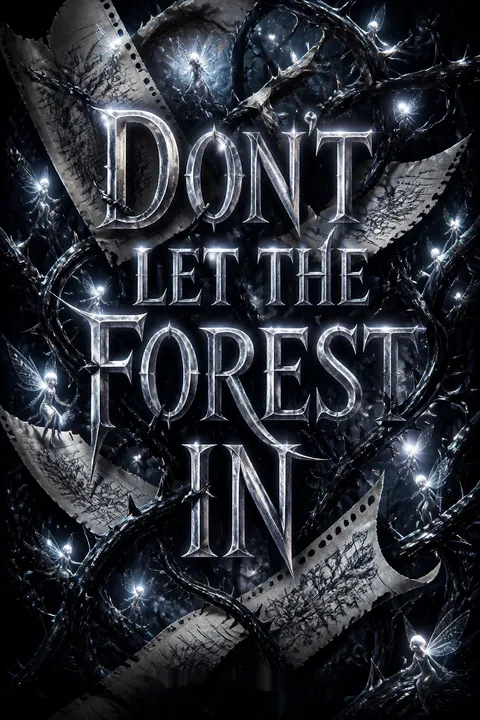
Don't Let the Forest In received mostly positive reviews, praised for its atmospheric horror, beautiful prose, and asexual representation. Readers found the story haunting, with compelling characters and an intense relationship between Andrew and Thomas. Some criticized plot holes and predictability. The ending was divisive, leaving many readers emotionally impacted. While some found it too dark for YA, others appreciated its exploration of mental health themes. Overall, it resonated strongly with readers seeking atmospheric, queer horror with complex characters.
People Also Read
Characters
Andrew Perrault
The hollow prince who writesAndrew is a walking contradiction: a boy terrified of confrontation who writes fairy tales soaked in blood and vengeance. His anxiety isn't performative—it sends him to his knees, turns food to cement, and makes speaking to strangers feel like swallowing glass. He processes the world through story rather than speech, and this gift becomes both his salvation and his weapon. His asexuality exists alongside a consuming romantic love for Thomas2—a combination he struggles to articulate even to himself. Andrew's deepest wound is his belief that he is empty, forgettable, impossible to love without modification. What drives him is not courage but devotion: he would endure anything for the people who see him. His growth is learning that fragility and ferocity can share the same bones.
Thomas Rye
The artist who draws monstersThomas is wildfire compressed into a short, freckled body—brilliant, reckless, and constitutionally unable to stay quiet when someone he loves is threatened. His art is cathartic violence: monsters with elegant teeth, forests with claws. Beneath his combative exterior lies a boy terrified of abandonment, shaped by parents who swung between artistic excess and casual cruelty. Thomas's love language is physical protection—he checks behind him constantly to make sure Andrew1 hasn't been left behind. His guilt is a living thing, rooted in the conviction that everyone he touches gets hurt. He doesn't know how to ask for tenderness without expecting punishment, and he offers his own suffering as currency for connection. His arc bends toward learning that vulnerability isn't weakness.
Dove Perrault
The twin who holds everythingAndrew's1 twin, the other half of his world. Dove is precision incarnate—color-coded study schedules, flawless uniforms, valedictorian ambitions. Where Andrew1 crumbles, she calculates. Where he whispers, she commands. Her perfection is armor against the same chaos that swallows her brother1; she simply organizes her way through pain rather than dissolves into it. Dove anchors the trio's dynamic as decision-maker, mediator, and enforcer. Her relationship with Thomas2 crackles with competitive energy that masks genuine affection. She loves Andrew1 with fierce, sometimes suffocating protectiveness—the kind that believes stability equals safety. Her deepest fear is change: that the trio she's built her identity around might reshape into something she cannot control, leaving her without purpose.
Lana Lang
Dove's fiercely loyal guardianDove's3 roommate and best friend—a Chinese American lesbian with purple combat boots, a scalpel tongue, and an aggressive kindness that manifests as dragging lonely people into her orbit. She runs the school's GSA club and protects Andrew1 not because she particularly likes him, but because Dove3 would want her to. Her hatred of Thomas2 stems from loyalty, not personal malice, though her confrontations with him carry genuine fury.
Bryce Kane
Wickwood's untouchable golden bullyTennis player, school board parents, perfect hair, and a practiced charm that shields systematic cruelty. He's tormented Andrew1 since they were twelve and knows exactly how to be terrible without looking terrible. His particular poison is homophobic mockery disguised as jokes and weaponizing institutional power against those who can't fight back. He reports Andrew1 to the principal not from moral concern but as calculated revenge.
Chloe Nguyen
The quiet friend Andrew needsA shy Vietnamese American junior who becomes Andrew's1 unexpected friend through Lana's4 orbit. Bisexual, bracelet-wearing, and genuinely kind, Chloe offers Andrew1 something rare: companionship without demand. Her social anxiety mirrors his in gentler form, and their shared preference for silence over performance creates a space where Andrew1 can exist without explaining himself.
Professor Clemens
The teacher who mocks weaknessA young, charming calculus teacher whose polished exterior conceals a petty tyrant. He singles out struggling students for public humiliation, weaponizes grades as threats, and savors the power his position affords.
Principal Grant
Wickwood's formidable authorityWickwood's leader, who projects authority through crisp pantsuits and a merciless gaze. She genuinely cares about students but ultimately prioritizes the school's reputation over confronting uncomfortable truths about what haunts her halls.
Ms. Poppy
The beloved art teacherWarm, patchwork-skirted, and endlessly patient with Thomas's2 creative blocks. She represents the rare Wickwood adult who sees students as people rather than problems to manage.
Andrew's father
The distracted parent abroadAn Australian-born international investor whose fortune arrived suddenly and whose attention departed gradually. He loves his children in scheduled increments, always promising to call back and rarely following through.
Plot Devices
Andrew's Notebook of Fairy Tales
Weapon, confession, and sacrificeAndrew's1 battered notebook contains dark fairy tales—stories about princes who cut out their hearts, witches who carve off faces, and forests that devour boys whole. What begins as a private creative outlet becomes a literal weapon when Andrew1 discovers that writing stories on surfaces can control and kill the monsters manifesting in the forest. The notebook also carries his unspoken confessions—every story codes his feelings for Thomas2 in blood and thorns. Each tale requires suffering to function: the narrative must include pain, sacrifice, or death to satisfy the forest's hunger. In the climax, the notebook becomes the heart Andrew1 buries instead of his own—his most precious possession given to the earth as tithe.
Thomas's Drawings
Monster genesis and red herringThomas's2 artwork—charcoal monsters, ink forests, thistle fairies with needle teeth—appears to manifest as real creatures crawling from the forest each night. The drawings are cathartic expressions of his pain: abusive parents, isolation, rage. The boys initially believe destroying every sketchbook will stop the monsters, but new creatures keep appearing even after every page is burned or buried. The drawings serve as a misdirection for the deeper source of the horror, while simultaneously revealing Thomas's2 psychological landscape through visual metaphor. Each monster they fight corresponds to a specific piece of art, making Thomas's2 inner life literally lethal—until the truth about their origin shifts.
The Wildwood Tree
Sacred ground turned woundAn ancient white oak deep in the forest where the three friends climbed, whispered secrets, and felt most like themselves since childhood. The tree functions as both sanctuary and epicenter—the place where their bond was strongest and where it was irrevocably broken. When the tree's significance shifts from haven to horror, it becomes the locus of the forest's supernatural power, capable of uprooting itself and wearing familiar faces. The final confrontation occurs in its hollow, transforming a place of childhood comfort into the altar where Andrew1 must choose what to sacrifice. The tree embodies the impossibility of preserving a perfect past.
Andrew's Scarred Hand
Visible map of buried traumaAndrew's1 hand is covered in thin, web-like scars that everyone at school can see but he cannot fully explain, even to himself. Students stare. Teachers exchange concerned glances. The scars prompt whispered speculation all year, functioning as a constant reminder of a trauma Andrew1 cannot consciously access. Other characters reference the incident with careful delicacy or cruel bluntness, but Andrew's1 confused non-reactions signal the depth of his dissociation. The hand becomes a barometer for his psychological state—he flexes it when anxious, hides it when ashamed, and nearly recreates the injury when his control fractures.
The Fence
Boundary that cannot holdA new chain-link fence erected between Wickwood's grounds and the surrounding forest, with immediate expulsion promised for anyone caught crossing. The fence represents institutional attempts to impose control over forces that cannot be contained—both literal monsters and the psychological darkness the school refuses to acknowledge. The boys climb it nightly. Monsters eventually tear through it entirely. Bryce5 uses Andrew's1 crossing as ammunition for expulsion. The fence embodies the futility of administrative responses to threats they won't name, and the impossibility of keeping darkness out when it already inhabits the people behind the barrier.
FAQ
Synopsis & Basic Details
What is Don't Let the Forest In about?
- Anxious boy returns to haunted school: Andrew Perrault, a sensitive and anxious teenager, returns to Wickwood Academy, a secluded boarding school, dreading his final year and separation from his twin sister Dove and best friend Thomas Rye.
- Art and stories manifest horrors: Andrew writes dark fairy tales, and Thomas draws macabre art; as the school year begins, monstrous creatures seemingly born from their creations start emerging from the surrounding forest and invading the school.
- Friendship fractures amid escalating threats: The deep bond between Andrew, Thomas, and Dove is tested by unspoken secrets, past traumas, and the terrifying reality of fighting monsters that feed on their pain and guilt.
Why should I read Don't Let the Forest In?
- Unique blend of psychological horror and emotional depth: The novel masterfully weaves supernatural horror with a raw exploration of anxiety, grief, trauma, and the complexities of codependent relationships, offering a deeply unsettling yet moving reading experience.
- Unreliable Narration and Reality Distortion challenges perception: Andrew's perspective is filtered through his intense anxiety and denial, creating a constantly shifting reality where the reader questions what is real and what is a manifestation of his internal struggles, leading to a powerful, debated conclusion.
- Rich symbolism and literary craft: Drews employs vivid imagery, recurring motifs (forest, hearts, thorns, art), and a fairy-tale-like structure to explore themes of creation, destruction, sacrifice, and the stories we tell ourselves to survive, rewarding close reading.
What is the background of Don't Let the Forest In?
- Setting rooted in gothic boarding school tradition: Wickwood Academy, with its ivy-covered stone buildings, ancient forests, and undercurrent of hidden cruelties among privileged students, provides a classic gothic backdrop that enhances the sense of isolation and creeping dread.
- Exploration of trauma and mental health: The narrative delves into themes of anxiety, panic attacks, self-harm, and denial, reflecting contemporary discussions around mental health struggles in young adults, particularly in high-pressure environments.
- Focus on the power of art and narrative: The book positions creativity—Andrew's writing and Thomas's drawing—not just as coping mechanisms but as forces capable of shaping reality, drawing on the idea that our internal worlds can manifest externally.
What are the most memorable quotes in Don't Let the Forest In?
- "Once upon a time, Andrew had cut out his heart and given it to this boy, and he was very sure Thomas had no idea that Andrew would do anything for him. Protect him. Lie for him. Kill for him." (Chapter 1): This early quote establishes Andrew's intense, possessive devotion to Thomas and foreshadows the lengths he is willing to go to protect him, hinting at the dark path their relationship will take.
- "Maybe I can't control them. But if I am—' Thomas's teeth clenched—'you have to swear you'd stop me.'" (Chapter 21): This exchange encapsulates Thomas's fear that he is the source of the monsters and his desperate need for Andrew to be his anchor, highlighting their codependent dynamic and the blurring line between protector and threat.
- "That thing was not Dove because Dove is dead." (Chapter 32): This devastating line shatters Andrew's constructed reality, revealing the core trauma driving his hallucinations and recontextualizing the entire narrative as a manifestation of his grief and denial over his sister's death.
What writing style, narrative choices, and literary techniques does C.G. Drews use?
- First-person subjective narration: The story is told entirely from Andrew's perspective, immersing the reader in his anxious, often distorted view of reality, making the eventual reveal of his hallucinations incredibly impactful.
- Integration of Andrew's dark fairy tales: Excerpts from Andrew's writing are woven throughout the narrative, mirroring and foreshadowing the events of the plot and blurring the lines between his internal world and the external horrors.
- Visceral and symbolic language: Drews uses rich, often unsettling descriptions, particularly for the monsters and the forest's influence (e.g., "ribs like mossy tree roots," "vines growing through his intestines"), grounding the psychological themes in tangible, body horror imagery.
Hidden Details & Subtle Connections
What are some minor details that add significant meaning?
- Moss on Bryce's blazer after Andrew's shove: After Andrew shoves Bryce in the faculty hallway (Ch 29), Bryce notices moss clinging to his blazer where Andrew touched him. This subtle detail, following Andrew's internal thought "Touch me again... and I'll kill you," hints that Andrew's connection to the forest and its destructive power is growing, manifesting physically on those he targets.
- The specific paintings in the narrow hallway: Andrew hides in a hallway filled with paintings of decaying fruit (Ch 20) just before overhearing Lana and Thomas argue about him. These images of rot and corruption subtly mirror the emotional decay and hidden resentments festering beneath the surface of their relationships and the school itself.
- The phone battery surviving weeks in the forest: Andrew's phone, lost in the forest for weeks, is found by Clemens with its screen still lit (Ch 17). This seemingly impossible detail suggests the forest isn't just a physical place but a realm where normal rules don't apply, hinting at its supernatural nature and its ability to preserve or alter objects within its domain.
What are some subtle foreshadowing and callbacks?
- Andrew's early story about the heart: The opening chapter features Andrew's story about a boy cutting out his heart and giving it away. This directly foreshadows the climax where Andrew prepares to cut out his own heart as a sacrifice to the forest (Ch 33), establishing the theme of self-sacrifice and the symbolic weight of the heart from the very beginning.
- The recurring motif of thorns and vines: Thorns appear early in Andrew's stories ("magic curled into thorns," Ch 1), then manifest physically as monsters (thistle fairies, Antler King's crown), and eventually grow inside Andrew himself (Ch 29). This motif tracks the increasing invasiveness and internalization of the forest's corruption and Andrew's pain.
- Thomas's drawing of the wishing well and monster: Thomas rips up a drawing of a boy at a wishing well with a monster eating his parents (Ch 5), claiming the shadows are wrong. Later, Thomas confesses this monster looked exactly like the one that attacked his parents (Ch 11), revealing the drawing was a direct, terrifying premonition he couldn't bear to face, linking his art directly to the monsters' origins.
What are some unexpected character connections?
- Lana Lang's unexpected protection of Andrew: Despite her initial gruffness and animosity towards Thomas, Lana repeatedly steps in to protect Andrew from bullies (Ch 3, 21) and offers him support (Ch 9, 24). This connection, initially framed as being "for Dove" (Ch 13), reveals Lana's underlying compassion and her role as an unexpected ally outside Andrew's core, unstable relationships.
- Chloe Nguyen's quiet understanding: Chloe, Lana's roommate, forms a quiet connection with Andrew (Ch 21, 24), recognizing his anxiety and offering non-judgmental support. Her own struggles with social anxiety and her gentle nature provide a contrast to the more volatile relationships Andrew is used to, highlighting the possibility of healthier connections he often overlooks.
- Bryce Kane's twisted obsession with the trio: Bryce's bullying isn't random; he seems particularly focused on Andrew and Thomas, and later reveals a desire for Dove (Ch 29). His cruel comments about their relationships and his eventual death linked to Andrew's actions reveal a deeper, disturbing connection rooted in jealousy and a sense of entitlement to their lives and affections.
Who are the most significant supporting characters?
- Lana Lang: More than just a friend to Dove, Lana acts as a fierce, albeit blunt, protector for Andrew, challenging Thomas's behavior and offering Andrew a lifeline outside their codependent dynamic. Her sharp perception and willingness to confront injustice make her a crucial, grounding presence.
- Bryce Kane: As the primary human antagonist, Bryce embodies the toxic privilege and cruelty of Wickwood. His relentless bullying serves as a catalyst for key events and highlights the real-world horrors Andrew faces alongside the supernatural ones, ultimately becoming a victim of the very darkness Andrew struggles with.
- Ms. Poppy: The art teacher represents a rare source of genuine warmth, understanding, and acceptance within the school. Her encouragement of Thomas's art and her gentle nature provide moments of respite and highlight the stark contrast between supportive adults and those who fail the students.
Psychological, Emotional, & Relational Analysis
What are some unspoken motivations of the characters?
- Andrew's desperate need to be needed: Andrew's intense anxiety and feeling of being "hollow" (Ch 1) drive an unspoken motivation to be essential to Thomas and Dove. His fear of abandonment fuels his denial of Dove's death and his willingness to engage with the monsters, as fighting alongside Thomas makes him feel solid and necessary (Ch 1).
- Thomas's self-punishment and guilt: Beyond protecting Andrew, Thomas's relentless monster-fighting is driven by profound, unspoken guilt over his parents' disappearance and Dove's death (Ch 11, 32). He believes he is the source of the monsters and deserves punishment, seeking absolution through violence against his own creations.
- Dove's fear of change and loss: Dove's initial distancing from Thomas and her later, spectral appearances are motivated by a deep, unspoken fear of losing the established dynamic of their trio (Ch 19, 32). Her perfectionism extends to her relationships, and she struggles to accept that things, and people, evolve beyond her control.
What psychological complexities do the characters exhibit?
- Andrew's complex denial and hallucination: Andrew's mind constructs an elaborate hallucination of Thomas and Dove being alive and at Wickwood to cope with the unbearable trauma of their deaths/absence (Ch 31, 32). This isn't simple delusion but a complex psychological defense mechanism where his internal world overrides external reality, blurring the lines for both him and the reader.
- Thomas's projection and internalization of abuse: Thomas projects his internal turmoil and past trauma onto his art, creating external monsters (Ch 11). He also internalizes the abuse he suffered, believing he is inherently monstrous and deserving of punishment, which fuels his self-destructive tendencies and need for Andrew to "stop" him (Ch 21).
- Andrew's asexuality and fear of intimacy: Andrew identifies as asexual (Ch 23), adding a layer of complexity to his intense emotional and physical bond with Thomas. His fear of intimacy isn't just general anxiety but specifically tied to the potential mismatch between his deep affection/need for Thomas and the possibility of Thomas wanting a sexual relationship he cannot reciprocate, leading to fear of rejection and loss.
What are the major emotional turning points?
- Thomas's confession about his parents and the blood: Thomas's hesitant confession to Andrew about the police investigation, the trashed house, and the blood (Ch 7) is a major turning point, shifting their dynamic from typical school drama to shared, terrifying secrets and solidifying Andrew's protective instincts.
- Andrew's realization of the forest growing inside him: Discovering vines and roots growing beneath his skin (Ch 29) is a visceral emotional turning point for Andrew, forcing him to confront that the horror is not just external but has become deeply internalized, blurring the line between his physical and psychological state.
- The reveal of Dove's death and Andrew's hallucination: Dove's "confession" in the forest (Ch 32) that she is dead and Andrew has been hallucinating her and Thomas is the most significant emotional turning point, shattering Andrew's reality and forcing him to grapple with the true depth of his grief and denial.
How do relationship dynamics evolve?
- The trio's initial fracture and Andrew's isolation: The story begins with the established trio, but Dove's unexplained distance from Thomas (Ch 3) immediately fractures their dynamic, leaving Andrew feeling isolated and clinging more desperately to Thomas.
- Andrew and Thomas's codependent intimacy: As the monsters escalate, Andrew and Thomas's relationship deepens into a highly intimate, codependent bond forged in shared trauma and secret monster-fighting (Ch 11, 18, 22). They rely on each other for survival and emotional support, blurring the lines between friendship, romance, and mutual need.
- Andrew's relationship with Dove transforms into grief and denial: What initially appears as sibling bickering and distance evolves into the heartbreaking revelation that Andrew's interactions with Dove are manifestations of his inability to process her death (Ch 31, 32), transforming their dynamic from present relationship to a haunting representation of unresolved grief.
Interpretation & Debate
Which parts of the story remain ambiguous or open-ended?
- The ultimate reality of Thomas's existence: While the reveal strongly suggests Andrew hallucinated Thomas being at Wickwood after Dove's death, the ending leaves a sliver of ambiguity. Thomas is physically present during the final sacrifice, and the last lines ("Kiss me... Then you'll find out") could be interpreted as confirming his reality in that moment, leaving the reader to debate if he was a consistent hallucination or if reality fractured and brought him back.
- The exact nature and origin of the monsters: The monsters are linked to Thomas's art and Andrew's stories, and the forest feeds on guilt and grief, but their ultimate metaphysical origin remains somewhat open. Are they purely psychological manifestations given form by trauma, or are they ancient entities drawn to pain and channeled through the boys' creativity? The text supports both interpretations.
- The long-term consequences for Andrew and Thomas: The ending sacrifice stops the immediate horror, but the physical and psychological scars remain. The story concludes with them together, but the future is uncertain. Will Andrew heal from his denial and trauma? Can their relationship survive the weight of what happened and the ambiguity of their connection? The resolution is emotional rather than definitive.
What are some debatable, controversial scenes or moments in Don't Let the Forest In?
- Andrew's hallucination of Thomas and Dove: The reveal that Andrew has been hallucinating Thomas and Dove's presence for months is highly debatable. Some readers may find it a powerful exploration of grief and trauma, while others might view it as a narrative twist that undermines the established relationships or feels manipulative.
- The scene where Andrew hits Thomas: Andrew hitting Thomas after Thomas pushes him and demands it (Ch 21) is a controversial moment. While framed within their intense, self-destructive dynamic and Thomas's need for Andrew to prove he can fight back, the depiction of violence as a form of communication or proof of capability is unsettling and open to debate regarding its message.
- The final sacrifice scene: The climax where Andrew prepares to cut out his heart (Ch 33) is graphically violent and symbolically charged. The debate lies in its interpretation: Is it a literal act of self-mutilation driven by Andrew's mental state, a symbolic surrender of his grief/guilt to the forest, or a magical ritual that genuinely appeases the supernatural threat?
Don't Let the Forest In Ending Explained: How It Ends & What It Means
- The Climax: Andrew's Sacrifice: The story culminates with Andrew, realizing he is the "prince" the forest demands a sacrifice from, preparing to cut out his own heart with a box cutter and bury it in the woods with his notebook (Ch 33). Thomas arrives and tries to stop him, offering himself instead, but Andrew insists it must be him, believing his heart (his stories, his pain, his love) is what the forest truly wants.
- The Resolution: The Forest is Sated: Andrew cuts into his chest (the text is ambiguous if he completes the act or if the intention/symbolism is enough), burying his notebook and perhaps his heart in the ground where the Wildwood tree stood (Ch 34). The forest falls silent, the monsters disappear, and the physical manifestations of its growth (vines, etc.) recede. The immediate horror ends.
- The Meaning: Acceptance and Survival: The ending signifies Andrew's acceptance of Dove's death and his own role in creating the monsters through his denial and grief. Burying his heart/notebook is a symbolic act of letting go of the stories that fueled the horror and offering his deepest self to appease the trauma. It means survival comes at a profound cost, leaving Andrew physically marked (vines in his stomach, roses from his eye) and emotionally raw, but finally present with Thomas, whose reality is affirmed in their final interaction, suggesting their bond, forged in shared suffering, endures.
About the Author

Download PDF
Download EPUB
.epub digital book format is ideal for reading ebooks on phones, tablets, and e-readers.








































