
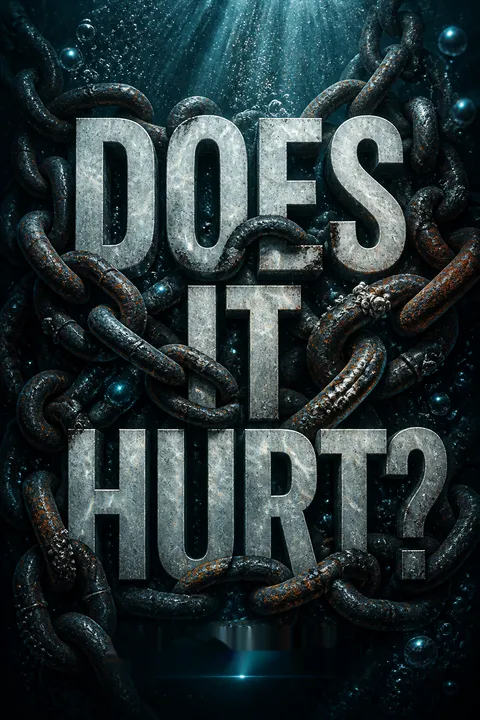


Plot Summary
Prologue
Sawyer Bennett1 spots a distant relative at an American airport terminal, and the recognition is mutual. Six years into running from her past, she's on the verge of being exposed. She ditches her Indonesia flight, buys a disguise in the gift shop — hoodie, sweats, ball cap — and pays cash for the next departure: Australia.
The ticket agent is slow, the security line is long, and they nearly close the gate before she arrives. Her heart doesn't settle until wheels leave tarmac, and even then, she half-expects air traffic control to ground the plane. This is not escape. This is continuation — another day being Sawyer Bennett,1 a name she'd rather bury than carry.
Surviving on Stolen Names
Three weeks into Port Valen, Sawyer1 lives from a buttery-yellow Volkswagen van she calls Senile Suzy, bleaches her brown roots blonde, and survives by stealing men's identities — sleeping with them to access their documents. She carries a stolen gun, a fake ID under the name Jamie Harris, and enough self-loathing to fill the ocean she's come to love.
A pregnancy scare sends her spiraling, but the test returns negative. At a bus stop, she meets Simon,5 an older man with a homemade tattoo kit who reads her loneliness on sight. He pokes the words Fuck You in black octopus ink onto her thigh — her first tattoo, her first real friendship, and the first warmth she's felt in years. He tells her they'll cross paths again.
The Waterfall One-Night Stand
Sawyer1 meets Enzo2 at a near-empty bar in Port Valen. He's Italian, six-four, built with devastating precision, works as a great white shark researcher, and looks permanently furious. She introduces herself as Jamie. Their chemistry is caustic and immediate — she tells him he could get her pregnant with a single look; he tells her not to sniff him.
He takes her to a hidden waterfall, where behind the thundering curtain of water, he brings her to an orgasm that rewrites her understanding of pleasure. They agree: one night, then strangers again. He refuses to kiss her lips — an intimacy he grants no one. She decides she can live with that limitation. She shouldn't have to resist him for long.
Sawyer Robs the Shark Man
Sawyer1 wakes before Enzo,2 memorizes the landscape of his sleeping body, then gets to work. She photographs his wallet, picks the lock on his desk drawer, and finds his Italian equivalent of a social security card alongside business documents. Within a week and a half, a new credit card arrives in Enzo's2 name. She charges less than a thousand dollars — just enough to survive, never enough to be reckless.
The guilt corrodes her from the inside, but guilt has been her constant companion for years. Meanwhile, Enzo2 wakes to find his desk drawer unlocked and eventually discovers the fraudulent credit card on his report. He doesn't freeze the account. He doesn't call the police. He starts hunting the blonde liar himself.
Blood in the Water
Weeks later, Enzo2 finds Sawyer1 on the beach and feigns ignorance, inviting her onto his boat to see sharks from his cage. She agrees against every screaming instinct. Miles from shore, he has sex with her again — and mid-thrust reveals he knows everything.
His hand closes around her throat while sharks circle below. He bites her lip until it bleeds, then forces her head into the water where the crimson swirls toward two massive great whites.
He pulls her up gasping, pushes her under again, each time closer to catastrophe as a shark lunges where her head had been seconds before. He demands her real name. Terrified and humiliated, she surrenders it: Sawyer Bennett.1 Then the horizon blackens with storm clouds, and vengeance becomes secondary to survival.
Fifty-Eight Minutes to Shore
The wave swallows the boat whole. Enzo2 is ripped from Sawyer1 and slammed into debris, losing consciousness. When she surfaces, she finds him floating with a bleeding head — and knows the sharks could return for it any moment. She counts every second as she swims, one arm hooked around his body and the other gripping driftwood.
Fifty-eight minutes and ten seconds pass before she drags them both onto the rocky shore of a tiny island dominated by a crumbling lighthouse, its red and white stripes chipped and blackening. She collapses beside him. When Enzo2 wakes minutes later, he doesn't know she saved his life. He looks disappointed that she survived. That disappointment cracks something in her chest that was already barely holding together.
The Keeper's Strange Rules
The lighthouse is occupied by Sylvester,3 a short, bearded old man with a wooden peg leg who claims to have been its caretaker since 1978. He lets them stay but imposes rigid control: a nine o'clock bedtime, locked bedroom doors, and a bucket instead of the bathroom after hours.
He explains the chains they hear dragging at night as ghosts of prisoners he killed decades ago — men who shipwrecked and tried to break in. Enzo2 doesn't believe a word. Sawyer1 is unsure. Forced to share a single bed, she and Enzo2 bicker viciously — he calls her a leech, she calls him a mammoth. But when his nightmares come, she slips her hand into his, and his breathing calms. Neither mentions it come morning.
A Girl in the Black Water
As days pass, suspicion compounds. Sawyer1 discovers old photographs in Sylvester's3 nightstand — his wife Raven gripped too tightly at the wrist, two young daughters named Trinity and Kacey.4 He named the island after his wife but claims she simply left.
Sawyer1 finds a cave on the island with bioluminescent glowworms on the ceiling and a glowing blue pool — her secret escape from both men. Then one night, she and Enzo2 see a girl standing knee-deep in the ocean, rail-thin in a white dress.
She disappears before Sylvester3 reaches the window. He insists nothing is there. Enzo2 suggests dryly that it must be just another ghost. Meanwhile, Sylvester's3 hand lingers on Sawyer's1 shoulder, and Enzo2 issues a sharp warning: touch her again, and consequences follow.
Twin Confessions Over Whiskey
A storm traps them inside with whiskey and candlelight. Sawyer1 finally speaks Kevin's6 name aloud — her twin brother,6 the cop who isolated her from every friend, who turned their parents against her, who sexually abused her from childhood while everyone looked away.
No one believed her. No one ever did. Enzo's2 fury is immediate and volcanic, but he channels it into his own confession: his mother dropped him at a Roman church on his ninth birthday, promising she'd return. She never did.
He was raised by nuns in a rigid Catholic institution, angry and unwanted, until one sister helped him leave for Australia at eighteen. Sawyer1 squeezes his hand in the dark. These are two people shaped by abandonment and betrayal, and for the first time, they recognize their wreckage in each other.
Enzo on His Knees
The cruelty between them has been mutual, but Enzo2 decides to end it. When Sawyer1 demands he kneel and properly apologize for every vicious word — for calling her worthless, for the boat, for weaponizing her vulnerability — he drops to the floor without hesitation. He tells her she is strong, brave, and admirable, that he was punishing her for wounds his mother inflicted.
She doesn't forgive him yet. Instead, she lifts her left foot and points to her pinkie toe — her favorite — and tells him to kiss it. He does, gently, then bites it softly. He promises that worshiping her is no hardship and that he'll spend his life on his knees if she asks. She tells him to stand. His devotion has already changed everything between them.
The Table That Couldn't Hold Them
He finds the stolen credit card hidden under their mattress, and the old rage threatens to resurface. But Sawyer1 swears she kept it out of paralysis rather than intent, and this time he believes her. He crashes his mouth against hers — the kiss he withheld from every woman before her, the intimacy he guarded more fiercely than his own name.
The dining table becomes their altar. He tells her she's become his oxygen, that breathing without her is no longer possible. She says she loves him. He says he loves her, and she will love him — not a question but a declaration. The table collapses beneath them mid-act, and they lie laughing in its wreckage. Then Sawyer's1 laughter dies. She has one more confession to make.
The Knife Under the Pillow
Six years ago, Kevin6 came home and tried to assault her again. When she resisted, he wrapped both hands around her throat and squeezed until her vision went black. Her fingers found the knife she'd hidden under her pillow weeks before, knowing this moment was inevitable. She drove it into his jugular. Blood covered her face and hands as he slumped beside her on the bed.
She ran from the house in socks, never looked back, and has been running ever since. The police — his friends, his allies — want her for murdering one of their own. Enzo's2 reaction stuns her: he is not horrified. He is proud. He tells her she did the world a favor and vows to find a way to keep her free.
The Caretaker Bares His Teeth
Sylvester3 formally asks Sawyer1 to stay on Raven Isle forever. She refuses. His mask disintegrates — he threatens to contact authorities and expose her fugitive status. When she fires back that she won't be intimidated, he backhands her hard enough to split her lip and send her crashing to the floor. Then he grabs his shotgun and aims it at Enzo2 in the hallway, ordering him back to the bedroom.
Sawyer1 mouths one word to Enzo2 over Sylvester's3 shoulder: cave. She bolts out the front door while Enzo2 is locked in. But he has spent weeks quietly removing the nails from their bedroom window and fashioning a rope from torn clothing tied to the bedframe. He was never truly trapped — and now open war has begun.
Stitched Shut and Chained
The ghosts were never dead. Something opens the bookshelf in the living room, revealing a hidden spiral staircase to the beacon. Enzo2 and Sawyer1 climb to find a working radio — proof Sylvester3 kept them stranded deliberately. Then a figure descends from above: a girl in a yellowed dress with thick chains bolted around her ankles and black stitches sealing her mouth shut.
It is Kacey,4 Sylvester's3 younger daughter, alive and captive her entire life. Her tongue was cut out years ago for screaming. She is fed through a tube in her stomach. Every dragging chain, every midnight cry, every fist pounding against their door was Kacey4 trying to be found. The only monster haunting this lighthouse has always been its keeper.
Raven Isle's Last Bloodshed
Sylvester3 ambushes Enzo,2 knocks him unconscious, and locks him in the cellar — where a graveyard of past victims' crosses line the dirt floor. Sawyer1 stabs Sylvester3 in the stomach with a kitchen knife, but he overpowers her and chains her to his bed upstairs.
From below, Enzo2 soaks torn cloth in rubbing alcohol, ignites it against the ceiling planks, and forces the hatch open when Sylvester3 comes to stamp out the flames. In the ensuing fight, Kacey4 is torn between a lifetime of brainwashed loyalty and the freedom Sawyer1 promised.
When Sylvester3 fires at Enzo,2 Kacey4 shoves him clear and takes the bullet herself. She dies peacefully in his arms. Enzo2 heats the gun barrel in the stove flames and presses it through Sylvester's3 throat until it hits spine.
A Fugitive Dies on Paper
The coast guard answers the radio. As rescue approaches, Enzo2 devises the plan: Sawyer1 will become Trinity, Sylvester's3 daughter, who was held captive alongside Kacey4 from birth.
Sawyer1 writes a confession letter in her own handwriting as the woman she used to be — a fugitive who supposedly wrecked here years ago and took her own life, detailing her abuse and her crimes. At the police station, she hands the letter to a sympathetic policewoman9 and narrates Trinity's captivity as her own.
Investigators find clear evidence of self-defense and clear Enzo.2 Sawyer1 is given resources to build a new identity. She keeps her first name — a memorial to who she was — and takes Enzo's2 last. Sawyer Vitale. The fugitive is dead. The woman who loved a shark man is finally free.
Epilogue
Two years later, Sawyer1 and Enzo2 are married, having eloped with Simon5 and Troy7 as witnesses. Enzo2 named their new boat Ladra — thief, in Italian — and Sawyer1 insists the name is cursed. She works alongside him at his underwater research center, though she still screams at the sight of great whites through the glass.
Simon5 gives them matching tattoos: a cactus on Sawyer's1 wrist for resilience, a shark on Enzo's.2 One afternoon, Enzo2 has her pinned against the inside of a shark cage while three great whites circle outside it, and she tells him she loves him between gasps. She chose to live. She chose him. For once, running sounds like the worst idea she's ever had.
Analysis
Does It Hurt? interrogates the entanglement of pain and intimacy with clinical precision, arguing that for survivors of abuse, the two have become so neurologically fused that separating them requires not avoidance but conscious reclamation. Sawyer1 doesn't need a partner who would never hurt her — she needs one who will hurt her differently, on her terms, transforming sensation from something inflicted into something chosen. Enzo's2 escalating physical intensity isn't romanticized recklessness; it's a negotiation of bodily autonomy between two people who've had theirs stripped away by different forces.
The novel's central architecture is identity in its most literal and figurative senses. Sawyer1 has inhabited so many stolen names that she's lost access to her own. Enzo's2 Italian nickname for her — bella ladra, beautiful thief — captures her paradox: she steals other people's lives because she cannot bear to live within her own. His refusal to kiss anyone until he's truly in love mirrors her withholding of truth; when he finally presses his lips to hers, it signals not just affection but mutual disarmament.
The lighthouse functions as a compression chamber for the thesis that captivity takes many forms. Sylvester's3 literal imprisonment of his daughter4 parallels Kevin's6 psychological imprisonment of Sawyer,1 which parallels the emotional fortresses both protagonists built around themselves. The 'ghosts' that terrify them nightly are revealed as a living person trying desperately to be found — a devastating metaphor for how suffering is misread as something abstract or inexplicable rather than recognized as a human being screaming behind walls.
Carlton subverts dark romance conventions by ensuring Sawyer's1 agency remains structurally central. She saves Enzo's2 life in the ocean, feeds them through spearfishing, stabs their captor,3 and ultimately authors her own freedom through a letter written in her own hand. The novel's final provocation isn't whether love hurts — it's whether you're brave enough to let someone hurt you beautifully, with your full consent, and call that living.
Review Summary
Does It Hurt? received mixed reviews, with some readers praising its dark romance elements, spicy scenes, and thrilling plot twists. Many appreciated the complex characters and intense emotional journey. However, others found it overly dramatic, unrealistic, and poorly executed. Critics cited issues with character development, writing style, and the mixture of genres. The book's explicit content and dark themes were polarizing, with some readers loving the intensity while others found it disturbing or cringeworthy. Overall, opinions varied widely on this controversial novel.
People Also Read


Characters
Sawyer Bennett
Fugitive identity thiefA twenty-eight-year-old woman surviving in Port Valen, Australia, under stolen identities. She sleeps with men to photograph their documents, opens credit cards in their names, and moves on before anyone catches her. Beneath her compulsive humor and bright exterior lies a woman shaped by her twin brother's6 sexual abuse, her parents' disbelief, and years of enforced isolation. She defaults to lying as armor, treats intimacy as transactional, and flirts with suicidal ideation while being too stubborn to actually surrender. Her psychology reveals someone whose fight-or-flight system never deactivated—she craves connection while sabotaging every chance at it. Running is the only life she knows, and every new city is just another place she'll eventually flee. Whatever drove her into hiding has followed her across an ocean.
Enzo Vitale
Italian shark researcherA thirty-four-year-old Italian marine biologist specializing in great white sharks, operating an underwater research center off the Australian coast. Abandoned by his mother at age nine on the steps of a Roman church, he was raised by nuns in a rigid Catholic institution that couldn't penetrate his defiant anger. He doesn't smile, rarely speaks more than necessary, and guards his emotions behind a permanent scowl. His relationship with sharks mirrors his psychology: drawn to dangerous creatures because vulnerability requires proximity to what can destroy you. He refuses to kiss anyone on the lips—a boundary signaling how fiercely he protects the last intimacy he owns. When a woman disrupts his carefully controlled world, his reaction oscillates between fury and fascination, cruelty and an obsession he cannot name.
Sylvester
Raven Isle's lighthouse keeperThe caretaker of Raven Isle since 1978, Sylvester presents himself as an eccentric but harmless old man with a wooden peg leg and a fondness for ghost stories. His hospitality conceals a pathological need for control and possession. Decades of isolation have calcified his loneliness into something predatory—he doesn't want company, he wants captives. His charm is calculated, his household rules are cages, and every story he tells is designed to prevent his guests from questioning what lies beneath the surface of his crumbling lighthouse.
Kacey
Sylvester's imprisoned daughterSylvester's3 younger daughter, whose presence on Raven Isle carries a truth far more disturbing than any ghost story. She exists in a fractured psychological state shaped by a lifetime of isolation and absolute paternal control. Her relationship with her father3 is defined by painful duality—love warped into obedience, survival mistaken for loyalty. She communicates not through words but through desperate physical acts that are easily misinterpreted by those who don't know to look closer.
Simon
Sawyer's first real friendAn older wandering soul who meets Sawyer1 at a Port Valen bus stop and gives her a stick-and-poke tattoo with octopus ink. He carries needles and ink in his pockets, laughs with his whole chest, and reads people with unsettling accuracy. He is Sawyer's1 first genuine friend—someone who smooths her broken edges without trying to reshape them. He represents the unconditional acceptance she has been denied her entire life.
Kevin Bennett
Sawyer's twin brother and abuserSawyer's1 twin brother, a police officer whose charming exterior concealed a sexual predator. He isolated Sawyer1 from friends, manipulated their parents into disbelieving her accusations, and used his badge as a shield of impunity. Though he never appears directly in the present timeline, his voice haunts Sawyer's1 internal monologue constantly—taunting, possessive, insisting no one will ever love her. He represents the abuser who becomes inescapable even in absence, whose influence persists long after physical proximity ends.
Troy
Enzo's research partnerEnzo's2 red-haired research partner and only friend, a marine biologist who masks genuine loyalty behind relentless wisecracks. He retrieves Sawyer's1 van and becomes a trusted confidant.
Garrett
Kevin's cop allyA police officer and friend of Kevin's6 who periodically emails Sawyer1, urging her to return and face justice. He represents the institutional machinery hunting her.
Officer Bancroft
Sympathetic policewomanThe gentle officer who questions Sawyer1 after rescue. Her patient demeanor and soft hands represent the compassion Sawyer1 has been denied by every authority figure in her life.
Plot Devices
The Stolen Identity
Catalyst that binds the leadsSawyer's1 method of survival—sleeping with men to steal their documents and open credit cards—drives the entire plot. When she applies this method to Enzo2, it becomes the inciting incident that binds them in a cycle of desire, betrayal, and obsession. The physical credit card recurs throughout the story: hidden under a mattress on the island, it symbolizes Sawyer's1 inability to fully release deception even when she wants to. Enzo's2 discovery of her crime transforms their dynamic from strangers to adversaries to reluctant allies. The device interrogates whether someone who steals to survive deserves condemnation or compassion—and whether the person she stole from can ever trust her with something more valuable than a name.
Raven Isle Lighthouse
Prison disguised as sanctuaryThe crumbling lighthouse operates on multiple symbolic registers—a structure built to guide ships to safety that has instead become a trap for the vulnerable. Sylvester's3 strict rules (locked doors, curfews, restricted bathroom access) gradually reveal themselves not as eccentricity but as a captor's infrastructure. The lighthouse contains hidden spaces: a cellar with dark secrets, a bookshelf concealing stairs to the beacon, and rooms storing evidence of Sylvester's3 true nature. It functions as the physical crucible forcing Sawyer1 and Enzo2 into proximity, stripping away their defenses, and ultimately revealing everyone's authentic self—captor, victim, protector, and survivor. Named after Sylvester's3 wife Raven, it's a monument to possession disguised as devotion.
The Chains and Ghost Stories
Misdirection concealing living horrorFrom their first night, Sawyer1 and Enzo2 hear chains dragging across floors, sobbing through walls, and violent pounding against doors and ceilings. Sylvester3 attributes these disturbances to spirits of prisoners he claims to have killed decades ago—a story designed to normalize the sounds and prevent investigation. The ghost narrative is Sylvester's3 most effective lie, weaponizing the newcomers' fear of the supernatural to mask a far more devastating reality. The true source of these sounds represents a person4 desperately trying to communicate through the only means available to someone who has been physically silenced. Every chain drag is an SOS that goes unheard because the wrong man controls the interpretation.
The Glowworm Cave
Sawyer's sanctuary of hidden beautySawyer1 discovers a cave beneath the island filled with bioluminescent glowworms—creatures whose glowing silk attracts prey, beautiful yet deceptive. The cave becomes her private refuge, the one space she controls on an island where control belongs to others. It's where Enzo2 follows her uninvited, where he shows unexpected tenderness when she falls and injures her head, and where their most vulnerable encounters take place. The cave mirrors Sawyer1 herself: outwardly beautiful, harboring light in darkness, but built on biological deception. The glowworms' glow is a hunting mechanism dressed as wonder—just as Sawyer's1 charm conceals a survival strategy. It also serves as their hiding place when the lighthouse becomes unsafe.
The Confession Letter
Kills old identity, enables freedomAfter the climax, Enzo2 devises a plan requiring Sawyer1 to write a letter in her own handwriting as the person she used to be—a woman who was supposedly held captive on Raven Isle and ended her own life. The letter confesses to past crimes, describes abuse, and provides enough detail to be investigated and confirmed against real records. By placing this document into police evidence, Sawyer1 simultaneously eliminates her fugitive identity and creates a paper trail explaining her disappearance from the world. It is the ultimate act of identity theft performed on herself—stealing her own name to set it free. It also represents the final lie she'll ever need to tell, closing the chapter on years of deception.
FAQ
Synopsis & Basic Details
What is Does It Hurt? about?
- A woman on the run: Sawyer, haunted by her past, is forced to flee the country and assume a new identity in Australia.
- A dangerous connection: She meets Enzo, a man who is both alluring and dangerous, and their lives become intertwined when they are shipwrecked on a mysterious island.
- A fight for survival: They must navigate the island's secrets, confront their inner demons, and fight for survival against both external threats and their own desires.
Why should I read Does It Hurt??
- Intense emotional journey: The book delves into the complex emotions of its characters, exploring themes of trauma, identity, and redemption.
- Dark and thrilling plot: The story is filled with suspense, unexpected twists, and a constant sense of danger, keeping readers on the edge of their seats.
- Complex characters: The characters are morally gray, with hidden depths and motivations, making them both compelling and unpredictable.
What is the background of Does It Hurt??
- Psychological trauma: The story explores the long-lasting effects of trauma, abuse, and guilt on the characters' psyches.
- Isolation and confinement: The setting of a remote island and a decrepit lighthouse creates a sense of isolation and confinement, mirroring the characters' internal struggles.
- Dark romance: The book blends elements of dark romance with themes of violence, power dynamics, and moral ambiguity.
What are the most memorable quotes in Does It Hurt??
- "Some days I'm the ocean. Some days I'm the ship. Tonight, I'm the lighthouse: at the edge, alone, and burning.": This quote, from Vasiliki, encapsulates the themes of isolation, strength, and internal conflict.
- "When have we ever been able to let go of the things that hurt us most?": This line, spoken by Sawyer, highlights the human tendency to cling to pain and self-destruction.
- "You're going to ruin me, too. But unfortunately for you, that's where I feel most at home.": Enzo's words reveal his attraction to danger and his acceptance of his own darkness.
What writing style, narrative choices, and literary techniques does H.D. Carlton use?
- First-person perspective: The story is primarily told from Sawyer's point of view, allowing readers to intimately experience her thoughts, emotions, and internal conflicts.
- Intense and visceral language: Carlton uses vivid and often graphic language to depict the characters' experiences, creating a sense of immediacy and emotional impact.
- Foreshadowing and symbolism: The author employs subtle foreshadowing and recurring symbols to hint at future events and deepen the story's themes.
Hidden Details & Subtle Connections
What are some minor details that add significant meaning?
- The playlist: The songs listed at the beginning of the book foreshadow the emotional tone and key themes of the story, such as obsession, danger, and self-destruction.
- The use of Italian: Enzo's use of Italian phrases and words adds depth to his character, hinting at his cultural background and emotional intensity.
- The recurring mention of teeth: The repeated references to teeth, biting, and sharp edges symbolize the characters' internal struggles and the dangerous nature of their relationship.
What are some subtle foreshadowing and callbacks?
- Sawyer's fear of being caught: Her initial escape from the airport foreshadows her constant state of paranoia and the danger she is running from.
- The mention of sharks: The early discussions about sharks foreshadow the later scenes where they become a symbol of both fear and attraction for Sawyer.
- The "just the tip" line: Enzo's repeated use of this phrase foreshadows the power dynamics and control issues that define their relationship.
What are some unexpected character connections?
- Simon and Sawyer's shared loneliness: Their connection at the bus stop reveals a shared sense of isolation and a need for companionship, despite their different backgrounds.
- Sylvester's connection to the past: His knowledge of the island's history and his connection to the lighthouse reveal a deeper, more sinister side to his character.
- Kacey's silent plea: Her actions, though limited by her inability to speak, reveal a desire for freedom and a connection to Sawyer and Enzo.
Who are the most significant supporting characters?
- Simon: He serves as a brief but important source of comfort and understanding for Sawyer, offering her a sense of connection in her lonely world.
- Troy: Enzo's research partner, he provides a foil to Enzo's intensity and offers a glimpse into his life outside of his relationship with Sawyer.
- Officer Bancroft: She represents a potential for justice and compassion, contrasting with the darkness and violence that surrounds Sawyer.
Psychological, Emotional, & Relational Analysis
What are some unspoken motivations of the characters?
- Sawyer's self-sabotage: She seems to be drawn to situations that reinforce her belief that she is unworthy of love or happiness, often making self-destructive choices.
- Enzo's need for control: His desire to dominate and possess Sawyer stems from his own past trauma and a need to feel powerful.
- Sylvester's loneliness: His actions are driven by a deep-seated fear of being alone, leading him to manipulate and control those around him.
What psychological complexities do the characters exhibit?
- Sawyer's trauma: She struggles with PTSD, anxiety, and a deep-seated fear of abandonment, which manifests in her constant need to run and her inability to trust others.
- Enzo's internal conflict: He is torn between his desire for control and his growing feelings for Sawyer, leading to volatile and unpredictable behavior.
- Sylvester's madness: His isolation and grief have warped his perception of reality, leading him to commit horrific acts in the name of love and control.
What are the major emotional turning points?
- Sawyer's confession: Her admission of her past to Enzo marks a turning point in their relationship, revealing her vulnerability and need for acceptance.
- Enzo's vulnerability: His admission of his own past and his fear of losing Sawyer shows a shift in his character, revealing a softer side beneath his tough exterior.
- The discovery of Kacey's fate: The revelation of her suffering and death forces Sawyer and Enzo to confront the true horror of their situation and their own capacity for violence.
How do relationship dynamics evolve?
- From tension to intimacy: The relationship between Sawyer and Enzo evolves from a tense and volatile attraction to a deep and complex bond built on shared trauma and desire.
- From distrust to dependence: Both characters initially struggle with trust, but their shared experiences force them to rely on each other for survival and emotional support.
- From control to vulnerability: Enzo's need for control is challenged by his growing feelings for Sawyer, while Sawyer's need to run is challenged by her desire to stay with him.
Interpretation & Debate
Which parts of the story remain ambiguous or open-ended?
- The nature of the spirits: The true nature of the spirits in the lighthouse is left ambiguous, leaving readers to question whether they are real or a product of the characters' imaginations.
- The extent of Sylvester's madness: The full extent of his crimes and his motivations are left open to interpretation, leaving readers to ponder the depths of his depravity.
- The future of Sawyer and Enzo: The ending leaves their future uncertain, with the possibility of both happiness and continued struggle.
What are some debatable, controversial scenes or moments in Does It Hurt??
- The drowning scene: Enzo's actions towards Sawyer in the water are highly controversial, blurring the lines between consensual and non-consensual acts.
- The power dynamics: The power dynamics between Sawyer and Enzo are complex and often disturbing, raising questions about consent and control.
- The violence: The graphic violence and gore in the book may be triggering for some readers, sparking debate about the author's use of such content.
Does It Hurt? Ending Explained: How It Ends & What It Means
- A new identity: Sawyer assumes the identity of Trinity, Sylvester's daughter, to escape her past and start a new life.
- A shared future: Despite the challenges, Sawyer and Enzo choose to stay together, their bond forged in the crucible of danger and shared trauma.
- A complex resolution: The ending is not a simple happily ever after, but rather a complex resolution that acknowledges the characters' pasts while offering a glimmer of hope for the future.
Cat and Mouse Series Series

About the Author
Other books by H.D. Carlton


Download PDF
Download EPUB
.epub digital book format is ideal for reading ebooks on phones, tablets, and e-readers.








































