Key Takeaways
1. Questioning Reality: The Path to Deeper Truths
The most important thing I learned from this precarious existence is that it's wise to question reality—question what we think we are seeing and experiencing.
Perception's limitations. Russell Targ, legally blind since birth, learned early that conventional sight doesn't define reality. His poor vision, leading to "face blindness" and challenges in school, forced him to develop alternative ways of perceiving and interacting with the world. This foundational experience instilled a lifelong habit of questioning what is presented as "real" or "true."
Beyond the obvious. His journey into magic, optics, and eventually extrasensory perception (ESP) research, all stemmed from this inherent skepticism. He observed how illusions, whether a magician's trick or a political narrative, manipulate perception. This led him to understand that "nothing has to be true, it just has to seem true," a principle he saw applied in both stage magic and government propaganda.
Unveiling illusions. Targ's experiences, from Sally Rand's wig to political "monumental historicism," consistently demonstrated that what appears to be true often isn't. This constant questioning became a survival mechanism, not just for navigating the physical world as a blind biker, but for discerning deeper truths about consciousness and existence.
2. Consciousness is Nonlocal: Beyond Space and Time
It is absolutely clear from the data that we seriously misperceive the nature of the space and time in which we live.
Scientific evidence. Targ's two decades of remote viewing research at Stanford Research Institute (SRI), funded by the U.S. government, provided compelling evidence that consciousness operates independently of physical distance and time. Experiments demonstrated that individuals could accurately describe distant locations or future events, challenging conventional scientific understanding.
Nonlocality defined. This phenomenon, termed "nonlocal," suggests an instantaneous connection between entangled particles or conscious awareness, regardless of spatial separation. Targ and his colleague Hal Puthoff published these findings in prestigious scientific journals, asserting that nonlocality might be "the most important discovery in all of science."
Real-world applications. The SRI program's success in "psychic spying" for the CIA and DIA, including locating a downed Soviet bomber and describing a secret Soviet submarine a year before its official discovery, underscored the practical implications of nonlocal consciousness. These operational successes, though classified for years, consistently defied conventional explanations.
3. Suffering is Optional: Releasing Ego and Conditioning
When, at the late age of sixty, I finally internalized the idea that “I give all the meaning there is, to everything I experience,” I profoundly reduced my own suffering, heartache, and loneliness.
Mind's role in suffering. Targ's spiritual journey led him to embrace the Buddhist teaching that "pain is unavoidable, but suffering is optional." Suffering, he realized, stems from the stories we attach to pain, our ego-based reactions, and the conditioning imposed by society.
The illusion of self. He learned that the "self" or "ego" is largely an illusion, a story we defend, which makes us vulnerable to insult and emotional distress. By letting go of the need to personalize every event, one can reduce emotional turmoil, as exemplified by his liberating experience of sitting naked for medical students without feeling embarrassment.
Path to peace. The Four Noble Truths of Buddhism, particularly the understanding that craving and attachment cause suffering, became central to his philosophy. He advocates for shifting attention from fear and judgment to gratitude, peace, and spaciousness, emphasizing that happiness is an "inside job" not dependent on external circumstances.
4. Love as Our Fundamental Nature: An Inner Residence
Love is a place to reside. Love is who you are, rather than something to do.
Unconditional connection. Targ's spiritual teachers, particularly Gangaji and Yukio Ramana, helped him realize that love is not something to be sought externally, but an inherent state of being. He describes profound experiences of "warm loving syrup" filling his chest, dissolving the illusion of separation and revealing a universal consciousness.
Beyond romantic love. While acknowledging the transformative power of passionate relationships, Targ emphasizes that true love is an "omnipresent radiation without a radiator," a core aspect of our awareness. This understanding shifts the focus from "looking for love" to "being love," a state of unconditioned loving awareness.
Manifestations of love. He observes this fundamental love in various forms: the selfless affection of pets, the pure openheartedness of childhood crushes, and the deep, nonsexual connections he forged with women throughout his life. This inner residence of love provides peace and freedom, transcending the fleeting nature of external desires.
5. Psychic Abilities: An Innate, Trainable Human Capacity
Through my work in this area I have taught thousands of people all over the world how to get in touch with the part of themselves that is psychic.
Universal potential. Targ firmly believes that psychic ability, or remote viewing, is not a rare gift but an innate capacity accessible to most people. His work at SRI and subsequent teaching demonstrated that individuals could learn to quiet their minds and perceive information beyond ordinary senses.
Training and feedback. The "ESP teaching machine" he co-developed provided immediate feedback, allowing users to learn what it "felt like" to access psychic information. This practical, experimental approach demystified psi, showing it as a skill that could be developed through practice, much like any other.
Intuition and analysis. The remote viewing protocol, which combines unfiltered intuitive impressions with analytical guidance, mirrors the bicameral functioning of the human brain. This balanced approach allows individuals to separate genuine psychic signals from mental noise, making the process more reliable and effective.
6. The Synergy of Science and Spirituality: A Unified View
Although my physics professors at Columbia University gave me a wonderful grasp of modern physics, they told me less than half the story of the reality of life.
Bridging two worlds. Targ's life exemplifies the integration of rigorous scientific inquiry with profound spiritual exploration. Trained as a physicist, he sought to understand the mechanics of reality, but found that conventional science offered an incomplete picture, particularly regarding consciousness and nonlocality.
Beyond dogma. He challenged the dogmatism of both scientific materialism and organized religion, advocating for direct experience over belief. His work with ESP, while rooted in scientific methodology, consistently pointed towards metaphysical truths that resonated with ancient wisdom traditions like the Perennial Philosophy and Advaita Vedanta.
Expanding physics. Targ argues that modern physics, despite its advancements, remains incomplete without incorporating the data of nonlocal psi phenomena. He believes that concepts like complex spacetime and additional dimensions, contemplated in string theory, could eventually provide a framework for understanding psychic abilities, pushing the boundaries of scientific knowledge.
7. The Power of Community and Gratitude: Pillars of Well-being
It is essential—critically important for peace of mind—to be part of some kind of a safe spiritual community.
Sangha's importance. Drawing from Buddhist teachings, Targ emphasizes the vital role of a spiritual community (sangha) for mental health and personal growth. His own participation in an "A Course in Miracles" study group provided essential emotional and spiritual support, especially during challenging times.
Gratitude as practice. He advocates for gratitude as a daily practice, a conscious choice to focus on "undeserved gifts" like a healthy mind or a safe country. This shift in perspective from desperation and resentment to appreciation can profoundly alter one's experience of life, creating a "positive glow" that disperses mental "mindfog."
Interconnectedness. These practices reinforce the understanding of interconnectedness, where separation is an illusion. Recognizing the "Divine in yourself and others" fosters compassion and reduces suffering, making one a source of healing for all beings.
8. Evidence for Survival: Awareness Beyond Bodily Death
We now have, for the first time in the history of our species, compelling empirical evidence for belief in some form of personal survival after death.
Beyond the physical. Targ presents various forms of evidence suggesting that awareness or personality can persist beyond physical death. This includes mediumistic studies, cross-correspondence cases, and the remarkable "Runki's Leg" case, where a deceased individual communicated specific, verifiable information unknown to the medium.
Post-mortem skills. The chess match between a living grandmaster and a deceased one, facilitated through a medium, is highlighted as particularly significant. The deceased grandmaster, Geza Maroczy, demonstrated his unique chess style and skill, suggesting that more than just information, but actual personality traits and abilities, can survive.
Personal experiences. Targ shares poignant personal accounts, such as his daughter Elisabeth's post-mortem message in Russian, a language unknown to the medium, and mysterious light flashes in his home after her death. These experiences, combined with the broader research, lead him to conclude that "we are more than just a body."
9. Personal Transformation: From Blindness to Awakening
At the midpoint of his life, Magoo was finally freed from his chrysalis, to become an awakened, competent, and passionate man, by this experience of love between a man and a woman—no longer a befogged bumbling cartoon character.
From limitation to liberation. Targ's journey is one of profound personal transformation, moving from identifying with the "bumbling, nearsighted cartoon character Mr. Magoo" to an awakened individual. His physical limitations, rather than hindering him, spurred a deeper exploration of perception and reality.
Catalysts for change. Key experiences, such as his intense romantic relationship in Japan, his cancer diagnosis, and his encounters with spiritual teachers, served as catalysts for shedding old identities and embracing a more authentic self. These moments forced him to confront his conditioning and make radical life changes.
Embracing freedom. His decision to leave a job at a "weapons factory" for a spiritual path, and his ability to navigate personal crises with a sense of inner peace, illustrate his commitment to living an examined and free life. This transformation underscores the idea that true freedom comes from within, independent of external circumstances or societal expectations.
10. Intentionality Shapes Reality: Belief as a Creative Force
The whole event was created out of my mother's desire, energy, and intentionality.
Manifesting outcomes. Targ observed throughout his life how strong intentionality and belief could shape reality. His mother, Anne, famously "manifested" Sally Rand's career by orchestrating a scandalous public appearance, demonstrating that "nothing has to be true, it just has to seem true."
Self-healing and purpose. His own recovery from a cancer diagnosis, which he reframed as a problem to solve rather than a death sentence, highlights the power of mind over matter. By changing his physical, mental, emotional, and spiritual "host," he created an environment where disease could not thrive, illustrating the profound impact of belief on health.
Psychic influence. Even in the realm of psychic abilities, intentionality played a role. The success of distant healing experiments, where prayerful healers influenced the health of distant patients, and the associative remote viewing project that successfully forecasted silver market changes, demonstrate that focused intention can indeed interact with and shape the world.
Review Summary
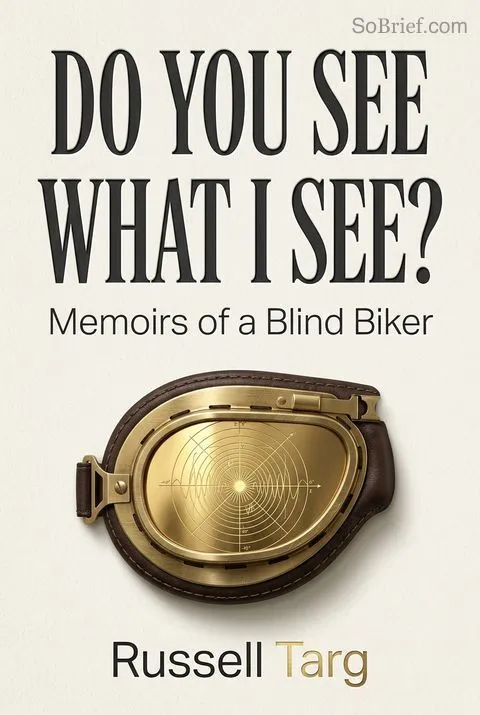
Do You See What I See? receives generally positive reviews, averaging 3.8 out of 5. Readers appreciate Targ's fascinating life story, humor, and candid insights, with many enjoying the casual, conversational style. Some critics note the memoir feels disjointed and non-chronological, making it occasionally hard to follow. Highlights include Targ's reflections on consciousness, remote viewing, and personal philosophy. Readers interested in ESP and paranormal subjects find it particularly compelling, while those seeking a structured narrative may find it scattered.
People Also Read

About the Author
Download PDF
Download EPUB
.epub digital book format is ideal for reading ebooks on phones, tablets, and e-readers.








































