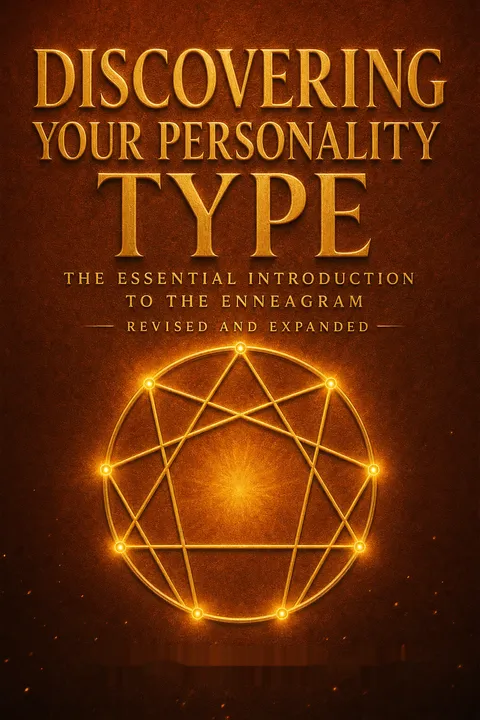

Key Takeaways
1. The Enneagram: A Multi-Dimensional Map for Self-Discovery
Understanding the Enneagram is like having a pair of special glasses that allows us to see beneath the surface of people with special clarity: we may in fact see them more clearly than they see themselves.
Profound insights. The Enneagram is a powerful, multi-dimensional system for understanding ourselves and others, offering insights that can profoundly change our lives. It reveals the underlying motivations, perceptions, and preoccupations that drive human behavior, making sense of what often seems ambiguous or chaotic. This knowledge, once gained, is irreversible, transforming how we perceive the world and our place within it.
Universal resonance. People from diverse cultures worldwide resonate with the Enneagram because it accurately reflects their experiences. It helps individuals and groups deepen their understanding of human nature, fostering greater acceptance and compassion. Its utility spans various domains, from personal growth and intimate relationships to therapy and spiritual development.
Practical utility. Beyond its psychological and spiritual depth, the Enneagram offers highly practical applications in the business world. Major organizations like Adobe, Boeing, and Toyota utilize it for:
- Increasing employee productivity and profitability
- Enhancing communication and conflict resolution
- Hiring and executive development
- Team building and marketing strategies
2. Your Basic Personality Type: An Inborn Core
We all emerge from childhood with one of the nine types dominating our personality, with inborn temperament and other prenatal factors being the main determinants of our type.
Dominant orientation. The Enneagram delineates nine basic personality types, each with its unique way of relating to others, perceiving the world, and approaching life. While we possess the potentials of all nine types, one type typically dominates our personality from early childhood, largely determined by inborn temperament and prenatal factors. This dominant type forms the foundation of our ego structure.
Value-neutral framework. The Enneagram uses numbers (one to nine) to designate each type, ensuring a value-neutral approach that encompasses the full spectrum of healthy to unhealthy traits without judgment. No type is inherently better or worse; each possesses unique assets and liabilities. The goal is not to imitate another type but to become the best version of your own.
Consistent identity. Your basic personality type remains constant throughout your life, even as you grow and develop new coping skills. While your behaviors and attitudes may fluctuate within the healthy, average, and unhealthy ranges of your type, your core motivational pattern—what you initially developed from—persists. This provides a stable reference point for self-understanding.
3. The Triads: Unveiling Core Emotional Responses
Most simply, these issues revolve around a powerful, largely unconscious emotional response to the loss of contact with the core of the self.
Three centers of intelligence. The Enneagram organizes the nine types into three Triads: Instinctive (Body), Feeling (Heart), and Thinking (Head). Each Triad is characterized by a dominant, largely unconscious emotional theme that shapes the personalities within it. This framework helps to understand the fundamental psychological issues each type grapples with.
Dominant emotional themes:
- Instinctive Triad (Types 8, 9, 1): Anger or rage.
- Eights: Act out anger directly.
- Nines: Deny or suppress anger.
- Ones: Control or repress anger.
- Feeling Triad (Types 2, 3, 4): Shame.
- Twos: Compensate by seeking approval.
- Threes: Deny shame by pursuing success.
- Fours: Avoid shame by emphasizing uniqueness.
- Thinking Triad (Types 5, 6, 7): Anxiety or dread.
- Fives: Cope by withdrawing and intellectualizing.
- Sixes: Most anxious, seek external reassurance.
- Sevens: Avoid anxiety by seeking constant stimulation.
Coping mechanisms. Each type within a Triad develops specific strategies to cope with its dominant emotion, either by "going with" or "going against" it. For example, Sixes can be phobic (succumbing to anxiety) or counterphobic (defying it). This dynamic applies to all types, revealing how they manage their core emotional challenges, often leading to unconscious patterns that limit their freedom.
4. Dynamic Nature: Wings, Stress, and Security Paths
No one is a pure personality type: everyone is a unique mixture of his or her basic type and usually one of the two types adjacent to it on the circumference of the Enneagram.
The influence of the wing. Your basic type is complemented by a "wing," one of the two adjacent types on the Enneagram, adding important, sometimes contradictory, elements to your personality. While some individuals may exhibit both wings, most have a dominant one that significantly shapes their overall expression. Understanding your wing provides a more nuanced portrait of your personality.
Directions of movement. The inner lines of the Enneagram reveal dynamic pathways that indicate how a type behaves under different conditions:
- Direction of Disintegration (Stress): When under stress, a type moves towards the unhealthy traits of another specific type (e.g., a One moves to an average Four). This shows how stress can cause a person to regress to less effective coping mechanisms.
- Direction of Integration (Security): When feeling secure and growing, a type moves towards the healthy traits of another specific type (e.g., a One moves to a healthy Seven). This path indicates potential for growth and positive transformation.
Holistic understanding. To gain a complete picture of an individual, it's essential to consider their basic type, dominant wing, and the types in their directions of stress and security. These four influences blend to form the total personality, providing a framework for understanding an individual's flexibility and dynamism. The ultimate goal is to integrate the healthy potentials of all nine types, becoming a balanced and fully functioning person.
5. The Levels of Development: Your Path to Health or Unhealth
The Levels account for differences between people of the same type as well as how people change both for better or worse.
Internal structure. Within each personality type, there are nine Levels of Development, forming a continuum of behaviors, attitudes, and motivations. This crucial concept explains why two people of the same type can appear vastly different, depending on whether they are functioning in the healthy, average, or unhealthy range. The Levels provide a "vertical" dimension to the Enneagram, reflecting the complexity and changing nature of personality.
Measuring presence. The Levels serve as a measure of our capacity to be present.
- Moving down the Levels: Indicates increased identification with the ego, leading to more defensive, reactive, and automatic patterns. This results in less freedom, less consciousness, and more compulsive, self-defeating actions.
- Moving up the Levels: Corresponds to greater presence and awareness in mind, heart, and body. This leads to less fixation on defensive structures, more openness, and the ability to respond effectively to life's challenges.
Guide to self-observation. Understanding the Levels offers a constant guide for self-observation, helping us chart our psychospiritual development. By objectively observing our personality in action, we create the possibility of "not doing" our personality, gaining distance from negative patterns, and allowing higher essential qualities like peace, creativity, and compassion to emerge.
6. The Three Instincts: Deepening Your Type's Expression
Combining our Enneagram type with our dominant instinct yields a much more specific portrait of the workings of our personality.
Biological hard-wiring. Beyond the nine types, the Enneagram incorporates three instinctual drives that profoundly influence our personalities: Self-Preservation, Sexual, and Social. While everyone possesses all three, one instinct typically becomes dominant, prioritizing certain needs and shaping how our core type expresses itself. These combinations create 27 unique "Instinctual Variants."
The three dominant instincts:
- Self-Preservation (Nesting): Preoccupied with physical safety, comfort, health, and resources. Tends to be grounded, practical, and introverted, seeking domestic tranquility and security.
- Sexual (Intimate): Driven by an intense need for intimacy, stimulation, and "chemistry" with others. Tends to be aggressive, competitive, and emotionally intense, seeking deep energetic union.
- Social (Adaptive): Concerned with personal connection, belonging, and impact on community. Tends to be warm, engaging, and socially responsible, adapting to group needs and seeking shared activities.
Flavoring the type. Each dominant instinct "flavors" the core Enneagram type, leading to distinct expressions. For example, a Self-Preservation One might focus their perfectionism on health and home, while a Sexual One might apply it to intimate relationships, and a Social One to social causes. This layer of understanding adds significant depth to personality analysis.
7. The RHETI: A Validated Tool for Type Identification
If properly taken, the Riso-Hudson Enneagram Type Indicator will accurately assess your basic personality type.
Reliable assessment. The Riso-Hudson Enneagram Type Indicator (RHETI, version 2.5) is a scientifically validated questionnaire designed to accurately assess one's dominant personality type. It uses 144 forced-choice paired statements, requiring individuals to select the statement that best describes them, ideally from the perspective of their past self ("as you have been most of your life").
Inherent limitations. Despite its reliability, the RHETI, like all self-reporting tests, has limitations:
- Self-knowledge: Requires a degree of self-awareness, which many people lack, leading to inaccurate self-perception or "blind spots."
- Type-specific difficulties: Types like Threes, Sixes, and Nines may struggle due to identity dependence on others, anxiety, or self-deception.
- External factors: Test-takers might skew answers to "look good," misunderstand vocabulary, or make scoring errors.
Complementary approach. The RHETI is best used as a starting point, narrowing possibilities from nine to two or three types. Confirmation should come from honest self-observation over time, reading detailed type descriptions, attending workshops, and discussing results with trusted friends or therapists. The test is a step towards scientific validation, but personal insight remains paramount.
8. Beyond Typing: The Enneagram's True Purpose is Liberation
The paradox of the Enneagram is this: we study the Enneagram because it is necessary to become conscious of how our personality operates so that we can become free of it.
A map, not a box. The Enneagram's ultimate purpose is not to label or confine individuals but to serve as a "treasure map" to self-realization and liberation. It reveals the "box you are already in (but don't know it) and the way out," highlighting the patterns of distortion and illusion that we mistakenly identify as ourselves.
The power of presence. The key to transformation lies in our capacity to be present—to be deeply abiding in the here and now. Our personality, however, constantly draws us away with habitual thoughts, emotional reactions, and fantasies. The Enneagram helps us awaken to these unconscious mechanisms, making them visible so we can gain distance from their control.
Shift from personality to essence. By bringing nonjudgmental awareness to our personality's reactivity, we discover a vast, unconflicted part of ourselves—our essence. This objective self-seeing allows something to "let go" within us, making transformation possible. We realize we are not our personality, and this truth enables us to live differently, accessing qualities like acceptance, love, courage, and joy.
9. The Nine Types in Brief: A Spectrum of Human Nature
All of the types have something necessary to contribute to a thriving, balanced world.
Diverse contributions. The Enneagram illustrates that there are nine distinct points of view, values, communication styles, and problem-solving approaches, all equally useful and valid. Each type brings unique strengths and perspectives essential for a balanced world.
Core traits of each type:
- One (The Reformer): Principled, purposeful, self-controlled, perfectionistic. Strives for integrity and improvement.
- Two (The Helper): Generous, demonstrative, people-pleasing, possessive. Seeks to be loved and needed.
- Three (The Achiever): Adaptable, excelling, driven, image-conscious. Focused on success and affirmation.
- Four (The Individualist): Expressive, dramatic, self-absorbed, temperamental. Seeks uniqueness and emotional depth.
- Five (The Investigator): Perceptive, innovative, secretive, isolated. Driven by understanding and knowledge.
- Six (The Loyalist): Engaging, responsible, anxious, suspicious. Seeks security and support.
- Seven (The Enthusiast): Spontaneous, versatile, distractible, scattered. Desires freedom and variety.
- Eight (The Challenger): Self-confident, decisive, willful, confrontational. Seeks independence and control.
- Nine (The Peacemaker): Receptive, reassuring, accommodating, complacent. Desires harmony and peace.
Beyond labels. While these brief descriptors highlight core tendencies, each type is far more complex, encompassing a wide range of healthy to unhealthy expressions. The Enneagram encourages us to see these types not as rigid labels but as dynamic patterns that can be transcended through self-awareness and conscious choice.
10. Real-World Applications: Enhancing Every Aspect of Life
Whenever we wish to understand any process more clearly (and why any course of action does or does not work), we can use the Enneagram as a guide.
Holistic understanding. The Enneagram provides a framework for understanding the mutually sustaining, self-balancing components of any complex process, making it applicable across a vast array of real-world scenarios. It clarifies why certain actions succeed or fail by revealing the underlying personality dynamics at play.
Key application areas:
- Business: Optimizing team dynamics, leadership, communication, and conflict resolution by understanding diverse motivations and styles. Each type contributes essential qualities (e.g., Eight for vision, Nine for mediation, One for quality).
- Relationships: Improving intimacy, communication, and conflict resolution by understanding personal values, expectations, fears, and coping mechanisms. It helps individuals treat others as they wish to be treated, fostering healthier connections.
- Parenting: Recognizing that personality type is inborn, parents can use the Enneagram to support a child's natural unfolding rather than imposing their own expectations. It fosters respect for the child's innate gifts and capacities.
- Cultural Studies: Analyzing national character and cultural differences to promote diplomacy and international understanding. It highlights shared humanity despite diverse expressions, fostering a belief in "oneness."
Continuous growth. The Enneagram is a tool for ongoing self-discovery and personal growth, helping to "make the unconscious conscious." It illuminates patterns of distortion and illusion, inviting us to transcend ego attachments and surrender to a deeper, more authentic self.
People Also Read









Download PDF
Download EPUB
.epub digital book format is ideal for reading ebooks on phones, tablets, and e-readers.








































