
Key Takeaways
1. The accidental birth of a comedy legend
"Well, you won’t be doing any more of those," he predicted, accurately as it turned out, "so why don’t we think of something new."
Organic assembly. The creation of Monty Python was not a calculated corporate masterplan, but an organic convergence of talented writers seeking creative freedom. Following the end of The Complete and Utter History of Britain, John Cleese approached Michael Palin to collaborate on something entirely fresh, leading to the formation of the iconic troupe.
Defining the style. The group quickly established a stream-of-consciousness style that threw out traditional sketch structures, punchlines, and logical transitions. By choosing John Philip Sousa's "The Liberty Bell" as their theme, they signaled a rejection of fashionable, calculated satire in favor of pure, unadulterated silliness.
Key milestones of early Python:
- The first day of filming at Ham House on July 8, 1969.
- The selection of the name "Monty Python's Flying Circus" over options like "Ow! It's Colin Plint."
- The immediate cult following established during late-night Sunday broadcasts on the BBC.
2. The chaos and chemistry of collaborative writing
We do tend to laugh at the same things – and working with John is not difficult – but there are still differences in our respective ways of thinking...
Creative friction. Writing for Monty Python was a masterclass in collaborative tension, where distinct writing partnerships (Palin/Jones and Cleese/Chapman) had to merge their styles. While Palin and Jones worked with disciplined, long-term focus, Cleese and Chapman brought a sharp, analytical, and sometimes erratic energy to the table.
The power of the group. Despite their differences, the group's chemistry was undeniable, with the collective filter ensuring that only the funniest, most absurd material survived. The writing sessions were characterized by intense bursts of laughter, occasional sulks, and spontaneous improvisations that elevated simple premises into legendary comedy.
Key dynamics of Python writing:
- The contrast between Palin/Jones's narrative-driven style and Cleese's logical, high-tension sketches.
- The role of Eric Idle as a solitary writer focusing on wordplay and songs.
- The visual anarchy injected by Terry Gilliam's surreal animations.
3. The battle for artistic control against corporate censorship
The first step as far as we’re concerned is to let as many people in America as possible know that we disassociate ourselves from the ABC sale...
Defending the vision. Throughout their run, the Pythons fought a continuous war against the conservative instincts of television executives who sought to sanitize their humor. From the BBC's attempts to cut "tasteless" sketches to the legal battle against ABC in the United States, the group fiercely defended their right to offend.
The battle with ABC. The climax of this struggle occurred in 1975, when the group sued ABC for broadcasting heavily censored, commercial-interrupted versions of their shows. Although the initial injunction was denied, the legal battle established a landmark precedent for artistic copyright and moral rights in America.
Key censorship battles:
- The BBC's demands to cut the "dirty vicar" and "masturbating" references.
- The deletion of the "undertakers" sketch from early US broadcasts.
- The US court battle that ultimately forced ABC to acknowledge the group's creative control.
4. Transitioning from television to feature-length films
The film was 20% too strong on authenticity and 20% too weak on jokes.
A leap of faith. Transitioning from the half-hour television format to feature-length films required the Pythons to reinvent their creative process. Monty Python and the Holy Grail was a grueling, low-budget shoot in the wet Scottish highlands, marked by technical failures, director friction, and financial anxiety.
The triumph of Brian. With Life of Brian, the group achieved a narrative and comedic masterpiece, funded by George Harrison after EMI pulled out due to "blasphemous" content. The film's success in the US, despite protests from religious groups, proved that Python's brand of intellectual absurdity had global, enduring appeal.
Key film milestones:
- The difficult co-direction of Holy Grail by Terry Jones and Terry Gilliam.
- George Harrison's last-minute financial rescue of Life of Brian through Euro Atlantic.
- The massive box-office success and subsequent religious backlash in America.
5. Balancing public fame with private grounding
I have no fixed timetable... This degree of unpredictability is beyond the sphere of most people – it is an awful thought how regular people’s lives contrive to be.
The cost of celebrity. As Monty Python transformed into a global phenomenon, Palin struggled to balance the demands of international stardom with his domestic life. The contrast between the glamorous, high-pressure promotional tours in New York and the quiet, grounded reality of his family in Gospel Oak was a constant source of tension.
Grounded by family. Palin's diaries reveal a man deeply rooted in his family, finding solace in his children's milestones and the quiet beauty of the English countryside. This grounding kept him from being consumed by the hollow, self-destructive excesses of the 1970s celebrity culture that claimed friends like Keith Moon.
Personal anchors for Palin:
- The birth of his children, Thomas, William, and Rachel.
- His regular visits to his aging, ailing father in Suffolk.
- His escape to the quiet, rural beauty of Abbotsley and France.
6. The evolution of individual creative identities
I have long since got over feelings of reproach or bitterness towards Eric... now perhaps I can be selfish as well.
Seeking independence. As the 1970s progressed, the individual Pythons increasingly sought creative outlets outside the collective identity of the group. John Cleese found massive success with Fawlty Towers, while Palin and Terry Jones created the critically acclaimed Ripping Yarns series for the BBC.
The freedom of solo work. For Palin, working on Ripping Yarns and acting in Terry Gilliam's Jabberwocky provided a liberating sense of artistic independence. These projects allowed him to escape the democratic compromises of Python and develop his own distinct voice as a writer and character actor.
Key solo achievements:
- The creation of Ripping Yarns, showcasing Palin's love for Edwardian adventure parodies.
- Palin's starring role as Dennis Cooper in Terry Gilliam's Jabberwocky.
- John Cleese's masterpiece Fawlty Towers, co-written with Connie Booth.
7. The inevitable drifting apart of a creative collective
The basic factor in the future life of Python is that John has had enough of Python TV shows – he doesn’t enjoy writing or performing them...
A natural dissolution. The eventual drifting apart of Monty Python was not marked by a dramatic, explosive feud, but by a gradual divergence of personal and financial goals. John Cleese's early departure from the television series signaled the beginning of the end, as members realized they could no longer sustain the collective energy.
The legacy remains. By 1979, the group had come full circle, achieving immense wealth and critical respect, yet realizing that their creative peak was behind them. The decision to write Life of Brian was a final, triumphant gathering of the team, leaving behind a legacy that permanently altered the landscape of modern comedy.
Factors in the group's evolution:
- John Cleese's refusal to do further television series due to creative exhaustion.
- Eric Idle's focus on American television and solo projects like the Rutles.
- The transition of Terry Gilliam and Terry Jones into full-time film directors.
Review Summary
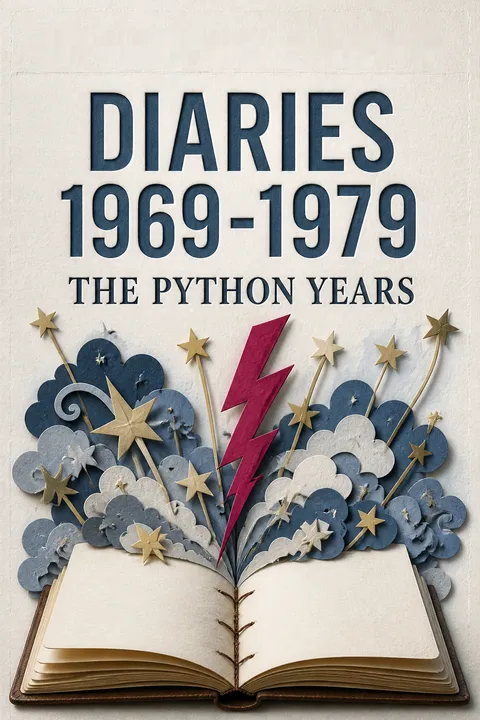
Diaries 1969-1979 by Michael Palin offers an intimate look into the Monty Python years, chronicling the group's rise to fame, creative process, and personal relationships. Readers appreciate Palin's warmth, humor, and candid observations about his family, colleagues, and the cultural landscape of 1970s Britain. While some find the diary format occasionally mundane, most fans consider it a valuable insight into Python's history and Palin's character. The book's length and detail may challenge casual readers, but devoted Python enthusiasts find it rewarding and enlightening.

Palin Diaries Series
Download PDF
Download EPUB
.epub digital book format is ideal for reading ebooks on phones, tablets, and e-readers.








































