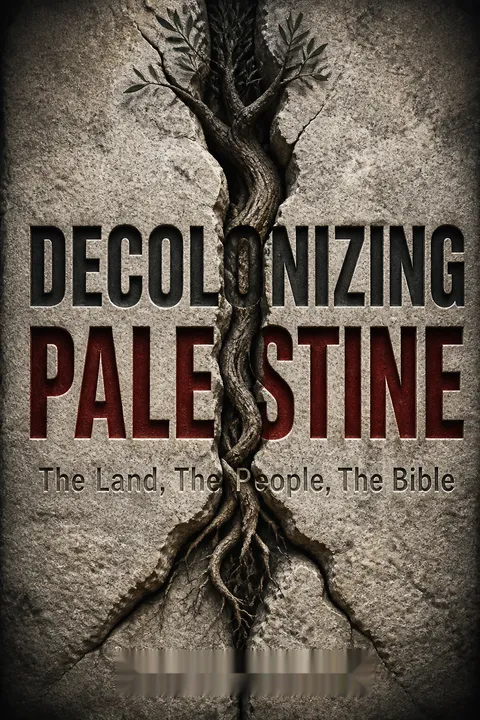

Key Takeaways
1. Palestine as a Settler Colonial Project, Not a Conflict
The framework of “conflict” is misleading to say the least.
Reframing the narrative. The prevailing paradigm of "conflict" or even "occupation" fails to accurately describe the situation in Palestine. These terms obscure the true nature of the ongoing reality, which is a deliberate and continuous settler colonial project. This mischaracterization has led to flawed international attempts at resolution, resulting in a deteriorating situation.
Defining settler colonialism. Settler colonialism is a distinct form of colonization characterized by the permanent settlement of colonists in an occupied land, aiming to establish state sovereignty and juridical control while ultimately eliminating the native people. Key features include:
- Casting settlers as natives and indigenous people as extraneous.
- Describing indigenous land as terra nullius (empty or barren).
- Depicting natives with racist constructs (savage, violent) and settlers as civilized pioneers.
- Creating a police state with extraordinary power over natives to defend settled property.
Global reach. While initially applied to contexts like Australia, New Zealand, and North America, the concept of settler colonialism is increasingly recognized as applicable to the State of Israel. This framework highlights that colonization is an ongoing reality, not a past event, and is crucial for understanding the historical development and current dynamics in Palestine.
2. The Bible as a Weapon for Settler Colonialism
The Bible that is a part of our heritage is being turned against us to enshrine Jewish supremacy and promote the settler colonization of our land.
Weaponizing scripture. For Palestinian Christians, the Bible, a part of their heritage, is being weaponized to justify Israeli settler colonialism. This involves using biblical passages and terms like "divine rights," "land promise," "Judea," and "chosen people" to bestow theological and political legitimacy upon the colonization of Palestine. This practice strips indigenous Palestinians of their land, livelihood, and roots.
Historical precedent. Christian theology has historically played a role in almost all settler colonial projects, from North America to South Africa and Australia. George Tinker, a Native American theologian, noted how Europe's colonial conquest of the Americas was fought on two fronts: military/political and religious, with missionaries serving as a crucial strategic phalanx. Palestine is not an exception to this pattern.
Modern application. Today, the Israeli government, the Zionist movement, and Christian Zionists actively use the Bible to colonize Palestine and gradually displace its indigenous people. This theological software provides ideological cover for the oppression, even when international law decisively condemns Israeli settlements as illegal and a flagrant violation of human rights.
3. Christian Zionism: A Lobby for Settler Colonialism
Christian Zionism should be defined as a Christian lobby that supports the Jewish settler colonialism of Palestinian land by using biblical/theological constructs within a metanarrative while taking glocal considerations into account.
Redefining Christian Zionism. The author argues against a narrow definition of Christian Zionism that focuses solely on dispensationalists or literalists. Instead, it should be understood as a Christian lobby supporting Jewish settler colonialism in Palestine, utilizing biblical/theological constructs within a broader narrative, and considering local and global factors. This definition emphasizes actions over beliefs.
Multifaceted manifestations. Christian Zionism manifests in various forms, from evangelical circles to mainline churches and liberal theology, and has spread globally. Its adherents share an emotional attachment to the Zionist settler colonial project, often driven by a metanarrative that transcends pure political lobbying, such as:
- British imperial interests and solving the "Jewish question" in Europe.
- Post-Holocaust guilt and the desire to combat anti-Semitism.
- American nationalism and exceptionalism, viewing America as a "New Israel."
Dangerous implications. This phenomenon is dangerous because it weaponizes the Bible for an imperial Western project, aiming to eliminate native people, confiscate land, and exploit resources. By disregarding international law and human rights in favor of "biblical rights," Christian Zionists become Israel's "last allies" in defending and promoting its settler colonial enterprise.
4. The Historical Stages of Israeli Settler Colonialism
The situation prevailing in Palestine since the Balfour Declaration is one of settler colonialism.
Seeding the seeds (19th century - 1917). British evangelical Christians, like Lord Shaftesbury and Charles Henry Churchill, actively promoted the "restoration" of Jews to Palestine, aligning with British imperial interests and a desire to address the "Jewish question" in Europe. Theodor Herzl's Zionist vision, articulated in Der Juden Staat, adopted this plan, viewing a Jewish nation-state as an outpost of Western civilization. The Balfour Declaration in 1917, an imperial promise, paved the way for the British Mandate, which facilitated European Jewish immigration and settlement, portraying native Palestinians as "non-Jewish communities" without national rights.
Taking the land (1948) and expanding boundaries (1967). The 1948 Arab-Israeli War led to the Nakba, displacing over 750,000 Palestinians and destroying 452 villages, with Israel occupying 77% of historic Palestine. This ethnic cleansing and land confiscation created terra nullius conditions. The 1967 Six-Day War further expanded Israeli control over the West Bank, Gaza, Sinai, and Golan Heights, boosting Jewish religious nationalism and triggering a settler movement to "Judaize" these territories. Post-Holocaust theology emerged, supporting the "territorial dimension of Judaism" and rendering Palestinians invisible.
Negotiating compromise (1987-early 2000s) and sealing the project (Trump era). The First Intifada led to the Madrid Conference and Oslo Accords, which, while offering interim self-rule, allowed Israel to dramatically expand settlements from 110,000 to over 800,000 settlers. Treaties were violated, and the Palestinian government became a subcontractor for the settler state. The Trump administration further solidified the settler colonial project by recognizing Jerusalem as Israel's capital, moving the US Embassy, and declaring settlements legal, effectively legalizing de facto control. The "Peace for Prosperity" plan and Abraham Accords aimed to bypass and isolate Palestinians, leading to a de facto apartheid system.
5. "Temple Mount" and "Land of Israel" as Colonial Constructs
Naming is a means to exercise power, to claim dominance over land and people, and it constitutes an important aspect of settler colonial projects.
The power of naming. The author highlights how the use of terms like "Temple Mount" for the Haram al-Sharif (Al-Aqsa Mosque and Dome of the Rock) by Western Christians, even liberal theologians, is not innocent. This terminology plays directly into the agenda of radical Zionist ideology and settler colonialism, which seeks to colonize Muslim shrines and replace them with a Jewish temple. This linguistic colonization ignores two millennia of Muslim presence and the current reality of major Muslim holy sites.
Erasing indigenous identity. Similarly, the modern State of Israel's adoption of the name "Israel" in 1948 was a deliberate act to instrumentalize an ancient biblical story for an exclusive national identity, while simultaneously erasing the name "Palestine" and marginalizing its indigenous people. This practice extends to replacing Arabic place names with Jewish and biblical ones, aiming to erase the indigenous history and identity of the land.
Distorting history. The biblical story, when taken at face value and detached from historical context, leads to a tunnel vision where Christians subconsciously side with Israel, viewing Palestinians as intruders. This distortion of history and instrumentalization of biblical narratives by Zionism and Christian Zionism has dire consequences, portraying Israeli settlers as legal heirs and native Palestinians as strangers.
6. Land Theology's Blind Spot: Ignoring Settler Colonialism
Ignoring the reception history of land ideology in modern settler colonial history while writing about the land and the Bible is irresponsible at best.
Theological naiveté. The author critiques prominent Western theologians, such as Walter Brueggemann, for their initial "naiveté" in discussing "the Land" without acknowledging its reception history in settler colonial contexts. Brueggemann's early work, influenced by post-Holocaust theology, emphasized the land as a "gift" to "God's chosen people," inadvertently providing theological cover for Israeli land claims and rendering Palestinians as "strangers" in their own homeland.
A contrasting perspective. In contrast, Norman Habel, an Australian Old Testament scholar, learned to read land theology from the perspective of Aboriginal elders. He distinguished between Abraham's peaceful coexistence as a guest in Canaan and Joshua's militant conquest. Habel recognized how "promised land ideology" was used by settlers in Australia, America, and South Africa to dispossess indigenous inhabitants and justify colonial actions.
The cost of silence. The author argues that Christian theologians have, consciously or subconsciously, aided the ongoing colonization of Palestinian land and people. Their preoccupation with the Bible, fear of being labeled anti-Semitic, and guilt over the Holocaust have obscured the reality of Palestine's colonization. The promised land, in this context, becomes the confiscated land, and the theology of conquest remains largely unquestioned.
7. "Chosen People" as an Existential Threat to Palestinians
Palestinian Christians feel that their existence is threatened when the Hebrew Bible is interpreted as the history of Jews as people and when the notion of election is weaponized politically to give modern Israelis a carte blanche for their discriminatory policies.
Theological weaponization. The concept of "chosenness" or "election" poses an existential threat to Palestinians, particularly Christians. When interpreted as a divine mandate for modern Israelis, it legitimizes discriminatory policies and land occupation, blurring military injustice with biblical concepts. This creates a political bias towards Israel, viewing it as a theopolitical entity with unique divine destiny, while Palestinians are often equated with biblical enemies or lesser descendants.
Exclusionary narratives. Traditional Christian theology, which once propagated the rejection of Jews, shifted post-Holocaust to include Jews, often unintentionally replacing indigenous Palestinians with European Jews in their theological framework. This "racial upgrading" of Jews in Western theology, coupled with Islamophobia, further marginalizes Palestinians, who are seen as "nonelect" or "cursed Canaanites."
Palestinian theological responses. Palestinian theologians like Naim Ateek, Paul Nadim Tarazi, and Patriarch Michel Sabbah have grappled with this issue. Ateek emphasizes Jesus Christ as the hermeneutical key, distinguishing prophetic justice from nationalistic tribalism. Tarazi views the Bible as a closed "story of God," not human history, rejecting extrapolations that justify modern political claims. Sabbah's pastoral letter stresses "progressive revelation," where land is spiritualized in the New Testament, and religious rights do not equate to political claims, urging for justice and reconciliation.
8. Decolonial Readings: Reclaiming Biblical Narratives for Liberation
Jesus was telling the Palestinian Jews that the Romans who had built those colonies would not be there forever, and Palestine would be inherited by the meek.
Reinterpreting "Naboth's Vineyard." The story of King Ahab coveting Naboth's vineyard (1 Kings 21) serves as a powerful analogy for the daily confiscation of Palestinian land by Israeli settlers. Naboth's refusal to surrender his ancestral inheritance, a divine command for him, mirrors the Palestinian struggle against land theft. This narrative highlights the violation of both divine and international law, urging theologians to raise a prophetic voice against land colonization.
"Blessed are the meek." Jesus's saying, "Blessed are the meek for they will inherit the land" (Matthew 5:5), is reinterpreted through a decolonial lens. The author argues that "earth" was a mistranslation of "land" (Palestine). From a longue durée perspective, Jesus understood that empires, like the Romans, come and go, but the meek—the powerless native people—remain and ultimately inherit the land. This offers a direct critique of settler colonial practices and a message of hope and resilience to the oppressed.
Geopolitical context of election. The notion of election, often developed during periods of imperial occupation and exile (e.g., Assyrian, Babylonian), was originally a statement of faith and a promise to the weak and powerless. It aimed to restore hope and encourage resilience against overwhelming imperial power. However, when applied to a powerful entity like the State of Israel today, it becomes an imperial tool for oppression, contrary to its original Sitz im Leben.
9. Western Theological Complicity and the "Ecumenical Deal"
The interfaith ecumenical deal was also part of a larger political deal in the American political scene.
The "ecumenical deal." Marc Ellis coined this term to describe the post-Holocaust relationship between Jewish synagogues and Christian churches in the West. Christians supported Israel as repentance for anti-Semitism, leading to a "deal": Christian silence on Israeli abuses in exchange for not being accused of anti-Semitism. This deal extended to the political sphere, where criticism of Israel could be career-ending.
Judaization of Christian theology. This dynamic led to a "Judaization" of Christian theological writings, fostering a pro-Israeli, often anti-Palestinian, stance. Western views of Ashkenazi Israelis as "kin" and part of their "White tribe" further cemented this commitment to settler colonial imperialism. Hollywood's vilification of Arabs and Palestinians also contributed to this narrative.
Fear and power. Despite lessons from figures like Dietrich Bonhoeffer, churches often side with the powerful. The strong Israel lobby actively rewards supporters and punishes critics, making it costly to advocate for the oppressed. This fear perpetuates a historical pattern of churches aligning with power structures rather than challenging injustice.
10. The Illusion of Peacebuilding and the Reality of Apartheid
Apartheid and settler colonialism are two sides of the same coin.
Failed solutions. Many churches and politicians continue to pay lip service to a two-state solution, even as Israeli settler colonialism makes it increasingly unviable. This paradigm, while seemingly safe, avoids confronting the reality on the ground. The international community's reluctance to challenge Israel's settler colonial approach leaves the entire country in a state of apartheid.
Defining apartheid. Credible human rights organizations, including Jewish ones like B'Tselem, Human Rights Watch, and Amnesty International, now declare that apartheid exists in historic Palestine. Apartheid is defined by:
- A system of segregation based on race, religion, or ethnicity.
- Intent to maintain domination by one group over another.
- Use of legislative measures to enforce segregation.
- Inhumane practices to impose and enforce segregation.
These elements are also inherent in settler colonialism, making the two concepts inextricably linked.
Colonial peacebuilding. Humanitarian aid and peacebuilding initiatives, often conceptualized with a colonial mindset, inadvertently serve to maintain the status quo. "Peacebuilding" programs, framed as preparing Palestinians for self-governance, often function as a modern mission civilisatrice, ensuring that any emerging Palestinian entity serves Israeli interests. A significant portion of donor funds goes to building Palestinian security forces, which primarily serve to pacify Palestinian resistance and provide security for Israel's settler colonies, effectively silencing opposition to the settler colonial project.
11. A Call for Decolonization and Resilience
Palestine must be understood as one of the last anti-colonial struggles in an era regarded as post-colonial.
Western hypocrisy. The stark contrast between Western support for Ukraine against Russian invasion and the portrayal of the Israeli occupation as "complicated" highlights a profound hypocrisy. This double standard reveals a failure to confront the ramifications of Western colonial heritage and a continued willingness to provide Israel with military hardware and theological software to sustain its settler colonial project.
Cracks in the wall. Despite the immense power of the Israeli state and its lobby, cracks are appearing. Palestinians, now equal in number to Israeli Jews in historic Palestine, demonstrate unity, resilience (sumud), and determination to resist. A dynamic young generation is actively defending their cause. Jewish diaspora groups, like Jewish Voices for Peace, are also recognizing the harm of the settler colonial project to their Jewish identity and are expressing solidarity with Palestinians.
The path forward. The author asserts that there is no future for this settler colonial project, and all walls will eventually fall. The book is an urgent call to decolonize Christian theology, to understand Israel through the paradigm of settler colonialism, and to contribute to the struggle for liberation, human dignity, and justice. This requires listening to indigenous voices and rejecting theological justifications for oppression.
People Also Read


Download PDF
Download EPUB
.epub digital book format is ideal for reading ebooks on phones, tablets, and e-readers.








































