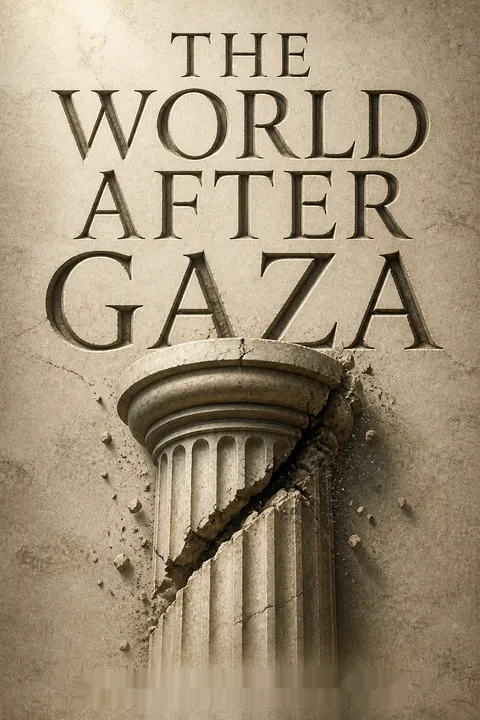

Key Takeaways
1. Gaza: A Catastrophic Rupture in Global Morality
Nothing has left us with such an intolerable weight of grief, perplexity and bad conscience.
Moral breakdown. The annihilation of Gaza, provisioned by Western democracies, has exposed a profound moral breakdown, shattering the post-1945 illusion of a common humanity underpinned by human rights and legal norms. Millions worldwide became involuntary witnesses to an act of political evil, experiencing a psychic ordeal of helplessness and complicity. The livestreamed destruction, often denied or obfuscated by Western media and leaders, poisoned daily life with the awareness of mass murder.
Unprecedented scale. The scale and nature of the devastation in Gaza, proportionally greater than Allied bombing of Germany in WWII, reveal signs of ultimate atrocity. This includes the frank resolves from Israeli leaders to eradicate Gaza, the identification of victims with irreconcilable evil, and the sinisterly impersonal modes of killing, often reliant on AI algorithms. The world's powerful nations, particularly the US and UK, actively undermined international legal bodies and suppressed critical discourse.
Generational impact. This catastrophe has pushed a whole generation of young people in the West into moral adulthood, forcing them to reckon with savagery aided by the world's richest democracies. Their elders' actions and inactions have created a deep inner wound and trauma that will persist for years, challenging fundamental assumptions about human nature and the security of international law and morality.
2. The Shoah's Memory: A Tool for Israeli Identity and Western Absolution
Israel today is becoming Yad Vashem with an air force.
Memory's manipulation. The collective memory of the Shoah, far from being an organic remembrance, was deliberately constructed and disbursed to serve specific political ends in both Israel and the West. Initially, the Shoah was not a central preoccupation in Israel, with early leaders like Ben-Gurion even expressing contempt for survivors. This changed dramatically with the Eichmann trial in 1961, which transformed the murder of six million Jews into a new basis for Israel's identity and a justification for its actions.
Nationalist narrative. The trial, stage-managed by Ben-Gurion, aimed to present Israel as the sole defender of all Jews, conflating Arabs with Nazis and portraying Israel as perpetually threatened by another Shoah. This narrative, amplified by leaders like Menachem Begin, became the sacred core of Israeli nationalism, rendering political negotiation meaningless and justifying violence and dispossession as self-defense. It also served to bind diverse Jewish populations within Israel, particularly Mizrahim, by offering them a status above dispossessed Arabs.
Western complicity. In the West, particularly in Europe, "Holocaust recognition" became an "entry ticket" to the European Union, allowing countries with histories of Nazi collaboration to publicly commemorate the Shoah while suppressing their own awkward pasts. This selective remembrance, often equating antisemitism with criticism of Israel, served to absolve Western nations of their historical failures and complicity in the Shoah, while simultaneously bolstering their geopolitical alliances.
3. Germany's Strategic Philosemitism: Whitewashing a Nazi Past
Germany can only return to itself when we communicate with one another.
Convoluted contrition. Germany's journey from 1945 to 2023 has been convoluted, with its public remembrance of the Shoah serving as a foundation for its collective identity. However, this contrition was often belated and strategic, with many former Nazis accommodated in post-war West Germany's civil service, judiciary, and academia. The opportunity for open public conversation about guilt, as urged by Karl Jaspers, was quickly lost amidst Cold War exigencies.
Philosemitism as strategy. West Germany's munificence towards Israel, including arms deals and financial aid, was driven by a desire to restore its international standing and secure a significant role in Western alliances. This "obtrusive philosemitism," as Jean Améry called it, became a political instrument to project a moral stance, justify foreign policy options, and deflect from persistent domestic antisemitism, which was often projected onto Muslim immigrants.
Dangerous self-deception. Today, Germany's "philosemitic fury" has turned against even Jewish critics of Israel, revealing a deep-rooted self-deception. By claiming to embody the Shoah's most hectic memory culture, Germany has avoided reckoning with its broader colonial crimes and the resurgence of far-right furies at home. This perverse dialectic makes Germany complicit in murderous ethnonationalism, demonstrating that history, if not genuinely confronted, can become a "clogged toilet" where "the shit keeps rising."
4. Americanizing the Holocaust: Political Mobilization and Distorted Memory
The Americanization of the Holocaust.
Delayed recognition. For many years after 1945, the Shoah was not widely or publicly remembered in the United States, with American immigration laws actively preventing Jewish refugees from entering the country before and during the war. Public skepticism about Nazi atrocities was pervasive, and Jewish organizations initially distanced themselves from Israel's actions and the Eichmann trial, fearing damage to their image.
Geopolitical shift. The Six Day War in 1967 and the Yom Kippur War in 1973 transformed American consciousness, with Israel's perceived vulnerability leading to a narrative of imminent Shoah and increased US military aid. This "Americanization of the Holocaust," through media like the miniseries Holocaust and the US Holocaust Memorial Museum, integrated the Shoah into American memory, serving to:
- Generate sympathy and support for Israel.
- Assuage American guilt over wartime inaction.
- Provide a basis for Jewish American collective identity.
Distorted identity. This process led to a "profound Israelization" of American Jewish identity, where commitment to Israel became paramount, often without deep knowledge of the country's complexities. This Americanized Zionism allowed Jews to embrace their Americanness while maintaining a strong Jewish identity, but it also fostered a "sickly taint of genocide" in contemporary Jewish thinking, precluding political bargaining and concessions.
5. Israel's Transformation: From Persecuted to Perpetrator
Israel is rapidly falling into total isolation…We must choke off the impulses towards emotional solidarity with Israel to reason coldly on the mistakes of Israel’s current ruling class.
Moral corrosion. Jean Améry, a Shoah survivor, was profoundly disturbed by reports of torture in Israeli prisons, recognizing the "incurable offense" spreading like an infection. He, along with other survivors like Primo Levi and Marek Edelman, saw Israel's lurch to the right, particularly under Menachem Begin, as a betrayal of Jewish values and a dangerous path towards moral corruption. Begin's rise, and the subsequent entrenchment of Revisionist Zionism, marked a shift from a left-leaning, egalitarian vision to an expansionist, religiously-infused ethnonationalism.
Weaponizing the Shoah. Israeli leaders, particularly after 1967, began to routinely invoke the Holocaust and the Bible to justify expansionism and disproportionate violence against Palestinians. This rhetoric, coupled with the demonization of Arabs as "new Nazis," served to liberate ordinary Israelis from moral restrictions, fostering a pitiless national ethos that humankind is divided into strong and weak, and victims must pre-emptively crush perceived enemies.
Global isolation. This transformation has led to Israel's increasing isolation and condemnation worldwide, with its actions in Gaza revealing a "brazen moral and legal arson." The country's reliance on unconditional Western support, particularly from the US, has created a "political hothouse" that cuts it off from global realities, leading to a "growing relish for violence and destruction for their own sake" that alarms even its traditional supporters.
6. Decolonization: A Global Challenge to Western Supremacy
The time ‘when the white man, by reason of the color of his skin, can lord it over colored people’ was finally drawing to a close.
A delayed revolution. Decolonization, a much-delayed revolution, was experienced by hundreds of millions across the world as an extraordinarily stirring event, marking the emergence of new nation states and the abolition of racially discriminatory policies. This process, from the late 1940s to the 1990s, fundamentally challenged the notion of white supremacy and offered both racial equality and historical agency to non-white peoples globally.
Bandung's spirit. The Asian-African Conference in Bandung in 1955 symbolized a powerful emotional unity among newly independent nations, united by their shared experience of Western racism and a collective desire to remake the world. Opposition to Zionism became a major point of anti-colonial allegiance, as seen in the 1975 UN General Assembly resolution equating Zionism with racism, reflecting Israel's perceived role as a Western-style colonial power.
Enduring legacy. Despite the fading of the "spirit of Bandung" and the rise of autocrats in post-colonial nations, decolonization remains a captivating narrative about the past, present, and future for most people. It continues to fuel demands for changes in the self-image of former empires and an overhaul of public cultures, gaining emotional appeal as white nationalists in the West attempt to re-establish racial hierarchies.
7. The Clash of Suffering Narratives: Shoah, Slavery, and Colonialism
Too many other races and peoples regard themselves, suddenly emerging in the light of history (something written by the West alone).
Competing claims. The pre-eminence of the Shoah as a universal symbol of human evil is fading, challenged by other narratives of suffering from slavery, colonialism, and other genocides. As Alfred Kazin observed, the "sheer arithmetic of multi-culturalism" means that many more peoples are demanding recognition for their own "holocausts not much regarded in history," threatening to marginalize the Jewish experience from its central stage.
Structural racism. African American thinkers, from W. E. B. Du Bois to Langston Hughes, long recognized Nazism as a "twin" of Western imperialism and racism, seeing their struggles as part of a global fight against white supremacy. This perspective, often suppressed during the Cold War, re-emerged with the Civil Rights movement and anti-colonial struggles, leading to a stark antagonism between Jewish American visions of Israel as redemption and the increasingly linked struggles for decolonization and civil rights.
Multidirectional memory. The challenge lies in linking these different histories of suffering, moving beyond zero-sum contests for recognition. Figures like Ahmed Kathrada, a Muslim victim of apartheid, found common ground with Anne Frank, demonstrating an "indivisible suffering" that transcends national or ethnic-racial boundaries. This "multidirectional memory" brings previously separated histories together, uncovering a broader vista of human fraternity and solidarity.
8. Identity Politics and Atrocity Hucksterism: Weaponizing Victimhood
Hereditary victimhood…was likely to make people develop ‘a vested interest in the hostility of the world, in fomenting the hostility of the world and keeping the world hostile’.
The victimhood industry. The global contest between narratives of suffering has led to "atrocity hucksterism," where collective memories are weaponized for material power and intellectual privilege. This involves "appropriating the Holocaust as my own, draping myself with the torture that others underwent," as Alain Finkielkraut confessed, leading to a "deluxe moral narcissism" and a "Manichean tendency" to oversimplify history into "us and them."
Authoritarian co-option. Authoritarian leaders, from Narendra Modi to Vladimir Putin, brazenly use narratives of hereditary victimhood to justify exclusionary politics and forge hyper-masculine national identities. Modi, for instance, leverages a lachrymose version of Hindu history to degrade Muslim minorities, while Putin denounces the West's "racist" and "neocolonial" past to position Russia as an anti-colonial leader.
Worldlessness. This identitarian politics fosters "worldlessness," where identity categories narrow, excluding vast areas of individual and collective experience and leading to political deadlock. It creates a "vested interest in the hostility of the world," making it harder to build bridges across antagonistic memory cultures and acknowledge an indivisible suffering necessary for a pluralist future.
9. The Enduring Power of Racial Prejudice in Modernity
The European…is to men of other races what man himself is to animals. He makes them serve his needs, and when he cannot bend them to his will, he destroys them.
Systemic violence. Racial prejudice, inseparable from nationalism and capitalism, remains a potent and mercurial political force of modernity, flourishing on all sides of the old color line. Western powers, from the early 20th century, upheld a global racial order where extermination and terrorization of Asians and Africans were normalized, a history that scholarship now links to the origins of Nazism.
Homecoming of white supremacism. The steady erosion of inherited white privileges and the assertiveness of previously marginal peoples have panicked many in the West, leading to crude exertions of arbitrary power. This panic, fueled by fears of immigration and "white genocide," manifests in militarized borders, mass deportations, and the open incitement of far-right nationalism, making visible the "homecoming of white supremacism" at the heart of the modern West.
Globalized prejudice. The massacres in Gaza, perceived by many white majoritarians as a violation of white power, have triggered a "rage bordering on the genocidal," echoing historical patterns of racialized violence. This brazen moral and legal arson, rather than noble warrior culture, recommends Israel to many supporters today, demonstrating a strong identification with an ethnonational state that unleashes lethal force without constraints.
10. Hope in a Dark Time: Reconciling Histories for a Shared Future
Is it possible to imagine moral and political action in the present that is liberated from Manichaean historical narratives?
Incurable offense. Gaza has deepened the "incurable offense" of modern history, exposing the death instinct at work and the moral abyss we confront. The shock of renewed exposure to peculiarly modern evil, conceived and endorsed by supposedly civilized societies, has shattered the belief in social progress and the intrinsic goodness of human nature.
Youthful reckoning. Young people, particularly, have been pushed into a brutal education in history's barbarities, witnessing the collusion and willful indifference of their elders. Their protests, though sometimes vehement, represent a rare refusal to become collaborators in violence and injustice, offering a glimmer of hope amidst the pervasive moral breakdown.
Indivisible suffering. The urgent ethical task is to link different histories of suffering, exploring a collectively calamitous past to orient us towards an inescapably pluralist future. This requires moving beyond Manichaean narratives and zero-sum contests for recognition, acknowledging an "indivisible suffering" and seeking solidarity beyond tribal affiliations to address common challenges like climate change.
Review Summary
The World After Gaza receives mixed reviews (4.08/5). Positive reviews praise Mishra's rigorous examination of how Holocaust memory has been politicized to shield Israel from criticism, connecting Western philosemitism, colonialism, and ethnonationalism. Critics appreciate his global perspective and moral urgency. However, many find the title misleading—the book focuses more on Holocaust historiography than Gaza itself. Common complaints include dense academic writing, excessive name-dropping, disjointed structure, and insufficient coverage of Palestinian history. Some readers wanted more direct engagement with Gaza's current crisis, while others found theework essential for understanding Western complicity in genocide.
People Also Read


Download PDF
Download EPUB
.epub digital book format is ideal for reading ebooks on phones, tablets, and e-readers.








































