
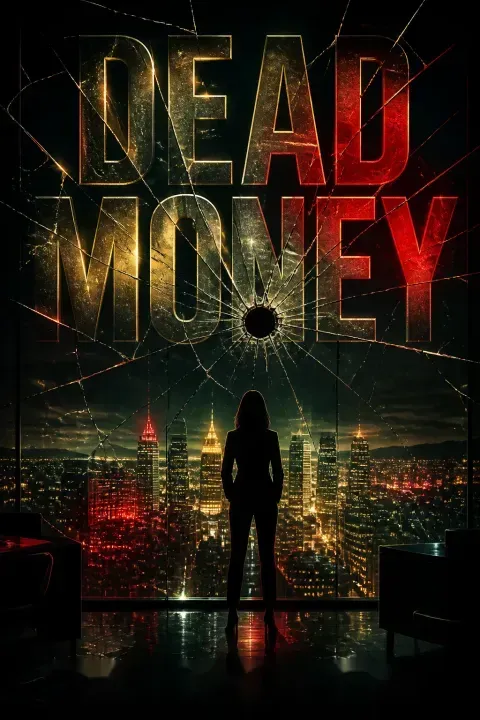


Plot Summary
Prologue
Tony wheels his custodial station through Journy's deserted headquarters at 2:36 AM, surrounded by silent Apple monitors and dormant espresso machines. His instructions are explicit: clean up food, push in chairs, touch nothing else. At 3:30 AM he badges into a private elevator ascending to CEO Trevor Canon5's glass-walled penthouse office.
Light glows under the door. Protocol demands he leave immediately, but a narrow trail of blood seeps across the foyer's hardwood floor. Knowing the elevator logged his badge, Tony cannot pretend ignorance. He pushes open the door and finds Canon5 sprawled on his back, a single bullet hole centered between his bright blue, lifeless eyes.
The prologue filters a tech industry murder through the eyes of an invisible worker, one who cleans the kombucha taps but never touches a keyboard. Tony's dilemma encapsulates the book's central tension: systems designed for control also create accountability for those caught within them. The abandoned ball pit and unplugged arcade games render Journy's utopian branding as a mausoleum, prefiguring the rot beneath the company's shiny surface. Canon's 'icy' blue eyes, described with almost supernatural intensity, establish his larger-than-life presence even in death and hint at the coldness that made him enemies.
Five Billion in Limbo
Mackenzie Clyde,1 a ruthlessly efficient fixer for Hammersmith Venture,3 strong-arms a fintech founder14 into signing a settlement, then is summoned by her boss. Roger Hammersmith3 discloses the catastrophe behind Canon5's murder: days before dying, Canon5 amended his will with a dead money provision.
All his assets, including $20 billion in Journy shares, remain frozen until someone is tried for the killing. HV's record $5.2 billion investment is trapped, and nobody controls the company.
Hammersmith,3 oscillating between grief for his protégé and fury at the financial paralysis, assigns Mackenzie1 to embed with the FBI investigation as HV's official advisor. Her true directive: report every discovery exclusively to him. She accepts, pulse racing. The opportunity she has waited for her entire life has arrived.
Hammersmith's investment is toxic not merely because it's frozen, but because its very existence ties him to forces he cannot control. His dual posture (mourning mentor and desperate financier) signals the book's central split: surface grief versus subsurface greed. Mackenzie's acceptance is not the obedience of a dutiful employee but the predatory patience of someone who has spent years positioning herself for precisely this moment. The dead money clause functions as a narrative trap: it baits everyone (cops, feds, execs, criminals) into revealing their true motives.
Only the Executive Floor
At Journy's sunlit atrium, Mackenzie1 meets Special Agent Jameson Danner,4 an officious young FBI agent who dismisses her as a VC lawyer out of her depth. Hector Ibarra,15 the chief people officer, reveals the building's anonymous badge system: entries are logged but not linked to individuals.
Someone badged in through the back alley at 11:18 PM the night Canon5 died. Eleanor Eden,2 Journy's exhausted COO and Mackenzie1's former brief girlfriend, describes Canon5's recent paranoia and unexplained absences.
Then Danner4 uncovers a crucial alteration: a week before his death, Canon5 reprogrammed the elevator to his penthouse so only executive badges would work. The killer had to be one of five people Canon5 trusted most. Eleanor2's shock appears genuine, her alibi a Fortune magazine gala.
Physical architecture mirrors psychological reality: Canon's glass-walled sanctuary, designed to project accessibility, became his execution chamber precisely because he belatedly tried to control access. The anonymous badge system embodies tech's libertarian fantasy (freedom without accountability) that backfires catastrophically. Danner's condescension toward Mackenzie, rooted in institutional arrogance and gender assumptions, blinds him to the possibility that she might understand this world better than he does. Eleanor's visible exhaustion reads as grief but could equally be the weight of secrets.
Alibis Carved in Whiskey
None of the other executives attend the FBI meeting. Mackenzie1 cons her way into Cassiopeia Moreau8's mansion by dangling HV investment in her coaching incubator. Canon5's girlfriend and marketing chief projects serene wellness but flinches when asked about the dead money.
She provides a social media post as alibi: she was at a Serafina retreat. Then they corner Brady Fitzgerald9 at Balboa Cafe. Canon5's original co-founder, now sidelined with a meaningless title, drinks whiskey and nurses grievances.
He admits confronting Canon5 days before the murder after spotting him with rival VC Indira Soti12 on a remote trail. Brady9's bar tab provides his alibi. He mentions seeing Roger Hammersmith3 exiting Canon5's elevator that same night and insists Canon5 was secretly building something new.
Cassiopeia's curated authenticity masks a woman whose entire identity is borrowed from Canon's wealth and status. Her coaching incubator, all Post-its and mindfulness, is entrepreneurship as performance. Brady's tragedy is different: he sold his co-founder shares too early, costing himself billions, and now drowns the cognitive dissonance in bourbon. Both interviews reveal Journy's executive team as a collection of walking resentments held together only by the gravitational pull of Canon's money. The investigation is not narrowing toward a killer but toward understanding that everyone had reason to want Canon dead.
The Giraffe's Lesson
Seventeen-year-old Mackenzie Clyde1 dominates on the basketball court until the opposing coach dubs her 'the Giraffe.' After the game, she punches him in the groin during the handshake line. A disciplinary committee later suspends her for a different offense: Jason Masterson, the rich, popular boy she foolishly trusted with her essay, copied it and blamed her.
His father, a major school donor, ensures Jason faces no consequences. Mackenzie1's mother Janine13 takes her to a Reno Christmas plaza, pours cheap chardonnay into paper cups, and delivers the truth: fairness is a fairy tale.
Money drives everything, from who gets suspended to who goes to college. Janine13 extracted a promise years ago: get straight As and she would make college work, whatever it took. She tells Mackenzie1 to watch for the one opportunity that could change everything.
This flashback encodes Mackenzie's entire operating system: the fusion of physical aggression (the punch) with strategic patience (waiting for opportunity). Her mother's philosophy treats morality as a luxury the poor cannot afford. The Reno Christmas tree, tawdry and out of place, symbolizes the disparity between the life Mackenzie wants and the one she has. Janine's advice (get close to power, then wait) transforms Mackenzie from a reactive teenager into a predator who understands that systems are designed by the wealthy to protect themselves. The disciplinary hearing's injustice is not a wound but an education.
Journy Is Already Dead
At the Futurist Summit, Hugo Chamberlain10 meets them flanked by his lawyer.17 The chief product officer, surgically precise in a bright blue suit, discloses he is leaving Journy to head Spyder's autonomous vehicle division.
His alibi is unassailable: a dinner meeting with Spyder's CEO and founder at a three-star restaurant, documented and time-stamped. Then Hugo10 delivers the real bombshell. Journy's growth has stalled, its user base is shrinking, and Canon5 burned through the entire $5.2 billion Journy Fund on cancelled projects and lavish promises.
The seventy-billion-dollar valuation is a mirage. Hugo10 laughs at the irony: the dead money provision, meant to protect Canon5's fortune, actually guards shares that will soon be worthless. He calls Canon5 one of the biggest assholes he has ever met.
Hugo represents competence without loyalty, the mercenary logic of late-stage capitalism. His revelation that Journy is a hollow shell reframes the entire investigation: the motive was never about inheriting Canon's shares, because those shares were evaporating. Hugo's laughter at the dead money clause is the laughter of someone who sees through the entire game. His defection to Spyder, taking autonomous vehicle expertise to Canon's biggest competitor, makes him a suspect in a different sense: he had the most to gain from Canon's death if it accelerated Journy's collapse and his own escape.
The Prius and the Blood
After Cassiopeia8 admits she left Serafina the night Canon5 died and leads them to a warehouse in Bayview, Mackenzie1 and Danner4 find the fire door smashed open. Inside, five standing desks form a half-circle around humming servers.
A white Prius, bristling with lidar sensors and cameras, sits under a tarp. Whiteboards bear erased equations; one reads 'M1ND' in Canon5's handwriting. The bathroom sink holds weeks-old blood droplets. On one surviving computer, Mackenzie1 restores an encrypted video app's address book to find a single contact: Indira Soti.12
The warehouse, rented to a group called Circus Sagittarius, was Canon5 and Yoo6's off-the-books laboratory, hidden from Journy, from investors, from everyone. They also find two discreet cameras installed in opposite corners.
The warehouse literalizes the shadow economy beneath Silicon Valley's legitimate surface. The Prius, an everyman's car loaded with bleeding-edge tech, captures the absurdity of startup culture: trillion-dollar ambitions housed in a vehicle associated with frugality and environmental smugness. The blood in the bathroom is the first physical evidence that the conflict surrounding M1ND turned violent before Canon's death. Mackenzie's technical skill in restoring the contacts list hints at capabilities far beyond her 'amateur' persona, a clue Danner consistently misses.
Kovalev's Hammer
After years of tedious legal work at Hammersmith Venture,3 Mackenzie1 discovers the truth: Roger Hammersmith3 rebuilt his firm after the dot-com crash using money from a Russian criminal syndicate. She traces shell companies through Cyprus and Panama back to arms dealers and terrorism financiers.
Armed with a thumb drive of evidence, she confronts Hammersmith3 in his bay-view office. She does not threaten exposure. She proposes a deal: make her his personal investigator, and her skills become his weapon.
Hammersmith,3 recognizing both her value and her danger, agrees but warns her that his backers do not tolerate loose ends. Weeks later, a hulking Russian named Vitaly Kovalev7 appears in her apartment. He pins her to the floor and shatters her right wrist with a mallet hammer, leaving permanent damage and a warning that she is being watched.
Mackenzie's blackmail of Hammersmith is not a moral act disguised as ambition; it is pure, clear-eyed predation dressed in professional clothing. She understands that in the world her mother described, leverage is the only currency that matters. Kovalev's visit transforms her from player to pawn, permanently. The shattered wrist becomes a physical reminder that she dances inside a cage built by men far more dangerous than any VC. Every flex of her fingers in the present-day investigation carries the memory of that hammer. The power she seized came with a blood price.
The Ten's Long Shadow
At a Warriors game, Indira Soti12 summons them to his private suite. He confirms Canon5 and Yoo6 built M1ND, an artificial intelligence far beyond current technology, capable of transforming medicine, law, and warfare. Soti12 was bankrolling it.
He plays security footage: Vitaly Kovalev,7 a former KGB operative now working security for the Ten (Russian oligarchs-turned-criminals), storms the warehouse, punches Yoo,6 kicks him when he is down, and threatens Canon5 at gunpoint. Later, FBI Assistant Director Dedrick Whitaker11 reveals his task force has investigated Hammersmith3 for years.
HV's entire investment portfolio, including the Journy Fund, was financed by the Ten. Hammersmith,3 they believe, sent Kovalev7 to intimidate Canon5 into surrendering M1ND. When Canon5 refused, Kovalev7 returned to kill him.
The Soti suite scene inverts the investigation's logic. Soti, the rival, becomes the truth-teller while Hammersmith, the grieving mentor, is exposed as a front for organized crime. The Warriors game provides ironic commentary: Curry, the 'outlier' who changed basketball, parallels Canon, the outlier whose AI could change civilization. Both men broke the rules of their respective systems. Whitaker's briefing completes Mackenzie's manufactured journey from ignorance to horror, but her performance of shock is her finest acting.
Burning Man Bait
After divers recover Canon5's laptop and the murder weapon from a toolbox dumped off Hammersmith3's Belvedere dock, Whitaker11 demands a direct link between Hammersmith3 and the violence.
Mackenzie1 realizes the centaur symbol on Yoo6's unicorn costume matches the Sagittarius astrological sign, which is also the name of the warehouse rental group: Circus Sagittarius. She confirms through Kevin Reiter14 that it is an exclusive Burning Man camp founded by Yoo,6 who never misses the festival.
Whitaker11 and Danner4 devise a plan: Mackenzie1 will travel to Burning Man, text Hammersmith3 that she found Yoo,6 and lure Kovalev7 into the desert where the FBI can capture him. The trap requires Mackenzie1 to serve as visible bait while finding Yoo6 before Kovalev7 does.
The Burning Man gambit transforms the investigation from a whodunit into a tactical operation. Mackenzie's insight about Yoo's devotion to the festival reveals how well she understands the psychology of her targets: even a brilliant engineer hiding from killers cannot resist the pull of his spiritual community. Her willingness to act as bait appears heroic but is actually calculated. She needs Kovalev to die and Hammersmith to fall, eliminating the only people who could expose her own complicity in Canon's murder.
Mourning in Neon Dust
Dressed as a flamingo, Mackenzie1 navigates Black Rock City's chaos of mutant vehicles and costumed revelers. She talks her way into the exclusive Circus Sagittarius camp, where Hugo Chamberlain,10 ecstatic on MDMA, directs her to the Playa. There she finds Yoo6 inside the Temple, a towering wooden pagoda covered in photographs, letters, and flickering candles.
He sits cross-legged in an astronaut costume, Rollerblades beside him, staring at a photo of himself and Canon5 from an earlier Burn. Without removing his helmet, he speaks of Canon5's duality: the friend he loved and the asshole the world knew. Mackenzie1 tells him Kovalev7 is coming. Yoo,6 exhausted from weeks hiding on a boat in the Pacific, agrees to follow her to safety.
The Temple of remembrance provides the novel's most emotionally authentic moment. Yoo's grief is complicated, layered with anger at what Canon became and love for who he had been. His astronaut costume literalizes his alienation: a man floating in space, disconnected from Earth's gravity. Mackenzie's approach is gentle but instrumental; she needs Yoo alive not for justice but because he holds the keys to M1ND, the technology she and Eleanor intend to steal. Her empathy is genuine but subordinate to her ambition.
Charge of the Flamingo
Kovalev7's helicopter lands near the Man statue. Yoo6 panics and sprints across the Playa, climbing aboard Air Playa, a mutant 747 turned dance floor. Kovalev7 pursues, throwing a costumed Burner off the wing and firing his gun to scatter the crowd. Yoo6 slides down the jet's nose but is captured by Kovalev7's partner. The Bull7 punches Yoo6 in the gut, then marches him at gunpoint toward the helicopter.
Mackenzie1 commandeers a retrofitted Journy Buggy and floors it across the desert, slamming into Kovalev7's partner at full speed. Dazed from the impact, she looks up to find Kovalev7 standing beside the cart, pistol aimed at her head. As he prepares to fire, a shot rings out. Agent Danner,4 waiting in the shadows, has killed him.
The Playa chase inverts the entire investigation's power dynamics. Kovalev, the predator who has haunted the narrative, becomes prey. Mackenzie's Buggy charge is her most reckless act, driven by desperation rather than calculation: if Kovalev escapes with Yoo, everything collapses. Danner's kill shot, delayed until Kovalev was about to execute Mackenzie, serves dual purposes: it eliminates the triggerman who could contradict the official narrative, and it gives Danner the righteous kill he needed for his career. Justice and ambition align conveniently on the blood-soaked playa.
The Tahoe Conspiracy
Two months before Canon5's death, Eleanor2 summons Mackenzie1 to an empty Tahoe cabin she just purchased. Over wine in the unfurnished kitchen, Eleanor2 lays out her fury: Canon5 stole her M1ND idea, partnered with Yoo,6 and cut her out entirely.
He is abandoning the sinking ship of Journy while she spends her days cleaning up his messes. Then she tells Mackenzie1 she intends to kill him, and she needs help. Mackenzie,1 who discovered Hammersmith3's Russian money years ago, sees the perfect synchronization: kill Canon,5 frame Hammersmith3 and his criminal backers, take M1ND with Yoo.6
She agrees without hesitation. They spend the evening refining the plan: Eleanor2 will shoot Canon5 during the Fortune gala, Mackenzie1 will cover the gap in her alibi, and they will plant evidence pointing to Hammersmith3's enforcer, Kovalev.7
This flashback, placed after the climax, retroactively transforms every preceding scene. Eleanor's exhaustion, her helpfulness to the investigation, Mackenzie's wide-eyed amateur routine: all were performances. The Tahoe cabin, empty of furniture but full of ambition, mirrors their relationship: a structure built to contain something that has not yet materialized. Their conspiracy is not born of desperation but of cold rational calculation. They understand that in the system they inhabit, murder is just another startup investment: high risk, extraordinary returns.
Epilogue
One year later, Danner4 visits M1ND's Chicago tower. Mackenzie1 and Eleanor2 are co-founders, billionaires, their names on office doors. Stanley Yoo6 serves as CTO. Danner4 lays out his full theory: Mackenzie1 already knew about Hammersmith3's criminal money; Eleanor2 killed Canon5 and dumped the gun at Hammersmith3's marina; together they manipulated the entire investigation, using the FBI to eliminate Kovalev7 and imprison Hammersmith.3
He has no evidence, just loose threads and a burned-out witness. Mackenzie1 dismantles his accusations point by point, reminding him that he and Whitaker11 used her as bait, that Danner4 waited to shoot Kovalev7 until the moment served his career.
She tells him to leave. He does. Walking back through the lobby, Mackenzie1 reflects on her mother13's lessons and the three methods for dealing with powerful, entitled men: flattery, blunt force, and when necessary, killing them.
The epilogue's final line echoes Danner's own words from their first meeting: 'People get away with murder every day.' Mackenzie has become exactly what the system rewards: someone ruthless enough to kill and disciplined enough to never confess. Danner knows the truth but can prove nothing, a mirror of his earlier frustration with sealed alibis. The three methods for dealing with rich assholes, introduced in Chapter 1, return with lethal completion. Mackenzie has learned the ultimate lesson of her mother's philosophy: when money is not enough, when leverage fails, there is always a third option. Her triumph is complete, her conscience untroubled.
Analysis
Dead Money operates as a matryoshka doll of conspiracies, each layer concealing a smaller, more intimate treachery within. On the surface, it presents as a classic whodunit: which executive killed the visionary CEO? Beneath that lies a tale of Russian money laundering, autonomous vehicle races, and the corruption of venture capital. At its core, however, the novel is a chilling portrait of two women who have internalized capitalism's darkest logic: that anything is permissible if the price is right. Mackenzie1 and Eleanor2 do not kill Canon5 out of revenge or passion. They kill him because he stands between them and the power they have spent decades positioning themselves to seize. The book's title refers to Canon5's frozen fortune, but the deeper meaning is that in Silicon Valley, human life itself is dead money: an asset to be liquidated when it no longer generates returns. Every character except the protagonists believes they are playing a game of wealth and status. Mackenzie1 and Eleanor2 understand they are playing a game of survival, and they play to win. The novel's true subject is not murder but the corruption of moral sense that occurs when a person fully accepts that systems are rigged and decides to rig them back. Mackenzie1's mother13 taught her that fairness is a fairy tale told by the powerful to pacify the powerless. By the novel's end, Mackenzie1 has graduated from student to master, and the lesson is complete.
Review Summary
Dead Money is Jakob Kerr's debut thriller set in Silicon Valley's tech world. Readers praise its twisty plot, strong characters, and engaging mystery. The story follows Mackenzie Clyde, a fixer for a venture capital firm, investigating a tech CEO's murder. Many reviewers found it gripping and unpredictable, with clever writing and a satisfying ending. Some critiqued pacing issues and predictable elements. Overall, it's well-received as a smart, suspenseful read that offers insight into the cutthroat tech industry.
People Also Read



Characters
Mackenzie Clyde
Fixer turned investigator, co-conspiratorA six-foot-two former basketball player and Georgetown Law graduate who serves as Hammersmith Venture3's director of investigations. She is pragmatic, cynical, and driven by a deep belief that money and power are the only forces that determine outcomes. Her mother Janine13, who died in federal prison for embezzlement, taught her to position herself near power and wait for one life-changing opportunity, then seize it ruthlessly. She has a hair-trigger temper she has learned to weaponize and a permanently damaged right wrist from a violent encounter. She presents herself to the FBI as a competent amateur, but her understanding of corporate psychology, financial crime, and human weakness runs far deeper than she reveals. She and Eleanor Eden2 share a history that predates the investigation.
Eleanor Eden
Journy COO, master strategistThe chief operating officer of Journy and a bestselling author (A Seat at the Table), which made her a cultural touchstone for women in business. She spent six years as Trevor Canon5's top lieutenant, running the company's day-to-day operations while Canon5 chased visionary distractions. Publicly she projects a maternal, unthreatening persona (soccer mom, minivan driver), but privately she is steely, calculating, and driven by ambitions far larger than Journy. She grew up in poverty in Terre Haute, Indiana, and has spent her career constructing personas to hide her true self. The press calls her both 'Most Powerful Woman in Tech' and 'Trevor Canon5's Hatchet Woman' for her role in cleaning up his public disasters. She and Mackenzie1 briefly dated years ago.
Roger Hammersmith
Venture capital titan, criminal financierFounder of Hammersmith Venture, Silicon Valley's most prestigious VC firm. A legendary figure who lost everything in the dot-com crash and rebuilt himself through sheer self-belief, political connections, and hidden backing from a Russian criminal syndicate called the Ten. He invested a record $5.2 billion in Journy through the Journy Fund. He claims Canon5 was a protégé and kindred spirit, but his primary concern after the murder is recovering his frozen investment and finding Stanley Yoo6. He assigns Mackenzie1 to the investigation and demands she report exclusively to him. His folksy, disheveled appearance masks a pitiless operator who believes his own mythology of the self-made man.
Jameson Danner
FBI agent with a famous fatherA 30-year-old FBI Special Agent assigned to lead the Canon5 investigation. Full name Osiris Jameson Danner Jr., son of powerful Senator Ozzie Danner. He is stiff, procedural, and initially dismissive of Mackenzie1 as an amateur. He wears expensive suits and a gold Patek Philippe that betray his privileged background. Though he presents himself as a homicide investigator, his actual expertise lies in financial crimes, specifically a DOJ task force tracking money laundering through venture capital. He is haunted by his father's shadow and sees the Canon5 case as his chance to prove his own merit. He is smarter than he first appears but blinded by institutional arrogance.
Trevor Canon
Slain founder, brilliant tyrantThe founder and CEO of Journy, the fastest-growing startup in history. A visionary entrepreneur with piercing blue eyes, relentless drive, and a destructive personality that alienated nearly everyone close to him. He was notorious for verbal abuse, chaotic leadership, and an obsessive belief in his own genius. In the months before his death, he grew increasingly secretive and paranoid, disappearing for days while working on a secret project with his closest friend, CTO Stanley Yoo6. He changed his will to include a dead money provision and restricted access to his office. He was shot in his penthouse office, a single bullet between the eyes.
Stanley Yoo
Brilliant CTO, Burning Man devoteeThe chief technology officer of Journy and Canon5's closest friend. Described by everyone as a brilliant technical mind but detached from everyday concerns and incapable of big-picture thinking. He founded Circus Sagittarius, an exclusive Burning Man camp, and never missed the annual desert festival. He often worked remotely from exotic locations and dropped off the grid for weeks at a time. He was secretly developing M1ND, a revolutionary artificial intelligence, first with Eleanor2 and later with Canon5. After Canon5's death, he vanished with the only complete version of the technology. His loyalty to Canon5 was absolute, even as the money corrupted everything around them.
Vitaly Kovalev
Russian enforcer, the BullA former KGB operative now working security for the Ten, a Russian organized crime syndicate. Enormous and physically imposing, with a shaved head, craggy features, and a menacing calm. His nickname is 'the Bull,' reflecting both his astrological sign (Taurus) and his brutal physicality. He operates as a high-level enforcer who uses intimidation and violence without hesitation. He broke into the Bayview warehouse to threaten Canon5 and Yoo6, and later shattered Mackenzie1's wrist with a mallet hammer to ensure her loyalty to Hammersmith3. He moves through the world with the quiet confidence of a man who has killed many times.
Cassiopeia Moreau
Canon's girlfriend and marketing headChief marketing officer at Journy and Canon5's girlfriend of six years. Her real name is Catherine Moore; she adopted the more exotic Cassiopeia. She lives in a mansion Canon5 purchased and is developing a coaching incubator that Canon5 refused to fund. She projects serene wellness but is deeply insecure about her position, which everyone assumes she earned through her romantic relationship. She speaks primarily in corporate mindfulness jargon and leads her meetings with 'Moments of Gratitude.' Her alibi for the night of Canon5's murder is a StoryBoard post from a wellness retreat, but the truth is more complicated than her curated image suggests.
Brady Fitzgerald
Sidelined co-founder, resentful drunkJourny's original co-founder alongside Canon5, now relegated to the meaningless title of chief innovation officer. He sold most of his co-founder shares to Canon5 years ago for a fraction of their eventual value, costing himself hundreds of millions. An alcoholic nursing deep resentment, he still considers Journy his company and believes Canon5 was corrupted by the corporate types he hired. He knew Canon5 best in the early days and recognized the signs when Canon5 began working on something new. He spends most days drinking at Balboa Cafe, which provided his alibi for the night of Canon5's death.
Hugo Chamberlain
Calculating product chief, defectorChief product officer at Journy, recruited to lead the autonomous vehicle initiative. Precise, calculating, and entirely self-interested. He clashed with Canon5's chaotic leadership style and considered him one of the biggest assholes he had ever met. He has been secretly negotiating to leave Journy for Spyder, where he will head their autonomous vehicle division. His alibi is airtight: a dinner meeting with Spyder's CEO at a three-star restaurant. He is the first to reveal that Journy's finances are catastrophic, with growth stalled and the $5.2 billion Journy Fund completely depleted.
Dedrick Whitaker
FBI task force directorAssistant director of the FBI's Criminal Investigative Division, leading a secret task force investigating money laundering through venture capital. He is world-weary, pragmatic, and willing to use people as assets to achieve his objectives. He briefs Mackenzie1 on the larger conspiracy linking Hammersmith3 to the Ten, a Russian criminal syndicate. His decades navigating D.C. bureaucracy have made him unsentimental about the human costs of his operations. He views the Canon5 investigation primarily as a vehicle for building the case against Hammersmith3.
Indira Soti
Hammersmith's flashy VC rivalHammersmith3's greatest rival in venture capital. Younger, hipper, with celebrity connections, podcast appearances, and a massive social media presence. He courtside Warriors games and wears Off-White hoodies. He secretly bankrolled Canon5 and Yoo6's M1ND project after missing the opportunity to invest in Journy initially. He has ex-military security, defense industry contacts, and access to facial recognition technology that allowed him to identify the man who attacked Canon5 and Yoo6 in their warehouse. He despises Hammersmith3 and what he represents.
Janine Clyde
Mackenzie's imprisoned motherMackenzie1's deceased mother. An accountant who worked her way up from dealing cards in Reno casinos to managing books for major clients. She systematically embezzled over $360,000 from Obsidian Investments over seven years to fund Mackenzie1's college education. She died of lung cancer in federal prison. Her philosophy (money determines everything, fairness is a myth, seize opportunity ruthlessly and without apology) shaped Mackenzie1's entire worldview. She never expressed regret for her crimes.
Kevin Reiter
Entitled fintech founderA fintech founder whom Mackenzie1 strong-arms in the opening chapter. Built a solarium in his backyard and used it for public exhibitionism, triggering a lawsuit from his neighbors. His T-shirt bears the Circus Sagittarius symbol, a clue that later helps Mackenzie1 locate Yoo6 at Burning Man.
Hector Ibarra
Journy's chief people officerJourny's chief people officer (an elevated HR title). He provides the FBI with facility access, security information, and badge system data. He explains Canon5's paranoid removal of all cameras and the anonymous entry logging system.
Agent Eagerly
FBI surveillance agentAn FBI agent from the San Francisco field office assigned to tail Mackenzie1. He has a distinctive colorful sleeve tattoo that makes him memorable. His surveillance is discovered by Mackenzie1 at Balboa Cafe, and later he is accidentally punched by her in a hotel elevator encounter.
Gaylen North
Hugo Chamberlain's lawyerHugo Chamberlain10's silver-haired attorney who orchestrates the secure disclosure of Hugo10's alibi and impending defection to Spyder. He manages the flow of sensitive information with precision.
Plot Devices
M1ND
Revolutionary AI, motive for murderAn artificial intelligence far beyond existing technology, developed secretly by Stanley Yoo6 over years and later refined with Trevor Canon5. Unlike chatbots and digital assistants, M1ND can diagnose medical patients, argue legal cases, write code, and eventually perform almost any cognitive task a human can. It was being developed in a Bayview warehouse bankrolled by Indira Soti12, hidden from Journy and from Hammersmith3. The technology represents a breakthrough on the scale of the wheel or fire, making it worth killing for. The complete version of M1ND exists only on a computer that Yoo6 took when they fled the warehouse after Kovalev7's attack.
Dead Money Provision
Freezes Canon's fortune, drives investigationA clause Canon5 added to his will days before his death, stipulating that all his assets (including controlling shares of Journy worth approximately $20 billion) would be frozen until someone is tried for his murder. This legal mechanism prevents Journy from making any corporate decisions, traps Hammersmith3's $5.2 billion investment, and initially provides the investigation's presumed motive: an executive killed Canon5 expecting to inherit his shares, unaware of the provision.
The Journy Fund
Record VC investment, criminal collateralThe $5.2 billion investment Hammersmith Venture3 made in Journy, the largest venture capital investment in history. Hammersmith3 personally oversaw this deal, trumping a competing offer from Indira Soti12. The fund was almost entirely financed by the Ten, a Russian organized crime syndicate, making it a massive money laundering operation. Canon5 burned through the entire amount on cancelled projects and lavish promises, accelerating Journy's financial collapse and triggering the Ten's violent response.
Circus Sagittarius
Burning Man camp, secret warehouse frontAn exclusive, invitation-only Burning Man camp founded by Stanley Yoo6, named for the Sagittarius astrological symbol (a centaur with bow and arrow). The same name was used to rent the Bayview warehouse where Yoo6 and Canon5 developed M1ND. The symbol appears on Yoo6's costumes, Kevin Reiter14's T-shirt, and as the camp's logo. Mackenzie1 recognizes the connection between the symbol, the warehouse rental, and Yoo6's annual pilgrimage to Burning Man, enabling her to locate him when he is hiding from both the FBI and the Ten.
Journy's Anonymous Badge System
Controls access, hides killer identityJourny's security system logs entries and exits with time stamps but does not record individual identities, reflecting tech's libertarian ethos of freedom without surveillance. Employees swipe personalized badges that are not tracked to specific people, though lost badges can be remotely deactivated. A week before his death, Canon5 secretly reprogrammed the elevator to his penthouse office so only executive badges would work, narrowing the killer's identity to five people. The system's anonymity initially protects the killer but eventually becomes the key evidence that the murder was an inside job.
Download PDF
Download EPUB
.epub digital book format is ideal for reading ebooks on phones, tablets, and e-readers.








































