Plot Summary
Creation's Fractured Harmony
In the beginning, the Allfather weaves Aron-Lyr from the primal forces of Order and Chaos, dividing his power among the Aurea—immortal avatars, each embodying an aspect of creation. Light, Darkness, Fire, Water, Earth, and Air shape the world and its races, but the harmony is fragile. Noctis, the God of Darkness, rebels, refusing to create as commanded, instead seeking forbidden power in Chaos. His envy and ambition poison the creation of Humans, introducing conflict and corruption. The first war erupts as Noctis, seduced by Chaos, turns against his kin, birthing monsters and sowing the seeds of endless strife. The world's beauty is shadowed by the inevitability of betrayal, and the gods' own flaws echo in the mortals they shape.
Exile and Unforgiven
Baradaz, once the Star Queen and Lady of Light, is exiled after the Sundering Wars, stripped of her powers and cast into mortal life. Her betrayal—real or perceived—by both her husband Aramaz and her lover Noctis leaves her isolated, haunted by guilt and loss. Noctis, condemned by the Ten for his crimes, is sentenced to death and cast into the Abyss, but survives, broken and powerless. Both wander the world as shadows of their former selves, their destinies intertwined by wounds that refuse to heal. The gods' judgments are revealed as deeply personal, and the cost of their choices ripples through the ages, leaving scars on the world and on their own hearts.
Storms at the Threshold
On her remote farm, Baradaz—now Rada—struggles to maintain a fragile peace, haunted by memories and the threat of Chaos storms. The land is restless, the weather unnatural, and rumors of Rakash and other monsters grow. When a violent storm brings a wounded stranger to her door, Rada's hard-won solitude is shattered. The storm outside mirrors the turmoil within, as old wounds and new dangers converge. The world's balance is tipping, and the past refuses to stay buried. The threshold between safety and peril, between past and present, is crossed in a single night.
The Fallen Returns
The stranger is Noctis, the Fallen One, battered and near death. Rada is torn between hatred and compassion, unable to abandon him despite all he's done. Their reunion is fraught with anger, regret, and unresolved longing. As she tends his wounds, the history between them—love, betrayal, judgment—surfaces in every word and touch. Noctis's presence is both a threat and a temptation, forcing Rada to confront the truth of her own heart. The farm, once a sanctuary, becomes a crucible where old grievances and forbidden desires ignite.
Wounds and Reckonings
Rada's care saves Noctis, but their interactions are a battleground of accusation and reluctant tenderness. Each is haunted by memories of the war, the Sundering, and the choices that led them here. Noctis's vulnerability exposes the depth of his loss, while Rada's compassion reveals her own unresolved feelings. The threat of the Chiasma—Noctis's former acolytes—looms, and the farm is no longer safe. As they face external dangers and internal demons, an uneasy alliance forms, bound by necessity and the remnants of love.
The Sundering's Shadow
The narrative shifts to the Sundering Wars, revealing the catastrophic fall of Yggdrasil, the Great Tree, and the shattering of peace. The Ten's judgment of Noctis is shown in all its pain and ambiguity, with Baradaz's neutrality and Aramaz's cold resolve. The gods' council is a stage for old resentments and impossible choices. The war's brutality, the corruption of mortals, and the gods' own failings are laid bare. The past is not dead; it shapes every present moment, and the wounds of the Sundering bleed into the lives of all.
Mortal Hearts, Immortal Scars
Rada's life in Lasgallen is marked by the struggle to belong, the suspicion of neighbors, and the constant threat of Chaos. Her relationships with mortals—Tristan, Briseis, Kyree—are colored by secrets and the impossibility of true connection. Noctis, too, is adrift, his power gone but his nature unchanged. Their attempts at normalcy are undermined by the scars of immortality and the ever-present lure of old patterns. The farm becomes a microcosm of the world's brokenness and its stubborn hope.
The Chiasma's Threat
The Chiasma, Noctis's former followers, hunt him relentlessly, wielding Chaos magic and seeking the power of the Adept. Deira, the most ruthless among them, orchestrates attacks and manipulates mortals to her ends. The threat escalates from distant rumors to direct assaults on the farm and the village. Rada and Noctis are forced to confront not only their enemies but the consequences of their own past actions. The line between victim and perpetrator blurs, and the cost of survival rises.
The Farm Besieged
The farm is beset by storms, monsters, and betrayal. Rada's animals are killed, her home invaded, and her friends endangered. The battle to protect what little she has left becomes a crucible for her and Noctis's alliance. They fight side by side, drawing on dwindling reserves of magic and trust. The violence outside mirrors the turmoil within, as old grievances and new wounds threaten to tear them apart. The siege is both physical and emotional, and survival demands sacrifice.
Allies and Betrayals
The struggle to defend Dalath and the farm draws in a cast of allies—Briseis, Kyree, the Sundered, and others—each with their own loyalties and wounds. Trust is fragile, and betrayal comes from unexpected quarters. The truth of Rada and Noctis's identities is revealed, shattering friendships and forcing reckonings. The cost of secrecy and the burden of history weigh heavily. In the crucible of crisis, alliances are forged and broken, and the meaning of loyalty is tested.
The Other's Temptation
The boundary between Aron-Lyr and the Other grows thin, and the lure of Chaos becomes irresistible. Rada and Noctis venture into the Other, seeking answers and power to confront their enemies. The Other is a realm of temptation and danger, where the rules of reality are mutable and the past is ever-present. Their journey is both a quest for survival and a confrontation with the darkest parts of themselves. The temptation to seize forbidden power is matched only by the fear of losing themselves to it.
The Dance of Light and Dark
The relationship between Rada and Noctis is a dance of attraction and resistance, of old wounds and new hope. Their passion is both a source of strength and a potential undoing. The tension between them is mirrored in their rivalry with Aramaz and the other Aurea, and in the struggle between Order and Chaos. The possibility of redemption—personal and cosmic—hangs in the balance, dependent on their willingness to trust, forgive, and risk everything for each other.
The Price of Power
The pursuit of power—whether to save or to destroy—demands sacrifice. Rada and Noctis are forced to confront the limits of their strength and the dangers of wielding magic in a world poisoned by Chaos. The cost is measured in blood, loss, and the risk of becoming what they most fear. The temptation to use forbidden power is ever-present, and the line between savior and monster is perilously thin. Every victory comes at a price, and the debt is never fully paid.
The Queen's Choice
Rada is forced to choose between duty and desire, between the demands of the world and the longing of her heart. The fate of Dalath, her friends, and the world itself hangs on her decisions. Noctis, too, must decide whether to pursue power or to risk vulnerability for love. Their choices are shaped by the scars of the past and the hope for a different future. The queen's choice is not only about who to trust, but about who to become.
The Battle for Dalath
The final confrontation with Deira and the Chiasma is a test of all that Rada and Noctis have become. Friends are endangered, sacrifices are made, and the cost of heroism is revealed in blood and loss. The battle is not only against external enemies but against the darkness within. The outcome is uncertain, and the price of victory is high. In the crucible of crisis, the true nature of power, love, and forgiveness is revealed.
Chaos Unleashed
The struggle to contain Chaos reaches its climax as the boundaries between worlds collapse. Noctis is forced to reclaim the power of the Adept, risking everything to save Rada and the world. The unleashing of Chaos threatens to consume all, and the gods' ancient fears are realized. The possibility of redemption is matched by the risk of utter destruction. The world stands on the brink, and the choices of two broken souls will determine its fate.
The Abyss Beckons
In the aftermath of battle, Rada and Noctis descend into the Abyss—literal and metaphorical—to confront the deepest wounds of their past. The truth of Yggdrasil's fall, the cost of love and betrayal, and the possibility of forgiveness are faced in the darkness. The journey is one of pain and revelation, but also of hope. The abyss is not only a place of death, but of rebirth, if they can find the courage to face themselves and each other.
Hope Among Ashes
In the story's aftermath, Rada and Noctis find themselves changed, scarred but not destroyed. The world is still broken, but the possibility of healing—personal and cosmic—remains. Their love, once a source of ruin, becomes a beacon of hope. The scars of the past are not erased, but transformed into the foundation for something new. The story ends not with triumph, but with the quiet, stubborn promise that even in darkness, the stars can be born.
Analysis
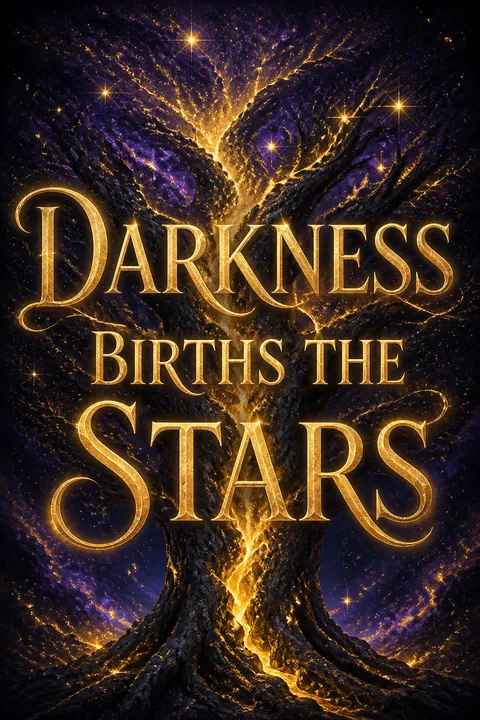
"Darkness Births the Stars" is a sweeping meditation on the cyclical nature of trauma, love, and the struggle for redemption in a world shaped by both divine and human flaws. At its heart, the novel interrogates the cost of power—personal, political, and cosmic—and the ways in which wounds, both individual and collective, are inherited, denied, and sometimes transformed. The story's central romance is not a simple tale of forbidden love, but a crucible in which the protagonists must confront the darkest parts of themselves and each other, risking everything for the hope of healing. The narrative's dual timelines and interwoven memories create a sense of history as living, contested, and ever-present, while the farm and its besiegement ground the epic stakes in the intimacy of daily life. The novel's greatest strength lies in its refusal to offer easy answers: forgiveness is hard-won, peace is fragile, and the possibility of hope is always shadowed by the risk of relapse. Yet, in the end, the story insists that even in the deepest darkness, the stars can be born—not by erasing the past, but by daring to love, to risk, and to hope again.
Review Summary
Characters
Rada / Baradaz
Once the Lady of Light and Star Queen, Baradaz—now Rada—embodies the tragedy of fallen divinity. Stripped of her powers and cast into mortal life after the Sundering Wars, she is defined by guilt, compassion, and a fierce longing for belonging. Her relationships are marked by betrayal: abandoned by her husband Aramaz, wounded by her lover Noctis, and isolated from her kin. Rada's psychological journey is one of wrestling with shame, anger, and the hope for redemption. Her compassion is both her strength and her vulnerability, as she cannot abandon even those who have hurt her most. Over the course of the story, she moves from self-imposed exile and numbness to a hard-won acceptance of her scars, daring to hope for love and healing even as the world's fate hangs in the balance.
Noctis / Belekoroz
Noctis is the archetype of the outcast, driven by envy, ambition, and a desperate hunger for connection. Once the God of Darkness and later the Adept of Chaos, he is both destroyer and creator, his rebellion against the Allfather shaping the world's history. Psychologically, Noctis is defined by his inability to accept limits—on his power, his desires, or his need for love. His relationship with Rada is a crucible of longing, resentment, and the hope for forgiveness. Stripped of his powers and hunted by his own followers, Noctis is forced to confront his own vulnerability and the consequences of his choices. His arc is one of painful self-awareness, as he learns that true strength lies not in domination, but in the willingness to risk everything for another.
Aramaz
Aramaz, the Sky Lord and Rada's estranged husband, is the embodiment of order, justice, and the crushing weight of responsibility. He is both a benevolent ruler and a cold judge, his love for Rada and his brother Noctis twisted by the demands of leadership. Psychologically, Aramaz is torn between compassion and the need to maintain control, often sacrificing personal happiness for the greater good. His inability to forgive or to accept imperfection in himself or others leads to isolation and regret. Over time, he is forced to confront the limits of his power and the cost of his choices, ultimately recognizing that mercy and vulnerability are as necessary as strength.
Deira
Deira, once a Dryad, is the most dangerous of Noctis's former followers. Her willingness to destroy her own heart tree for power marks her as a figure of self-annihilating ambition. She is a master manipulator, using pain and fear to control others, and is driven by a belief that only sacrifice and ruthlessness can bring true freedom. Psychologically, Deira is a mirror for Noctis's own darkest impulses, showing what he might become if he abandons all restraint. Her arc is one of increasing monstrosity, culminating in her attempt to seize the power of the Adept, only to be undone by the very compassion she despises.
Briseis
Briseis, once Elvish nobility, is Rada's closest confidante and a survivor of war and loss. Her exile and the challenges of raising her son in a hostile world have made her pragmatic, fiercely protective, and unafraid to speak hard truths. She serves as a grounding force for Rada, reminding her of the value of friendship, resilience, and the possibility of happiness even after devastation. Briseis's arc is one of adaptation and quiet heroism, her loyalty and wisdom helping to anchor the story's emotional core.
Kyree
Kyree, an Aerieth healer and former commander, is marked by physical and emotional scars from the war. His loss of faith in the gods and his struggle to forgive—both himself and others—make him a complex figure of skepticism and reluctant hope. Kyree's relationship with Rada is one of mutual respect and disappointment, as he is forced to confront the limits of forgiveness and the cost of truth. His arc is one of painful honesty, as he learns that healing requires both boundaries and the willingness to risk trust again.
The Chiasma
The Chiasma are Noctis's former acolytes, each marked by ambition, fanaticism, and the scars of betrayal. They embody the dangers of power without restraint, their pursuit of the Adept's magic leading them to ever greater acts of cruelty and self-destruction. Psychologically, they are a collective shadow, representing the consequences of Noctis's rebellion and the seductive lure of Chaos. Their presence forces the protagonists to confront the darkness within themselves and the world.
Araks, Bane, and the Farm
The animals and the farm itself are more than background—they are extensions of Rada's longing for peace, belonging, and the possibility of healing. The loss of the araks, the siege of the farm, and the presence of Bane (the cat/Anima) all serve as emotional touchstones, reminding the characters of what is at stake and what is possible even in the midst of ruin.
The Ten / Aurea
The remaining Aurea—Tanez, M'tar, Zamani, Sha'am, Enlial, Khiraz, Ashur, Namtaz—each represent aspects of creation and the psychological forces that shape the world. Their council is a stage for the drama of pride, envy, mercy, and the limits of power. Their inability to forgive, to adapt, or to see beyond their own wounds is both the cause and the consequence of the world's suffering. They are not distant deities, but deeply human in their failings and their longing for meaning.
The Allfather
The Allfather is a distant, ambiguous figure—both the source of creation and the origin of the world's deepest wounds. His decrees shape the destinies of gods and mortals alike, but his absence and his refusal to intervene leave his children to struggle with the consequences of freedom and the burden of choice. Psychologically, he is the archetype of the absent parent, the source of both longing and rebellion.
Plot Devices
Dual Timelines and Interwoven Memory
The narrative structure alternates between present-day events and flashbacks to the Sundering Wars, the fall of Yggdrasil, and the gods' council. This device allows the reader to experience the emotional weight of history as it unfolds, revealing how past betrayals and choices echo in every present moment. Memory is not static; it is contested, fragmented, and often unreliable, forcing characters to confront the difference between what they remember, what they believe, and what is true.
The Farm as Microcosm
The farm is both a place of refuge and a site of siege, symbolizing the fragile hope for peace in a world shaped by violence. Its besiegement by monsters, storms, and betrayal mirrors the larger conflict between Order and Chaos, and the struggle to protect what is precious even when the world is falling apart. The farm's animals, routines, and relationships ground the story's cosmic stakes in the intimacy of daily life.
Magic as Metaphor for Trauma and Healing
Magic in the story is not merely a tool, but a metaphor for the characters' psychological wounds and their capacity for change. The loss of power, the temptation of forbidden magic, and the struggle to control or surrender to it all mirror the characters' journeys through grief, guilt, and the hope for redemption. The risk of using magic is the risk of becoming what one most fears, but also the possibility of healing and renewal.
The Other and the Abyss
The Other is both a literal realm and a psychological space—the place where the boundaries between self and other, past and present, order and chaos dissolve. Crossing into the Other is a journey into the unconscious, where the characters confront their deepest fears, desires, and the possibility of transformation. The Abyss is the ultimate test, the place where one must face the truth of one's own darkness and the hope for rebirth.
The Dance of Light and Dark
The central relationship between Rada and Noctis is structured as a dance—of attraction and resistance, of old wounds and new hope. Their passion is both a source of strength and a potential undoing, and the story's emotional arc is driven by their willingness to risk vulnerability, to forgive, and to trust. The dance is mirrored in the cosmic struggle between Order and Chaos, and in the possibility that even the deepest wounds can become the source of new creation.
Foreshadowing and Prophecy
Prophecies, visions, and the warnings of the Farseer (Enlial) create a sense of inevitability, but also of possibility. The characters are haunted by the fear that the past will repeat itself, but the story insists that choice, however costly, remains. The tension between fate and free will is a constant undercurrent, and the possibility of hope is always balanced by the risk of despair.
Download PDF
Download EPUB
.epub digital book format is ideal for reading ebooks on phones, tablets, and e-readers.








































