
Plot Summary
Hunter's Grief and Gamble
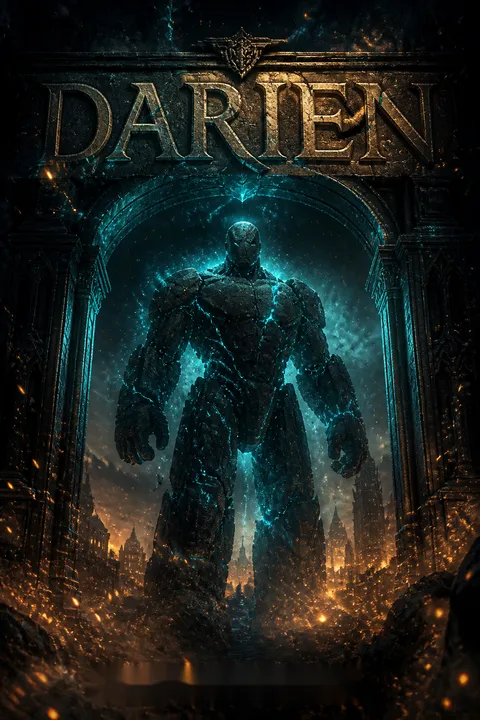
Elias Post, a skilled hunter in the village of Wyburn, is devastated by the death of his son to plague and the illness of his wife and daughters. Driven by grief and desperation, he risks everything in a card game, using his mysterious knack to glimpse moments ahead and win enough silver to buy medicine. When his secret is exposed, he flees, pursued by the enigmatic gunman Vic Deeds. Elias's world narrows to a single hope: save his family, no matter the cost. The emotional weight of loss, the coldness of fate, and the flicker of hope drive him toward a bargain that will change not only his life, but the fate of Darien itself.
Orphan's Silent Arrival
In the bustling, grimy city of Darien, Tellius, an aging ex-soldier, runs a den of orphan thieves. Donny, a hapless pickpocket, brings in a new boy—mute, filthy, and nameless. Tellius names him Arthur and quickly discovers the boy's uncanny ability to mimic any skill after seeing it once. Arthur's silence hides a deep, ancient mystery, and his presence unsettles the other boys. Yet, in the attic's warmth, a fragile sense of belonging forms, even as the city's dangers loom. The chapter pulses with the ache of lost childhood, the hunger for acceptance, and the first hints of something extraordinary beneath Arthur's quiet exterior.
Gifts and Knacks Revealed
Arthur's uncanny mimicry is revealed as he flawlessly performs the Mazer steps, a secret martial art, after a single demonstration. Tellius, both awed and unsettled, realizes the boy is no ordinary orphan. Meanwhile, Elias, having bargained with Deeds for his family's cure, is drawn into the orbit of General Justan, who sees in Elias's knack a weapon for assassination. The city's undercurrents of magic, power, and fate begin to converge. The emotional tension rises as characters are forced to confront the gifts and burdens that set them apart, and the choices that will define their paths.
Fateful Encounters in Darien
Daw Threefold, a charming rogue and minor mage, meets Nancy, a skeptical, streetwise woman. Their night together turns from seduction to confrontation as Nancy's presence inexplicably nullifies Daw's magical artifacts. Daw's world is upended; Nancy's disbelief in magic is challenged. Their uneasy partnership is forged by necessity and the promise of fortune in the desert. Meanwhile, Elias is coerced into a deadly bargain: assassinate the king in exchange for his daughters' lives. The city of Darien becomes a crucible where strangers' fates are bound together by secrets, ambition, and the lure of power.
Chains, Bargains, and Betrayals
Elias, now a pawn of General Justan, is forced to accept that his daughters are hostages to ensure his obedience. The general's cold pragmatism is matched by Deeds's own conflicted loyalty. In the city, Tellius's pride leads to a fatal confrontation with Master Aurelius, resulting in Aurelius's death at Arthur's hand. The city's justice is swift and merciless, and Tellius and Arthur are swept into the machinery of power. The emotional landscape is fraught with guilt, fear, and the bitter taste of betrayal, as each character is forced to weigh survival against conscience.
The City's Secret Powers
Daw and Nancy journey into the black desert, seeking the legendary white tomb. Nancy's presence continues to disrupt magic, while Daw's ambitions grow. In Darien, Arthur's true nature as a golem—an ageless, magically animated being—emerges, drawing the attention of King Johannes and Lady Sallet. The city's elite covet Arthur's obedience, seeing in him the ultimate guardian or weapon. The tension between those who wield power and those who are its instruments intensifies, as the boundaries between human and inhuman, free will and servitude, blur.
The Golem's True Nature
Arthur's abilities astound and unsettle all who witness them. Tellius, recognizing the boy's origins, is torn between affection and fear. The king seeks to bind Arthur with a secret phrase, hoping for an eternal, loyal protector. Yet Arthur's will and memories hint at a deeper, more tragic existence—a child made to replace a lost son, doomed to outlive all who love him. The emotional core of the chapter is the loneliness of immortality, the longing for connection, and the question of what it means to be human.
The Desert's Forbidden Tomb
Daw and Nancy reach the tomb, braving magical wards that have killed all previous intruders. Nancy's knack absorbs the tomb's ancient magic, unleashing a torrent of power within her. Inside, they find a golden mask and a corpse meant to rise and destroy them, but Nancy's presence drains the threat. The cost is high: Daw is left shaken, Nancy transformed. Their partnership is tested by greed, fear, and the intoxicating allure of newfound power. The desert becomes a crucible of transformation, where the boundaries of self and magic are irrevocably altered.
Magic Unleashed, Magic Consumed
Nancy, now brimming with raw magical energy, returns to Darien with Daw. Her power is both a blessing and a curse, fueling dreams of vengeance against those who wronged her family. Daw, fearful and awed, realizes he has unleashed something uncontrollable. In the city, the balance of power shifts as Nancy's presence disrupts magical artifacts and terrifies those who sense her. The emotional arc is one of temptation, rage, and the seductive danger of unchecked power, as Nancy teeters on the edge of becoming the very force she once despised.
The King's Assassins
Elias and Deeds infiltrate the palace during the Reapers' Eve festival, using the chaos to reach King Johannes. Simultaneously, Nancy storms the palace, her magic incinerating all who oppose her. Arthur, compelled to defend the king, is drained of power by Nancy's presence. In a moment of hesitation, Elias cannot bring himself to kill the king, but Deeds finishes the deed. The palace erupts in flames, the king is dead, and the city plunges into chaos. The emotional climax is one of violence, regret, and the irrevocable crossing of moral lines.
The City Burns
As the palace burns, Nancy exacts her revenge on Lord Albus, the magistrate who destroyed her family, incinerating him before the crowd. Daw is mortally wounded, dying in Nancy's arms. The city erupts in violence as the Immortal legion invades, the Twelve Families scramble for power, and the people of Darien rise in fury. Arthur, drained and near death, is revived by Nancy's lingering magic. The emotional devastation is total: love lost, innocence consumed, and the city itself transformed by fire and blood.
The Legion Invades
General Justan's Immortals march into Darien, using Elias's daughters as leverage. The Twelve Families, led by Lady Sallet, rally their own magical forces, including the legendary Sallet Greens and the Hart Blue Border. Nancy, her power waning, is caught between the warring factions. The city becomes a battlefield, with alliances shifting and the cost of victory mounting. The emotional core is the desperation of survival, the weight of leadership, and the realization that no one is untouched by the violence.
The Families' Last Stand
The Sallet Greens—giant, magically powered suits of armor—are unleashed, only to be drained by Nancy's touch. Lady Sallet, recognizing Nancy's unique gift, enlists her help to restore the Greens, at the cost of more lives. The Hart Blue Border, a magical barrier, halts the Immortal cavalry. The city's fate hangs in the balance as old powers clash, and the cost of victory is measured in blood and sacrifice. The emotional tension is one of exhaustion, guilt, and the burden of choices that cannot be undone.
The Witch's Choice
Nancy, spent and wounded, is taken in by Lady Sallet and asked to save the trapped men inside the Greens. Her efforts kill some, save others, and leave her drained of power. She chooses mercy over vengeance, walking away from the city's power struggles. The emotional resolution is bittersweet: Nancy has avenged her family, but at the cost of her innocence and Daw's life. She is left to find her own path, forever changed by what she has done and what she has become.
The Golem's Sacrifice
Arthur, recognizing the threat to his friends and the city, sacrifices himself to close the western gate, holding back the Immortal legion. Mortally wounded, he experiences a vision of reunion with his long-lost mother, finding peace at last. Nancy, witnessing his revival, chooses not to drain him again, allowing him to live. The emotional arc is one of selflessness, the longing for home, and the hope of redemption. Arthur's journey from tool to person is complete.
The Hunter's Final Hunt
Elias, battered and bloodied, fights his way through the chaos to rescue his daughters from General Justan. In a final confrontation, he survives the onslaught of the Immortal cavalry, aided by the intervention of the Hart Blue Border and the city's defenders. The general is slain, the legion surrenders, and Elias is finally reunited with his girls. The emotional resolution is one of exhaustion, relief, and the quiet triumph of love over vengeance.
The Aftermath and New Order
As dawn breaks, the city's survivors count their losses. Lady Sallet emerges as the de facto ruler, offering Arthur the chance to become Darien's just king. Tellius and his boys are honored for their bravery, and Nancy slips away to find her own peace. Deeds, spared by Elias, leaves the city, his fate uncertain. The emotional tone is one of weary hope, the possibility of renewal, and the recognition that power, once unleashed, can never be fully controlled. The city of Darien stands, forever changed by the choices of a few.
Analysis
Darien is a sweeping, emotionally charged fantasy that explores the collision of fate, power, and humanity in a city on the brink of transformation. At its heart, the novel interrogates the cost of survival and the nature of agency—whether in the hands of a grieving father, a mute golem, a wounded witch, or a city's ruling elite. The story's interwoven narratives and shifting perspectives create a mosaic of longing, loss, and resilience, where every act of violence or mercy ripples outward to shape the city's destiny. Magic is not a panacea but a burden, its use always exacting a price, and those who wield it are as likely to be destroyed as empowered. The novel's greatest strength lies in its refusal to offer easy answers: heroes are flawed, victories are pyrrhic, and the future is uncertain. Yet, in the ashes of the old order, there is the possibility of renewal—a city remade not by the strongest, but by those who choose compassion over conquest, and hope over despair. Darien stands as a meditation on the limits of power, the necessity of sacrifice, and the enduring human need for connection and meaning.
Review Summary
Darien receives mixed reviews averaging 3.88 stars. Most readers praise Iggulden's character development and his transition from historical fiction to fantasy, comparing it favorably to Game of Thrones. Reviewers appreciate the focused setting in one city, the well-crafted magic system featuring "knacks" (unique abilities), and the multiple POV narrative that converges effectively. Common criticisms include limited worldbuilding, too many characters for the book's length (around 340 pages), lack of character connection, and predictable plot lines. Some found the ending flat, though most agree it works as a standalone with series potential.
Characters
Elias Post
Elias is a hunter whose life is shattered by plague and loss. His knack—an ability to see moments ahead—makes him both invaluable and vulnerable. Driven by love for his family, he is forced into a bargain with General Justan, becoming an unwilling assassin. Elias's journey is one of moral compromise, guilt, and the desperate hope of redemption. His stoic exterior masks deep wells of grief and tenderness, especially for his daughters. By the end, Elias is transformed by violence but ultimately chooses love over vengeance, embodying the cost and resilience of the human spirit.
Arthur Quick (Oryx)
Arthur is a mute, enigmatic boy with the uncanny ability to mimic any skill. Revealed to be a golem—an immortal, magically animated being—he is both weapon and orphan, created to replace a lost child. Arthur's journey is one of self-discovery, loneliness, and the longing for connection. He is coveted by the city's elite for his power, but ultimately chooses self-sacrifice and, through Nancy's mercy, a chance at a new life. Arthur's arc explores the nature of humanity, free will, and the pain of outliving all love.
Nancy Cupertino
Nancy is a streetwise woman hardened by poverty and injustice. Her unique knack—absorbing and nullifying magic—makes her both a disruptor and, when unleashed, a force of destruction. Consumed by rage and the desire for vengeance, she becomes a living weapon, but the cost is high: the loss of Daw, the deaths she causes, and the burden of power. Nancy's arc is one of temptation, guilt, and the search for redemption. Her final choice to walk away from power, and to show mercy, marks her as a survivor who refuses to be defined by her wounds.
Daw Threefold
Daw is a minor mage, thief, and conman whose life is upended by Nancy's presence. His ambition and bravado mask insecurity and a longing for significance. Daw's partnership with Nancy is fraught with tension, humor, and ultimately, love. His death is a turning point for Nancy, underscoring the cost of power and the fragility of hope. Daw's arc is one of self-discovery, sacrifice, and the bittersweet realization that some dreams are paid for in blood.
Tellius
Tellius is an ex-soldier and master of the Mazer steps, running a den of orphan thieves. His pride and longing for respect lead to tragedy, but his affection for Arthur and his boys redeems him. Tellius's arc is one of regret, humility, and the search for meaning in old age. He is both a father figure and a cautionary tale, embodying the tension between tradition and change, and the hope that even the broken can find purpose.
Vic Deeds
Deeds is a skilled gunfighter, loyal to General Justan but driven by self-preservation. His fascination with Elias's knack leads him into the heart of the city's chaos. Deeds is both charming and ruthless, capable of violence and moments of unexpected mercy. His arc is one of shifting loyalties, the search for belonging, and the realization that survival sometimes means letting go of power. Deeds's fate is left uncertain, a reminder that not all stories end in triumph or ruin.
General Justan Aldan Aeris
Justan is the architect of the city's upheaval, using Elias as a weapon and his daughters as leverage. His vision of order is built on ruthlessness and sacrifice, and his downfall is the result of hubris and underestimating the power of those he seeks to control. Justan's arc is a study in the dangers of ambition unchecked by empathy, and the inevitable collapse of power built on fear.
Lady Win Sallet
Lady Sallet is the head of one of Darien's ruling families, wielding power with intelligence and pragmatism. She covets Arthur for his potential as a guardian and ruler, and navigates the city's chaos with cold efficiency. Her interactions with Nancy and Tellius reveal both her capacity for kindness and her willingness to make hard choices. Lady Sallet's arc is one of adaptation, the balancing of tradition and innovation, and the recognition that true power lies in those who can change.
Jenny and Alice Post
Elias's daughters are the emotional heart of his journey, representing innocence, vulnerability, and the future he fights to protect. Their ordeal as hostages is a crucible of fear and resilience, and their reunion with Elias is the story's most tender moment. Jenny's courage and Alice's sweetness anchor Elias's humanity, reminding him—and the reader—of what is truly at stake.
Micahel
Micahel is Tellius's most gifted pupil, mastering the Mazer steps and leading the orphans in the city's defense. His courage and skill are instrumental in closing the gate and turning the tide against the Immortals. Micahel's arc is one of coming of age, loyalty, and the hope that the next generation can build something better from the ruins of the old.
Plot Devices
Interwoven Fates and Multiple POVs
Darien employs a braided narrative, following multiple protagonists—Elias, Arthur, Nancy, Daw, Tellius, Deeds—whose stories intersect at pivotal moments. This structure allows for a rich exploration of the city's social strata, from rural villages to noble estates, and creates a tapestry of perspectives on power, loss, and survival. The shifting points of view build suspense, deepen empathy, and foreshadow the convergence of personal and political upheaval.
Magic as Burden and Catalyst
Magic in Darien is both a gift and a curse, manifesting as unique knacks or ancient artifacts. Nancy's ability to absorb and unleash magic disrupts the city's balance, while Arthur's existence as a golem blurs the line between tool and person. The plot uses magic not as a simple solution, but as a source of temptation, corruption, and transformation. The consequences of wielding or nullifying power drive the characters' choices and the city's fate.
Moral Ambiguity and Reluctant Heroes
Characters are repeatedly forced to choose between survival and conscience, love and vengeance, loyalty and betrayal. Elias's journey from hunter to assassin to father, Nancy's transformation from victim to witch to penitent, and Arthur's evolution from tool to self-aware being all hinge on moments of moral crisis. The narrative structure uses these dilemmas to build tension, foreshadow tragedy, and ultimately offer the possibility of redemption.
Urban Fantasy and Political Intrigue
Darien itself is a living, breathing entity—its streets, markets, and palaces teeming with life, danger, and secrets. The city's ruling families, magical defenses, and social hierarchies create a backdrop of intrigue and rebellion. The plot uses the city's geography and politics to heighten stakes, trap characters, and stage the climactic battle for its soul. The interplay of personal vendettas and public upheaval is foreshadowed throughout, culminating in a revolution that leaves no one unchanged.
Sacrifice and the Limits of Power
From the opening pages, the narrative foreshadows that every gain will come at a cost—lives lost, innocence destroyed, power corrupted. The deaths of Daw, Aurelius, and General Justan, the burning of the palace, and the exhaustion of Nancy's magic all serve as reminders that victory is never without sacrifice. The structure uses these losses to deepen the emotional arc, challenge the characters' assumptions, and leave the reader with a sense of hard-won, ambiguous hope.
Empire of Salt Series
Download PDF
Download EPUB
.epub digital book format is ideal for reading ebooks on phones, tablets, and e-readers.








































