
Key Takeaways
1. The Halifax Explosion: An Unprecedented Catastrophe
The Mont Blanc, with 2,923 tons of explosives in barrels and kegs, packed in hermetically sealed holds inside a super-heated hull, was now the most powerful bomb the war and the world had ever produced.
A fateful collision. On December 6, 1917, during WWI, the French munitions ship Mont Blanc, laden with high explosives, collided with the Belgian relief ship Imo in Halifax Harbour. The Mont Blanc caught fire, drawing citizens to their windows, unaware of the impending disaster.
Devastating blast. After burning for twenty minutes, the Mont Blanc exploded with unimaginable force. The blast shattered glass across the entire city, sent a funnel of black smoke 2,000 feet high, and showered ruins with burning oil and hot metal. A subsequent tsunami swept the waterfront, adding to the destruction.
Unparalleled destruction. The explosion killed over 2,000 people, left 6,000 homeless, and injured almost 10,000, many with severe facial and eye lacerations. It razed more than two miles of Halifax, wiping out entire families, and was later studied by J. Robert Oppenheimer to predict the effects of an atomic bomb.
2. Immediate Chaos and Misinformation Fueled Panic
Because at the time everybody thought it was a bomb from the Germans—you know—from an airplane. . . .They just said well, the Germans are here and somebody said there’s going to be another one.
Search for saboteurs. In the immediate aftermath, the air was thick with dust and the smell of burning benzol, leading to initial confusion and a widespread belief that a German plane had dropped a bomb. This fear was exacerbated by wartime jitters and previous sabotage incidents on the Eastern Seaboard.
Infrastructure collapse. The city's infrastructure crumbled instantly:
- Telegraph and telephone lines were down.
- Roads were impassable due to debris and overturned vehicles.
- Fire services were decimated, with the chief dead and the only motorized pumper destroyed.
- Electricity was cut off, plunging parts of the city into darkness.
Evacuation and secondary panic. Rumors of a second, larger explosion from the Wellington Barracks magazine spread rapidly, causing thousands to flee their damaged homes towards open ground like Point Pleasant Park or the Commons. This mass movement, often by injured and disoriented people, further hampered early rescue efforts.
3. Overwhelmed Medical Response Faced Unique Injuries
Here was the kind of thing one dreams about sometimes, enough cases to keep one going steadily for days and days ahead.
Hospitals overwhelmed. Halifax's hospitals, though numerous, were instantly beyond capacity, filled with thousands of severely wounded patients. Doctors and nurses worked continuously, often for sixty hours straight, improvising with limited supplies and makeshift operating rooms.
Unprecedented eye injuries. The explosion caused an unparalleled number of eye injuries, primarily from shattered glass. Doctors like Dr. George Cox, an ophthalmologist from New Glasgow, performed countless eye surgeries, often removing eyes to save the other or reconstructing eyelids from damaged tissue.
- Many patients were blinded or partially blinded.
- Glass shards were found deep within eyeballs and orbital tissue.
- Cocaine and chloroform were rationed for pain relief.
Pioneering pediatric surgery. Dr. William Edwards Ladd, a Boston gynecologist turned pediatric surgeon, arrived to find children suffering from severe burns and fluid imbalances. His experiences in Halifax, particularly in managing fluid balance in infants, were crucial in establishing North America's first pediatric surgical ward and advancing the field.
4. Boston's Swift and Organized Relief Efforts
Governor McCall has given me orders to go the limit in rendering aid and I shall.
Immediate Massachusetts response. Upon hearing fragmented reports, Massachusetts Governor Samuel McCall, through the Committee on Public Safety, immediately offered "unlimited assistance" to Halifax. Despite communication lines being down, a special relief train was dispatched without waiting for a reply.
The "Mercy Train" journey. The first relief train from Boston, carrying doctors, nurses, and Red Cross staff, faced severe blizzard conditions, including snowdrifts that blocked tracks on Folly Mountain. Volunteers and railroad crews worked tirelessly, shoveling snow and ramming the train through drifts to reach Halifax.
Organized aid and resources. The American Red Cross, with its experience in large-scale disasters, brought a structured approach to relief. Key contributions included:
- Medical units, including Dr. Ladd's team and a Harvard hospital unit.
- Thousands of blankets, clothing, and building materials.
- Financial aid, with the U.S. Congress contributing $3 million.
- Expertise in setting up temporary hospitals and coordinating relief efforts.
5. Community Resilience and Unsung Heroes Emerged
It’s not the courage that allows you to run into a burning building. It’s the kind that allows you to accept the unacceptable, bear the unbearable, keep going.
Local heroism. Amidst the chaos, ordinary citizens and military personnel displayed extraordinary courage. Firemen, soldiers, and volunteers risked their lives to rescue survivors, fight fires, and provide aid, often while dealing with their own losses and injuries.
Spontaneous cooperation. The disaster temporarily dissolved Halifax's rigid social structures, fostering a spirit of unity. Wealthy families opened their homes to the homeless, and English Protestant mothers welcomed poor Irish Catholic children, transcending pre-existing social divides.
Unwavering dedication. Many individuals, like Deputy Mayor Henry Colwell, worked tirelessly for days without rest, organizing relief efforts from City Hall. Teenagers and young adults proved invaluable, running errands, delivering food, and assisting in hospitals, demonstrating remarkable adaptability and selflessness.
6. The Wreck Commission: A Flawed Search for Blame
It seemed to me that, so far from being negligent or careless, as charged in the information, the defendant had taken every possible care to prevent the collision which was about to be caused by the conduct of the Imo.
The official inquiry. One week after the explosion, the "Investigation into the Mont Blanc and Imo Collision" (Wreck Commission) began, seeking to determine the cause and assign responsibility. The proceedings were highly partisan, with lawyers for each ship blaming the other and local officials blaming the military.
Conflicting testimonies. Witnesses, including the pilots and crew of both ships, offered contradictory accounts regarding:
- The location and angle of the collision.
- The speed of the vessels.
- The sequence and meaning of whistle signals.
- Whether warnings were given about the Mont Blanc's explosive cargo.
Political and nationalistic undertones. The inquiry was influenced by wartime anti-German sentiment and the ongoing conscription debate in Canada, which fueled anti-French Canadian prejudice. Pilot Frank Mackey and Captain Aimé Le Médec were arrested and charged with manslaughter, despite evidence suggesting complex factors beyond individual negligence.
7. Long-Term Scars and Enduring Legacies
Old soldiers bear scars. Halifax has many, but the scar from the explosion is its worst.
Reconstruction and the Hydrostone. The devastated Richmond area was razed and rebuilt as the Hydrostone, a planned community of fire-resistant houses designed by British town planner Thomas Adams. This new development, with its concrete sidewalks and boulevards, aimed to restore community and provide modern, safe housing.
Psychological trauma. Survivors carried deep psychological scars, experiencing lifelong anxiety, fear of loud noises, and recurring nightmares. The mental and emotional toll was profound, affecting not only those who lived through it but also their children, who grew up with parents suffering from post-traumatic stress.
A lasting bond with Boston. The immediate and generous aid from Massachusetts forged an enduring friendship. Since 1971, Halifax has sent Boston a Christmas tree annually as a gesture of gratitude, a poignant tradition that serves as a reminder of the disaster and the spirit of mutual support.
8. The Human Cost: Personal Stories of Loss and Survival
I can still remember the explosion like it just happened yesterday.
The Duggan family's tragedy. The Duggan family, a prominent Richmond family of rowers and ferrymen, suffered immense loss. Charles Duggan, a ferryman, was swept naked onto a field by the tsunami, losing his wife, infant son, parents, and three siblings. His brother Billy, a minesweeper, returned to find his home incinerated and his baby son missing, only to learn later that the baby had been forgotten in the rubble.
Children's harrowing experiences. Children like Helen Clark, an eight-year-old, jumped from school windows, dazed and bleeding, while others like Helena Duggan, nine, dug through rubble to rescue her injured mother and siblings. Many children were orphaned or separated from their families, facing immense challenges in the aftermath.
Unforgettable acts of kindness. Amidst the devastation, countless acts of compassion shone through. A sailor snatched Aggie March's baby and shielded her from the blast, saving their lives. Donald Morrison, a soldier at the morgue, helped Elizabeth Fraser find her eleven-year-old brother Arthur's body, a moment of profound grief and human connection.
Review Summary
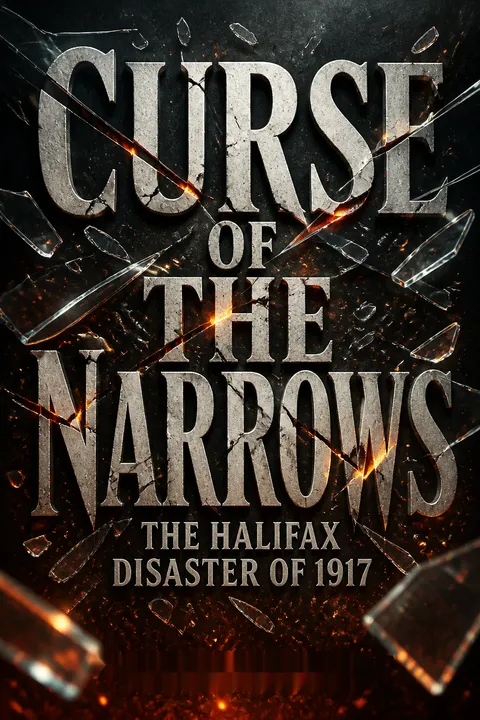
Curse of the Narrows receives generally positive reviews, averaging 3.99/5. Readers praise MacDonald's thorough research and vivid storytelling about the 1917 Halifax explosion, calling it gripping and emotional. Many appreciated learning about this lesser-known disaster. Common criticisms include sloppy prose, occasional factual errors, disorganized structure, and poor photo quality. Several readers noted the book's graphic injury descriptions as overwhelming. The tradition of Halifax sending Boston a Christmas tree annually as gratitude for post-explosion relief efforts resonated deeply with many reviewers.
People Also Read




Download PDF
Download EPUB
.epub digital book format is ideal for reading ebooks on phones, tablets, and e-readers.








































