
Plot Summary
Heist Gone Wrong
Jules, along with her best friends Fin and Max, attempts to steal a truckload of diapers from a warehouse. Their plan is chaotic and amateurish, but their intentions are noble—they want to donate the goods to a charity for newborns in need. The heist is messy, filled with bickering and improvisation, but they manage to escape, barely, by smashing through a locked door in a stolen truck. The adrenaline rush is mixed with anxiety, as Jules is haunted by the feeling that someone is watching her. The trio's Robin Hood act is both exhilarating and terrifying, setting the stage for consequences they can't yet imagine.
The Mobster's Interest
Killian Black, the enigmatic and ruthless head of the Irish mafia, reviews security footage of the diaper heist. He's both amused and intrigued by the thieves' audacity, especially when he discovers they're women. Killian's curiosity is piqued not by the loss of goods, but by the skill and boldness of the operation. He quickly deduces the theft was not for profit but for a cause, and his interest in the mysterious "diaper thieves" becomes personal. The stage is set for a collision between two worlds—one of power and violence, the other of desperate, righteous rebellion.
Cat and Mouse Escape
After the heist, Jules and her friends try to celebrate, but Jules can't shake the sense of being hunted. In a crowded bar, she realizes a dangerous man is watching her—Killian Black himself. A chaotic escape ensues, with Max creating a diversion and Jules fleeing into the night. But her relief is short-lived when she finds Killian waiting for her in a taxi, revealing he knows exactly who she is. The tension between them is electric, laced with fear, attraction, and the threat of violence. Jules's world is upended as she's forced to confront the consequences of her actions.
Dangerous Encounters
In the taxi, Jules and Killian engage in a verbal duel, each probing for weakness. Killian is both threatening and oddly respectful, fascinated by Jules's refusal to show fear. Their banter is sharp, layered with sexual tension and mutual suspicion. Killian lets Jules go, but not before making it clear he could find her anytime. Jules is left shaken, realizing she's caught the attention of a man who is both her enemy and her equal. The encounter leaves both of them unsettled, their fates now intertwined.
Unlikely Confessions
Jules confides in her friends about her encounter with Killian, trying to make sense of his actions. They debate whether he's truly dangerous or just dangerously attracted to Jules. Meanwhile, Killian reaches out to Jules, apologizing for his earlier aggression and probing her motives for the theft. Jules admits her actions are driven by a need to make amends for her family's sins—her father is a notorious mobster, and she's trying to balance the scales. This honesty creates a fragile bridge of trust between them, even as danger looms.
The Truth About Motives
Killian and Jules meet again, each demanding the truth from the other. Killian reveals a rare vulnerability, confessing his own regrets and the violence in his past. Jules, in turn, admits her fear of being used or betrayed, shaped by a lifetime of secrets and survival skills. Their connection deepens as they recognize the darkness in each other, and the possibility of something more. But trust is hard-won, and both are haunted by the shadows of their families and the violence that defines their worlds.
A Game of Trust
Killian insists on honesty as the foundation for any relationship between them, while Jules struggles to let down her guard. Their interactions are a dance of push and pull—Killian's dominance and Jules's defiance, their mutual attraction and mutual suspicion. As they spend more time together, the lines between captor and captive, enemy and lover, begin to blur. Jules is drawn to Killian's intensity, even as she fears the consequences of surrendering to him. The game of trust becomes a game of survival, with both risking more than they intended.
Bullets and Betrayal
An ambush shatters the fragile peace between Jules and Killian. Their car is attacked, and Jules's survival instincts kick in as she's thrust into a world of gunfire and chaos. Killian protects her with ruthless efficiency, revealing the full extent of his power and violence. The aftermath leaves Jules questioning everything—her safety, her feelings, and the true nature of the man she's falling for. The violence is a stark reminder of the world they inhabit, where trust can be fatal and betrayal is always a heartbeat away.
Secrets and Safehouses
In the wake of the attack, Killian takes Jules to his penthouse, insisting it's the only place she'll be safe. Jules is both grateful and resentful, chafing at the loss of control. As she recovers, she snoops through Killian's life, searching for clues to his true identity. Their conversations grow more intimate, revealing wounds and desires neither can hide. But the safehouse is also a cage, and Jules's fear of captivity—literal and emotional—threatens to destroy the fragile trust they've built.
The Devil's Temptation
The tension between Jules and Killian finally erupts into passion. Their physical connection is explosive, a release of all the fear, anger, and longing that's been building. But even in the throes of desire, the power dynamics are fraught—Killian's dominance, Jules's resistance, their mutual need for control. The sex is both a battleground and a sanctuary, a place where they can be honest in ways words won't allow. But surrendering to each other only raises the stakes, making the possibility of betrayal even more terrifying.
Unraveling Identities
As their relationship deepens, secrets come to light. Jules discovers that Killian is not who he seems—his real name, his hidden past, and the existence of an identical twin brother. The truth is more complicated than she imagined, involving espionage, revenge, and a lifetime of violence. Killian, in turn, learns the full extent of Jules's trauma and the burden of her family legacy. Their identities are stripped bare, forcing them to confront who they are and what they want from each other. This chapter exemplifies the Duality and Identity plot device.
Five Days of Fire
Jules and Killian agree to a five-day truce—a brief, intense affair before returning to their separate lives. They live in a bubble of passion and honesty, exploring the depths of their connection. But the outside world intrudes, and the reality of their circumstances can't be ignored. The five days are a crucible, burning away illusions and leaving only the raw truth of their feelings. When the time is up, both are changed, but neither is willing to admit how much.
Love and Lies
Misunderstandings and half-truths threaten to destroy everything Jules and Killian have built. Jules sees Killian with another woman and believes he's betrayed her, not realizing the woman is his brother's wife. The pain of jealousy and the fear of being used drive Jules to the brink, but the truth eventually comes out. Their reunion is fraught with emotion, as they finally admit the depth of their love and the impossibility of living without each other.
The Past Revealed
Killian writes Jules a letter, revealing the full truth of his past—his work as a spy, his quest for vengeance, and the violence that has shaped him. Jules is overwhelmed by the weight of his confession, but also moved by his vulnerability and honesty. They find solace in each other, accepting the darkness as part of who they are. The past is no longer a barrier, but a foundation for a future built on truth and trust. This chapter showcases the Confession and Letter Writing plot device.
Kidnapped and Caged
Jules is kidnapped by enemies seeking revenge against her father. She's held captive, tortured, and left to die in a dungeon. Her survival instincts and training kick in, but hope fades as the days pass. In her darkest moment, she clings to the memory of Killian, refusing to give up. The ordeal is a crucible, burning away any remaining illusions about safety or control.
Rescue and Reckoning
Killian tracks Jules down, launching a violent rescue mission that leaves a trail of bodies in his wake. He carries her to safety, tending to her wounds and refusing to let her go. Their reunion is a testament to the power of love and the lengths they'll go to protect each other. The violence is both a curse and a blessing, a reminder of the world they inhabit and the bond they share.
Letters and Legacies
With their enemies defeated and their secrets laid bare, Jules and Killian begin to build a life together. Killian retires from the criminal world, faking his own death and negotiating peace with Jules's father. They move forward, not as gangster and thief, but as partners—equal in love and in darkness. Their legacy is one of survival, redemption, and the possibility of happiness, even in a cruel paradise. The Symbolism of their journey is complete.
Analysis
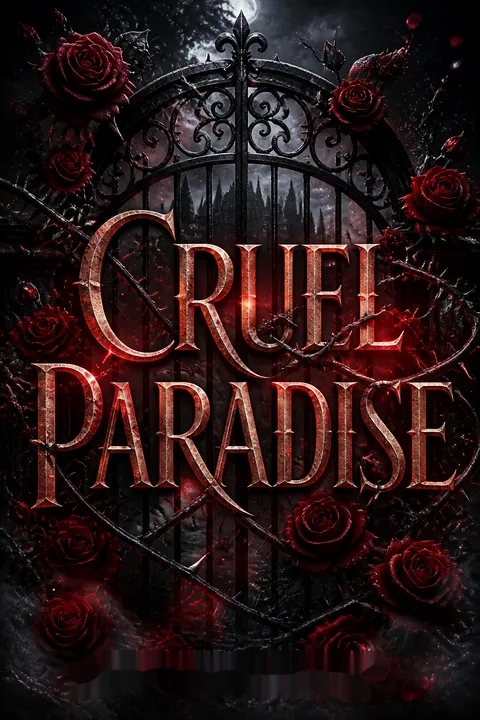
Cruel Paradise is a modern, subversive take on the classic star-crossed lovers trope, blending the grit of organized crime with the vulnerability of a romance built on trust, redemption, and survival. At its core, the novel interrogates the nature of identity—how we are shaped by our past, our families, and the masks we wear to protect ourselves. Jules and Killian are both products of violence, yet their love becomes a crucible for transformation, forcing them to confront their deepest fears and desires. The story challenges the notion that people are defined by their origins, suggesting instead that true freedom comes from embracing both light and darkness. Through sharp dialogue, high-stakes action, and moments of raw intimacy, the novel explores the possibility of forgiveness, the necessity of honesty, and the courage required to choose love in a world that punishes vulnerability. The Cat-and-Mouse Structure drives the narrative tension, while Foreshadowing and Irony keep readers engaged. Ultimately, Cruel Paradise is a testament to the resilience of the human spirit and the redemptive power of connection, even in the most unlikely—and cruel—of paradises.
Review Summary
Cruel Paradise receives mixed reviews, averaging 4.21/5 stars. Many readers adore Killian Black as a swoon-worthy, romantic alpha hero, praising the witty banter and sizzling chemistry between him and Juliet. Highlights include sharp dialogue, humor from supporting characters Max and Fin, and cameos from book one's couple. Common criticisms include excessive insta-love, repetitive push-and-pull dynamics, a thin plot, and an abrupt ending. Some felt the book didn't match the first installment's quality, while others considered it superior.
Characters
Jules (Juliet Moretti)
Jules is the daughter of a notorious Italian mob boss, raised in a world of violence, secrets, and survival. Her childhood was marked by loss and isolation, shaping her into a woman who trusts no one and hides behind sarcasm and self-reliance. Driven by guilt over her family's crimes, she becomes a modern-day Robin Hood, stealing from the corrupt to help the vulnerable. Jules is fiercely loyal to her friends, Fin and Max, who are her chosen family. Her psychological complexity lies in her constant battle between vulnerability and strength, fear and desire. Throughout the story, she evolves from a woman running from her past to one who confronts it head-on, ultimately finding the courage to trust and love Killian, even as she fears being destroyed by it.
Killian Black (Liam Black)
Killian is the head of the Irish mafia, feared and respected for his ruthlessness and intelligence. Beneath his cold exterior lies a man scarred by tragedy—the loss of his family, a lifetime of violence, and a secret life as a spy and vigilante. His attraction to Jules is immediate and consuming, challenging his carefully constructed control. Killian's psychological depth comes from his duality: he is both protector and predator, capable of tenderness and brutality. His journey is one of redemption, as he seeks not only to save Jules but to save himself from the darkness that has defined him. Through his relationship with Jules, he learns vulnerability, honesty, and the possibility of a different life.
Fin
Fin is Jules's best friend and partner in crime, a skilled thief with a sharp wit and a rebellious spirit. She provides logistical support for their heists and emotional support for Jules, often acting as the voice of reason. Fin's own background is hinted to be as troubled as Jules's, and her loyalty is unwavering. She is the glue that holds the trio together, balancing Max's impulsiveness and Jules's anxiety with humor and competence.
Max
Max is the third member of Jules's crew, responsible for electronics and surveillance. She is brash, sarcastic, and fiercely protective of her friends. Max's tough-girl persona hides a deep well of emotion and a longing for connection. Her banter with Fin provides comic relief, but her skills are essential to the group's survival. Max's loyalty and courage are tested throughout the story, and she proves herself a true friend in every crisis.
Declan
Declan is Killian's right-hand man, a formidable enforcer with a dry sense of humor. He serves as both muscle and confidant, providing Killian with advice, support, and occasional comic relief. Declan's loyalty is absolute, but he is not without his own opinions and insights. His interactions with Jules and her friends add depth to the criminal world, showing that even killers can have a code of honor.
Truvy (Tru)
Tru is the wife of Killian's twin brother, Liam. She is intelligent, compassionate, and unflappable, providing a bridge between the violent world of the mob and the possibility of a normal life. Tru's presence is a reminder that love and family can survive even in the darkest circumstances. Her friendship with Jules is genuine, and her advice is often the catalyst for Jules's growth.
Liam (Killian's Twin Brother)
Liam is Killian's identical twin, a former mob boss who has retired to a quieter life. His history is intertwined with Killian's, and their bond is unbreakable. Liam's own journey from violence to peace serves as a model for Killian, and his relationship with Tru offers hope for redemption. Liam's wisdom and experience are invaluable, especially when Killian faces his greatest challenges.
Antonio Moretti
Jules's father, Antonio, is the head of the Italian mafia—a man defined by pride, violence, and a twisted sense of honor. His relationship with Jules is fraught with pain and betrayal, shaping her fears and insecurities. Antonio represents the inescapable pull of family and the dangers of legacy. His eventual truce with Killian signals a possible end to the cycle of violence, but his shadow lingers over Jules's life.
Diego
Diego is a young, ambitious member of Killian's organization who eventually takes over the combined Irish and Italian mafia operations. His loyalty, intelligence, and adaptability make him the ideal successor. Diego's rise to power represents a new era—one where old rivalries can be set aside, and the possibility of reform exists, however tenuous.
Harley
Harley is the bartender at the seaside restaurant where much of Jules and Killian's romance unfolds. His gruff humor and outsider perspective provide levity and a touch of normalcy amidst the chaos. Harley's interactions with the main characters remind them—and the reader—that life goes on, even in a cruel paradise.
Plot Devices
Duality and Identity
The narrative is driven by the theme of duality—Jules as both thief and daughter, Killian as both mobster and spy, Liam and Killian as twins with mirrored lives. The story constantly plays with the idea of hidden identities, secrets, and the masks people wear to survive. This device creates tension and suspense, as characters are forced to reveal their true selves or risk losing everything.
Cat-and-Mouse Structure
The plot unfolds as a series of chases—literal and metaphorical. Jules and Killian are both hunter and hunted, their relationship a constant game of pursuit, evasion, and capture. This structure keeps the stakes high and the pacing relentless, mirroring the emotional cat-and-mouse game at the heart of their romance.
Foreshadowing and Irony
The story is rich with foreshadowing—references to Romeo and Juliet, warnings about betrayal, and repeated motifs of trust and danger. Irony is used to subvert expectations: the mobster is the hero, the thief is the moral center, and the "cruel paradise" is both a prison and a sanctuary. These devices deepen the emotional impact and keep the reader guessing.
Confession and Letter Writing
The use of letters and confessions allows for deep psychological insight and emotional release. Killian's letter to Jules is a turning point, providing both characters—and the reader—with the truth that has been withheld. This device underscores the importance of honesty and vulnerability in healing and connection.
Symbolism
Throughout the story, objects like the unicorn pony, the diamond necklace, and the recurring references to Shakespeare serve as symbols of hope, love, and the possibility of transformation. These symbols anchor the characters' emotional journeys and provide moments of grace amidst the violence.
About the Author


Download PDF
Download EPUB
.epub digital book format is ideal for reading ebooks on phones, tablets, and e-readers.








































