
Plot Summary
Shadows on the Horizon
The story opens with a land on the brink of disaster. Cerine, haunted by the encroaching Witchwood and the mysterious blue glow on the horizon, stands watch over Dunloch Castle. The world is beset by shades—spirit-beings that possess mortals, granting them power but threatening to consume their souls. The Order of Saint Evander catalogues these shades, each with unique abilities, and fights to keep their influence at bay. Cerine's fears are personal and political, as she clings to hope for her loved ones and the fate of Perrinion. The sense of impending doom is palpable, and the stage is set for a struggle that will test the boundaries between light and shadow, love and duty, and the destinies of those who walk the line between them.
The Dreamer and the Wolf
Ayleth, the protagonist, is introduced in a dreamlike state, separated from her shade, Laranta, by iron shackles. Alone and vulnerable, she navigates a surreal landscape filled with oblivis—magical darkness that both obscures and reveals. Her journey through the dream world is a metaphor for her internal battle: she is hunted, forced to confront visions of sacrifice and possession, and ultimately faces the memory of Odile di Mauvalis's own harrowing initiation. The dream blurs the line between past and present, self and other, as Ayleth is drawn into the legacy of the Witch Queen. The chapter establishes Ayleth's resilience, her fear of being manipulated, and the deep connection she shares with her shade, even in absence.
Possession and Sacrifice
Through visions and memories, Ayleth witnesses the brutal ceremony that binds a shade to a mortal host. Odile's past is revealed: a young woman, full of hope and courage, is forcibly possessed to serve a higher cause. The process is violent and traumatic, leaving scars both physical and spiritual. This chapter explores the theme of sacrifice—what is given up for power, for protection, for love. Ayleth's empathy for Odile grows, even as she resists the pull of the Witch Queen's influence. The narrative questions whether the ends ever justify the means, and whether those who wield power can ever escape the consequences of their choices.
The Witch Queen's Legacy
Odile's transformation from victim to Witch Queen is chronicled through a series of vignettes. Her journey is marked by loss, betrayal, and the relentless pursuit of survival for herself and her people. She becomes both protector and tyrant, carving out a sanctuary for the shade-taken but at a terrible cost. Ayleth, forced to relive these memories, begins to understand the complexity of her enemy—and her own place in this legacy. The chapter delves into the inheritance of trauma, the weight of bloodlines, and the seductive nature of power. Odile's actions are both monstrous and deeply human, blurring the line between villain and victim.
Chains of Iron, Chains of Blood
Ayleth awakens to find herself a prisoner, bound in iron and cut off from her shade's strength. The Evanderians, led by Fendrel and Hollis, debate her fate, torn between fear and hope. The Witchwood's influence grows, and the threat of Odile looms ever closer. Ayleth's captivity is both physical and psychological; she is a pawn in a larger game, her blood the key to Odile's immortality. The chapter explores themes of trust, betrayal, and the desperate search for autonomy in a world determined to use her for its own ends.
The Poison's March
Odile, now fully ascendant, marshals her forces and advances on Dulìmurian, her ruined city. The Witchwood, animated by the power of the eitr crown, resists her, creating a living wall of vines and monsters. The Evanderians, vastly outnumbered, prepare for a hopeless defense. Ayleth, still shackled, is forced to march with Odile, her every step watched and manipulated. The tension escalates as the various factions converge on the city, each driven by their own vision of salvation or destruction. The sense of inevitability is crushing, as destinies intertwine and the final confrontation draws near.
The Witchwood's Wrath
The siege of Dulìmurian erupts in chaos. Shade-taken creatures, compelled by Odile's will, hurl themselves against the Witchwood's defenses. The Evanderians fight valiantly, but are overwhelmed by the sheer force of magic and numbers. Hollis and Fendrel make desperate stands, while Terryn, empowered by his light-dragon shade Nisirdi, intervenes in a blaze of power. The Witchwood itself becomes a character—ancient, wrathful, and enigmatic. Amid the carnage, Ayleth and Odile reach the city's heart, the idol that holds the eitr crown. The battle is both external and internal, as loyalties are tested and sacrifices made.
The Crown's Temptation
Atop the idol, Ayleth is confronted by the eitr crown, the source of the Witch Queen's might. The crown calls to her, promising strength, belonging, and the end of loneliness. Odile, wounded but unbroken, pleads with Ayleth to join her, to accept her legacy and rule together. The moment is fraught with temptation and terror, as Ayleth must decide whether to seize power or reject it. The crown is both a gift and a curse, a symbol of everything she has lost and everything she might become. The chapter is a crucible, burning away illusions and forcing Ayleth to confront the truth of her own heart.
Bloodlines and Betrayal
The confrontation between Ayleth and Odile reaches its emotional peak. Odile reveals the depth of her regret, her longing for family, and the terrible choices she has made. Ayleth, torn between empathy and horror, is forced to choose: kill her grandmother and end the curse, or accept the bond of blood and risk losing herself. The chapter is a meditation on the nature of family—chosen and inherited—and the ways in which love can both save and destroy. The past and present collide, and the fate of both women hangs in the balance.
The Battle for Dulìmurian
The final battle is waged not just with weapons and magic, but with souls. Terryn, Fendrel, and Hollis each face their own reckonings, risking everything to save those they love. Fendrel sacrifices himself to save Terryn, breaking the chains of duty and guilt that have bound them both. The Witchwood's defenses fall, and Odile, desperate, uses Ayleth as a hostage to force her way to the crown. In a moment of clarity and courage, Ayleth seizes agency, turning the tide of the battle and setting the stage for the ultimate confrontation.
The Fall of Odile
Odile's reign ends in violence and sorrow. Gerard, wielding an oblidite sword, fulfills the prophecy by severing Odile's head—guided by Ayleth's will and the power of the crown. The Cravan Druch, the spell that has sustained Odile's unnatural life, is broken in a torrent of liberated magic. Odile's spirit is finally freed, and the Witchwood's curse is lifted. The city is left in ruins, but hope flickers on the horizon. The chapter is both an ending and a beginning, as old wounds are laid bare and the possibility of healing emerges.
The Crown's Curse
In the aftermath, Ayleth is overtaken by the spirit of the crown, Oromor. She is consumed by power, her identity threatened with annihilation. The battle shifts inward, as Ayleth fights to retain her selfhood against the ancient, alien will of the shade. Laranta, her beloved wolf shade, makes the ultimate sacrifice, breaking the soul tether and dragging Oromor into the Haunts. Ayleth is left alone, stripped of her magic and her companion, but alive. The cost of victory is profound, and the scars—both visible and invisible—will shape her forever.
The Breaking of Tethers
Ayleth's recovery is slow and painful. She is haunted by the loss of Laranta, the emptiness where her shade once dwelled. The world is changed: the Witchwood is gone, the eitr crown is dead, and the old order is shattered. Gerard, now king, promises a new era of peace and protection for the shade-taken. Terryn, freed from his own chains, must choose between duty and love. Hollis, burdened by guilt, seeks forgiveness. The chapter is a meditation on grief, resilience, and the possibility of redemption.
The Aftermath of Power
As Perrinion begins to heal, its characters must find their places in a changed world. Gerard and Cerine embrace a future together, vowing to protect those once hunted. Ayleth, unable to remain in the world she has saved, sets out alone to find her roots and make peace with her past. Terryn, torn between loyalty and longing, is urged to follow his heart. The bonds of family, friendship, and love are tested and reforged in the crucible of loss. The chapter is both an epilogue and a promise: that even in the wake of devastation, hope endures.
The King's Promise
Gerard, now king, enacts sweeping changes. He offers sanctuary to the shade-taken, challenges the old prejudices of the Order, and seeks to unite his fractured kingdom. His relationship with Cerine deepens, and together they adopt Nilly, the inborn Seer child, as their ward. The chapter explores the challenges of leadership, the burden of prophecy, and the courage required to break with tradition. Gerard's promise is both personal and political: to build a world where all can belong.
The Huntress Alone
Unable to remain among those who have used and betrayed her, Ayleth leaves civilization behind. She returns to the wilds of her childhood, seeking the truth of her origins and the solace of solitude. Her grief for Laranta is raw and unrelenting, but she is determined to survive. The chapter is a meditation on loneliness, resilience, and the search for identity beyond the roles others have imposed. Ayleth's journey is both a retreat and a quest for healing.
The Return to Roots
In the mountains of her youth, Ayleth uncovers the remnants of her lost family and the truth of her past. She finds Rotoro, her wolf sister, and through a final act of love and sacrifice, gains a new shade. The reunion is bittersweet, marked by the pain of loss and the hope of renewal. Ayleth's acceptance of her new companion is a testament to her growth and her refusal to be defined by tragedy. The chapter is a celebration of resilience, memory, and the enduring power of love.
A New Dawn, A New Bond
As spring breaks over the mountains, Ayleth and Rotoro run together, embracing the wildness and freedom that has always been her birthright. Terryn, following the call of his heart, seeks her out, and the possibility of reunion and new beginnings glimmers on the horizon. The story ends with Ayleth poised between past and future, loss and hope, ready to claim her place in a world remade by sacrifice and love. The final note is one of possibility: that even after the darkest night, dawn will come.
Analysis
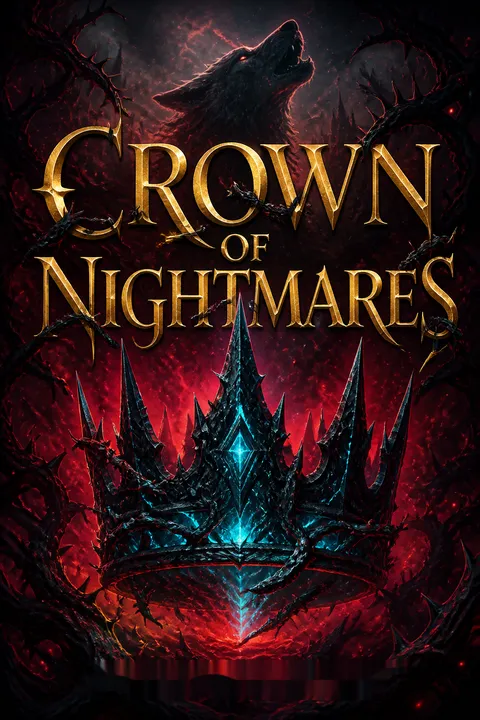
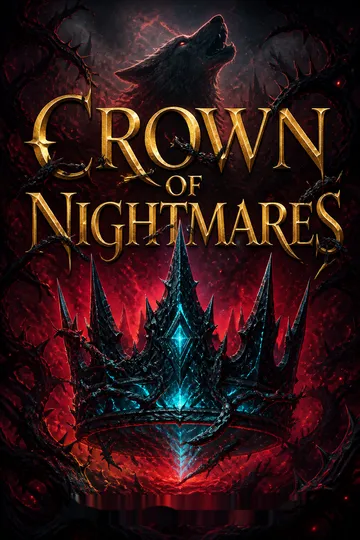
Crown of Nightmares is a dark, emotionally charged fantasy that interrogates the nature of power, the legacy of trauma, and the possibility of redemption. At its core, the novel is a meditation on agency: how individuals navigate the expectations and manipulations of family, society, and fate. Through Ayleth's journey—from pawn to player, from possessed to free—the story explores the costs of survival in a world that fears and persecutes difference. The shades, both gift and curse, are a metaphor for the parts of ourselves we fear and the connections that make us whole. The breaking of tethers—between mortal and shade, between past and present, between love and loss—is both painful and necessary for growth. The novel ultimately rejects the simplicity of prophecy and bloodline, insisting that true power lies in choice, compassion, and the willingness to forge new bonds. In a world haunted by nightmares, it is love—messy, sacrificial, and enduring—that offers the only hope of dawn.
Review Summary
Crown of Nightmares received mostly positive reviews, with readers praising the action-packed plot, character development, and emotional impact. Many found it a satisfying conclusion to the series, appreciating the complex themes and unexpected twists. Some readers felt the ending was bittersweet, with mixed feelings about character resolutions. A few critics noted pacing issues and desired more closure for certain storylines. Overall, fans of the series were pleased with the finale, though some wished for more romantic moments between key characters.
People Also Read

Characters
Ayleth
Ayleth is the heart of the story—a young woman forged in isolation, trained as a venatrix, and bound to her wolf shade, Laranta. Her journey is one of self-discovery, as she is forced to confront the truth of her origins: she is the granddaughter of Dread Odile, the Witch Queen, and the key to breaking the curse that sustains Odile's unnatural life. Ayleth's psyche is marked by trauma, resilience, and a deep longing for belonging. She is manipulated by those who claim to love her, yet she refuses to be defined by their expectations. Her relationship with Laranta is both a source of strength and vulnerability, and her ultimate sacrifice—losing her shade to save the world—leaves her profoundly changed. Ayleth's arc is one of agency reclaimed, as she moves from pawn to player, forging her own path in a world that would use her as a weapon.
Odile di Mauvalis
Odile is both villain and victim—a woman who began as a sacrificial host for a shade and rose to become the most feared figure in Perrinion. Her love for her daughters and her people drives her to terrible acts, and her quest for immortality is both a curse and a burden. Odile's psyche is a labyrinth of regret, ambition, and longing for connection. She manipulates Ayleth, seeing in her both a threat and a chance for redemption. Her final moments are marked by vulnerability and love, as she offers Ayleth the choice to kill her or join her. Odile's legacy is complex: she is both the architect of suffering and a symbol of the costs of survival in a world that fears difference.
Laranta
Laranta is more than a source of power for Ayleth—she is her companion, protector, and the embodiment of unconditional love. Their bond is deep and symbiotic, blurring the line between self and other. Laranta's ultimate act—breaking the soul tether to drag Oromor into the Haunts—saves Ayleth but at the cost of her own existence. Her sacrifice is a testament to the power of love to transcend even the boundaries of life and death. Laranta's absence leaves a void in Ayleth's soul, but her memory becomes a guiding force, shaping Ayleth's journey toward healing and new connection.
Terryn du Balafre
Terryn is Ayleth's counterpart—a venator bound to the light-dragon shade Nisirdi, torn between duty to the Order and his love for Ayleth. His journey is one of self-forgiveness and the breaking of chains, both literal and metaphorical. Terryn's loyalty to Gerard and Fendrel is tested by betrayal and loss, and his willingness to sacrifice himself for others marks him as a true hero. His relationship with Ayleth is fraught with longing, misunderstanding, and the hope of a future unburdened by the past. Terryn's arc is one of transformation, as he learns to choose his own path and embrace the possibility of love.
Gerard du Glaive
Gerard is the prophesied Chosen King, destined to end Odile's reign and usher in a new era. His journey is marked by doubt, compassion, and the struggle to reconcile prophecy with personal desire. Gerard's relationships—with Cerine, Ayleth, and Terryn—are central to his growth as a leader. He is both a symbol and a man, forced to make impossible choices for the greater good. Gerard's promise to protect the shade-taken and build a kingdom of peace is both a fulfillment of destiny and a radical act of hope. His arc is one of acceptance, as he learns to wield power with humility and love.
Hollis di Theldry
Hollis is Ayleth's surrogate mother and the architect of much of her suffering. Driven by duty and a twisted sense of love, she raises Ayleth to be a weapon against Odile, shaping her through lies and half-truths. Hollis's psyche is marked by guilt, regret, and the desperate hope for forgiveness. Her relationship with Fendrel is equally complex, marked by love, loss, and the shared burden of impossible choices. Hollis's arc is one of reckoning, as she is forced to confront the consequences of her actions and seek redemption in the aftermath of victory.
Fendrel du Glaive
Fendrel is the stern leader of the Evanderians, a man defined by his sense of duty and the weight of his past. He is both mentor and antagonist, ordering Terryn's death and binding Ayleth in iron. Fendrel's psyche is a battleground of faith, guilt, and the longing for absolution. His final act—sacrificing himself to save Terryn—breaks the chains of duty that have defined his life. Fendrel's legacy is one of both suffering and salvation, a reminder of the costs of leadership and the possibility of grace.
Nisirdi
Nisirdi is Terryn's shade, a being of light and song, representing the possibility of harmony between mortal and shade. Nisirdi's guidance helps Terryn navigate the darkness within and without, and its intervention at key moments is crucial to the survival of the protagonists. Nisirdi's perspective is ancient and otherworldly, offering wisdom and a reminder that love and sacrifice are the true sources of power.
Cerine
Cerine is Gerard's beloved, a figure of quiet strength and resilience. Her role is often that of observer and supporter, but her presence is a source of stability and hope for those around her. Cerine's relationship with Gerard is marked by mutual respect and deep love, and her willingness to adopt Nilly as their ward signals a new era of acceptance and protection for the vulnerable. Cerine's arc is one of endurance, as she holds fast to hope in the face of overwhelming darkness.
Nilly du Bucheron
Nilly is a child possessed of great power and greater vulnerability. Her visions guide the protagonists, and her fate is a barometer for the world's capacity for change. Nilly's innocence is both a shield and a source of danger, as she becomes a pawn in the struggle between light and shadow. Her adoption by Gerard and Cerine is a promise that the new world will be one where all can belong, regardless of their origins.
Plot Devices
Shades and Possession
The central device of the novel is the existence of shades—disembodied spirits that possess mortals, granting them supernatural abilities at the risk of losing their souls. This dynamic is both literal and metaphorical, exploring themes of agency, autonomy, and the cost of power. The various types of shades (Feral, Elemental, Arcane, etc.) allow for a rich tapestry of magic and conflict, while the process of possession and suppression becomes a crucible for character development. The soul tether between mortal and shade is a symbol of connection, love, and the potential for both salvation and damnation.
Prophecy and Bloodline
The narrative is structured around prophecy—the Seion-Ebathe—which foretells the coming of a champion to end the reign of the Poison. Bloodlines are both a source of power and a chain, binding Ayleth and Odile to a cycle of violence and sacrifice. The fulfillment of prophecy is subverted and complicated, as characters struggle to assert their own agency within the confines of destiny. The breaking of the Cravan Druch, the curse that sustains Odile, is both a literal and symbolic act of liberation.
The Eitr Crown
The eitr crown is the focal point of the novel's conflict—a living artifact that promises godlike power but threatens to consume its wearer. It is both a prize and a curse, a test of character and a catalyst for transformation. The crown's possession of Ayleth is the climax of the story, forcing her to confront the darkness within and the limits of her own will. The destruction of the crown marks the end of an era and the possibility of a new beginning.
The Witchwood
The Witchwood is more than a setting—it is a character in its own right, animated by the power of the shades and the will of the crown. Its defenses, its wrath, and its eventual dissolution mirror the internal struggles of the protagonists. The Witchwood's presence is a constant reminder of the past, the cost of survival, and the possibility of renewal.
Narrative Structure and Foreshadowing
The novel employs a complex narrative structure, weaving together present action, dreams, visions, and memories. This allows for deep psychological exploration and the gradual revelation of secrets. Foreshadowing is used to build tension and connect disparate threads, while the use of dreams blurs the line between reality and imagination. The structure reinforces the themes of destiny, agency, and the cyclical nature of trauma and healing.
The Venatrix Chronicles Series
About the Author




Download PDF
Download EPUB
.epub digital book format is ideal for reading ebooks on phones, tablets, and e-readers.








































