


Plot Summary
Prologue
Rosie Lachlan,1 a thirty-year-old heart transplant recipient, sends her first message through DonorConnect to the husband of her organ donor2 on the anniversary of his wife3's death. She describes the transplant day, the sharp light of the operating room, her gratitude. Morgan Thorne,2 a thirty-eight-year-old thriller author in a Boston suburb, responds with warmth and wit.
He tells her about his orange tabby named Sickle, his writing life, his late wife Daphne3 who loved potatoes and crocheted terrible hats. He asks about Rosie1's own story, her heartbreak, her dark place. Rosie1 already knows exactly who Morgan2 is. She has followed his Instagram for months, walked past his house at night, studied his every post. She does not tell him this.
This epistolary opening establishes the novel's central dramatic irony: Rosie knows Morgan's identity while he believes he's corresponding with a stranger. The DonorConnect framework literalizes the book's core question—what does it mean to carry someone else's heart? The messages also introduce Morgan's seductive voice: self-deprecating, literary, seemingly vulnerable. His question about Rosie's 'dark place' hooks her with the promise of being truly seen. The exchange models how intimacy can be manufactured through curated disclosure, and how grief creates openings that charismatic people can exploit.
The Bridal Salon Ghost
At Just Say Yes, the bridal salon Rosie1 manages for her parents, a distraught woman named Edith Cole6 arrives after hours clutching a garment bag. Her fiancé canceled the wedding.
Rosie,1 who still keeps her own unused Casablanca A-line ball gown in her closet eighteen months after Brad9 left her at her most vulnerable, recognizes the particular agony on Edith6's face. She bends store policy to comp the return, and the two women bond over breakup survival strategies: Gilmore Girls binges, Danishes from the café next door, changing your hair.
Edith6 notices Rosie1's pink dye job and asks if it was part of her recovery. Rosie1 deflects, unwilling to admit the color came months after her transplant, a desperate attempt to become someone new. They exchange numbers.
This scene establishes Rosie's core wound: her identity was shattered not just by Brad's rejection, but by the humiliation of having prepared for a wedding that was never real. The bridal salon setting externalizes her inner conflict—she surrounds herself with women beginning their stories while she remains stalled in hers. Edith functions as Rosie's mirror, a woman at an earlier stage of the same grief. Rosie's instinct to help Edith, to comp the dress, reveals her generosity but also her pattern: she pours herself into others' narratives because her own feels too precarious to inhabit fully.
Sweet Bean Coincidence
At Sweet Bean café, Rosie1 spots Morgan Thorne2 in person for the first time. He sits across from Blair Hawkins,4 his best friend — a woman Rosie1 recognizes from his Instagram. Hidden under her hood, Rosie1 eavesdrops as Blair4 complains about wedding planning stress and Morgan2 teases her. Their banter reveals years of intimacy.
When Blair4 mentions Morgan2's first dance with Daphne,3 his face shifts, and something weighted passes between the friends. Morgan2's eyes eventually catch Rosie1 's. She holds his gaze for a charged moment before breaking away, heart pounding. Later, Rosie1 texts Nina5 in a panic — she is sitting one table from the man she has been messaging anonymously. Nina5 warns her to stop this obsession.
The café scene dramatizes Rosie's split existence: she is both voyeur and participant in Morgan's world. Her hiding under a hood literalizes her clandestine approach to love. The exchange between Morgan and Blair—sharp, knowing, exclusionary—shows Rosie what she wants: to be inside someone's life that completely. Her text to Nina betrays her awareness that her behavior crosses a line, yet she cannot stop. The scene also plants seeds about Blair's centrality in Morgan's life and the undercurrent of tension whenever Daphne is mentioned, clues that will only make sense in retrospect.
Piper's Dire Warning
Rosie1 meets Piper Bell,7 Edith6's co-worker at Burnham Library, in a basement meeting room. Piper,7 who was close with Daphne Whittaker3 before her death, delivers an alarming portrait of Morgan.2 She tells Rosie1 that Daphne3 became increasingly scared and on-edge after Morgan2 returned from book tours. He constantly called to check where she was.
Piper7 also reveals that the title of Morgan2's debut novel, Someone at the Door, echoes the last words Daphne3 ever spoke to her sister before the girl was murdered during a home invasion when Daphne3 was twelve. Piper7 believes Morgan2 stole Daphne3's trauma for commercial gain, belittled her poetry, and may have killed her. Rosie1 dismisses Piper7's claims as prejudice against popular male authors.
Piper's testimony introduces the book's epistemological crisis: who is telling the truth about Daphne and Morgan? Piper's claims align with the online trolls Rosie has seen, yet Rosie reflexively defends Morgan. Her resistance is rooted in more than naivety—she has invested too much in the fantasy of Morgan to absorb information that would dismantle it. Piper's mention of the sister's murder and the novel's title establishes a pattern of exploitation that Rosie will later verify through Daphne's own words. The scene also demonstrates how women's warnings about men are often dismissed as bitterness or hysteria.
Two Versions of Daphne
Through DonorConnect, Morgan2 finally shares his version of his marriage's unraveling. He claims Daphne3 grew paranoid and delusional, lashing out with verbal abuse, throwing books, slamming his laptop shut. He paints himself as a baffled victim of her deteriorating mental health. Concurrently, Rosie1 finds an old podcast interview of the couple.
Watching the footage, she notices Morgan2 repeatedly interrupting Daphne,3 dismissing her poetry career, and at one point, gripping her knee so hard she flinches. He calls Sylvia Plath his favorite poet and claims Ted Hughes was only trying to help his wife's legacy by editing her posthumous manuscript. Daphne3's expression goes tight and dark.
The juxtaposition of Morgan's self-serving narrative with video evidence of his behavior creates the novel's central ambiguity. Morgan's account uses the language of mental health to discredit Daphne, a classic gaslighting tactic that reframes her reasonable anger as pathology. Yet his DonorConnect messages to Rosie remain charming and seemingly vulnerable. The podcast details—the knee grip, the Plath/Hughes discussion—function as early warnings that Rosie registers but rationalizes away. Her pattern of excusing male behavior, established through her history with Brad, makes her uniquely susceptible to Morgan's version of events.
Daphne's Poetry as Evidence
Rosie1 reads Daphne Whittaker3's two poetry collections and a postcard featuring her final poem, 'Pre-Mortem.' The books confirm Piper7's accusations. In one poem, Daphne3 describes Morgan2's cold response when she confronted him about appropriating her sister's murder: 'There's no copyright on trauma.'
Another poem opens with the line 'words are how I dress my wounds,' which Rosie1 recognizes — Morgan2 sent her nearly the same phrase, passing it off as his own. The final poem is the most disturbing: Daphne3 writes of being robbed repeatedly, her body drained of blood, her wedding ring taunting her from inside a grave. The title means 'Before Death.' Rosie1 decides she must confront Morgan2 in person.
The poetry serves as Daphne's posthumous testimony, the voice Morgan tried to silence now speaking directly to Rosie. The revelation that Morgan stole not just Daphne's story but her actual words—claiming them as his own wisdom—exposes him as a predator of women's interior lives. Yet Rosie's response is not to flee but to seek confrontation, revealing her persistent need to believe in redemption. Daphne's 'Pre-Mortem' poem functions as both evidence and prophecy, its imagery of theft and bodily violation eerily literalizing what has happened: Daphne's literal heart now beats in Rosie's chest, her husband's attention now fixated on another woman.
Body on the Kitchen Floor
Rosie1 goes to Morgan2's house intending to reveal her identity and demand the truth about Daphne.3 The front door stands ajar. His cat Sickle darts out, and when Rosie1 catches him, she notices red on his paws. She enters the house, calling for Morgan2 over pounding music. Following faint red tracks across the hardwood, she rounds the kitchen island and finds Morgan2 flat on his back.
A knife protrudes from his chest. His pool-blue eyes are fixed on the ceiling, unseeing. His blood spreads beneath him like dark velvet. Rosie1 dials 911, her voice a stranger's. Police swarm the house, cruisers strobing blue and red. Detective Jackson Dean8 begins asking her questions she cannot answer.
Morgan's death transforms the novel from psychological suspense into murder mystery, but it also completes a grim symmetry: the man who fed on women's trauma is silenced by violence. The open door, the escaped cat with bloodied paws, the too-loud music—these details create a tableau of interrupted domesticity. Rosie's discovery of the body positions her as both witness and suspect, her prior surveillance of Morgan now recast as potentially criminal. The image of the knife in Morgan's chest, where his heart would be, resonates with the novel's preoccupation with hearts: broken, transplanted, stolen, stopped.
The Other Pink-Haired Rosie
At the police station, Detective Jackson Dean8 confronts Rosie1 with impossible information. Morgan2's laptop contained emails to Blair describing dates with a woman named Rosie1 — a woman with pink hair. The emails detail encounters at Sweet Bean, at the park, at Morgan2's house.
A barista confirms seeing a pink-haired woman with Morgan2 the night Rosie1 was there, but says it was not Rosie.1 Pink hairs were found clutched in Morgan2's dead hand. Jackson8 suggests someone is impersonating her.
Rosie1 insists she never met Morgan2 in person, never set foot in his house before finding his body. She submits hair samples and her phone, certain they will exonerate her. Jackson8 remains skeptical, especially after learning about a harassment prevention order filed against Rosie1 by her ex.9
The doppelgänger twist externalizes Rosie's psychological fragmentation. Someone has literally appropriated her identity—name, hair, romantic narrative—turning her into a character in a story she didn't write. This violation mirrors what Morgan did to Daphne, stealing her trauma for his fiction. Jackson's discovery of the harassment order—the legal residue of Rosie's lowest moment—shows how women's pain, once documented by institutions, becomes permanent evidence against them. Rosie's willing surrender of her phone and hair demonstrates her belief that truth will protect her, a faith the novel will test severely.
Emails from a Dead Man
At a chaotic memorial gathering for Morgan,2 Blair Hawkins4 approaches Rosie,1 mistaking her for the woman Morgan2 dated. Rosie1 explains the situation: her heart transplant, DonorConnect messages, the imposter. Blair4 reluctantly believes her and shows her Morgan2's emails.
Reading them, Rosie1 experiences a vertiginous doubling: the other Rosie1's banter, her mannerisms, her tastes are eerily similar to her own. She likes Friends, makes quirky jokes, even orders the same Danishes.
Morgan2 writes about being drawn to this woman's contradictions, her hidden darkness — the same language he used about Daphne.3 He also mentions a new novel idea about a heart transplant recipient connecting with her donor's husband, making Rosie1 realize she was just research to him.
Morgan's emails function as a hall of mirrors for Rosie. She sees herself refracted through his gaze—both as the anonymous correspondent he praised and as the physical woman he pursued. The revelation that she was merely material for his next book confirms the pattern Piper identified: Morgan consumed women's pain and converted it into product. His emails to Blair also reveal a performative cruelty, deliberately making his best friend jealous with detailed accounts of his romantic exploits. The emails collapse the boundary between Rosie's two identities—DonorConnect confidante and covert admirer—exposing both as roles she played for a man who was never truly seeing her.
Waking in the Dress
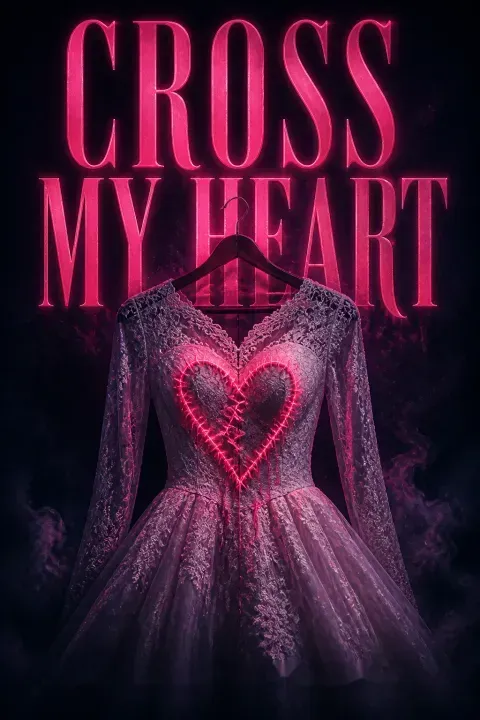
Exhausted and unable to sleep, Rosie1 takes one of her mother's sedatives. She wakes the next afternoon on her bed, still wearing her wedding dress — the Casablanca gown she bought for a marriage Brad9 never offered. The bodice is buttoned partway up her back, higher than she could possibly reach herself. She finds her apartment door ajar, keys left in the lock outside.
Panicked, she calls Marilee from work to help her unbutton the dress. That night, a masked intruder in black attacks her in her kitchen. Rosie1 fights back, the knife slashing her arm. As the attacker chokes her from behind, she notices a scuff on their boot shaped like half a heart. The attacker flees when someone pounds up the stairs.
The wedding dress sequence crystallizes the novel's themes of control and identity. The dress—a symbol of Rosie's most humiliating delusion—becomes a violation when someone else literally fastens her into it. The inability to unbutton herself replicates the helplessness she felt after Brad's rejection. The intruder's scuffed boot, marked with half a heart, introduces a visual motif of fractured love that will prove crucial. The attack transforms the novel's threat from psychological to physical, shifting Rosie from passive investigator to active survivor. The half-heart image also resonates with the transplant narrative: Rosie carries half of someone else's heart-story inside her.
Edith Unmasked
The person who interrupted the attack and called 911 is Edith.6 As she helps Rosie1 stanch her bleeding arm, Rosie1 notices a bottle of pink hair dye in Edith6's tote bag. The truth spills out: Edith6 is the other Rosie.1 After her breakup, broken and wanting to be anyone but herself, she went to Sweet Bean and accidentally collided with Morgan.2
When he asked her name, she blurted out 'Rosie1' instead of her own. She had already dyed her hair pink on Rosie1's recommendation. She kept up the impersonation, using a burner phone, because Morgan2 made her feel wanted. Edith6 swears she didn't kill Morgan2 — she went to his house the night he died to confess her real identity, they argued about Daphne,3 and she left. The police arrest Edith6 anyway.
Edith's confession reframes the imposter plot as tragic rather than sinister. Like Rosie, she is a woman whose identity was shattered by romantic rejection, who grasped at reinvention through a man's attention. Her use of a burner phone to call her ex—not to hide from Morgan—reveals the humiliating compulsions heartbreak can produce. The novel thus presents a spectrum of female responses to romantic devastation: Rosie's obsessive hope, Edith's identity theft, Daphne's poetic testimony, Blair's homicidal possessiveness. Edith's arrest despite her plausible innocence demonstrates how women who behave strangely are readily criminalized, their explanations dismissed as further evidence of instability.
Nina's Ten Percent Doubt
Recovering in the hospital, Rosie1 is visited by Nina,5 who admits something devastating: when she learned Rosie1 was a suspect, part of her — ten percent — wondered if Rosie1 had killed Morgan.2 She cites Rosie1's history: the wedding dress bought without a proposal, the blood-soaked night on Brad9's doorstep, the inability to let go.
Nina5 also confesses she has been tracking Rosie1's location since that night, checking to make sure she wasn't doing something dangerous. Rosie1 absorbs the blow, recognizing that even the people who love her most see her through the lens of her worst moments. She realizes her 'Rosie-colored glasses' have not only blinded her to men's flaws — they've prevented her from seeing how others perceive her own.
Nina's confession delivers the novel's most intimate wound: the realization that love and suspicion can coexist, that those closest to us keep private tallies of our instability. The 'ten percent' becomes a haunting metric for how female emotion is policed even by other women. Nina's location tracking—presented as protective—also carries the uncomfortable valence of surveillance. Yet her honesty, however painful, gifts Rosie with clarity: she cannot demand others see her truly when she refuses to see herself. This turning point marks Rosie's shift from passive romantic to active investigator of her own life, determined to find the real killer without her distorting glasses.
Boots at Blair's Door
Investigating the theory that Piper7 could be the killer, Rosie1 messages Blair,4 who claims Piper7 is her neighbor. Rosie1 goes to Blair4's house to plan their confrontation. While Blair4 makes tea, Rosie1 studies the memorial photos Blair4 has laid out. She notices details she missed before: Blair4 and Morgan2 holding hands in college photos, Blair4's hair darkening over the years to resemble Daphne3 's.
Then she sees it — a pair of black boots by the door with a scuff shaped like half a heart. The same boots her attacker wore. Before Rosie1 can react, Blair4 returns and notices her expression. She pulls a gun. The friendly collaboration was a trap. The 'neighbor' story was a lie to lure Rosie1 over.
The boots function as the novel's Chekhov's gun, a detail planted during the attack scene that detonates here. The photo gallery—Blair's transformation from platinum pixie to dark-haired Daphne replica—tells a visual story of identity erasure that mirrors Edith's appropriation of Rosie. Blair's physical metamorphosis represents the darkest version of the novel's recurring motif: women reshaping themselves for male desire. The revelation that Blair orchestrated this meeting as a trap confirms what the boots suggested: the threat was never an external stranger but someone inside the story from the beginning, hiding in plain sight as the loyal best friend.
Confessions at Gunpoint
With a gun aimed at Rosie,1 Blair4 confesses everything. She and Morgan2 were college sweethearts who began sleeping together again years later, right before he met Daphne.3 Blair4 never stopped loving him. When Daphne3 became an obstacle, Blair4 snuck into their house to investigate Daphne3's perfume — the one Morgan2 said drove him wild.
Daphne3 caught her and accused her of stalking. Blair4 pushed her; Daphne3 cracked her skull on the bathroom vanity. Blair4 left her to die. A year later, when Morgan2 rejected Blair4's final love confession and laughed at her engagement, she stabbed him with a kitchen knife, then plunged it deeper to end his suffering.
She broke into Rosie1's apartment, buttoned her wedding dress while she slept, and later attacked her, planning to kill her and leave Edith6 to be convicted of both murders.
Blair's confession recontextualizes the entire narrative. Morgan was not Daphne's killer—his crime was neglect and exploitation, not murder. Blair emerges as the novel's true predator, yet her motives are chillingly legible: decades of loving a man who used her affection as ego-fuel while pursuing other women. Her meticulous framing of Edith and attempted framing of Rosie show a strategic mind operating beneath the 'crazy' label she fears. The detail about buttoning Rosie's wedding dress while she slept is the novel's most intimate violation—Blair literally dressing Rosie in her own trauma. Blair's final words before surrender echo Rosie's central fear: 'I just wanted him to love me.'
The Dress Finds a Bride
In the aftermath, Blair4 is arrested, Edith6 is released, and Rosie1 returns to work at Just Say Yes. A young teacher on a tight budget comes in hoping for an affordable dress. Rosie,1 unable to use another comp so soon, offers her own Casablanca gown. She tells the woman it was donated by a bride whose wedding was canceled — a half-truth that frees her from the dress's ghost.
Later, Detective Jackson Dean8 visits the salon. He tells Rosie1 he bought the yellow colonial with the stained-glass window — the house she has admired on her walks with Bumper. He mentions his sister Winnie, whom Rosie1 befriended in high school, always said Rosie1 had 'a good heart.' Rosie1 starts a new Notes file: JACKSON DEAN.
The dress's departure completes Rosie's arc from woman defined by romantic anticipation to woman claiming her own story. She no longer needs the gown as placeholder for an uncertain future. Jackson's revelation—that he lives in the house she has loved from afar—offers a gentler form of the fate-meets-surveillance pattern Rosie previously enacted with Morgan. But now Rosie is the one being seen and appreciated, not the one watching from the dark. The new Notes file, begun with curiosity rather than obsession, suggests she can carry forward her intensity without losing herself. The novel ends not with a wedding but with a woman resting her hand on her chest, measuring the steady beat that means she is still here.
Analysis
Cross My Heart operates as both a tightly plotted thriller and a psychological examination of how women's desire for love is pathologized. The novel's central preoccupation is the word 'crazy' — the label men deploy to dismiss women whose emotional needs exceed their convenience, and that women internalize until they police their own longing. Rosie1's history with Brad9 established this dynamic: she bought a wedding dress for a man who never proposed, and when she couldn't let go, the legal system validated his assessment of her as dangerously unstable. The harassment order becomes a permanent stain, resurfacing whenever she must defend her sanity to authorities.
The heart transplant premise literalizes the novel's core insight: women are expected to absorb and sustain others' emotional lives while their own needs are treated as symptoms. Daphne3's heart beats in Rosie1's chest, but so does Daphne3's unheeded fear, her appropriated trauma, her silenced voice. The poetry collections function as the novel's conscience, insisting that what men call 'inspiration' is often theft. Morgan2's defense that 'there's no copyright on trauma' exposes how patriarchy treats women's pain as a commons, freely available for extraction and repackaging.
Blair4 completes the triangle of damaged women orbiting Morgan.2 Her transformation into a Daphne3 replica and her eventual violence represent the logical endpoint of building one's identity entirely around male validation. Her confession that she 'just wanted him to love me' echoes Rosie1's own deepest fear and Daphne3's poetic testimony, suggesting a continuum rather than a hierarchy of dysfunction.
The novel's resolution resists the expected romantic redemption. Rosie1 does not find a new man to fill the empty frame on her parents' hutch. Instead, she gives away the wedding dress, reclaims her heart as 'good' on its own terms, and opens a new Notes file with cautious curiosity rather than desperate hope. The gesture is small but transformative: she can still be a woman who pays intense attention, who catalogs the details of another person, but now she does so from a place of wholeness rather than lack. The final image of Rosie1 pressing her hand to her chest, counting the steady beats that prove she is alive, asserts that survival itself is an accomplishment worthy of recognition — brave, badass, and entirely her own.
Review Summary
Cross My Heart is a twisty psychological thriller about Rosie, a heart transplant recipient who becomes obsessed with her donor's husband. The book receives mostly positive reviews for its unique premise, unpredictable plot twists, and engaging writing style. Readers praise the author's ability to keep them guessing and the creative use of mixed media format. While some found the characters unlikeable and the ending unrealistic, many appreciated the book's entertainment value and fast-paced narrative. Overall, it's recommended for fans of domestic thrillers and suspenseful reads.
Characters
Rosie Lachlan
Heart transplant survivor, bridal managerA thirty-year-old woman managing her parents' bridal salon in a Boston suburb. She received a heart transplant a year ago after cardiomyopathy—triggered partly by a congenital defect, partly by the devastation of her broken engagement. She tends toward obsessive attachment in romantic relationships, a pattern her best friend5 calls her 'Rosie-colored glasses.' She is witty, generous, and deeply empathetic, but her fear of dying alone—of her transplanted heart failing before she finds lasting love—drives her to pursue connection with desperate intensity. Her past includes a harassment prevention order after she couldn't stop contacting her ex-fiancé Brad9, a humiliation that taught her to hide her needs. Her arc moves from defining herself through male desire to recognizing her own resilience.
Morgan Thorne
Bestselling thriller author, widowerA thirty-eight-year-old author famous for his debut novel Someone at the Door. His wife Daphne3 died a year ago in what was ruled an accidental fall. He is charming, literary, and skilled at emotional manipulation—he performs vulnerability to draw women close, then mines their trauma for his fiction. He corresponded anonymously with Rosie1 through DonorConnect while simultaneously dating a woman he believed to be named Rosie1. His emails to his best friend Blair4 reveal a man who treats relationships as material, deliberately inspiring jealousy for his own amusement. Despite his charisma, his neglect contributed to his wife3's death: he heard her fall but kept writing for an hour before checking on her.
Daphne Whittaker Thorne
Poet, Rosie's heart donorMorgan2's deceased wife and an award-winning poet who published under her maiden name. As a child, she survived a home invasion in which her older sister was murdered; the last words she spoke to her sister were 'There's someone at the door.' Morgan2 titled his debut novel after this phrase without her consent. Her poetry collections reveal her growing anguish over Morgan2's exploitation of her trauma and his dismissal of her art. In her final weeks, she was frightened and agitated—behavior Morgan2 characterized as mental instability, but her poems suggest she feared for her safety. Her heart now beats in Rosie1's chest.
Blair Hawkins
Morgan's best friend, fiancéeMorgan2's closest friend since college, where they were briefly romantic partners who continued a sexual relationship intermittently over the years. Engaged to Vanessa, but still deeply in love with Morgan2—a love he exploited for ego gratification. Over time, she transformed her appearance to resemble Daphne3, dyeing her hair dark and adopting similar makeup. She functions as Morgan2's confidante and diary; his lengthy emails document his relationships with other women in provocative detail. Beneath her sardonic, protective exterior lies obsessional possessiveness that ultimately proves lethal. Her character illustrates how unrequited love, combined with a lifetime of being treated as backup, can curdle into violence.
Nina Burke
Rosie's protective best friendAn ER nurse married to Alex. She has been Rosie1's best friend since kindergarten and has witnessed every romantic disaster, including finding Rosie1 crumpled in her wedding dress after Brad9's rejection. She is practical, protective, and increasingly frustrated by what she sees as Rosie1's self-destructive patterns. She was the one who confirmed Daphne3 was Rosie1's donor (a HIPAA violation she committed out of love). Her admission that ten percent of her believed Rosie1 could have killed Morgan2 delivers the novel's most painful truth about how even loved ones can doubt women who want too much. She also tracks Rosie1's location, blurring the line between care and surveillance.
Edith Cole
Jilted bride turned imposterA woman whose fiancé abruptly canceled their wedding. In her devastation, she came to Just Say Yes to return her dress and met Rosie1, who showed her unexpected kindness. Desperate to escape her own identity, she dyed her hair pink and, when she accidentally encountered Morgan2 at Sweet Bean, impulsively gave him Rosie1's name. She continued the impersonation through several dates, using a burner phone she had originally obtained to call her ex without detection. She genuinely cared for Morgan2 but became suspicious of the online rumors about him. Her arrest for his murder, based on circumstantial evidence, reflects how women's unconventional behavior is readily criminalized.
Piper Bell
Daphne's friend, librarianA librarian at Burnham Library who befriended Daphne Whittaker3 in the weeks before her death. She is fiercely convinced that Morgan2 killed his wife3 or drove her to her death through emotional abuse. She witnessed Daphne3 becoming increasingly frightened and secretive. Her accusations against Morgan2, initially dismissed by Rosie1 as prejudice against popular male authors, prove partially correct: Morgan2 did steal Daphne3's trauma and belittle her work. However, her certainty about Morgan2's guilt leads her to suspect the wrong person. She was a peripheral figure in Rosie1's high school years, once a mean girl who mocked Rosie1's friend Winnie Dean.
Detective Jackson Dean
Investigating detectiveThe detective assigned to Morgan Thorne2's murder. He is the older brother of Winnie Dean, a girl Rosie1 befriended and protected from bullies in high school—a connection that softens his initially suspicious stance toward Rosie1. He is thorough, skeptical, and perceptive; he notices the list of Morgan facts in Rosie's phone and the harassment order in her past. He purchased the yellow colonial house with stained-glass windows that Rosie1 has admired on her dog walks, a coincidence that suggests a gentler form of fate. His comment that Rosie1 has 'a good heart,' quoting his sister, opens the possibility of a new, healthier connection.
Brad
Rosie's ex who called her crazyRosie1's former partner who discussed forever with her but never actually proposed. He broke up with her after catching her wearing a wedding dress she had purchased without his knowledge. Despite the breakup, he later invited her over for sex—which she interpreted as reconciliation—then ghosted her again. When Rosie1 showed up at his house bleeding from a cut, desperate for answers, he obtained a harassment prevention order against her. His rejection and the legal aftermath triggered the depressive spiral that, combined with a congenital heart defect, led to Rosie1's heart failure.
Plot Devices
DonorConnect Messages
Anonymous communication between Rosie and MorganThis service allows organ recipients and donor families to exchange messages anonymously. Rosie1 and Morgan2's correspondence forms the emotional backbone of the novel's first half. Through these messages, Rosie1 shares her breakup trauma and Morgan2 shares his version of his marriage. The anonymity creates dramatic irony: Rosie1 knows Morgan2's identity while he does not know hers. Morgan2 uses their exchanges partly as research for a novel about a heart transplant recipient. The messages also preserve evidence of Morgan2's lies and manipulations, which become significant after his death. The platform's rules against sharing identifying information mirror the novel's themes of hidden identities and curated self-presentation.
Rosie's Notes App List
Catalog of Rosie's obsession with MorganRosie1 maintains a document in her Notes app titled 'MORGAN THORNE' where she records every fact she learns about Morgan2: his preference for ketchup on dumplings, his need for complete silence while writing, his love of Moleskine notebooks. She started the list after seeing a TikTok about a boyfriend who kept a similar record for gift inspiration. When Detective Jackson Dean8 discovers the list on her surrendered phone, it becomes circumstantial evidence of stalking. The list represents Rosie1's attempt to possess Morgan2 through knowledge, to make him 'a little more hers.' At the novel's end, she begins a new Notes file for Jackson8, suggesting her capacity for intense attention need not be pathological.
Daphne's Poetry Collections
Reveals the truth about Morgan and Daphne's marriageDaphne Whittaker3 published two collections under her maiden name: Anatomy of Night and The Quiet House. The poems document her sister's murder, her parents' blame, and her growing despair in her marriage. Crucially, one poem contains the line 'words are how I dress my wounds,' which Morgan2 later repeated to Rosie1 as his own wisdom, substituting 'heal' for 'dress.' Her final poem, 'Pre-Mortem,' written weeks before her death, describes being robbed of identity and predicts her body drained of blood. These collections function as Daphne3's posthumous voice, speaking truths Morgan2 tried to silence. A postcard version of 'Pre-Mortem' leads Rosie1 to her final decision to confront Morgan2.
Morgan's Emails to Blair
Chronicle Morgan's relationship with 'Rosie' and reveal his characterMorgan2 sends lengthy, novelistic emails to Blair4 documenting his encounters with the woman he believes is named Rosie1. The emails function as both diary and psychological weapon—he shares intimate details of his dates, knowing Blair4 is in love with him and will be wounded. The emails become crucial evidence after his death, revealing the existence of the 'other Rosie1' and allowing Blair4 to manipulate Rosie1 into investigating. They also expose Morgan2's predatory approach to relationships: he views women as characters to be studied and their trauma as material. One email includes his idea for a novel about a heart transplant recipient, confirming he treated Rosie1's DonorConnect messages as research.
Rosie's Wedding Dress
Symbol of Rosie's romantic delusion and eventual liberationA Casablanca A-line gown with beaded lace bodice that Rosie1 purchased for a wedding that was never real—Brad9 never proposed. The dress hangs in her closet as a 'ghost,' a reminder of her most humiliating moment. Midway through the novel, after taking a sedative, Rosie1 wakes to find the dress buttoned on her body—something she could not have done herself. This violation, later revealed as Blair4's work, literalizes how Rosie1's romantic trauma has been used against her. At the novel's conclusion, Rosie1 gives the dress to a teacher on a budget, telling her it was donated. Letting go of the gown marks her release from defining her worth through marriage.
Download PDF
Download EPUB
.epub digital book format is ideal for reading ebooks on phones, tablets, and e-readers.








































