
Key Takeaways
1. The modern world is a patchwork of undemocratic zones rather than a unified map of nation-states.
Inside the containers of nations are unusual legal spaces, anomalous territories, and peculiar jurisdictions.
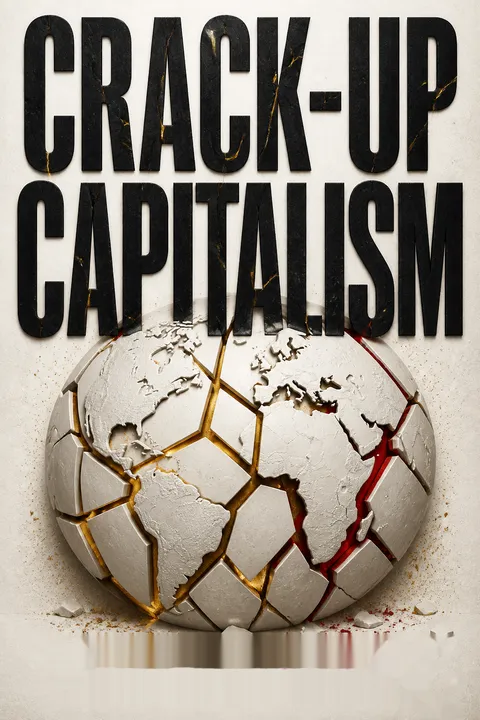
The perforated globe. While standard maps show a clean mosaic of sovereign nations, the global economy is actually riddled with over 5,400 special economic zones, tax havens, and free ports. These enclaves are carved out of nations to suspend ordinary taxation and regulation, allowing capital to dictate its own rules.
Crack-up capitalism defined. This fragmentation is not accidental but rather the result of a deliberate ideology that seeks to dissolve democratic oversight. By punching holes in national territories, market radicals create zones of exception that discipline surrounding states into lowering taxes and regulations.
Key zone characteristics:
- Quasi-extraterritorial status distinct from the host state.
- Complete suspension of ordinary democratic and labor regulations.
- Tax holidays and zero-tax jurisdictions for transnational corporations.
- Private security and infrastructure replacing public services.
2. Hong Kong proved that capitalist freedom can thrive without the ballot box.
I believe a relatively free economy is a necessary condition for a democratic society... But I also believe there is evidence that a democratic society, once established, destroys a free economy.
The neoliberal paradise. For economists like Milton Friedman, colonial Hong Kong was the ultimate laboratory of laissez-faire capitalism. Run by a British colonial governor and corporate elites without popular elections, it demonstrated that economic freedom did not require political democracy.
Administrative absolutism. The absence of an electorate insulated policymakers from popular demands for welfare, minimum wages, or labor protections. This "no-party administrative state" kept taxes flat at 15 percent and public spending minimal, prioritizing market efficiency over social equity.
The portable template:
- A flat tax model later exported to post-communist Eastern Europe.
- Constitutional clauses enforcing balanced budgets and debt brakes.
- The decoupling of economic freedom from civil liberties.
- A blueprint for China's own special economic zones.
3. Enterprise zones like Canary Wharf bypass local democracy to serve global capital.
The London that had traded things... became the London that traded money.
The city in shards. In the 1980s, Margaret Thatcher's government introduced "enterprise zones" to revitalize decaying urban areas like the London Docklands. By bypassing local governments and planning regulations, these zones handed control directly to private real estate developers.
Hong-Kong-on-Thames. The development of Canary Wharf created a second financial district designed specifically for the new era of electronic trading. This megaproject was heavily subsidized by public funds but operated as a privately owned, heavily surveilled public space.
The urban consequences:
- The abolition of local socialist governments like the Greater London Council.
- The transformation of housing into a speculative global asset class.
- The displacement of working-class residents by luxury developments.
- The rise of gated communities and "vertical secession" in the sky.
4. The Singapore Solution combines state-led planning with authoritarian market integration.
Our port makes the world our hinterland.
Authoritarian modernism. Unlike Hong Kong's laissez-faire approach, Singapore's success relied on the "long arm of state intervention." The city-state's government aggressively acquired land, built massive industrial estates, and established state-owned enterprises to plug into multinational networks.
Soft authoritarianism. Under Lee Kuan Yew, Singapore combined economic openness with strict political control, suppressing labor unions and political opposition in the name of "pragmatism." This model proved highly attractive to Chinese reformers looking to modernize without democratizing.
The Singaporean paradox:
- A highly managed economy with 80 percent of residents in public housing.
- A reliance on a massive, disenfranchised migrant workforce.
- The promotion of "Asian values" to justify paternalistic rule.
- A template for post-Brexit Britain's "free ports" and deregulation.
5. Market radicals co-opted apartheid's balkanization to test tax-free, union-busting enclaves.
The libertarian solution to involuntary apartheid from above left the door open for voluntary racial segregation from below.
The Ciskei experiment. In the 1980s, South African libertarians partnered with the apartheid regime to turn the Black "homeland" of Ciskei into a free-market laboratory. They envisioned Ciskei as an "African Hong Kong" that would bypass apartheid's state-led regulations.
Subsidized sweatshops. In reality, Ciskei's economic boom relied on massive subsidies from the Pretoria government and the violent suppression of trade unions. Foreign investors, primarily from Taiwan and Hong Kong, exploited low-wage female labor while enjoying complete tax immunity.
Voluntary segregation:
- The privatization of communal tribal land into individual property.
- The use of "freedom of association" to justify racial discrimination.
- The creation of private, white-only enclaves like Orania.
- The defense of authoritarian regimes in the name of economic liberty.
6. Anarcho-capitalists champion secession to fragment the world and escape democratic taxation.
The more states the world is fragmented into... the less power any one state can build up.
The strategy of crack-up. Anarcho-capitalist Murray Rothbard argued that the path to a stateless, tax-free society lay in the radicalization of national self-determination. By supporting secessionist movements worldwide, libertarians hoped to shatter the map into thousands of competing jurisdictions.
The paleo-alliance. In the 1990s, market radicals formed an alliance with neo-Confederates and paleoconservatives in the United States. This coalition united a desire for extreme laissez-faire capitalism with a defense of racial homogeneity and voluntary segregation.
The neo-medieval vision:
- The replacement of public law with private, polycentric contracts.
- The celebration of the dissolution of large federal states.
- The promotion of "nations by consent" based on cultural alignment.
- The use of secession as a tool to dismantle the welfare state.
7. Gated communities act as private micro-governments that enforce voluntary segregation.
We are building a kind of medieval landscape... in which defensible, walled and gated towns dot the countryside.
The rise of privatopia. Gated communities and homeowners associations (HOAs) represent a form of "soft secession" within the nation-state. These private residential governments replace municipal services with contracted providers and enforce strict aesthetic and behavioral codes.
Sociological federalism. Economists like Gordon Tullock defended gated communities as voluntary contracts that allowed people to live with similar peers. This spatial segregation allowed wealthy residents to wall themselves off from public responsibilities and tax burdens.
The private legal order:
- The allocation of voting rights based on property ownership rather than citizenship.
- The use of private security forces to police and exclude outsiders.
- The replacement of constitutional rights with restrictive covenants.
- The return of company-town-style paternalistic governance.
8. Liechtenstein models the state as a private, for-profit service provider.
The people... should be the shareholders of the state.
The absolute monarchy as a business. Liechtenstein, a tiny alpine principality, transformed itself into a premier tax haven by allowing foreign corporations to buy anonymous legal residency. Its monarch, Prince Hans-Adam II, actively promotes the idea of the state as a mere service provider.
Sovereignty for sale. Under Liechtenstein's constitution, communes have the right to secede, and the state operates on an opt-in, opt-out basis. This model treats citizens as customers who can choose to take their business elsewhere if the state fails to perform.
The offshore sanctuary:
- The creation of the Anstalt to shield family fortunes from taxes.
- The defense of bank secrecy against international regulatory bodies.
- The promotion of "democratic feudalism" over social democracy.
- A model of tax competition designed to starve the welfare state.
9. Dubai represents the ultimate corporate city-state organized into legal bubble-domes.
The delays, the disputes, the litigation, the whole messy business of 'Not in My Back Yard' simply doesn't exist in the country.
The patchwork city. Dubai is organized as a collection of specialized free zones, or "legal bubble-domes," each with its own distinct regulations and courts. This radical legal pluralism allows foreign investors to operate under rules tailored specifically to their industries.
Dubai, Inc. Run by a ruling family that acts as a corporate board, Dubai has eliminated the "messiness" of democratic politics. The city-state prioritizes rapid infrastructure development and real estate speculation, funded by global capital and built by disenfranchised migrant labor.
The franchise state:
- The export of the Jebel Ali free zone model to ports worldwide.
- The creation of specialized zones like Media City and Internet City.
- The use of offshore shell companies to conceal global wealth.
- The replacement of civic identity with consumer-based contracts.
10. Silicon Valley's "network states" seek to replace physical nations with digital cloud countries.
Rather than starting with the physical territory, we start with the digital community.
The digital exodus. Tech entrepreneurs like Balaji Srinivasan and Peter Thiel advocate for "ultimate exit" through the creation of "network states." These are cloud-first communities that organize online around shared values before acquiring physical land.
Sovereignty on the blockchain. By utilizing cryptocurrencies and smart contracts, these digital communities seek to bypass central banks and state-run legal systems. They envision a world where individuals can opt out of their physical nations and join private, decentralized "cloud countries."
The new colonial frontier:
- The development of private "charter cities" like Próspera in Honduras.
- The replacement of democratic citizenship with "agreements of co-existence."
- The use of international arbitration to protect private investments from local laws.
- The retreat of tech elites into fortified, self-governing enclaves.


Download PDF
Download EPUB
.epub digital book format is ideal for reading ebooks on phones, tablets, and e-readers.








































