
Key Takeaways
1. Liberalism's Hegemony Has Collapsed, Ushering in Ideological Conflict
Five years of political upheaval—from 2016 to 2020—was all it took to shatter the hegemony of Enlightenment liberalism.
A new era. Western nations, after three generations living under the shadow of the World Wars, experienced an unprecedented political revision by the 1960s, where Enlightenment liberalism became the dominant framework. This era, marked by the belief that liberalism was the "final political theory," has now abruptly ended. The period from 2016 to 2020 saw the dramatic rise of nationalist conservatism, exemplified by Donald Trump's "America First" administration and Brexit, alongside the astonishing success of an updated Marxism, often termed "Progressivism" or "Woke," in seizing control of key institutions.
Competing visions. The collapse of liberal hegemony has reignited fierce competition among political ideologies. While nationalist conservatism seeks to restore national interest, traditional values, and democratic processes, the new Marxism aims to fundamentally transform institutions like media, universities, and corporations. Simultaneously, the rise of an imperialist China challenges the long-held myth that economic prosperity would inevitably lead to a liberal political order, presenting a bleak reality of global power shifts.
The Weimar parallel. Many commentators compare the crumbling of the liberal regime to Weimar Germany before Hitler's rise, with new racialist movements and calls for dictatorship emerging on the fringes. However, the author argues that America still possesses resources for revival, particularly in the Anglo-American constitutional tradition and the potential for national conservatism to restore stability, either alone or in alliance with anti-Marxist liberals.
2. Anglo-American Conservatism: A Tradition Rooted in Empiricism, Nation, and Faith
A conservative is a traditionalist, a person who works to recover, restore, and build up the traditions of his forefathers and to pass them on to future generations.
A distinct worldview. Unlike universal theories like liberalism or Marxism, political conservatism is inherently traditionalist, focused on the recovery and repair of national and religious traditions specific to a people. The Anglo-American conservative tradition, traced through figures like John Fortescue, Richard Hooker, John Selden, and Edmund Burke, is crucial for understanding the historical strength and success of English-speaking nations.
Foundational principles. This tradition is characterized by five core principles:
- Historical Empiricism: Authority from constitutional traditions refined by centuries of trial and error, skeptical of abstract universal systems.
- Nationalism: Human beings form national collectives with mutual loyalties and unique inherited traditions, rooted in the Hebrew Bible's ideal of a free and just national state.
- Religion: The state upholds God, the Bible, congregation, and family as essential for national heritage and public morals, while tolerating other views that don't endanger national well-being.
- Limited Executive Power: A strong, unitary chief executive whose powers are limited by the people's representatives, requiring their consent on crucial matters.
- Individual Freedoms: Security of life and property, freedom of speech and debate, guaranteed by law and due process.
Beyond liberalism. These principles diverge sharply from Enlightenment liberalism, which detaches individual freedoms and limited government from their national and religious foundations, mistakenly treating historical-empirical truths as universal dictates of reason. This liberal approach, the author contends, is inherently incapable of conserving anything, as it is devoted entirely to freedom from the past.
3. The Conservative Paradigm: Loyalty, Hierarchy, Honor, and Cohesion as Political Realities
Men are born into families, tribes, and nations to which they are bound by ties of mutual loyalty.
Beyond the individual. The conservative paradigm recognizes that political reality is not merely about individuals and the state, but about nested hierarchies of families, clans, tribes, and nations bound by mutual loyalty. This loyalty, an extension of the individual's self to others, is the most powerful force in politics, creating enduring structures capable of sustaining duress and propagating across generations.
The role of honor. Within these hierarchies, individuals and groups constantly compete for honor, importance, and influence. The precept to "Honor your father and your mother" exemplifies a lifelong obligation to give "weightiness" to superiors, which is crucial for learning, transmitting traditions, and maintaining social order. Liberalism's emphasis on individual autonomy and equality, however, undermines this honor, leading to a disregard for elders and tradition.
Cohesion and constraint. A society's cohesion—its ability to remain unified under stress—depends on these bonds of mutual loyalty and the willingness of its members to accept constraints. Cohesive societies can be governed with a light hand, fostering freedom, whereas dissolute societies, lacking internal loyalty, require heavy-handed rule or face civil war and tyranny. Liberalism's relentless pursuit of individual freedom, by eroding traditional constraints and honor, inadvertently leads to societal dissolution and the need for greater coercion.
4. Liberalism's Blindness to the Nation Leads to Societal Dissolution
This blindness to the real existence of the nation as something distinct from the individual or the state stands behind almost all of the great policy disasters of the last generation.
A fundamental flaw. Enlightenment liberalism's paradigm is fundamentally blind to the concept of the nation as a real, distinct entity, reducing it merely to a collection of individuals under a state. This intellectual oversight has led to catastrophic policy failures in recent decades, as liberals fail to grasp the importance of national identity, loyalty, and borders.
Policy disasters:
- Free Trade with China: Encouraged by liberal theory, it strengthened a hostile authoritarian nation at the expense of Western manufacturing and workers, eroding national cohesion.
- Unrestricted Immigration: Viewed through a liberal lens, borders become arbitrary curtailments of individual liberty, ignoring the reality of national and tribal loyalties and the potential for internal conflict when assimilation is not prioritized.
- "Liberal World Order": Imposing liberal democracy through military intervention in diverse nations has consistently failed, as foreign peoples resist the overthrow of their unique national and tribal traditions.
- Family Dissolution: Dogmatic belief in individual freedom has destigmatized traditional family structures, leading to declining marriage rates, out-of-wedlock births, and plummeting fertility, threatening the very existence of nations.
Perpetual revolution. By dismissing national and tribal loyalties as "primitive" or "irrational," liberalism inadvertently fuels a "perpetual cultural revolution." It systematically dismantles inherited institutions and norms without being able to consolidate a stable consensus around new ones, leaving societies vulnerable to fragmentation and external threats.
5. God, Scripture, and the Traditional Family are Indispensable Pillars of Society
Public religion has been a central pillar of Anglo-American conservatism throughout its entire history.
One normative order. The Anglo-American tradition, rooted in the Hebrew Bible, understands that the discovery of the one God means there is a single normative order for what is true and right, transcending local standards. "Fear of God" signifies an awareness of moral boundaries essential for societal persistence, distinguishing it from atheism or polytheism, which deny this universal standard.
The traditional family. The traditional family, as known in Judaism and Christianity, is not a natural construct but an artifice of Mosaic law designed to channel human nature for societal benefit. Its five pillars include:
- Lifelong bond of a man and a woman.
- Lifelong bond between parents and children (through honoring parents).
- Family as a business enterprise.
- Multiple generations in daily contact.
- Part of a broader community or congregation.
This robust structure serves ten distinct purposes, from raising children to caring for the elderly, fostering resilience and cultural transmission.
Congregation as refuge. The traditional congregation, an alliance of families, acts as a vital loyalty group, transmitting inherited ideas and institutions. In liberal societies, where traditions are overturned, the congregation becomes a crucial refuge, offering a healthy hierarchy and a path to conservative life. Investing in congregations is not a retreat from the nation but a necessary act to cultivate the loyal leaders and cohesive communities from which a strong nation draws its strength.
6. Government's True Purpose: Balancing the National Good with Individual Liberty
Are there legitimate purposes of government that cannot be reduced to the freedom of the individual?
Beyond individual freedom. The Anglo-American conservative tradition recognizes that government has multiple, irreducible purposes beyond merely ensuring individual freedom. These purposes, articulated in documents like the U.S. Constitution's preamble and Burke's writings, include:
- Forming a more perfect union (national cohesion).
- Establishing justice.
- Insuring domestic tranquility.
- Providing for the common defense.
- Promoting the general welfare.
- Securing individual liberty.
- Maintaining national liberty (independence).
- Ensuring permanence and stability through the ages.
- Encouraging traditional religion.
The economy of honors. A just government cultivates mutual loyalty among the nation's constituent tribes or parties by influencing the "economy of honors," ensuring that all factions feel respected and have a voice. Compromises, like those in the U.S. Constitution regarding legislative composition or slavery, were "exchanges of honors" designed to forge national cohesion, not merely to uphold abstract rights.
Religion as a public good. Government cannot be truly neutral on overarching philosophical frameworks. Burke argued that national religion provides an indispensable "public philosophy" that encourages officials and citizens to act with a sense of duty and purpose beyond immediate gain. The postwar liberal attempt to create a "neutral" state, by banishing traditional religion, inadvertently replaced it with an atheistic Enlightenment framework, leading to the dissolution of traditional institutions and national cohesion.
7. The Inevitable Dance Between Liberalism and Marxism
What if it turned out that liberalism has a tendency to give way and transfer power to Marxists within a few decades?
Liberalism's vulnerability. Liberal societies are inherently vulnerable to Marxism because liberalism's abstract principles of freedom and equality, detached from tradition, lack stable content. Marxists exploit this by pointing to every instance of unfreedom or inequality as "oppression," demanding new rights and a "revolutionary reconstitution of society."
A one-way street. This dynamic creates a "dance" where liberals progressively adopt Marxist demands, but Marxists rarely move towards liberalism. This imbalance stems from liberals' unconscious reliance on inherited traditions they simultaneously disparage, while Marxists consciously work to dismantle these traditions. The result is a rapid collapse of liberal ideas before Marxist criticism, as seen in the takeover of major liberal institutions.
Democracy's end. Marxism is fundamentally incompatible with democracy because it grants legitimacy only to the "party of the oppressed," aiming for a one-party regime and the violent overthrow of all rivals. The delegitimization of conservative viewpoints, and subsequently liberal ones, by ascendant Marxists signals the end of two-party democracy. Liberals face a stark choice: submit to Marxism or ally with conservatives to defend democratic principles.
8. Conservative Democracy: A Path to National Restoration
Conservative democracy does not require that changes be made in any written constitutional documents.
A viable alternative. Rejecting the false dichotomy that only liberalism, Marxism, or fascism exist, conservative democracy offers a practical alternative rooted in the Anglo-American tradition. It seeks to restore a sustainable balance between limited government and individual liberties, and the principles of religion, nationalism, and historical empiricism.
Key tenets of conservative democracy:
- National Identity: Embrace traditional language, religion, laws, and history as the basis for national cohesion, rejecting the "creedal nation" myth.
- Public Religion: Restore biblical religion (Christianity in Christian nations) as the normative framework for public life, discarding the "separation of church and state" doctrine.
- Law: Ground law in the Anglo-American constitutional tradition, the Bible, and common law, rather than abstract universal human rights.
- Family and Congregation: Promote traditional family and congregational norms as essential for civilized life.
- Education: Prioritize parental responsibility, encouraging congregational schools and homeschooling, and teaching the Anglo-American constitutional and religious tradition.
- Economy: Uphold property rights and free enterprise, but balance with national security, cohesion, and public morals.
- Immigration: Regulate immigration to ensure assimilation and serve national interests, not just economic ones.
- Foreign Policy: Focus on safeguarding national independence and prosperity, respecting other nations' traditions, and avoiding the imposition of liberalism.
- International Bodies: Recognize the independent national state as vital for freedom, rejecting the imperialistic tendencies of international organizations.
Experiments in restoration. This framework is not a utopia but a practical proposal for historically Christian countries to restore a politics of conservation. It calls for overturning postwar Supreme Court decisions that delegitimized Christianity in public life and fostering extensive cooperation among Christian denominations, orthodox Jews, and anti-Marxist liberals to establish negotiated settlements for legitimate non-compliance in diverse locales.
9. Living a Conservative Life: Personal Repentance and Rebuilding Tradition
Political conservatism cannot be separated from such a personal conservatism.
Decadence and anomie. Liberal societies, by severing individuals from traditional norms and obligations, foster a state of "anomie"—a life without law or constraint. This leads to widespread disorientation, despair, and a susceptibility to "charlatans peddling easy hatreds," as individuals drown in a sea of meaningless choices.
The path of teshuva. The only honorable way out of this decadence is through "teshuva"—a personal journey of repentance and return to traditional paths. This means actively engaging in the conservation of national and religious traditions in one's private life, not merely advocating for them abstractly. It requires concrete steps:
- Locating and joining a conservative community (e.g., an orthodox Christian or Jewish congregation).
- Giving honor to its institutions and learning its traditions.
- Committing to practices like keeping the Sabbath, studying Scripture, and upholding traditional marriage and family life.
Beyond ideas. The author's personal journey at Princeton, inspired by Reagan-era nationalism and religious revival, highlights that conservatism is not just about "the power of ideas" but about living those ideas. Intellectual defenders of tradition, like George Will and Irving Kristol, may articulate conservative principles, but without personal commitment to a conservative life, their influence is limited.
Honor and constraint. True conservatism requires accepting the constraints cultivated by tradition and honoring those who came before us. It means recognizing that disbelief often stems from dishonor—an inability to give weight and significance to our inheritance. By embracing honor and constraint, individuals can begin to heal ravaged families, communities, and nations, reviving a common sense that liberalism has eroded. This personal commitment is the engine for any genuine public conservatism.
Review Summary
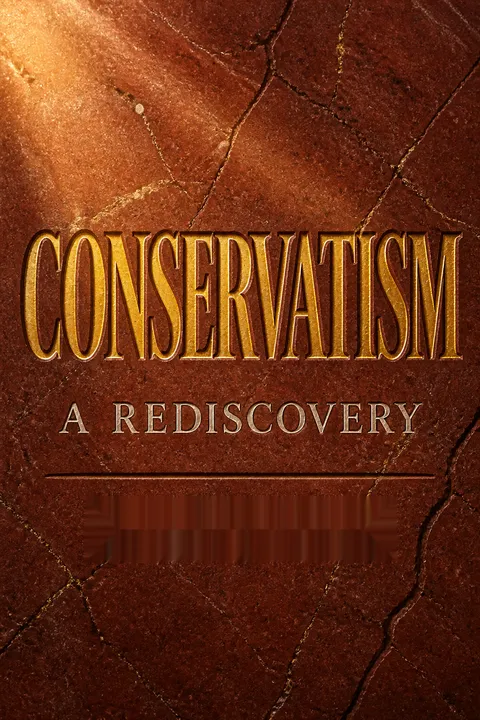
Conservatism: A Rediscovery receives widespread praise (4.29/5) for articulating Anglo-American conservative tradition rooted in historical empiricism, nationalism, and religion rather than Enlightenment rationalism. Reviewers appreciate Hazony's deep historical analysis from Fortescue through Burke, his distinction between conservatism and liberalism, and his emphasis on family, honor, and tradition. Many call it superior to Russell Kirk's work and essential reading for understanding modern conservatism. Critics note occasional historical oversimplifications, questionable classifications of philosophers, and concerns about his nationalism framework. The book's personal testimonial section resonates strongly, urging conservatives to actually live their principles.
People Also Read





Download PDF
Download EPUB
.epub digital book format is ideal for reading ebooks on phones, tablets, and e-readers.








































