
Key Takeaways
1. Connectivity, Not Borders, Defines Global Destiny
The future has a new maxim: 'Connectivity is destiny.'
Obsolete adage. The traditional saying "geography is destiny" is becoming outdated. Centuries-old beliefs about climate, culture, or size dictating a society's fate are being overturned by the rise of global transportation, communications, and energy infrastructures. These networks—highways, railways, pipelines, internet cables—are fundamentally transforming human society from a system of divisions into one of connections.
Global nervous system. Infrastructure acts as a nervous system for the planetary body, with capital and code as its blood cells. This increasing connectivity is creating a world beyond traditional states, fostering a global network civilization where connective corridors are more indicative of how the world works than national borders. The arc of history, despite its tragic cycles, bends towards greater connectivity.
Investment in flow. There is no better investment than connectivity, with global spending on physical infrastructure projected to reach $9 trillion per year by 2025. This massive build-out, particularly in Asia, is transforming regions from economies valued in billions to trillions. Connectivity, alongside demographics, capital markets, labor productivity, and technology, is a major source of momentum in the global economy, proving that flow ultimately triumphs over friction.
2. The World is Undergoing Devolution and Aggregation
Fragmentation is thus not the antithesis of globalization but its handmaiden.
Dialectical forces. Devolution, the fragmentation of territory into smaller units of authority, is the most powerful political impulse of our age, driven by local desires for self-rule, urbanization, and fiscal transparency. This process, akin to the second law of thermodynamics, leads to maximum entropy in political systems. However, devolution has a powerful counterpart: aggregation, where smaller units fuse into larger commonwealths for survival through shared resources and infrastructure.
Healing divisions. This devolution-aggregation dynamic is a geopolitical dialectic, a progression through opposites towards transcendence. Regions worldwide are moving from postcolonial separation to collective functional integration. Europe, for instance, is both legally devolved and supranationally integrated, while Africa is splintering in some areas but consolidating in others through subregional clusters.
Inclusive remapping. This process involves inclusive remapping, where countries use shared infrastructure, customs agreements, and energy grids to evolve from political to functional spaces. Even in "frozen conflicts," shared infrastructure can diminish tensions, allowing both sides to benefit from connectivity. The ultimate goal is to transcend arbitrary postcolonial boundaries in favor of connective infrastructures, leading to a world with more borders but also more borderlessness.
3. Geopolitical Competition is a "Tug-of-War" Over Supply Chains
Who rules the supply chain rules the world.
Brutal non-contact sport. Geopolitical competition has evolved from territorial conquest to a "tug-of-war" over global supply chains. This ancient metaphor for a "severe contest for supremacy" aptly describes a world where conflict is less about military conquest and more about pulling flows of money, goods, resources, technology, knowledge, and talent towards oneself. Unlike traditional warfare, tug-of-war is a brutal non-contact sport, where victory is won by economic master planning rather than military doctrine.
Beyond Orwell's vision. George Orwell's 1984 envisioned perpetual war between superstates, but today's reality is a perverse twist: superstates' primary interaction is not conquest but the pursuit of access to each other's resources and markets. Precisely because they cannot conquer each other, they wage tug-of-war. This competitive liberalization is fought over supply chains, not territory, with economic ties becoming crucial tools of strategic influence.
Interdependence forestalls conflict. The increasing depth of global cross-border trade and investment makes tug-of-war complex. Interdependence forestalls conflict if leaders expect its benefits to continue, as seen in the steady integration between China and Taiwan despite historical tensions. Military maneuvers don't fully capture leverage; the tangled complexities of today's system force leaders to make functional calculations about the cost-benefit utility of their strategies, knowing that supply chain warfare involves deep interests on both sides.
4. New Maps Must Reflect Functional, Not Just Political, Geography
The true map of the world should feature not just states but megacities, highways, railways, pipelines, Internet cables, and other symbols of our emerging global network civilization.
Beyond static lines. Traditional political maps, which ironically hold sacred veracity, are increasingly irrelevant as they are foremost propaganda tools that present natural or political geography as permanent constraints. They fail to represent the reality of place, where borders change constantly and are often porous filters for exchange rather than solid lines of separation. The absence of man-made infrastructure on these maps gives a misleading impression that borders trump other means of portraying human geography.
Functional over political. Mega-infrastructures overcome hurdles of both natural and political geography, revealing that the era of organizing the world by political space is giving way to functional space—how we actually use it. This means the de jure world of political borders is yielding to the de facto world of functional connections. Connectivity and geography are not opposites; they reinforce each other, morphing our perception of "natural" regions.
A sophisticated glossary. To produce an atlas for the supply chain world, a more sophisticated glossary of power is needed, highlighting coherent units, concrete connections, and strong gravities of influence. This includes:
- Territorial countries (mapping de facto authority, not just de jure sovereignty)
- Networked cities (global hubs, not just black dots)
- Regional commonwealths (larger, more coherent groupings)
- Cloud communities (transcending physical geography)
- Stateless companies (autonomous players with global reach)
Such maps would depict a far more complex and dynamic reality than current political boundaries.
5. Cities Emerge as the Primary Nodes of Global Organization
Cities are mankind’s most enduring and stable mode of social organization, outlasting all empires and nations over which they have presided.
Timeless global form. Cities are mankind's most profound infrastructure, growing from villages to megacities and super-corridors. By 2025, there will be at least forty megacities with populations over 10 million. As populations, wealth, and talent concentrate in global cities, they gradually supersede countries as the world's key gravitational centers. Their influence is ranked by their role in global networks, not territorial possessions.
Diplomacity in action. Demographic and economic weight gives cities greater policy-making leverage, autonomy, and enables direct diplomacy—"diplomacity"—with other cities. Great and connected cities belong as much to global networks as to their political geography, acting as disembedded assemblages of circuits. They form a league of their own, drawing talent and capital globally, often bypassing national governments.
Islands of governance. Cities are often islands of governance and order in weaker states, extracting rents from surrounding areas while remaining indifferent to national capitals. This is evident in places like Lagos, Karachi, and Mumbai. The rise of special economic zones (SEZs) further underscores this, as cities and provinces directly recruit investors to ensure local benefits, embodying a shift where optimizing economic geography supersedes preserving territorial sovereignty.
6. Infrastructure Alliances Supersede Traditional Military Pacts
The strength of ties is measured not by color-coding countries according to membership in clubs such as NATO but through mapping connectivity and volumes of flows between them.
Competitive connectivity. Geopolitics is no longer solely about territorial conquest but competitive connectivity, where the most connected power wins. Empires have always used infrastructure to extend influence, from Roman roads to British railways. Today, mega-continental empires like the North American Union and Greater China emerge through topographical engineering and supply chain mastery, aligning diplomatic, military, and commercial instruments.
Post-ideological pragmatism. Traditional alliances, once based on ideology, are replaced by ephemeral partnerships driven by supply-demand complementarities. Russia and China, for example, feign an anti-Western front while China buys Russian resources. The strongest predictor of stable relations is not trade or military alliances, but foreign investment between nations. This is the age of infrastructure alliances, where material and diplomatic interests are intertwined.
Global public goods. Infrastructure provision has become a global public good on par with security. China, as the world's largest infrastructure exporter, builds roads, railways, and pipelines not out of generosity but to efficiently access raw materials and markets, binding countries through infrastructural tethers. This approach, while mercantilist, offers job creation and economic participation for poor, landlocked nations, demonstrating a division of labor rather than spheres of influence.
7. Global Dilution is Reshaping Human Identity and Society
If 'demography is destiny'—as is also claimed—then our destiny is a global mongrel civilization.
Accelerating genetic mixing. Mankind's ancestry is far more mixed than previously realized, a continuous process accelerating through global connectivity. Over 300 million people live outside their country of origin, leading to perpetual demographic blending. This mass migration is remapping continents, creating mestizo populations in North America, blending European with North African and Arab peoples, and fostering Sino-Siberian cultures in the Far East.
Nation-state obsolescence. The concept of pure nation-states is becoming passé, with only a dozen truly ethnically homogeneous states remaining. Xenophobic sentiments in Europe, while prevalent, contradict the inevitable demographic shifts driven by structural imbalances between rich and poor, young and old. Aging societies face a choice: immigration or demographic demise, as tax revenues and social services cannot be maintained without inflows of young workers.
Civicism over nationalism. Immigration is transforming the complexion of elites and electoral politics, leading to more diverse, "mongrelized" communities. Cities like Toronto, London, and Dubai are becoming incubators of this new global civilization, where loyalty to the city ("civicism") supersedes national identity. This shift promotes place-based rights over identity politics, fostering cohesion amid economic inequality and offering a more inclusive ethos for mobile, itinerant youth.
8. Cyber Civilization is a New Frontier of Flows and Frictions
The Internet is the first thing that humanity has built that humanity doesn’t understand.
Invisible infrastructure. The Internet, born to overcome distance, is a quantum world: everywhere yet difficult to see, enabling connections that can disappear instantaneously. What we call "tech" companies are essentially technology infrastructure companies, expanding into digital empires. Telecommunications has leapfrogged other forms of connectivity, with global spending on mobile infrastructure projected to reach $4 trillion by 2020, expanding access and speed worldwide.
Bordered cyberspace. While initially borderless, the Internet is acquiring interstate divisions. The U.S. Commerce Department's stepping down as de facto Webmaster has led to greater unilateral government interventions and international oversight. Countries assert digital sovereignty to protect privacy or gain access to data, making the geographic location of servers and cables as important as oil pipelines. However, data's replicability and rerouting capabilities make it slippery, allowing individuals to circumvent restrictions.
Quantum conflict. Cyber war is a quantum type of conflict with intangible weapons and no fixed arsenals. It's a perpetual war of hack attacks to damage infrastructure, steal data, or access intellectual property. The "Internet of Things" is also the "Internet of Threats." Despite government roadblocks, tech companies prioritize user data protection and resist government demands, ensuring the Internet remains a universe of voluntary association and competition for mind share, with distributed connectivity preventing single points of failure.
9. Nature's Forces Demand Adaptive Infrastructure and Governance
We can debate about geography, but we cannot debate with nature.
Existential vulnerability. Geophysical phenomena profoundly shape mankind, with earthquakes, tsunamis, and climate change constantly shifting coastlines. Humanity's concentration into dense, coastal civilizations, particularly in Asia, creates existential vulnerability to rising sea levels and extreme weather events. This necessitates adaptive infrastructure and relocation strategies, moving beyond mitigating emissions to active resettlement and urban cooling centers for a hotter world.
Rivers as shared resources. Rivers, often seen as natural borders, are primarily shared resources vital for civilizational survival. From the Indo-Gangetic Plain to the Nile, these waterways unite billions across political boundaries. Mismanaged urbanization and overexploitation of rivers threaten drinking water for billions, while droughts and desertification squeeze populations. This demands a return to models of functional geography, where shared resources are managed cooperatively across borders.
Sustainable supply circles. Geo-engineering techniques and sustainable supply chain administration are crucial. Drilling for water, nuclear-powered desalination, and harnessing solar power for water production are becoming essential. Sustainable urbanization, conservation, and sensible pricing of resources are vital. International organizations and socially responsible investors are leveraging their influence in supply chains to promote sustainability, ensuring that the planet's resources are harvested and distributed responsibly, rather than plundered.
10. Supply Chains Offer Both Salvation and Exploitation
There is only one thing worse than being overrun by multinationals, and that is not being overrun by multinationals.
Double-edged sword. Supply chains are a double-edged sword: they offer salvation by creating economic opportunities, bringing technology, and lifting billions out of poverty, but also facilitate exploitation, environmental damage, and illicit trade. Episodes like the horse meat scandal or factory collapses in Bangladesh highlight the complexity and opacity of global supply chains, revealing how they invisibly penetrate borders and challenge traditional notions of accountability.
Corporate citizenship. Despite the risks, foreign firms in supply chains pay higher wages, bring new technology, and boost worker skills, acting as catalysts for development. As states depend more on corporations, the distinction between public and private blurs, fostering a new dynamic where corporate citizenship becomes crucial for delivering welfare. Multinationals, facing consumer pressure and labor strikes, are increasingly realizing that caring for the entire supply chain is a sound long-term investment.
Beyond the law. Extractive companies embody the permanent nature of supply chain empires, often operating in unstable geographies where they effectively govern entire towns. While some countries resist exploitation through resource nationalism, others desperately woo foreign investment, even if it means compromising on environmental or labor standards. The challenge is to clean up supply chains on-site through initiatives like the Extractive Industries Transparency Initiative (EITI) and corporate transparency laws, ensuring that benefits are shared and exploitation is minimized.
11. A Post-Ideological World Driven by Pragmatic Connectivity
Connectivity is unquestionably a greater force than all the political ideologies in the world combined.
Beyond "anti" movements. The early 21st century saw antiglobalization movements, but these "anti" movements ultimately lose because they represent parochial shortsightedness rather than universalistic humanism. Globalization and connectivity have dramatically improved the quality of life for billions, proving to be a greater force than political ideologies or even religions in driving modernization and progress. Individuals connect with the world through markets and media, fostering empathy and guiding ethical evolution.
Utilitarian morality. A supply chain order is neither a libertarian fantasy nor a socialist paradise, but an evolutionary reality. The touchstone of morality in this global society is leveraging connectedness for utilitarian ends: achieving the greatest good for the greatest number. This means overcoming rigid moralities that hinder justice and efficiency, and adopting a utilitarian mentality where governments manage parts of a global network civilization rather than owning the world.
Co-creation, not hierarchy. Global order is no longer top-down; globalization itself is the order. A Pax Sinica is unlikely to replace Pax Americana linearly. Instead, a multi-civilizational, multipolar world is emerging where continents deepen internal integration and expand global linkages. This requires co-creation across civilizations, self-restraint, and mutual trust. Competitive grand strategy, by promoting regional integration and global connectivity, inadvertently contributes to greater collective resilience, making the world safer for supply chains and, ultimately, a safer place.
Review Summary
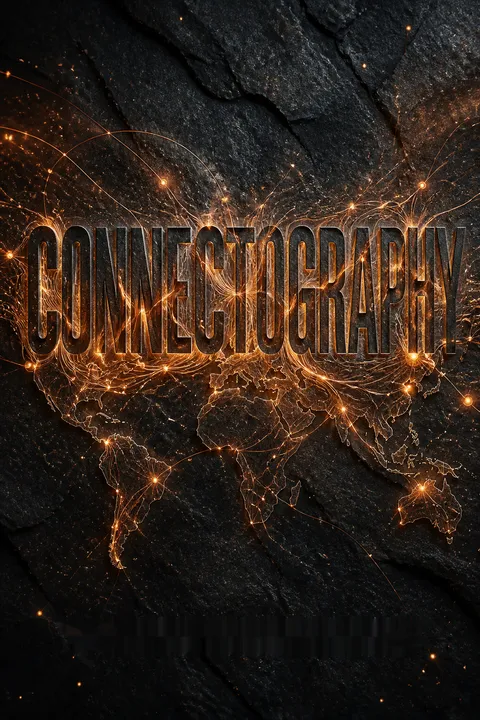
Connectography by Parag Khanna explores how global connectivity through infrastructure, supply chains, and networks increasingly matters more than traditional national borders. Reviews are deeply divided: critics fault the book's overuse of metaphors (especially "tug-of-war"), sloppy writing, technical inaccuracies, and overly optimistic pro-globalization stance that ignores valid concerns about inequality and climate change. Supporters praise its original perspective on how cities, infrastructure investment, and economic interdependence shape civilization's future, finding the innovative maps and comprehensive global analysis thought-provoking and potentially worldview-changing, despite occasional hyperbole.
People Also Read









Download PDF
Download EPUB
.epub digital book format is ideal for reading ebooks on phones, tablets, and e-readers.








































