
Plot Summary
Nightmares and New Beginnings
Gibs awakens from a harrowing nightmare, the trauma of the past and the uncertainty of the future weighing heavily on him. The world has ended, but life stubbornly continues in the commune, where survivors cobble together a new existence. The morning routines—coffee, chores, and awkward conversations—are tinged with the anxiety of what's been lost and what must be built. The community is a patchwork of personalities, each carrying scars and secrets, but united by the need to survive. As Gibs interacts with Olivia, the medic, and others, the sense of unease lingers, hinting at deeper troubles beneath the surface. The chapter sets the tone: hope and dread are constant companions, and every day is a negotiation between the past's ghosts and the demands of a fragile present.
Merging Tribes, Fractured Trust
The commune faces a pivotal moment as Warren's military-led group seeks to merge with Jake's civilian survivors. Negotiations are tense, balancing compassion with the hard math of calories and space. The decision to accept orphans and a handful of others is made with heavy hearts, knowing resources are limited. The process exposes underlying tensions—questions of leadership, trust, and the trauma each group carries. Patricia's plea for the orphans, Andrew's desire to stay, and Jake's cold pragmatism all reveal the emotional and ethical complexity of building a new society. The chapter explores the fragile hope of unity, shadowed by the knowledge that every new mouth to feed is a risk, and every act of mercy could be a future threat.
Farewells and Foundations
Warren and his people depart, leaving behind a changed commune and a sense of both loss and possibility. The farewell is bittersweet, marked by gifts—like the sniper rifle for Wang—and promises to return. The emotional weight of separation is palpable, as is the anxiety of those left behind. The community must recalibrate, integrating new members and saying goodbye to old friends. The moment is both an ending and a beginning, as the survivors realize that home is not a place but the people who remain. The chapter captures the ache of transition, the awkwardness of new relationships, and the determination to make the best of what's left.
Justice in the New World
In the world after the fall, justice is swift and brutal. Clay, leader of another survivor group, presides over the trial and execution of Willy Dingle, accused of murder. The process is messy, emotional, and deeply human—full of bluster, fear, and the desperate need to maintain order. The execution is botched, revealing the community's inexperience and the thin line between civilization and savagery. The scene is a microcosm of the new world's moral ambiguity: justice is necessary, but it is also ugly and imperfect. The chapter forces characters and readers alike to confront the cost of survival and the compromises required to keep the peace.
Secrets, Schemes, and Survival
As the commune struggles to maintain order, secrets and schemes multiply. Stacy's clandestine lessons in accounting, Riley's manipulations, and Ronny's power plays all reveal the undercurrents of ambition and fear. The economic system is fragile, dependent on trust and the constant threat of collapse. Personal relationships are transactional, and every alliance is suspect. The chapter explores the ways in which survival breeds both ingenuity and duplicity, as characters jockey for position and security. The sense of impending crisis grows, as the community's foundations are tested by both internal and external threats.
The Gathering Storm
Food supplies dwindle, and the community faces the hard truth that their scavenging days are numbered. Meetings are fraught with blame and anxiety, as leaders debate whether to move on or dig in. The threat of starvation exposes old wounds and creates new divisions. Pap and Ronny's rivalry, Clay's impatience, and the community's collective fear all come to a head. The chapter is a study in group dynamics under stress, as the survivors realize that the greatest danger may come not from the outside world, but from within. The storm is coming, and everyone feels its approach.
Lines Drawn in Dirt
The arrival of a massive new group in Jackson forces the commune to confront the limits of their territory and their tolerance. Gibs and Clay's tense meeting is a dance of posturing and veiled threats, as both sides test each other's resolve. The newcomers are well-armed and desperate, and the potential for violence is ever-present. The chapter explores the psychology of borders—physical, emotional, and moral—and the ways in which fear and hope shape every interaction. The lines drawn in the dirt are both literal and symbolic, marking the boundaries of trust, power, and survival.
The Kid and the Cataclysm
A feral child, known only as Ratshit, becomes the focus of both cruelty and compassion. His capture and the subsequent intervention by Pap highlight the community's struggle to retain its humanity in the face of brutality. The episode is a microcosm of the larger cataclysm: innocence is endangered, and violence is never far away. The chapter is both a character study and a meditation on the costs of survival, as the community is forced to reckon with the darkness within and the need to protect what little light remains.
The Price of Peace
As tensions escalate, the commune is occupied by Clay's forces, and the survivors are forced to submit to searches, curfews, and the loss of autonomy. The price of peace is steep: dignity, privacy, and the illusion of safety. Amanda's efforts to maintain a semblance of normalcy—organizing Bible studies, caring for the wounded—are acts of quiet resistance. The chapter explores the psychological toll of occupation, the small acts of defiance that keep hope alive, and the ways in which power is both wielded and endured. The survivors must decide what they are willing to sacrifice, and what lines they will not cross.
Betrayal and Bloodshed
Betrayal comes from within, as Edgar's actions lead to tragedy and the community is plunged into chaos. The resulting bloodshed—murders, executions, and the loss of beloved members—marks the breaking point for many. The survivors are forced to confront the reality that trust is a luxury they can no longer afford. The chapter is a crucible, burning away illusions and leaving only the hard core of what the community has become. The cost of betrayal is measured in blood, and the survivors are forever changed.
The Occupation
Clay's occupation becomes more oppressive, as weapons are confiscated, homes are searched, and dissent is crushed. Yet beneath the surface, the seeds of revolt are sown. Amanda and others plot in secret, using faith as both shield and sword. The community is divided between those who submit and those who resist, and the tension is palpable. The chapter is a study in power—how it is imposed, how it is resisted, and how it ultimately corrupts both the oppressor and the oppressed. The survivors must decide whether to endure or to fight, knowing that either choice comes with a terrible price.
The Last Stand
The long-simmering tensions erupt into open rebellion. The survivors execute a desperate, coordinated plan to reclaim their home, risking everything for a chance at freedom. The battle is brutal and costly, with losses on both sides. Old wounds are reopened, and new ones are inflicted. The chapter is a testament to the power of collective action, the necessity of sacrifice, and the enduring hope that something better is possible. The survivors are bloodied but unbowed, having reclaimed not just their home, but their agency.
Monsters in the Mountains
In the aftermath of battle, the survivors use fear and legend as weapons, projecting the image of monsters in the mountains to drive away would-be invaders. Jake's calculated terror campaign is both effective and morally ambiguous, blurring the line between protector and predator. The chapter explores the power of storytelling—the stories we tell to survive, to warn, and to control. The survivors become both the heroes and the monsters of their own tale, and the world outside learns to fear the mountains.
Exodus and Reckoning
The defeated invaders are given a choice: leave or face annihilation. The exodus is somber, marked by grief, regret, and the knowledge that survival sometimes means walking away. The survivors reckon with what they have done and what they have become. The ghosts of the past linger, and the future is uncertain. The chapter is a meditation on judgment—of self, of others, and of the world that remains. The survivors must decide how to live with the choices they have made.
The Ghosts We Bury
The community buries its dead, mourning not just the loss of individuals, but the loss of innocence, trust, and the world that was. The rituals of grief are both comfort and torment, as survivors struggle to find meaning in the aftermath. The chapter is a reckoning with the cost of survival—the wounds that never heal, the memories that haunt, and the hope that endures despite everything. The survivors are marked by their losses, but they are also defined by their resilience.
The Long Goodbye
With the immediate crisis past, some survivors choose to leave, seeking answers, redemption, or simply a new beginning. Gibs and Alan set out on the road, carrying with them the scars and lessons of all that has come before. The community is changed, but not broken. The chapter is both an ending and a beginning, as the survivors say their long goodbyes and look toward whatever comes next. The story closes on a note of hope, tempered by the knowledge that every journey is uncertain, and every goodbye is only temporary.
Analysis
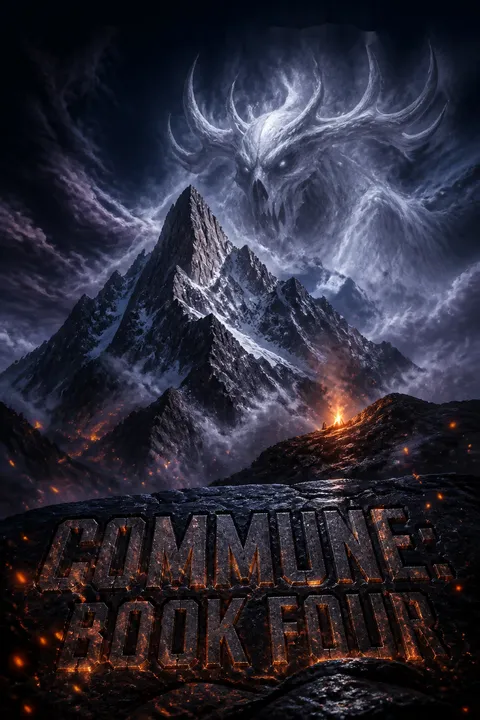
Commune: Book Four is a masterful exploration of survival, community, and the moral complexity of life after the end of the world. Joshua Gayou's narrative is both epic and intimate, weaving together the fates of dozens of characters in a story that is as much about the psychology of leadership and the ethics of power as it is about action and adventure. The novel's greatest strength lies in its refusal to offer easy answers: every act of violence, every gesture of compassion, is fraught with ambiguity and consequence. The survivors are forced to confront not just external threats, but the darkness within themselves and their own community. The story is a meditation on the cost of survival—the innocence lost, the trust betrayed, the ghosts that linger. Yet it is also a testament to resilience, adaptation, and the enduring hope that something better can be built from the ruins. The lessons of the book are both timely and timeless: that community is forged in struggle, that leadership is a burden as much as a privilege, and that the stories we tell—about ourselves, about our enemies, about the world—shape the reality we inhabit. In the end, Commune: Book Four is a story about the long, hard road to redemption, and the possibility that, even in the darkest times, we can choose to be more than what the world has made us.
Characters
Gibs (Blake Gibson)
Gibs is the gruff, tattooed Marine whose nightmares and trauma are matched only by his fierce loyalty to the commune. He is both a source of strength and a barometer for the group's moral compass, often acting as the voice of hard-earned wisdom and caution. His relationships—with Jake, Amanda, and especially the children—reveal a deep well of compassion beneath his rough exterior. Gibs is tormented by the violence he's witnessed and committed, struggling to reconcile the need for brutality with the desire to protect what's left of his humanity. His journey is one of reluctant leadership, self-sacrifice, and ultimately, the search for redemption. As the story progresses, Gibs becomes both the heart and conscience of the community, even as he is forced to confront the limits of his own endurance and the cost of survival.
Jake
Jake is the de facto leader of the original commune, a man whose intelligence and adaptability are matched only by his emotional distance. He is a master of strategy, able to see several moves ahead, but his methods are often cold and utilitarian. Jake's relationship with Amanda is complex—marked by mutual respect, shared trauma, and unspoken longing. He is both protector and manipulator, willing to do whatever is necessary to ensure the survival of his people, even if it means becoming the monster others fear. Jake's psychological depth is revealed in his moments of vulnerability and in the secrets he keeps, both from others and from himself. He is a study in the ambiguity of leadership: admired, feared, and ultimately, alone.
Amanda
Amanda is the emotional heart of the commune, a mother whose love for her daughter, Elizabeth, drives her every action. She is resourceful, compassionate, and quietly defiant, using faith and ritual as both comfort and resistance. Amanda's journey is one of transformation—from caretaker to conspirator, from victim to leader. Her relationships—with Jake, Gibs, and the other women—reveal her capacity for empathy and her willingness to make hard choices. Amanda is the glue that holds the community together, even as she is forced to confront the darkness within herself and those she loves. Her struggle is both personal and universal: how to protect innocence in a world that has lost its own.
Clay Barton
Clay is the leader of a rival survivor group, a man whose charm and intelligence are matched by his ruthlessness and moral flexibility. He is both a builder and a destroyer, capable of great generosity and terrible violence. Clay's leadership style is authoritarian but not without reason; he is driven by a genuine desire to protect his people, even as he is corrupted by power and the demands of survival. His relationship with Pap is both partnership and codependency, and his interactions with the commune are marked by a mix of admiration, envy, and contempt. Clay is a tragic figure, undone by his own contradictions and the impossible choices of the new world.
Pap
Pap is Clay's right hand, a giant of a man whose strength is matched only by his emotional vulnerability. He is fiercely loyal, both to Clay and to the idea of community, but he is also haunted by guilt and regret. Pap's role as enforcer is both a burden and a calling; he is the instrument of Clay's will, but he is also the conscience that Clay cannot afford to heed. Pap's relationship with the other survivors is complex—he is both feared and pitied, respected and resented. His ultimate act of violence is both a sacrifice and a tragedy, marking him as one of the story's most deeply wounded characters.
Elizabeth (Lizzy)
Elizabeth is Amanda's daughter, a child forced to grow up too soon in a world that offers little protection. She is intelligent, resourceful, and fiercely independent, often acting as both observer and participant in the community's struggles. Lizzy's experiences—her kidnapping, her resilience, her ability to adapt—make her both a symbol of hope and a catalyst for the story's most dramatic events. Her relationships with Gibs, Amanda, and the other children reveal the ways in which innocence can survive, even in the harshest conditions. Lizzy is the future the survivors are fighting for, and her journey is a testament to the possibility of renewal.
Rebecca
Rebecca is a key member of the commune, known for her intelligence, courage, and willingness to challenge authority. She is both a moral compass and a catalyst for action, often pushing others to confront uncomfortable truths. Rebecca's relationships—with Tom, Monica, and the other women—reveal her capacity for both love and anger, and her willingness to risk everything for what she believes is right. She is a bridge between the old world and the new, embodying both the ideals and the compromises of survival. Rebecca's journey is one of self-discovery, sacrifice, and the relentless pursuit of justice.
Fred
Fred is the community's rock, a man whose physical strength is matched by his emotional steadiness. He is a builder, a caretaker, and a reluctant warrior, often serving as the voice of reason in times of crisis. Fred's relationships—with Gibs, Wang, and the children—reveal his deep capacity for kindness and his struggle to reconcile violence with his own values. He is both protector and peacemaker, willing to fight when necessary but always searching for a better way. Fred's journey is one of quiet heroism, marked by loyalty, sacrifice, and the enduring hope that something good can be built from the ruins.
Wang
Wang is a survivor whose physical wounds—he is an amputee—are matched by his psychological resilience. He is a skilled marksman, a loyal friend, and a symbol of the community's ability to adapt and overcome. Wang's journey is one of recovery and reinvention, as he learns to navigate both the physical and emotional challenges of the new world. His relationships—with Monica, Rose, and the other fighters—reveal his capacity for love, humor, and courage. Wang is both a weapon and a witness, his perspective offering insight into the costs and possibilities of survival.
Ronny
Ronny is the story's most complex antagonist, a man whose intelligence and ambition are matched by his capacity for betrayal and self-destruction. He is a master of schemes, always looking for an angle, but his machinations ultimately lead to tragedy for himself and others. Ronny's relationships—with Riley, Clay, and the other power players—reveal the dangers of unchecked ambition and the corrosive effects of mistrust. He is both a cautionary tale and a mirror for the story's other leaders, embodying the dark side of survival and the price of power.
Plot Devices
Dual Narrative Structure
The novel employs a dual narrative structure, alternating between the commune's internal struggles and the external threats posed by rival survivor groups. This structure allows for deep character development and thematic exploration, as the personal and the political are constantly intertwined. The use of multiple perspectives—Gibs, Amanda, Clay, Jake, and others—creates a rich tapestry of voices, each with their own motivations and blind spots. The convergence of these narratives in moments of crisis—negotiations, betrayals, battles—heightens the emotional stakes and underscores the interconnectedness of survival.
Foreshadowing and Symbolism
Recurring nightmares, campfire legends (like the Wendigo), and symbolic acts (such as the burial of the dead) are used to foreshadow coming events and to deepen the story's psychological resonance. The legends serve as both warnings and mirrors, reflecting the characters' fears and hopes. The use of dreams and omens creates a sense of inevitability, as if the characters are caught in a cycle of history they cannot escape. The symbolism of home, family, and the land is ever-present, grounding the story's violence in a search for meaning and belonging.
Moral Ambiguity and Ethical Dilemmas
The story is driven by a series of ethical dilemmas—who to trust, who to save, when to fight, when to forgive. Characters are constantly forced to choose between competing goods and lesser evils, and the consequences of these choices are never simple. The use of rough justice, betrayal, and calculated violence blurs the line between hero and villain, forcing both characters and readers to confront the complexity of survival. The plot is structured around these moments of decision, using them to reveal character and to drive the narrative forward.
Tension and Release
The novel expertly builds tension through a series of escalating conflicts—scarcity, occupation, betrayal, and battle—punctuated by moments of release: farewells, reunions, and small victories. The pacing is deliberate, allowing for both action and reflection. The use of cliffhangers, shifting alliances, and sudden violence keeps the reader off-balance, mirroring the characters' own uncertainty. The aftermath of each crisis is given space to breathe, allowing for grief, healing, and the slow rebuilding of trust.
The Power of Storytelling
Storytelling is both a plot device and a theme, as characters use legends, rituals, and shared narratives to make sense of their world. The stories they tell—about the past, about monsters, about themselves—shape their actions and their identities. The act of storytelling becomes a form of resistance, a way to preserve hope and to assert agency in the face of chaos. The novel itself is a testament to the power of narrative, using its own structure and style to explore the ways in which stories can both save and destroy.
Commune Series
Download PDF
Download EPUB
.epub digital book format is ideal for reading ebooks on phones, tablets, and e-readers.








































