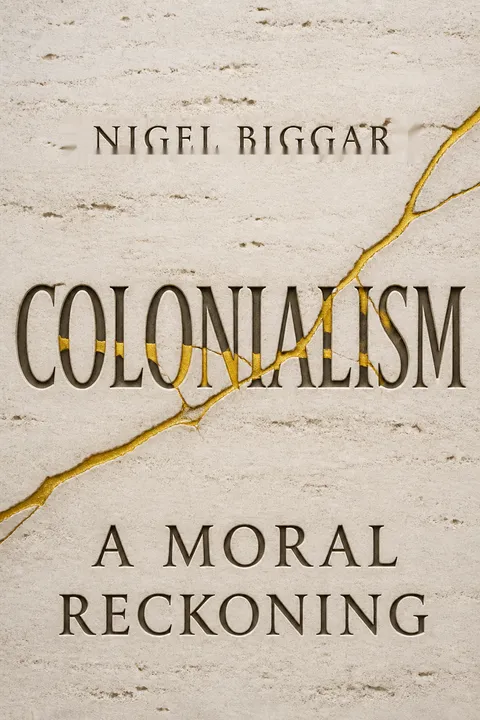

Key Takeaways
1. The British Empire was a complex, evolving entity, not a singular, malevolent "colonial project."
No one woke up one sunny morning in London and said, ‘Let’s go and conquer the world.’
Diverse motivations. The British Empire was not a monolithic, centrally planned "project" driven by a single, malevolent aim. Its expansion was a piecemeal, often ad hoc process, propelled by a multitude of shifting motives over centuries. These included:
- Security: Defending national autonomy against rivals like Spain and France.
- Trade and profit: The East India Company's commercial interests, leading to military and territorial control in India.
- Adventure and personal betterment: Individuals seeking new lives, wealth, or opportunities abroad.
- Humanitarianism: Later efforts to abolish slavery and "civilize" indigenous populations.
Evolutionary, not static. The empire's character changed dramatically over time, from early privateering and trading ventures to later periods of direct administration and a focus on "civilizing missions." This contrasts sharply with the singular, ideologically driven project of Nazi Germany, which was animated by resentment, hatred, and racist loathing. The British Empire lacked such a coherent, evil essence.
International rivalry. Many territorial acquisitions were consequences of international competition and war, rather than pre-meditated conquest. For instance, the acquisition of Quebec in 1763 or territories in Africa in the late 19th century often stemmed from strategic needs against European rivals, not an inherent desire for domination. The empire's "improvised and provisional character" meant its "command and control" was often "ramshackle and quite often chaotic."
2. Britain, after participating in the slave trade, led a costly, century-long global campaign for its abolition.
Between the slave trade and slavery of the eighteenth century and the present lie a hundred and fifty years of imperial penance in the form of costly abolitionist endeavour to liberate slaves around the globe.
Universal and ancient evil. Slavery, defined as treating a human being as disposable property, was an ancient and universal institution, practiced across Mesopotamian, Greek, Roman, Islamic, and African societies long before European involvement. African societies themselves engaged in extensive slave trading and human sacrifice. British involvement in the transatlantic slave trade, primarily between 1660 and 1807, was undeniably brutal, with high mortality rates during transit and horrific conditions on plantations.
Moral awakening and costly abolition. However, from the late 18th century, a powerful abolitionist movement, fueled by Enlightenment philosophy and Christian principles of human equality, emerged in Britain. This led to:
- 1807: Abolition of the slave trade within the British Empire.
- 1834: Abolition of slavery itself throughout the empire.
- Post-1807: A century-long commitment to suppressing the global slave trade, deploying the Royal Navy and diplomatic pressure.
Significant financial sacrifice. This abolitionist effort was not economically convenient; it was a costly moral action. Britain spent a minimum of £250,000 annually (equivalent to £1.3–1.7 billion in 2019) for half a century on naval suppression alone. The total economic cost to British society was estimated at 1.8% of national income over sixty years, making it "the most expensive example recorded in modern history" of costly international moral action. This refutes the claim that abolition was driven by economic self-interest.
3. Imperial "racism" was often a nuanced cultural judgment, distinct from biological determinism, and not the empire's core essence.
The British Empire did contain some appalling racial prejudice, but not only that. It also contained respect, admiration and genuine, well-informed, costly benevolence.
Distinguishing cultural from biological. "Racism" is often broadly defined, but it's crucial to distinguish between judging a culture as less developed (e.g., in science or technology) and believing a race is biologically inferior and incapable of development. Many imperial figures, like Cecil Rhodes, saw Africans as "children" in terms of development but believed they possessed "human minds" and were "not different from ourselves" in potential.
Mixed attitudes and self-correction. While instances of racial prejudice, social exclusion, and contempt existed, particularly among settlers and lower-ranking officials, they were not universal or unchallenged.
- Metropolitan vs. colonial: Racial attitudes were often less severe in Britain itself than in the colonies.
- Individual respect: Figures like David Livingstone and Ronald Storrs expressed respect and fascination for native cultures.
- Official condemnation: Governors like Lord Curzon actively combated the mistreatment of native populations by white settlers.
Challenging "pervasive racism." The narrative of "pervasive racism" is often an oversimplification. For example, the Commonwealth War Graves Commission's unequal commemoration of non-white war dead was attributed to practical difficulties, deference to diverse burial customs, and sometimes religious (not purely racial) distinctions, rather than systemic "apartheid in death." The empire's policies, especially post-1800s, were increasingly driven by a belief in the basic human equality of all races.
4. Land acquisition was a complex process, frequently involving treaties and native consent, not simply "conquest" or "theft."
The normal imperial means of land transfer, therefore, was not by conquest but by treaty.
Fluidity of land rights. The concept of fixed, exclusive land ownership was not universally shared by all native peoples, and inter-tribal warfare often resulted in shifting territorial control (e.g., Comanches, Ndebele). European settlers were, in many cases, "a new immigrant wave, taking control of land just as earlier aboriginal settlers did."
Regulation and recognition of native title. British colonial policy, guided by the "doctrine of discovery," aimed to regulate land acquisition, asserting sovereignty to prevent anarchic free-for-alls among Europeans and to recognize native rights.
- Royal Proclamation of 1763: Reserved lands for native tribes, requiring consent for acquisition.
- Numbered Treaties (Canada): Formal agreements where native peoples ceded land in exchange for reserves, payments, and aid.
- Treaty of Waitangi (New Zealand): Ceded sovereignty in exchange for guaranteed property rights.
Challenges and unintended consequences. Despite these efforts, land disputes, settler encroachment, and misunderstandings of treaty terms were common. The devastating impact of European diseases on native populations (e.g., Beothuk, Mississauga, Canadian plains tribes) often facilitated displacement more than direct military conquest. While injustices occurred, the intent was often to manage inevitable settlement humanely, not to engage in wholesale theft.
5. Assimilation, driven by humanitarian and developmental ideals, was the primary policy for native peoples, not genocide.
They were separated in order to be assimilated, and they were assimilated in order to be saved.
A policy of "civilization." British imperial policy, particularly from the 19th century, aimed at the assimilation of native peoples into modern, "civilized" society, based on the belief in their inherent potential for development. This involved:
- Land reserves: Seen as "protected training schools" for gradual adaptation.
- Education: Establishment of schools to teach English, agriculture, and Christianity.
- Economic integration: Promotion of wage-labor and private property.
Canadian residential schools. These schools, though often flawed and causing suffering (e.g., cultural suppression, poor conditions, abuse), were fundamentally motivated by humanitarian desires to help native children adapt to a rapidly changing world. Many native leaders actively sought such education. The claim of "cultural genocide" is an overstatement, as the intent was assimilation, not extermination, and the high death rates were primarily due to disease and inadequate funding, not deliberate murder.
Refuting "genocide" claims. The term "genocide" (intentional destruction of a group) is inappropriate for events like the near-extinction of Tasmanian aboriginals. While settler violence contributed, the primary causes were disease and inter-tribal warfare. Colonial authorities, often driven by evangelical humanitarianism, actively sought to protect native populations, establishing reserves and lamenting their decline, even if their efforts were tragically insufficient.
6. The Empire's economic impact was mixed, fostering development and trade, rather than solely "exploitation."
To summarise the economic effects of the British Empire in terms of the exploitation of natural and human resources, the use of slave labour, the destruction of native industry, the draining of profits from the colonial periphery to the imperial centre and the retardation of native economic development is at best historically simplistic, at worst a slander upon the past.
Complex economic realities. While early East India Company rule in Bengal saw "unbridled and systematic economic exploitation," this was often in a context of pre-existing Indian predation and was later curbed by reforms (e.g., Lord Cornwallis). The empire's economic legacy was far from a simple narrative of exploitation:
- Free trade: Promoted global markets, benefiting some native producers (e.g., West African cocoa, Indian textiles) and consumers (cheap imports).
- Investment: Britain was the leading exporter of capital, with significant investment in the empire, particularly in infrastructure.
- Infrastructure: Massive railway and irrigation systems in India (e.g., Ganges Canal) significantly boosted agricultural income and famine relief.
Native agency and development. Many Africans and Indians actively exploited new economic opportunities, becoming successful capitalists. Native prosperity and health generally improved during the colonial period, with rising real wages and declining infant mortality in many regions. The claim that colonialism arrested native capitalist development is challenged by the rise of Indian-owned textile and steel industries that outcompeted British manufacturers.
Limited government intervention. Before 1945, direct government economic planning was limited, reflecting prevailing laissez-faire ideologies. However, post-1945, significant loans and grants for development led to "the greatest boom period in African and Caribbean economic history." The economic success of settler colonies like Australia, which became "the richest society in the world between the 1860s and the 1890s," further complicates the exploitation narrative.
7. Colonial governance, though undemocratic, often provided stability, justice, and public goods, relying heavily on native cooperation.
Colonial rule would not have been possible at all without the widespread acquiescence, participation and cooperation of native peoples.
Necessity of cooperation. British colonial governments, with tiny numbers of administrators relative to native populations, could not have functioned without extensive native cooperation. This cooperation was often voluntary, driven by the appeal of:
- Security and law and order: Ending inter-tribal warfare and brigandage.
- Honest administration: Figures like Lord Cromer in Egypt and the Indian Civil Service (ICS) were renowned for their incorruptibility and public duty.
- Public goods: Infrastructure, famine relief, and justice.
Forms of governance. "Indirect rule" preserved traditional native authorities under imperial oversight, adapting to local customs. In British India, thousands of Indians served in middle and lower administrative ranks, and legislative councils increasingly included Indian representatives.
Addressing criticisms. While undemocratic, colonial governments were not insensitive to native needs. Famine relief efforts, though sometimes inadequate (e.g., Irish Famine, Bengal Famine), were rarely due to racist malevolence or negligence, but rather to natural disasters, limited resources, and prevailing economic doctrines. The failure to integrate educated native elites quickly enough did fuel nationalist resentment, but many native leaders, like Sun Yat-sen and Chinua Achebe, praised the efficiency, justice, and stability of British administration.
8. Imperial violence, while present, was not inherently racist or terroristic, and often subject to internal self-correction.
In that sense, the culpable violence or negligence was not symptomatic of a consistent, characteristically racist, colonial ‘logic’. It was not essential or systemic.
State's use of force. All states use force, and colonial states, operating in often anarchical environments with limited resources, frequently resorted to it. While instances of unjustifiable aggression and disproportionate force occurred, they were not always driven by systemic racism or terroristic intent.
- Opium Wars: Unjust in origin (trade enforcement, not honor), but not inherently racist or terroristic.
- Indian Mutiny (1857): Brutal suppression, but the Crown (Queen Victoria, Lord Canning) repudiated vindictive violence, leading to reforms and a commitment to non-discrimination.
- Amritsar Massacre (1919): General Dyer's actions were disproportionate and condemned by the British government, not indicative of a systemic "logic of terror."
- Benin Expedition (1897): A punitive expedition for the massacre of an unarmed mission, also driven by humanitarian aims (ending human sacrifice). Destruction of the city was largely accidental, and the removal of artifacts was customary "spoils of war," not "looting."
- Second Anglo-Boer War (1899-1902): Fought partly to prevent a racist Boer-dominated South Africa. Concentration camps, though tragically mismanaged, were not genocidal and saw remedial action.
- Mau Mau Uprising (1950s Kenya): A brutal counter-insurgency, but also a civil war among Africans. While abuses occurred, the colonial government and judiciary implemented checks and balances, preventing it from becoming a "gulag."
Global defense. Crucially, the British Empire mobilized vast, multi-ethnic forces in both World Wars to fight against aggressive, racist, and totalitarian regimes (Germany, Japan), demonstrating a commitment to international order and liberal values. This collective effort, with millions of volunteers from across the empire, contradicts the notion of an inherently evil, racist imperial project.
9. The British Empire left a significant legacy of liberal institutions and contributions to global order.
So if colonial history gives those who of us who identify ourselves with Britain cause for lament and shame, it also gives us cause for admiration and pride.
Enduring positive legacies. Despite its undeniable evils and injustices, the British Empire also left a substantial credit column. Many former subjects, like India's Prime Minister Manmohan Singh, acknowledge beneficial consequences:
- Rule of law: Constitutional government, an incorruptible civil service, and an independent judiciary.
- Democratic foundations: Free press, modern universities, and the gradual development of self-governing institutions.
- Economic development: Promotion of free markets, infrastructure (railways, irrigation), and new economic opportunities.
- Humanitarian advances: Leading the global abolition of slavery, and efforts to suppress practices like sati and human sacrifice.
Global impact. Beyond individual nations, the empire contributed to:
- International order: Standing against aggression in two World Wars, inspiring the League of Nations and the United Nations.
- The Commonwealth: Evolving into a voluntary, multiracial organization, joined even by non-former colonies.
- Western alliances: Forming key pillars of post-war security and intelligence (NATO, Five Eyes).
Incommensurable goods and evils. It is impossible to quantify and weigh the good against the evil to declare a definitive "balance." However, the empire was not "systemically unjust" in the way Nazi Germany was. Its capacity for self-correction and its increasing commitment to liberal and humanitarian principles distinguish it from truly evil regimes.
10. Anti-colonial narratives often oversimplify history, driven by present-day political agendas and a "tyranny of guilt."
The anti-colonialists want the worst to be true, and so they meet any suggestion to the contrary not with the eyes of curiosity, but the fist of aggression.
Distortion of history. Contemporary anti-colonialism, particularly in the West, often presents a caricatured view of the British Empire as uniformly racist, exploitative, and violent. This narrative frequently:
- Oversimplifies complex events: Reducing nuanced historical processes to simple narratives of oppression.
- Ignores contradictory evidence: Dismissing positive aspects or native agency.
- Applies anachronistic moral standards: Judging the past solely by present-day values without historical context.
Political motivations. This oversimplification is often driven by present-day political agendas:
- Reparations claims: As seen in Hilary Beckles' arguments.
- Subverting Western influence: Used by authoritarian regimes like China to deflect criticism.
- "Decolonization" movements: Aiming to dismantle perceived "systemic racism" in Western societies, often based on a flawed understanding of historical causation.
The "tyranny of guilt." A "degenerate Christian sensibility" can lead to a perverse self-righteousness, where exaggerating one's own nation's sins becomes a bid for moral supremacy. This "paternalism of the guilty conscience" can lead to a narcissistic focus on Western wrongdoing, while ignoring similar or worse actions by non-Western actors or contemporary issues in post-colonial nations. This approach, often rooted in dogmatic post-colonial theories, prioritizes ideological purity over historical accuracy, rendering critical inquiry unaccountable and authoritarian.
Review Summary
Colonialism: A Moral Reckoning by Nigel Biggar presents a controversial defense of the British Empire, arguing it was morally complex rather than wholly evil. Reviews are polarized: supporters praise its extensive research and balanced approach to challenging anti-colonial narratives, appreciating the detailed examination of historical events and context. Critics accuse Biggar of minimizing atrocities, employing semantic arguments to excuse wrongdoing, and displaying excessive patriotism that clouds judgment. Most reviewers acknowledge the book's comprehensive documentation (over 130 pages of notes) but disagree on whether it successfully proves the Empire did more good than harm, with many finding certain arguments unconvincing despite appreciating the nuanced historical perspective.
People Also Read







Download PDF
Download EPUB
.epub digital book format is ideal for reading ebooks on phones, tablets, and e-readers.








































