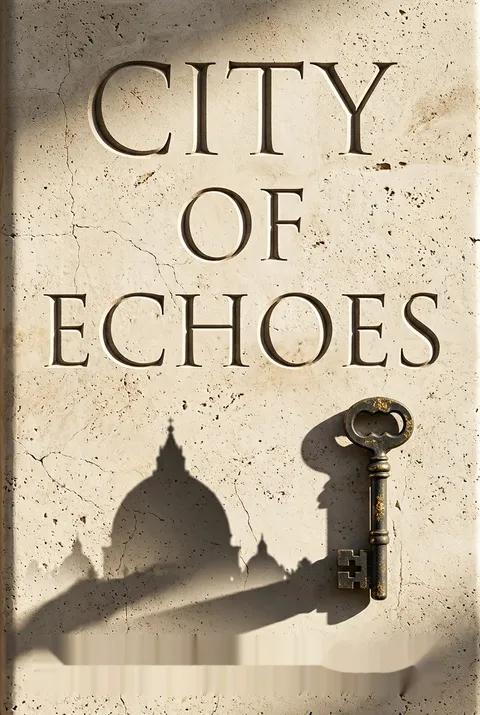

Key Takeaways
1. The Enduring Foundation of Peter: Rome's Christian Identity
When Peter died in Rome, he imbued the city with the unique authority given to him by Jesus.
Apostolic Roots. The Christian identity of Rome is fundamentally rooted in the martyrdom of Saint Peter, a fisherman from Galilee, who journeyed to pagan Rome in the mid-first century to spread the nascent Christian faith. Despite his death as an anonymous criminal under Nero, Peter's presence and eventual crucifixion near a racetrack in northern Rome imbued the city with the unique authority bestowed upon him by Jesus, who declared Peter the "rock" upon which his Church would be built. This foundational narrative, though initially marked by humble monuments and quiet devotion, became the wellspring for future claims of Roman bishops to universal spiritual leadership.
Invisible Beginnings. For centuries after Peter's death, Christian Rome remained largely invisible, a collection of disparate house churches primarily composed of low-born, Greek-speaking foreigners, often indistinguishable from the city's Jewish community or other Eastern cults. Early bishops like Clement, Anacletus, and Evaristus quietly laid administrative foundations, but it was not until the late second century, under Bishop Victor, that the Bishop of Rome began to assert monarchical authority, making fundamental decisions like adopting Latin and excommunicating those who disagreed on practices like the date of Easter. This shift marked the slow emergence of the Roman Church from obscurity into a more unified and assertive entity.
Martyrdom's Prestige. The persecution of early Christians, often for "mischievous superstition" rather than their faith itself, paradoxically cemented Rome's Christian character. As men and women died for their beliefs in Roman circuses and streets, their blood was declared to steep the city in holy prestige, transforming sites of execution into revered pilgrimage routes. This narrative of heroic holiness, epitomized by Peter and Paul, provided an enduring moral authority that future Bishops of Rome would leverage to assert their pre-eminence, linking their office directly to Christ through the apostles' sacrifice in the Eternal City.
2. Constantine's Transformative Patronage: Elevating the Church
Under Constantine, the Christians in the city left the simple obscurity of their house churches to stride through vast, marble-clad buildings raised exclusively for their religion by an emperor who would soon become the greatest ever patron of the Roman Church.
Imperial Conversion. The triumph of Constantine at the Milvian Bridge in 312, fought under the banner of the Christian God, marked a pivotal moment for Christianity in Rome. Although Constantine's conversion was rooted in worldly political ambition and he continued to patronize pagan cults, his victory led to the Edict of Milan in 313, legalizing Christianity across the empire and ending centuries of persecution. This imperial endorsement transformed the faith from a clandestine cult into a public, respected institution, fundamentally altering its status and visibility within the Roman world.
Monumental Architecture. Constantine became the greatest patron of the Roman Church, initiating a massive building program that reshaped Rome's urban landscape. He repurposed the grand Roman basilica, traditionally a civic space, for Christian worship, inaugurating structures like the Lateran Basilica (the "Golden Basilica") and the immense Basilica of Saint Peter. These monumental constructions, often built on sites of Christian martyrdom or pagan ruins, physically manifested the Church's newfound prominence and authority, creating new architectural, social, and cultural centers pregnant with Christian stories and ideas.
Elevated Status. Constantine's patronage not only provided physical spaces for Christian worship but also elevated the Bishop of Rome within the burgeoning Church hierarchy. Imperial gifts and land grants significantly enriched the Roman See, transforming the bishop's role from a humble pastor to a wealthy and influential figure. This imperial favor, combined with the enduring legacy of Peter's martyrdom, laid the institutional groundwork for the Bishop of Rome to claim supremacy over all other episcopal sees, even as the emperor shifted his capital eastward to Constantinople, inadvertently creating a power vacuum that the papacy would eventually fill.
3. Papal Authority Amidst Imperial Decline: Protectors of Rome
For the popes of this period did not climb onto the tomb of the Caesars in a cynical quest for greater power. Rather they (willingly) inched ever closer to it in response to outside demands, taking on imperial tones and authority along the way.
Power Vacuum. The fifth and sixth centuries saw Rome repeatedly invaded and pillaged by Barbarians, Huns, and Vandals, culminating in the deposition of the last Western Roman Emperor in 476. As the imperial system crumbled and emperors abandoned Rome for other capitals like Ravenna, a gaping void in secular authority emerged. Into this vacuum stepped the Bishops of Rome, who, in response to the city's desperate needs and the breakdown of traditional governance, began to assume roles as protectors of the city and custodians of its people, taking on imperial tones and authority.
Protectors of Rome. Figures like Pope Leo I (440–461) exemplified this new papal role, famously negotiating with Attila the Hun and Gaiseric the Vandal to spare Rome from complete devastation. While not always fully successful, these interventions cemented the pope's image as the city's defender, contrasting sharply with the absent or ineffective imperial powers. Leo, in particular, instrumentalized the unique power of the Petrine link, asserting that Rome, "thanks to Peter, you have become head of the world... you reign over a vaster empire by virtue of divine religion than you ever did by earthly supremacy."
Universal Church Leadership. Beyond Rome, the popes also asserted their supremacy within the global Christian Church, leveraging conflicts with other major sees like Alexandria and Constantinople. The Council of Chalcedon in 451, for instance, recognized Rome's "primacy of honor," with some delegates proclaiming that Peter had "spoken through Leo." This growing pre-eminence, rooted in the apostolic succession from Peter, allowed the Bishop of Rome to transcend the political traumas of the age, transforming the papacy into an increasingly autonomous and universally influential figure, even as the Western Empire faded.
4. The Papacy's Struggle for Independence and Unity: Internal and External Challenges
The people of Rome had a hand at almost every juncture in this saga. When Boniface VII died in 985, after a return to the papal throne, they would haul his corpse to the foot of the statue from which Peter the prefect had been hung.
Imperial Interference. The alliance between the papacy and the Holy Roman Emperors, initiated by Charlemagne's coronation in 800, initially brought stability and expanded papal temporal power through the creation of the Papal States. However, this relationship soon became a source of conflict, as emperors sought to control papal elections and impose their preferred candidates. This imperial interference, coupled with the ambitions of powerful Roman noble families like the Crescenzi and Teofilatti, led to periods of intense politicking, intrigue, and even violence surrounding the papal throne, as seen in the macabre Cadaver Synod of 897.
Roman Revolutions. The Roman people themselves frequently intervened in papal affairs, expressing their exasperation with corruption and external control. The revolution of 1143, for instance, saw Romans overthrowing the pope and establishing a communal government, asserting that the pontiff should have no political power. This republican spirit, drawing on ancient Roman heritage, forced popes into exile for decades and led to the Concord Pact of 1188, which tempered papal authority by recognizing the Roman Senate and limiting the pope's ability to thwart local ambitions.
Avignon Exile and Schism. The papacy's move to Avignon in the 14th century, driven by a desire to placate the French king and escape Roman unrest, further highlighted the fragility of papal independence. This "Babylonian Captivity" and the subsequent Great Western Schism (with multiple rival popes) severely damaged the papacy's prestige and left Rome in decay. Critics like Petrarch and Dante condemned the popes' worldliness and neglect of Rome, underscoring that the pope's authority, despite its universal claims, was inextricably tied to his role as Bishop of Rome and the city's unique spiritual significance.
5. Renaissance Rome: A Fusion of Pagan and Christian Ideals
In Renaissance Rome even fragments of ancient artefacts could be accorded more nobility than the bloodline of a great contemporary scholar such as Poggio Bracciolini.
Rebirth of Antiquity. The return of the papacy to Rome under Martin V in 1420, after decades of exile and schism, ushered in a period of intense cultural and architectural renewal known as the Renaissance. This era saw popes, cardinals, and humanists enthusiastically embracing the classical pagan past, unearthing ancient artifacts, studying classical texts, and rebuilding Rome with a blend of ancient grandeur and Christian triumph. Figures like Cardinal Prospero Colonna recreated ancient gardens, while scholars like Flavio Biondo and Poggio Bracciolini meticulously documented and revived classical learning, often finding more nobility in ancient fragments than in contemporary lineage.
Papal Patronage and Urban Transformation. Renaissance popes became significant patrons of art and architecture, transforming Rome into a magnificent capital that reflected both their spiritual authority and their worldly power. Nicholas V initiated plans for a new Saint Peter's Basilica, and later popes like Sixtus IV commissioned masterpieces like the Sistine Chapel ceiling from artists such as Michelangelo. This period saw the creation of new streets, markets, and palaces, consciously integrating ancient Roman elements into a distinctly papal cityscape. The Capitoline Hill, once a symbol of the ancient republic, was re-ordered by Michelangelo under Paul III, becoming a testament to papal authority over Rome's past.
Tensions and Paradoxes. Despite the fervent embrace of classical learning, tensions between pagan ideals and Christian doctrine occasionally surfaced, as seen in the persecution of Giulio Pomponio Leto's academy for perceived republican and pagan sympathies. Furthermore, the humanists' scholarship, like Lorenzo Valla's exposé of the Donation of Constantine as a forgery, challenged the historical basis of papal temporal power. This era presented a paradox: a thoroughly Christian elite revered a pagan past, using its aesthetic and intellectual achievements to bolster their "Romanness" and the prestige of the papal court, even as the foundations of papal authority were subtly questioned.
6. The Reformation and Global Papal Influence: Asserting Catholic Supremacy
As significant as the popes’ secular concerns were, the sack of Rome of 1527 occurred as a result of the efforts of Pope Clement VII to protect his religious position when Holy Roman Emperor Charles V appeared to pose a direct threat to the pope’s unique status in the Christian world.
Reformation's Challenge. The early 16th century brought the Protestant Reformation, a religious revolution that fundamentally challenged papal authority and splintered Christendom. Martin Luther's critique of indulgences and papal power, widely disseminated through cheap print, led to widespread defections from Rome across Europe. This forced the papacy to vigorously reassert its unique status as the supreme religious figurehead of the West, even as it faced the devastating Sack of Rome in 1527, a consequence of Pope Clement VII's efforts to protect his religious position against the ambitions of Emperor Charles V.
Global Catholic Assertion. Despite these profound challenges, Rome emerged as the undisputed global center of Catholicism. Popes like Alexander VI arbitrated international disputes, such as the division of newly discovered lands between Spain and Portugal, asserting a supra-national territorial authority based on their universal spiritual power. The city became a diplomatic hub, attracting ambassadors from across Europe, Africa, and Asia, including the first ambassador from Central Africa and envoys from Japan and Persia. These foreign presences, often leading to conversions, were strategically leveraged by popes to demonstrate Rome's unique magnetism and the universal appeal of the Catholic Church.
Rome as a "Theatre of the World." The early modern papacy transformed Rome into a "Theatre of the World," where art, architecture, and ceremony dramatically proclaimed Catholic truth and supremacy. The Baroque style, exemplified by Bernini's ecstatic sculptures and Pozzo's illusionistic ceilings, aimed to immerse the faithful in the miraculous reality of saints and divine love. Events like the procession of Saint Andrew's head and the conversion of Queen Christina of Sweden were staged as powerful symbols of Catholic triumph over heresy and Islam. This grand spectacle, however, often masked the underlying political and financial vulnerabilities of the papacy, which relied on worldly power to maintain its spiritual claims.
7. The Paradox of Papal Governance: Control and Contradiction
To safeguard the identity of that city as wholly and purely Christian was, therefore, to safeguard his own power.
Enforcing Purity. In the mid-16th century, facing the twin threats of Protestantism and a growing Jewish population (exacerbated by expulsions from Spain), popes like Paul IV intensified efforts to safeguard Rome's identity as a "wholly and purely Christian" city. This led to the establishment of the Roman Ghetto in 1555, confining Jews to a walled quarter and imposing severe restrictions to prevent their "infection" of Christian society. The Holy Office of the Roman Inquisition, founded in 1542, vigorously pursued religious rebels, using public condemnations and executions, like that of Pomponio Algieri, to enforce Catholic orthodoxy and protect souls from "heretical plague."
Internal Resistance and Pragmatism. Despite these coercive measures, papal governance in Rome was often marked by internal resistance and pragmatic compromises. Jews in the ghetto found subtle ways to subvert compulsory conversion sermons, while the Church itself grappled with the paradox of offering privileges to converts while fearing insincere conversions. The Inquisition, though brutal, sometimes acknowledged the complexities of faith, as seen in its willingness to release Didaco Perez into Jesuit care. This reflected a reality where ideals were imposed but often renegotiated or sidestepped by a populace more concerned with daily survival and economic opportunity.
Social Challenges and Charitable Solutions. Rome's status as a pilgrimage and economic hub led to overcrowding, poverty, and social ills like prostitution. Popes attempted to control these issues through measures like confining prostitutes to specific areas or proposing workhouses, though often with limited success. Paradoxically, the Church also offered charitable solutions to the very problems it exacerbated, endowing confraternity hospitals and supporting figures like Filippo Neri, who ministered to the city's most desperate. These efforts, while genuinely charitable, also served to reinforce papal claims of universal pastoral care, even amidst the contradictions of their rule.
8. Enlightenment Challenges and the Papacy's Diminished Worldly Power
For Goethe a visit to the Sistine Chapel was no more religious than a tour of the British Museum.
Erosion of Authority. The 18th century, marked by the Age of Enlightenment, brought profound challenges to the papacy, as philosophers like Rousseau questioned traditional Christian assumptions and scientists like Newton offered new explanations for the material world. This intellectual shift led many, like Johann Wolfgang von Goethe, to view the pope and Catholic ceremonies as mere spectacles, devoid of genuine spiritual authority. Goethe's casual nap on the papal throne in the Sistine Chapel symbolized this erosion of reverence, reflecting a growing "non-Christian" sentiment that threatened to discard the very frameworks that had underpinned papal power for centuries.
Ancient Rome's Resurgence. As papal authority waned, ancient Rome experienced a cultural resurgence, becoming the primary draw for European intellectuals and Grand Tourists. Figures like Edward Gibbon celebrated classical Rome as the pinnacle of human achievement, often attributing its decline to the rise of Christianity. Scholars like Johann Winckelmann meticulously studied its ruins, inspiring a generation to view Rome through a purely classical lens, detached from its papal present. This focus on antiquity, while enriching the city's cultural landscape, further marginalized the popes in the eyes of many, who saw them as obstacles to progress and the cause of Rome's perceived modern decay.
Political Marginalization. The Enlightenment's emphasis on national sovereignty and secular governance led to the political marginalization of the papacy on the international stage. Popes, once arbiters of European affairs, found themselves excluded from major treaties like the Peace of Westphalia (1648) and their diplomatic overtures rejected. Even Catholic monarchs asserted greater control over religious matters within their own lands, leading to the suppression of influential orders like the Jesuits. Despite efforts to centralize papal administration and maintain financial stability through means like the lottery, the popes' temporal power and global influence were significantly diminished, leaving them as "ruined popes" in a world increasingly hostile to absolute religious rule.
9. The "Prisoner of the Vatican" and the Rise of Modern Italy
Without Rome, the process of unification, known as the Risorgimento or ‘Rising Again’, would remain incomplete.
Revolutionary Assaults. The late 18th and early 19th centuries saw the papacy repeatedly challenged by revolutionary forces, culminating in the French occupation of Rome and the kidnapping of Pius VI and Pius VII. Napoleon, while initially using papal authority as a political tool, ultimately annexed Rome and exiled the pope, declaring the city a "free imperial city" after "centuries of oblivion" under papal rule. These events, though temporary, exposed the vulnerability of papal temporal power and fueled the burgeoning Italian nationalist movement, the Risorgimento, which viewed Rome as the indispensable capital for a united Italy.
The Roman Republic and Papal Restoration. The revolutionary fervor reached its peak in 1849 with the declaration of the Roman Republic, led by figures like Giuseppe Mazzini and Giuseppe Garibaldi, who sought to secularize the city and unite Italy. Pius IX, initially seen as a liberal reformer, quickly became an intransigent opponent of these movements, refusing to wage war against Austria and eventually fleeing Rome. His restoration by foreign powers (France, Austria, Spain, Naples) underscored the papacy's reliance on external support to maintain its temporal sovereignty, further alienating liberal nationalists who saw the pope as an obstacle to Italian unity.
The "Prisoner" and the New Capital. The final act of the Risorgimento came in 1870 when Italian forces captured Rome, declaring it the capital of the new Kingdom of Italy. Pius IX, refusing to acknowledge the legitimacy of the secular state, retreated into the Vatican Palace, proclaiming himself a "prisoner." This standoff, known as the Roman Question, lasted for decades, with the pope refusing to set foot outside the Vatican. Despite the loss of temporal power, the papacy maintained its spiritual authority and became a powerful symbol of tradition and Catholic identity against the forces of modernity, while the new Italian government struggled to forge a national identity in a city deeply imbued with papal history.
10. The Papacy in the 20th Century: Navigating Totalitarianism and a Changing World
The pope’s influence in the modern world is, therefore, contingent on an ever shifting political and moral landscape.
Confronting Totalitarianism. The 20th century presented the papacy with unprecedented challenges, including two World Wars and the rise of totalitarian regimes. Popes like Pius XI and Pius XII navigated complex relationships with figures like Mussolini and Hitler, seeking to protect Church interests and the Catholic faithful amidst escalating conflicts. While Pius XI initially saw Mussolini as a pragmatic partner, their alliance was strained by fascist incursions on Church autonomy and, critically, by Mussolini's racist laws. Pius XII, though criticized for his public silence on the Holocaust, privately lamented the persecution of Jews and intervened to protect many, demonstrating the papacy's difficult position between moral imperative and political pragmatism.
Vatican City and Enduring Influence. The Lateran Treaty of 1929, negotiated with Mussolini, resolved the Roman Question by establishing Vatican City as a sovereign state, granting the pope visible independence and liberty. This new status, though a far cry from the vast Papal States, allowed the papacy to re-engage with the world as a recognized international actor. Despite the rise of secularism and the decline of religious practice in many parts of Europe, the pope remained a global spiritual leader, commanding the loyalty of hundreds of millions of Catholics worldwide and influencing public life through encyclicals on social justice (like Rerum Novarum) and popular devotions.
Modernity's Moral Landscape. Post-World War II, Italy's "Economic Miracle" and rapid social changes further challenged papal moral authority, with society increasingly diverging from Catholic teachings on issues like divorce and abortion. Popes like John XXIII and Paul VI initiated the Second Vatican Council to update the Church's language and engage with the modern world, but faced internal divisions and external indifference. Despite these shifts and revelations of widespread abuse, the papacy's symbolic power endures, rooted in Rome's unique history. As Pope Francis stood alone in an empty Saint Peter's Square during the 2020 pandemic, he invoked centuries of papal tradition, reaffirming Rome as the unwavering spiritual heart of a fluctuating and uncertain world.
People Also Read





Download PDF
Download EPUB
.epub digital book format is ideal for reading ebooks on phones, tablets, and e-readers.








































