
Plot Summary
London's Shadowed Resilience
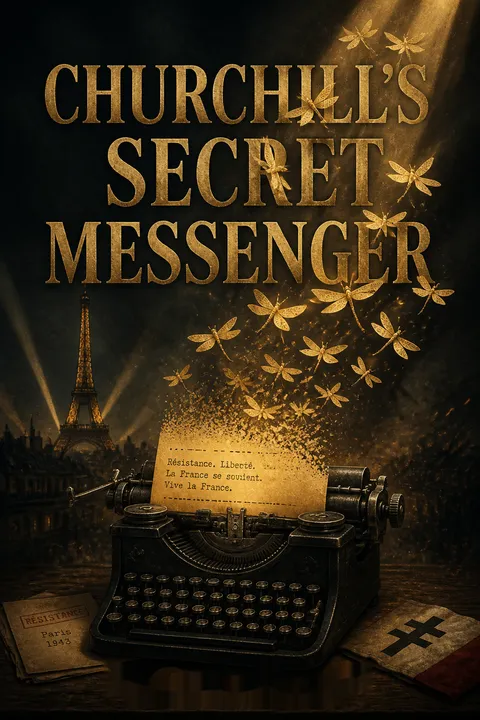
In 1941, Rose Teasdale works as a typist in Churchill's underground War Rooms beneath battered London, enduring the Blitz with steely resolve. The personal weight of war is crushing: the loss of her brother, Charlie, a Spitfire pilot, leaves her family broken. The death of her parents in a Luftwaffe air raid deepens her trauma, fueling a vengeful patriotism. Rose's existence revolves around work, and she increasingly craves to fight back, her grief morphing into quiet strength and hope. Her fluency in French and impressive composure catch Churchill's eye during a critical, tense wartime meeting—an encounter that plants seeds for a transformation she could never foresee.
Paris Under Siege
Paris, under the German boot, suffers starvation, suspicion, and the slow erosion of its soul. Lazare Aron, a sensitive young Jewish man maimed as a child, copes with rejection by the French Army by conducting illegal propaganda for the Resistance. His involvement, meant to give hope to his family and city, puts everyone he cares for at risk. As he witnesses the merciless enforcement of German rule and French complicity—including a moment of horrific violence at a bridge—Lazare's resolve hardens. His moral guilt lingers, manifesting a lifelong burden and deepening his desire to sabotage the occupiers.
Loss and Reckoning
Rose's grief for her slain family isolates her, turning her into both a relic of what has been lost and a vessel of the city's relentless, unsung endurance. A rare letter of condolence from Churchill, small acts of kindness from a close friend Lucy, and her own perseverance become the mortar for a new life built not on hope, but on necessity and vengeance. Rose's trauma becomes her greatest motivator, turning her into more than just a typist—she becomes a seeker of agency amid chaos, driven to transform anguish into action.
Threads of Resistance
Lazare's clandestine activities in the Paris Resistance evolve from graffiti to sabotage, though his own family remains in denial of approaching danger. Parental skepticism versus Lazare's urgent realism creates a chasm of personal and generational tension. Meanwhile, Rose's language skills thrust her into the orbit of power—as an impromptu interpreter in a Churchill–de Gaulle confrontation, she catches the attention of shadowy recruiters. Each character begins to understand that however small their acts, their choices ripple through a web of consequence, exposing them—and those they love—to invisible, mounting danger.
The Spy's Awakening
Summoned for mysterious interviews amid mounting wartime paranoia, Rose faces intrusive, unsettling questions about fear, loss, and willingness to kill. She realizes that revenge has given her a fatalistic courage. Eventually, she's recruited by SOE—the Special Operations Executive, Britain's secret army—with orders to set Europe ablaze behind enemy lines. Driven by loss and a thirst for vengeance, Rose agrees, stepping into a clandestine world where her pain and language are tools sharpened for sabotage and subterfuge.
Secrets Beneath the Surface
No longer content with propaganda, Lazare escalates to direct acts of sabotage—slashing tires, setting petrol-bombs. Pursued by Nazis, he's saved by Claudius, leader of a gritty Resistance cell operating from the city's catacombs. Here, among men with nothing left to lose, Lazare finds a new family. In this labyrinth of bones and secrets, his Jewish identity is a non-issue, and for the first time, his talents—even his limitations—truly matter. A clandestine British drop arms the cell, forging new bonds of loyalty as Paris descends into moral grey.
Saboteur's Path
As occupation policies worsen and Jews are forced to wear the yellow star, Lazare's parents refuse to flee, trapped by their faith in France. Lazare's Resistance work deepens; so does his secret-keeping, guilt, and growing sense that Parisian society itself may become a trap. Meanwhile, Rose endures brutal SOE training—overcoming skepticism about her slight size and physical limitations. She fails conventional tests of strength but passes in cleverness, grit, and cunning. Both Rose and Lazare learn that in resistance, the mind often eclipses the body, and true danger comes from those once trusted.
Marked and Defiant
Denied her own grief or rest, Rose is transformed by SOE into "Dragonfly," a courier–saboteur dispatched to occupied France. She bonds with fellow trainees—Muriel, a single mother seeking to shape her daughter's world; and Felix, a French exile haunted by loss. Parachuted behind enemy lines, Rose's borrowed French childhood and language become camouflage. Lazare, now an essential Resistance contact, saves Rose after a botched drop, their fates intertwined. In enemy territory, survival becomes improvisation, luck, and faith in others—until the network's hidden fractures threaten everything.
Trials of the Secret Army
Operating as a cosmetics saleswoman, Rose dodges Nazi patrols, forging alliances and outmaneuvering suspicion. Her partnership with Lazare—first out of necessity, then trust, and finally unspoken attraction—proves vital as she navigates espionage's daily risks. As the SOE subnetwork flourishes, distrust and strain fester: Felix's impulsiveness, Muriel's peril as a wireless operator, and Rose's exposure to ever-closer SD counterintelligence. Each mission, especially one involving sabotage near Gestapo headquarters, increases the stakes and their emotional entanglement. On quiet nights in hiding, Rose and Lazare's longing surfaces, briefly tempering the war's hard edge.
Reunion in the Catacombs
Their connection forced into secrecy, Rose follows Lazare through the Paris catacombs—a subterrestrial world where memory and longing swirl. In this confined underworld, they share their histories: the shape of familial loss, the ache of living on borrowed time. Their night together is one of rare, tender comfort, a desperate remembrance of what peace could be. As Paris above them seethes with betrayal and counterspies, Rose and Lazare risk emotional exposure, an act as perilous as any mission, and find in each other courage to persist.
Code Names and Cover Stories
Rose's proficiency as a courier is tested as the network faces German infiltration and betrayal. Her encounters with the SD's mistress, Zelie, and Gestapo chief Kieffer blur the lines between seduction, survival, and subterfuge. The Resistance crumbles as arrests sweep up allies—Muriel and Felix disappear, Lazare is caught in a failed RAF drop. Loss and isolation once again define Rose, forcing her onto the run. With all safe houses compromised, she flees alone, her mission and hope now survival itself.
Betrayal in Occupied Paris
The SD's trap closes: safe houses fall, friends are tortured or killed, and Rose is forced into hiding underground. Her daring journey by bicycle—almost 400 miles to make vital contact—typifies the extremes resistance, resourcefulness, and desperation must reach. Her appeal to SOE for help leads, finally, to Operation Jericho: the controversial RAF raid on Amiens Prison. But the intervention comes too late to prevent the mass execution or save everyone: Rose's actions set events beyond her control, culminating in mass deaths, her own capture, and her descent into the Nazi prison camp system.
Love Amidst Chaos
Imprisonment seals the fate of many: Rose endures torture and Ravensbrück's cruelty; Muriel's and Felix's fates unfold in parallel agonies. Their friendships, loves, and sacrifices are immortalized by small acts of kindness—Muriel's messages to her child, Rose's relentless endurance. Meanwhile, Lazare survives the Amiens raid—maimed, anguished, but alive—while Rose's courage saves countless others. Liberation brings its own torments: survivor's guilt, opaque government secrecy, and the overwhelming task of memorializing a generation lost and nearly forgotten.
Collapse of Networks
With the war's end, Rose returns to a London still scarred by loss, reconciling with Lucy and battling the lingering trauma of her captivity. She labors to keep her promises: delivering Muriel's last words to her daughter in Scotland, honoring Felix's memory, and attempting to rebuild a self from what remains. Lazare, too, is changed—body and soul—fighting to reclaim his voice as a journalist and to demand France confront its complicity. When their paths cross again, reconciliation is uncertain: wounds linger, and both struggle to believe in healing, love, or even the possibility of peace.
The Trap and the Raid
The knowledge of mass executions at Amiens forces Rose and her allies to push for Operation Jericho, the daring RAF prison break. Behind-the-scenes politics play out as Churchill and the SOE weigh the raid's risks. The attack itself is chaotic and devastating—walls breached, scores freed or killed, Lazare rescued then gravely wounded, and Rose left to reckon with the moral aftermath. The raid is victory and defeat in one stroke: bravery saves some, but the war's price is personal, and final hope often comes at the cost of loss.
Prison Walls and Bravery
Rose's existence at Ravensbrück is one of relentless hardship—disease, starvation, brutality. Small acts of sabotage—like subtly sabotaging Nazi uniforms—restore agency to the powerless. Bonds with Muriel, the Russian prisoner Yana, and others become lifelines. Lazare endures parallel horrors in Nazi prisons but is ultimately liberated—his injuries permanent yet his spirit intact. Every day the prisoners outlast the system meant to extinguish them is an act of resistance; each moment of kindness, a statement of defiance against the darkness.
A Courier's Last Hope
Liberation finds Rose emaciated and sick, but fiercely alive, while Lazare fights through misery to write the truths France would rather suppress. Muriel's last words reach her daughter through Rose, and the reunion with Lucy is bittersweet but vital. The war's secrets—SOE missions, forbidden loves, sacrifices in the shadows—are to be buried under official silence. Even so, both Rose and Lazare resolve to bear witness, to keep memories alive and hope—tentative, hard-earned—moving forward.
Ravensbrück: Women's Hell
Postwar, Rose and Lazare labor to find identity and normalcy: she as a civil servant, he as a journalist challenging France's reckoning with guilt. Their reunion is fraught with pain; honest communication brings them at last to reconciliation, facing the truth of loss and what remains. With ceremony and private ritual, they honor their fallen friends, the unacknowledged heroes, and the silent dead of the camps. Gradually, they find purpose and healing in activism, art, and love.
Survival and Sisterhood
Rose and Lazare find a life together, children, and the enduring friendship of those who survived. Their bond—sustained by struggle—becomes the ground from which honesty, activism, and compassion grow. Their children inherit not only their parents' scars, but also the resolve never to let these stories fade. Grief is woven into hope, and the endeavor to bear witness, even under the strictures of state secrecy, becomes their greatest legacy.
Deliverance and Return
Victory in Europe is celebrated with both joy and solemn reflection. Rose publishes her record of the war, undaunted by official silencing, while Lazare continues the fight for memory and justice. Together with family and allies like Claudius, they honor the dead and strengthen the living. For Rose, true liberation is found not just in survival, but in sharing the truth and living with love and meaning.
Memory, Grief, & New Beginnings
On the anniversary of VE Day, Rose finishes her manuscript, reflecting on Churchill's influence, the losses she has lived, and the small community she and Lazare have forged. Their home, like France itself, is built on both pain and hope, their story a testament to the necessity of courage, remembrance, and the long, difficult path to healing. Family, love, and the commitment to bear witness to history define their legacy—a legacy that, though secret in state archives, burns quietly in the hearts of those who refuse to forget.
Analysis
Alan Hlad's Churchill's Secret Messenger is a tribute to the overlooked, often invisible heroism of ordinary individuals—especially women—amidst the epic horror of World War II. The novel reframes spy fiction by focusing on the psychological costs and ethical ambiguities faced by those resisting oppression, showing that heroism is not merely daring, but persistence in the face of personal loss and dehumanization. The dual narrative underscores how trauma and hope entwine: grief does not defeat the protagonists, but rather becomes the crucible forging their defiance, compassion, and the courage to build anew. The author's emphasis on secrecy and silenced voices—both in the operational and official sense—laments how so many sacrifices have been lost to the recounting of official histories. Ultimately, the story argues that true victory lies not in public glory, but in bearing witness, honoring the dead, and refusing to let memory die. The relevance resonates today, urging readers to seek justice for the forgotten, to remain vigilant against tyranny, and to cherish the fragile means by which we connect, endure, and revive after immense destruction.
Review Summary
Churchill's Secret Messenger receives overwhelmingly positive reviews, averaging 4.4 out of 5 stars. Readers praise Alan Hlad's meticulous research, vivid historical detail, and compelling characters, particularly the brave protagonist Rose Teasdale and French Resistance fighter Lazare Aron. Many highlight the gripping portrayal of SOE operations, occupied France, and concentration camp horrors. The audiobook narration by Simon Vance also earns praise. Minor criticisms include a forced romance, Churchill's limited presence despite the title, and occasional pacing issues in the final section.
People Also Read


Characters
Rose Teasdale
Rose is at once orphan, survivor, and modern heroine. Her defining trauma—losing her brother and parents to the war's violence—roots her emotional world in grief, loneliness, and an implacable need for revenge against the Nazis. Intellect and linguistic skill make her rise from an overlooked typist to SOE's "Dragonfly," thrust into the deadliest clandestine games of occupied France. Rose is marked by acute empathy, especially for women and children, yet her resilience is fused with self-denial and a restless drive for significance. Her relationship with Lazare—tender but fraught—reflects her deep hunger for connection and meaning amid horror. In captivity, small rebellions (like sabotaging uniforms) embody her refusal to give Hitler the last word. By war's end, her journey is one of painful transformation: from passive victim to creator of memory, truth, and hope.
Lazare Aron
Lazare's story is one of layered exclusion: disabled by a childhood accident, doubly marked as both Jew and Parisian, doubted by his closest family as occupation tightens. His inability to serve in the military becomes, paradoxically, his gateway to vital, subversive action. Lazare is driven by conscience and haunted by survivor's guilt. Unlike many, he bears witness to the collaboration of his own people (French police, neighbors) and the brutality of German rule. His stubborn courage binds a disparate resistance cell together, but his closest relationships–with his parents, with Rose–are shadowed by fear and trauma. The loss of his family to the Vél' d'Hiv roundup devastates him, yet strengthens his resolve to fight, even as hope grows dim. After liberation, his struggle to live with his injuries, and to demand that France remember its own guilt, cements his legacy as chronicler and conscience.
Muriel Brown
Muriel, a Scottish single mother, is Rose's closest friend and the model of ordinary women propelled into history. Her motivations are double: to give her daughter Mabel a free world and to find purpose and agency she could not at home. Her humor and warmth sustain Rose, even as her work as an SOE wireless operator exposes her to mortal danger. Muriel's last words, smuggled at the edge of death, become a maternal legacy—a promise that trauma need not sever love. Her bond with Rose, solidified in shared suffering at Ravensbrück, reflects the pervasive, sustaining power of female friendship.
Felix Renaud
Felix, once a Grand Prix driver and proud father, is organizer, risk-taker, and flawed planner. Haunted by the loss of his only child and his country's defeat, he exhibits both courage and impulsiveness. His leadership style—sometimes questioning, sometimes reckless—mirrors the precarious, often-fractured nature of resistance networks. His devotion to mission eclipses self-preservation; in the end, his sacrifice and final words to Rose secure his humanity more than his strategic decisions ever could.
Claudius
Claudius is an older Resistance leader who shepherds both Lazare and Rose through impossible darkness. He embodies patience, practical wisdom, and a tragic awareness of loss. While others succumb to paranoia and betrayal, Claudius stays adaptive and humane, seeing through difference to what binds. His role as intermediary—between French, British, and within forgotten catacombs—makes him both the network's anchor and its conscience. After the war, he is the steadfast "family," a link between past courage and the next generation.
Churchill
Churchill is a background presence—stern, gruff, but surprisingly human in his brief direct encounters with Rose. He is both the architect and shield of Britain's "secret armies," aware of moral ambiguity but willing to harness the pain and trauma of skilled individuals for state ends. His recognition of Rose at the war's conclusion acts as a benediction, but also a cold reminder: heroism is honored, but rarely acknowledged in public memory. He embodies both gratitude and the machinery of secrecy that shapes history.
Gervais and Magda Aron
Lazare's parents, each an immigrant and product of past conflict, serve as both anchors and cautionary lessons. Gervais's faith in French justice blinds him to Nazi danger; Magda's need to hope for the best ultimately seals their fate. Lazare's devotion to them—and their deaths in the Holocaust—fuel his later activism, and his mother's painting becomes totemic: the persistence and beauty that must outlive atrocity.
Lucy
Rose's confidante and housemate, Lucy represents the simultaneous continuity and loss of prewar life. She is loyal, caring, and resilient—her home and eventual family offering Rose an emotional safe harbor. Lucy's faithfulness helps Rose reconnect with ordinary joys after the storm, subtly demonstrating how the "small" people on the home front are essential to the survival of those fighting in the shadows.
Yana
A Russian medic and political prisoner in Ravensbrück, Yana offers practical care and secret solidarity, risking her life to provide food and medicine to Rose, Muriel, and other critically ill inmates. Her actions, though understated, are emblematic of the invisible networks of support among women prisoners. Yana's presence keeps alive not just bodies, but the possibility of mutual aid and hope.
Hans "Josef" Kieffer and Zelie
Kieffer, the SD interrogator, is a chilling, methodical enforcer of Nazi authority—a symbol of cruelty both impersonal and intimately invasive. Zelie, his mistress, represents another shade of survival: her complicity is transactional, offering Rose brief protection and a window into the enemy's world, but ultimately she, too, is destroyed by the system she tried to exploit. Their pairing warns of the corrupting, cannibalizing effects of occupation on every stratum of society.
Plot Devices
Dual-narrative structure binds personal to political.
The novel alternates between Rose and Lazare, drawing readers into twin odysseys that intersect and divide across enemy lines. This device deepens psychological realism, as the characters' transformations mirror one another: survivor's guilt, agency, and slow-burn love emerge from the crucible of total war. The collision of private pain and public duty forces readers to grapple with the ethical ambiguities inherent in resistance, espionage, and personal survival.
The motif of secrecy and documents shapes character fate.
Secret messages—letters, photographs, coded drops, state archives—drive the plot and serve as metaphors for the interior lives of characters. What can be said, what must be hidden, and what is revealed only in the intimacy of death form the central tension: Rose's coded letters, Muriel's message to her daughter, and the eventual government suppression of SOE records all illustrate how memory and witness are constructed, obliterated, and reclaimed.
Foreshadowing underscores inevitable loss.
The deaths of Rose's family and the slow collapse of Lazare's world presage larger tragedies, priming the reader for a narrative in which most attachments are doomed. This structure makes moments of love and friendship hard-won, their impermanence intensifying both pain and meaning. The frequent motif of "last meals," "last glances," and partings at rail stations and safe houses hint repeatedly: each moment could be final.
Repetition and cycling of motifs: keys, typewriters, photographs.
Typewriters link past peace to the secrets of war and peace anew. Keys—opening or closing opportunities, symbolizing trust or betrayal—thread across layers of narrative. The act of photographing or painting becomes an assertion that beauty, love, and witness can outlive violence.
Trauma and personal survival reframe heroism.
The narrative dismantles conventional heroics, foregrounding emotional stamina, creativity, and the capacity to sustain others as crucial forms of defiance. Rose and Lazare both stand as reminders: the "ordinary" person's ability to endure, to comfort, and to bear witness is as vital to resistance as sabotage or arms.
Download PDF
Download EPUB
.epub digital book format is ideal for reading ebooks on phones, tablets, and e-readers.








































