
Plot Summary
Endings and New Beginnings
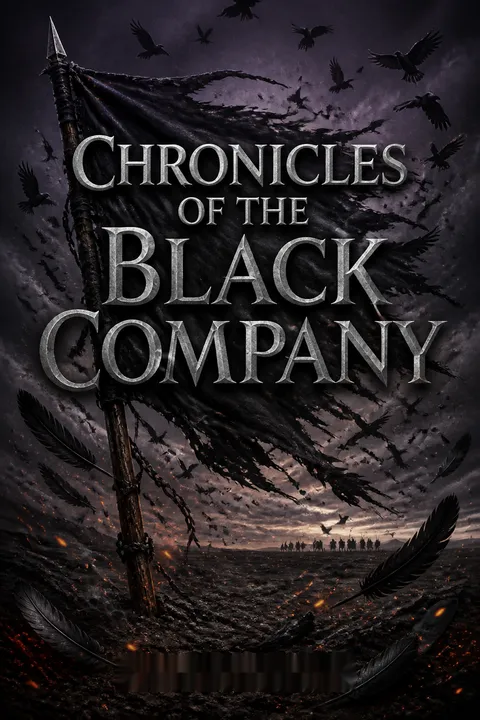
At a crossroads, the legendary Black Company fractures, with only a handful remaining: Croaker, One-Eye, Goblin, Otto, Hagop, Murgen, and the enigmatic Lady. The sense of finality is heavy, but Croaker, ever the Annalist, resolves to continue chronicling their journey. The Company, once a mighty force, is now a ragged band, haunted by memories and the weight of their name. Each member carries scars—physical and emotional—from battles past, and the Lady, once a powerful ruler, is now stripped of her magic and status. As they set out on a quest to recover the lost Annals and seek their origins in Khatovar, the group is bound by habit, loyalty, and the hope that their story is not yet finished. The journey ahead is uncertain, but the Company's legend endures.
Southward Shadows
The Company travels south through a crumbling empire, encountering violence and lawlessness where order once reigned. The collapse of imperial authority is evident in the rise of banditry and the fear that stalks the roads. The group's skills and reputation allow them to survive, but the world they knew is vanishing. Lady's presence is both a comfort and a complication, as her past power lingers in the minds of those they meet. The Company's old ways—cunning, illusion, and intimidation—serve them well, but Croaker is haunted by the cost of survival and the uncertain future. The journey is as much about escaping the past as it is about seeking a new purpose.
The Lady's Choice
Arriving at the Tower of Charm, the heart of the old empire, Croaker and his companions must retrieve the Annals. Lady, once the empire's ruler, is welcomed as a returning sovereign, but she surprises Croaker by choosing to leave it all behind. She desires to travel with the Company, seeking an ordinary life and redemption. The Tower is a place of ghosts—literal and figurative—and the past weighs heavily on all. Croaker's trust in Lady is tested, as is his own sense of duty. Ultimately, Lady's decision to forsake power for uncertain freedom marks a turning point, both for her and for the Company's journey.
Taverns and Prophecies
In the distant city of Taglios, three outlanders—Willow Swan, Cordy Mather, and Blade—find themselves drawn into local intrigue. Their tavern is a hub for gossip and prophecy, and they are soon entangled with Smoke, a local wizard, and the Woman, who is revealed as the Radisha Drah, sister to the city's prince. Smoke's dreams foretell the coming of the Black Company and the threat of the Shadowmasters, sorcerous rulers to the south. The Taglians, long pacifistic, are unprepared for war, and Swan and his friends are reluctantly recruited to help organize resistance. The stage is set for the Company's arrival and the collision of destinies.
The Tower's Ghosts
Within the Tower, Croaker and Lady confront the ghosts of their history—fallen comrades, old enemies, and the unresolved mysteries of the Taken. The Annals are recovered, but the sense of closure is elusive. The Company's legacy is both a burden and a shield, and Croaker wrestles with doubts about the true fate of the Taken and the nature of evil. Lady's choice to leave the Tower is reaffirmed, but the shadow of her former self lingers. The Company departs, transformed by loss and the knowledge that the world is changing faster than they can adapt.
Chains of Power
As the Company prepares to leave the empire, Lady is ensnared by the demands of power and the expectations of her former subjects. Her desire for freedom clashes with the responsibilities she cannot fully abandon. Croaker, now Captain, must balance his feelings for Lady with his duty to the Company. The group is outfitted with imperial resources, but the trappings of authority are both a blessing and a curse. The journey to Opal and beyond is marked by tension, as old loyalties are tested and new roles are forged. The Company's path is set, but the cost of leadership grows heavier.
Crows and Omens
Throughout their travels, Croaker becomes increasingly aware of the crows that seem to shadow the Company's every move. These birds, symbols of death and fate, appear at moments of decision and danger. In Opal, the Company recruits new members and prepares to cross the Sea of Torments. The crows' presence is unsettling, hinting at forces beyond mortal control. One-Eye and Goblin sense magical disturbances, and Lady's baggage is revealed to contain powerful artifacts. The Company's legend grows, attracting both followers and enemies. The crows are a constant reminder that the past is never truly gone, and that destiny is watching.
Across the Screaming Sea
The Company boards The Dark Wings, a ship once used by their old nemesis Soulcatcher, and sails across the Sea of Torments to Beryl. The journey is swift but fraught with tension, as the Company's reputation precedes them. In Beryl and beyond, they gather new recruits—men drawn by the promise of adventure and the shadow of the Company's name. Croaker revisits his childhood home, reflecting on the changes within himself and the world. The crossing marks a point of no return, as the Company leaves the empire behind and enters lands where their history is legend and their future uncertain.
The Shadowmasters' Council
In the south, the Shadowmasters—powerful, masked sorcerers—gather to discuss the threat posed by the Black Company and Lady. Their alliance is uneasy, marked by rivalry and paranoia. They plot to destroy the Company in the swamps, using both armies and dark magic. The Shadowmasters' presence looms over the narrative, their machinations shaping the fate of nations. Their fear of Lady and the Company is palpable, and their willingness to betray one another is a constant threat. The stage is set for a confrontation that will test the limits of mortal and magical power.
March into Yesteryear
The Company marches south through lands steeped in their own history, passing cities and ruins mentioned only in the oldest Annals. At the Temple of Travellers' Repose, they discover lost volumes of their chronicles, filling in gaps in their collective memory. The journey is both physical and spiritual, as Croaker and his companions confront the cyclical nature of their existence—march, fight, betray, and move on. The search for Khatovar, their legendary birthplace, becomes a quest for meaning in a world where the past is both inspiration and warning.
Jungle Memories
Crossing the shaggy hills, the Company enters the jungle of D'loc Aloc, One-Eye's homeland. The journey is arduous, plagued by insects, disease, and the temptations of a more peaceful life. One-Eye's past is shrouded in mystery, and his reunion with his people is bittersweet. The jungle is both a place of refuge and a reminder of what has been lost. The Company's discipline is tested, and Croaker's introspection deepens. The passage through the jungle marks a transition from the known to the unknown, as the Company prepares to face new dangers on the savannah beyond.
Savannah Dangers
Emerging onto the savannah, the Company encounters hostile tribes and the ever-present threat of betrayal. The road is marked by white stones, and straying from it means death. New guides are recruited, and the Company's numbers swell with warriors from the Nar, a caste descended from old Company soldiers. The savannah is a place of both opportunity and peril, as alliances are forged and tested. The Company's reputation as mercenaries and legends precedes them, attracting both admiration and fear. The journey south is a march into the heart of darkness, where every step is shadowed by the past.
The Temple's Secrets
At the Temple of Travellers' Repose, Croaker and One-Eye discover lost Annals that shed light on the Company's origins and the battles that shaped their destiny. The records reveal a cycle of betrayal and survival, and the loss of the earliest volumes is explained by treachery and siege. The discovery is both exhilarating and disappointing—so much is learned, yet the essential mystery of Khatovar remains. The Company's obsession with its own history is both a strength and a curse, driving them ever onward even as the world changes around them.
Allies and Betrayals
Arriving in Taglios, the Company is drawn into a web of political intrigue. The city's rulers, the Prahbrindrah Drah and his sister Radisha, seek to use the Company against the encroaching Shadowmasters. Willow Swan, Cordy Mather, and Blade become intermediaries, caught between loyalty and self-preservation. The Taglian priests and cults are both allies and obstacles, their rivalries complicating the formation of an army. Croaker is offered command, but only on his own terms—absolute authority, free from interference. The Company's reputation is both a weapon and a liability, as old fears and new ambitions collide.
Taglios: City of Schemes
Taglios becomes a boot-camp city as the Company trains a new army from scratch. Mogaba, a Nar officer, proves invaluable in shaping raw recruits into disciplined soldiers. The city's politics are treacherous, with priests and nobles scheming for advantage. Croaker's demands for authority are met, but the price is constant vigilance. The Company's methods—showmanship, discipline, and ruthlessness—begin to transform Taglios, but the threat of the Shadowmasters looms ever larger. The crows are ever-present, and the sense of being watched intensifies. The stage is set for a confrontation that will determine the fate of nations.
The Gathering Storm
As the rivers recede, the Shadowmasters prepare to invade. The Company races to fortify positions at the Ghoja ford, while Lady leads a cavalry force to intercept enemy movements at Numa. The Shadowmasters employ cunning, building levees to manipulate the river and outflank the Taglian defenses. Betrayals and assassinations plague the Company, and the presence of old enemies—Shapeshifter, Stormbringer, and others—complicates the battle. Croaker's leadership is tested as never before, and the crows gather in ever greater numbers, portents of the bloodshed to come.
Ghoja Ford
The battle at Ghoja ford is a test of strategy and nerve. Croaker employs every trick—charcoal, mist, and illusion—to disrupt the enemy's advance. The Taglian legions, trained by Mogaba and Ochiba, hold the line against overwhelming odds. Lady's cavalry arrives in time to strike the enemy's flank, and the Company's discipline and showmanship turn the tide. The victory is hard-won, but the cost is high. The Shadowmasters are wounded but not defeated, and the road south is open. The Company's legend grows, but so does the shadow of fate.
Widowmaker and Lifetaker
In the aftermath of Ghoja, Lady and Croaker adopt the personas of Lifetaker and Widowmaker, symbols of fear and power. Their relationship deepens, but the burdens of leadership and destiny weigh heavily. The Company advances on Stormgard, facing both external enemies and internal doubts. The crows are ever-present, and the sense of being manipulated by unseen forces intensifies. The battle for Stormgard is both a test of arms and a struggle for identity, as the Company confronts the legacy of the Taken and the true nature of the Shadowmasters.
Stormgard's Fall
The siege of Stormgard is a culmination of strategy, magic, and raw determination. The Company employs deception, mining, and a night assault to breach the city's defenses. Within the citadel, Shapeshifter confronts Stormbringer, revealing that the Shadowmasters are in fact surviving Taken. The battle is brutal and personal, with old scores settled in blood and sorcery. One-Eye's cunning ensures the destruction of the Taken, but the victory is hollow. The Company is battered, and the true cost of survival becomes clear. The war is not yet over, and the shadows deepen.
The Price of Victory
In the aftermath of Stormgard's fall, Croaker and Lady finally consummate their long-delayed relationship, but the moment is tinged with disappointment and the weight of all that has been lost. The Company is victorious, but the cost is high—many dead, and the survivors are haunted by what they have become. The crows are everywhere, and the sense of being watched by fate or something darker is inescapable. The war with the Shadowmasters is not yet finished, and the road to Khatovar remains uncertain. The price of victory is the loss of innocence and the burden of memory.
The Stump and the Crow
Wounded and near death, Croaker lies beneath the Company standard, surrounded by crows and haunted by visions. The mysterious walking stump approaches, revealed to be Soulcatcher, Croaker's old nemesis, returned from the dead. She claims Croaker as her own, spiriting him away as the battlefield fades into silence. The crows, ever-present, are revealed as agents of fate or something darker. The Company's future is left in doubt, and the cycle of death and rebirth continues. The silence of stone awaits, and the hunt is never-ending.
Overlook's Laughter
In the fortress of Overlook, the remaining Shadowmasters gloat over their partial victory and the fall of their rivals. Their alliance is fragile, marked by madness and ambition. The threat of the Black Company remains, but the Shadowmasters are confident in their power. The release of ancient evils is hinted at, and the stage is set for further conflict. The laughter from Overlook is both triumphant and ominous, a reminder that the struggle is far from over.
Glittering Stone
In the haunted plain of Glittering Stone, shadows gather among ancient pillars, feasting on the unwary and hungering for release. The place is a symbol of the Company's quest—a destination both literal and metaphorical, where immortality is a curse and the past is never truly dead. The silence of stone is both a warning and a promise, and the Company's journey is far from finished. The cycle of violence, memory, and fate continues, and the shadows wait for the next chapter.
Analysis
Glen Cook's Shadow Games is a meditation on memory, identity, and the burdens of history, set against the backdrop of mercenary warfare and sorcery. The novel explores the tension between the desire for redemption and the inescapability of the past. Through Croaker's introspective narration, we witness the transformation of the Black Company from a legendary force to a band of survivors seeking meaning in a changing world. The interplay between power and vulnerability is embodied in Lady's arc, as she moves from empress to exile, and in Croaker's reluctant assumption of leadership. The recurring motifs of crows, masks, and the Annals underscore the themes of fate, deception, and the cyclical nature of violence. The novel's structure—blending personal reflection, political intrigue, and epic battles—invites readers to question the nature of heroism and the cost of survival. In a modern context, Shadow Games resonates as a story about the search for identity in a world where history is both a guide and a curse, and where the struggle to define oneself is as important as any external victory. The lessons are clear: the past shapes us, but it does not have to define us; redemption is possible, but only through honesty, courage, and the willingness to face the shadows within.
Review Summary
The Chronicles of the Black Company receives mostly positive reviews, praised for its gritty realism, morally ambiguous characters, and unique perspective on military fantasy. Readers appreciate the complex plot, dark humor, and Glen Cook's writing style. Some criticize the lack of detailed world-building and initially confusing narrative. The series is considered influential in the grimdark fantasy subgenre. Many readers find the characters compelling, especially Croaker, the narrator. While some struggle with the abrupt prose, others find it adds to the authentic military feel of the story.
People Also Read

Characters
Croaker
Croaker is the heart and conscience of the Black Company—a physician, historian, and, reluctantly, Captain. His role as Annalist makes him both participant and observer, chronicling the Company's deeds and misdeeds. Croaker is introspective, often doubting his own worth and the morality of his choices. His relationship with Lady is fraught with longing, guilt, and the hope for redemption. As Captain, he is forced to make hard decisions, balancing loyalty to his men with the demands of survival. Croaker's journey is one of self-discovery, as he confronts the ghosts of the past and the burdens of leadership. His development is marked by increasing hardness, but also by a persistent humanity that sets him apart from the mercenary world he inhabits.
Lady
Once the most powerful sorceress and ruler of the empire, Lady is now stripped of her magic and status. Her beauty and charisma remain, but she is haunted by loss and the consequences of her past. Lady's relationship with Croaker is central to her arc—he is both her confessor and her hope for a new life. She struggles with the tension between power and freedom, often torn between the desire to lead and the longing for ordinary humanity. Lady's intelligence, tactical acumen, and capacity for ruthlessness make her both an asset and a danger. Her journey is one of atonement, as she seeks to redefine herself beyond the shadow of her former self.
One-Eye
One-Eye is the Company's oldest member, a wizard of considerable power and even greater cunning. His rivalry with Goblin is legendary, providing both humor and danger. One-Eye is pragmatic, self-serving, and deeply loyal to the Company, though he rarely shows it openly. His past is shrouded in mystery, and his actions are often guided by old grudges and a desire for revenge. One-Eye's magic is as much about illusion and trickery as raw power, and his survival instincts are unmatched. He is both a stabilizing force and an agent of chaos within the group.
Goblin
Goblin is One-Eye's eternal rival, a small, wiry wizard whose magic is rooted in mischief and creativity. His relationship with One-Eye is both antagonistic and symbiotic—they need each other to stay sharp. Goblin is an outsider even within the Company, often underestimated but capable of surprising brilliance. His humor masks a deep loneliness, and his loyalty to the Company is fierce. Goblin's magic is unpredictable, and his schemes often backfire, but he is indispensable in moments of crisis.
Mogaba
Mogaba is a Nar, descended from the Company's ancient soldiers, and becomes the commander of the Taglian legions. He is disciplined, ambitious, and fiercely proud of his heritage. Mogaba's military skill is crucial in transforming raw recruits into an effective army. He is both a rival and a complement to Croaker, embodying the virtues of order and strength. Mogaba's loyalty is to the Company's ideals, and his development is marked by increasing responsibility and the challenge of reconciling tradition with necessity.
Willow Swan
Willow Swan is an outlander who becomes entangled in Taglios's fate. He is charming, self-deprecating, and often in over his head. Swan's loyalty to his friends—Cordy Mather and Blade—and his growing attachment to Taglios draw him into the struggle against the Shadowmasters. He is both a comic figure and a capable leader, embodying the theme of ordinary men caught in extraordinary events. Swan's development is marked by a gradual acceptance of responsibility and a willingness to fight for a cause greater than himself.
Radisha Drah
The Radisha Drah is the true power behind the throne in Taglios, orchestrating alliances and manipulating events to protect her city. She is pragmatic, ruthless, and deeply committed to Taglios's survival. Her relationship with her brother, the Prahbrindrah Drah, is complex—she is both his advisor and his protector. Radisha's interactions with the Company are marked by mutual suspicion and respect. She is a master of political intrigue, willing to use any means necessary to achieve her goals.
Smoke
Smoke is a local wizard in Taglios, plagued by prophetic dreams and a sense of impending doom. He serves the Radisha and becomes a key figure in the city's resistance. Smoke's magic is subtle, rooted in dreams and intuition rather than raw power. He is cautious, often fearful, and aware of forces beyond mortal understanding. Smoke's role is that of a watcher and a guide, his insights shaping the decisions of those around him.
Shapeshifter (Shifter)
Shapeshifter is one of the original Ten Who Were Taken, presumed dead but revealed as a Shadowmaster. His motives are complex—driven by old grudges, ambition, and a desire for revenge against his peers. Shifter's magic is formidable, rooted in transformation and illusion. His relationship with Lady and the Company is fraught with suspicion and manipulation. Shifter is both ally and enemy, his actions shaping the course of the war.
Soulcatcher
Soulcatcher, Croaker's old enemy, returns in the guise of the walking stump, orchestrating events from the shadows. Her motives are personal—revenge against Lady and Croaker, and a desire to reclaim power. Soulcatcher's magic is rooted in deception, voice, and manipulation. Her presence is a constant threat, and her actions in the final chapters upend the Company's hard-won victories. Soulcatcher embodies the theme of the past's inescapable return and the cyclical nature of conflict.
Plot Devices
Annals and Memory
The Annals of the Black Company serve as both a literal record and a metaphor for the burden of history. Croaker's role as Annalist shapes the narrative, blending personal reflection with collective memory. The search for lost volumes and the quest for Khatovar are driven by a need to understand the past and find meaning in the present. The Annals are a source of identity, but also a chain, binding the Company to cycles of violence and betrayal. The device allows for foreshadowing, unreliable narration, and the exploration of myth versus reality.
Masks and Identity
Masks—literal and figurative—are central to the story. The Shadowmasters and the Taken conceal their identities, while Lady and Croaker adopt the personas of Lifetaker and Widowmaker. The theme of transformation is echoed in Shapeshifter's magic and the Company's shifting roles. Masks allow characters to hide, deceive, and reinvent themselves, but also raise questions about authenticity and the cost of survival. The device is used to explore the tension between who we are and who we pretend to be.
Crows and Omens
Crows are a recurring motif, symbolizing death, fate, and the presence of forces beyond mortal control. Their appearance at key moments foreshadows danger, change, and the intervention of supernatural powers. The crows are both watchers and agents, their true nature revealed only in the final chapters. The device heightens the sense of inevitability and the cyclical nature of the Company's journey.
Showmanship and Deception
The Company's reliance on illusion, trickery, and psychological warfare is a key plot device. Battles are won as much by showmanship as by force, and the ability to manipulate perception is as valuable as martial skill. The device allows for reversals, surprises, and the subversion of expectations. It also serves as a metaphor for the blurred line between truth and fiction, both in war and in the telling of history.
Cyclical Structure and Foreshadowing
The narrative is structured around cycles—of war, betrayal, and renewal. The Company's journey south is both a literal retracing of their past and a metaphor for the inescapability of fate. Foreshadowing is used extensively, with dreams, prophecies, and omens hinting at future events. The device reinforces the themes of memory, destiny, and the search for meaning in a world where the past is never truly dead.
Download PDF
Download EPUB
.epub digital book format is ideal for reading ebooks on phones, tablets, and e-readers.








































