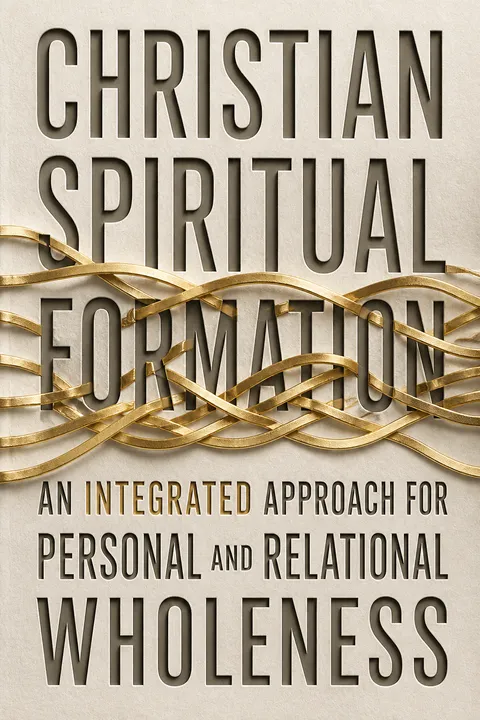

Key Takeaways
1. Christian spiritual formation is a holistic, seven-dimensional restoration of the imago Dei.
Christian spiritual formation (CSF) describes the process of being restored into the image of God through Jesus Christ in its multidimensionality by the work of the Holy Spirit.
Holistic restoration. The fall of humanity corrupted the perfect image of God (imago Dei) infused in us at creation. Christian spiritual formation is not merely a mystical or nonphysical pursuit; rather, it is an interactive, grace-based process of being conformed to the image of Jesus Christ across the entirety of human existence.
Seven integrated dimensions. God created men and women as integrated beings, meaning our spiritual growth cannot be separated from our physical, emotional, or intellectual realities. The author identifies seven primary dimensions of human formation that universally characterize the human fabric:
- Spirit: The foundational faith journey overseen by the Holy Spirit.
- Emotions: Understanding, expressing, and regulating our feelings.
- Relationships: Social connectedness and community interactions.
- Intellect: Developing the mind to think and discern truth.
- Vocation: Fulfilling our life purpose and calling.
- Physical Health: Caring for our bodies as holy temples.
- Resource Stewardship: Managing creation, money, and time.
Interdisciplinary synergy. These seven dimensions are intricately interwoven, meaning a deficit in one area inevitably compromises the others. For example, chronic physical illness can stymie relational formation, while unresolved emotional wounds can derail vocational focus. True wholeness requires a balanced, integrated approach that avoids the trap of over-spiritualizing life while neglecting the body, mind, or resources.
2. Trinitarian love is the catalyst and ultimate motivation for spiritual growth.
Godly love is the essence of God’s character and personality, proceeding from the Father as demonstrated by the Son through the work of the Holy Spirit, which unconditionally upholds the highest good of others and fosters the same altruism and benevolence in human relationships without regard for personal sacrifice.
Trinitarian foundation. At the very core of Christian spiritual formation lies the limitless, self-giving love of the triune God. God the Father, Son, and Holy Spirit exist in an eternal, reciprocal relationship of love, and they created humanity to echo this trinitarian life on a finite level.
Reciprocal love response. Because God first loved us, our spiritual journey is essentially a response of grateful, reciprocal love. This love is not a passive sentiment but a dynamic, relational force that drives us to steward our lives for God's glory. The Father's unconditional embrace is beautifully illustrated in the parable of the prodigal son:
- The younger son "un-sons" himself through rebellion, yet the father never "un-sons" him.
- The father's embrace is based on relationship, not moral performance.
- The older son's self-righteousness also "un-fathers" the father, yet the father extends the same loving invitation to him.
The Spirit's role. The Holy Spirit acts as the divine energy of love, pouring God's love into our hearts and empowering us to live as adopted sons and daughters. Through this spiritual adoption, we are freed from the spirit of slavery and fear, allowing us to cry out "Abba! Father!" and participate in the dynamic of the divine life.
3. The human spirit is the heart-centered command center nurtured by grace and spiritual practices.
The human spirit is the core capacity and repository of one’s deepest longings and desires, and it directs all of the issues of life.
The inner core. The human spirit, often referred to in Scripture as the "heart," serves as the "air traffic control" mechanism of our entire being. It is the seat of our will, intellect, and affections, directing how we think, feel, and act. Because sin corrupted this inner core, our spirits must be radically restored through Christ's redeeming grace.
Grace-based transformation. Spiritual transformation is an inside-out process that relies entirely on the enabling grace of God. We cannot manufacture spiritual growth through sheer willpower or legalistic perfectionism; rather, we must humbly receive God's grace, which:
- Enlightens the intellect to discover divine truth.
- Strengthens the will to follow and obey God.
- Redirects our desires and passions away from the flesh.
- Empowers us to overcome the destructive "sin cycle" of doubt, deception, and disobedience.
Engaging spiritual practices. To make space for this transforming grace, we must engage in spiritual disciplines as "means of grace" rather than mere tasks. These practices—such as prayer, fasting, study, solitude, and worship—are the rhythms that align our habits with the Kingdom of God. Additionally, God uses the crucible of suffering to strip away our pride and deepen our fellowship with Christ.
4. Emotional healing and secure attachments are vital for a healthy relationship with God.
The goal of emotional formation is to move increasingly toward a fuller reception of the love of God, which results in the disabling of emotional bondages that prevent the reciprocal flow of God’s love, as expressed by the fruit of the Spirit.
Attachment and God. Our early childhood experiences with primary caregivers shape "attachment filters" that heavily influence how we perceive and relate to God. Psychologists identify four primary attachment styles—secure, avoidant-insecure, anxious-insecure, and disorganized—which act as templates for our adult relationships. A secure human attachment provides a healthy "God filter," whereas insecure attachments can lead us to view God as distant, demanding, or untrustworthy.
Healing emotional wounds. Unresolved emotional hurts from our past, whether inflicted actively (abuse, abandonment) or passively (neglect, withheld love), create a destructive downward spiral. This spiral begins with unhealed wounds, which morph into ungodly beliefs, negative emotional patterns, and ultimately, destructive behaviors. To break this cycle, we must experience the healing power of the Holy Spirit, who:
- Replaces the lies we believe with God's truth.
- Binds up the brokenhearted and sets captives free.
- Uses Christian community and counseling as safe spaces for emotional restoration.
The power of forgiveness. Forgiveness is the indispensable doorway to emotional healing and freedom in Christ. It is the supernatural, grace-enabled decision to release our offenders and relinquish our right to retaliation. While forgiveness does not instantly erase the pain, it stops the cancer of bitterness from consuming our souls, allowing us to walk with a "holy limp" of humility and resilience.
5. Relational formation in the family and church mirrors the social nature of the Trinity.
To be human is to be created in and for relationship with divine and human others.
Relational by design. Because God exists as a social Trinity, human beings are inherently relational creatures who find their true identity in community. The family is the primary incubator for this relational formation, designed to be a covenantal space of commitment, grace, empowerment, and intimacy. When families fracture, the resulting relational wounds can distort our capacity to trust others and God.
The church as family. Beyond the nuclear family, the church (familia Dei) is the primary community where relational formation is nurtured. Authentic Christian community requires us to share our lives, stay committed through conflict, and reach out to the marginalized. In this communal setting, we learn to practice the "one another" commands of Scripture:
- Loving one another with genuine, mutual affection.
- Bearing with one another and forgiving grievances.
- Encouraging and building up one another in faith.
- Serving one another through our diverse spiritual gifts.
Navigating conflict and culture. Interpersonal conflict is inevitable, but it serves as a powerful tool for character development when handled through biblical peacemaking. Rather than escaping or attacking, we are called to confess our part in conflicts and seek reconciliation. Furthermore, we must recognize that our cultural backgrounds shape how we relate, but our ultimate citizenship is in the boundary-transcending Kingdom of God.
6. Loving God with the mind requires intellectual discipleship and a renewed worldview.
Loving God with our minds means developing our intellectual capacity in pursuing God’s truth in order to advance God’s Kingdom and bring glory to God.
Intellectual discipleship. Loving God with all our mind requires us to actively engage our intellect to pursue truth and honor our Creator. A flabby, undisciplined mind is not a badge of spiritual honor; rather, a robust intellectual life is a crucial component of the spiritual journey. We must use our minds to understand God's revelation, stand against secular ideologies, and spread the gospel.
Worldview and truth. Our minds are constantly bombarded by competing cultural worldviews—such as naturalism, humanism, nihilism, and postmodernism—that seek to deconstruct absolute truth. To navigate this intellectual battlefield, we must cultivate a Christian worldview grounded in the Word of God. This involves integrating learning and faith, recognizing that all truth is God's truth across every academic and professional discipline:
- Science and mathematics reveal the order of God's creation.
- History and sociology trace the narrative of human interaction and redemption.
- Literature and the arts reflect the creative genius of the Creator.
Renewing the mind. Because the fallen mind is a spiritual battleground, we must actively participate in its renewal by taking every thought captive to Christ. This requires us to intentionally detox from the constant distractions of digital media, advertising, and entertainment that foster mental passivity. By meditating on Scripture and relying on the Holy Spirit, we develop the "mind of Christ" and cultivate intellectual humility.
7. Vocation is a calling to love and serve others through our unique, God-given design.
The Christian calling is to love, and love is the one thing most worth living for.
The call to love. Vocation is not merely a career or a job; it is a divine summons to live a life of love and service. Our primary calling is to follow Christ and love God and our neighbor, which then finds concrete expression in our specific life roles and work. When we view our work through the lens of vocation, even the most mundane tasks become sacred acts of worship.
Discerning your calling. Discerning our specific life purpose requires us to pay attention to how God has uniquely designed us. This developmental journey involves the convergence of our passions, aptitudes, and opportunities, and is guided by:
- Identifying our spiritual gifts (e.g., teaching, mercy, leadership) and natural talents.
- Seeking the wisdom and feedback of godly mentors and community.
- Reflecting on our life experiences, including our failures and trials.
- Listening to the promptings of the Holy Spirit through prayer and Scripture.
Vocational holiness. The workplace is a primary incubator for spiritual formation, where our character is tested and refined. We are called to practice "vocational holiness" by resisting the temptations of power, prestige, and compromise. By viewing our daily labor as a partnership with God, we contribute to the common good and manifest the fruit of the Spirit in our professional lives.
8. Physical health and embodiment are sacred acts of stewardship that honor the Holy Spirit's temple.
Through the fact that the Word of God became flesh, the body entered theology . . . through the main door.
The sacred body. Christian faith is an embodied faith, and our physical bodies are masterpieces of God's creation. The body is not an obstacle to spirituality or a disposable shell; rather, it is the temple of the Holy Spirit, designed to glorify God. We must reject gnostic dualism that separates the spiritual from the physical, and instead offer our bodies as living sacrifices of worship.
Stewardship of health. Caring for our physical health is a spiritual discipline that directly impacts our capacity to serve God and others. The author highlights five critical areas of physical health stewardship that require intentionality:
- Nutrition: Hydrating with water and eating whole, unprocessed foods while avoiding toxic additives.
- Exercise: Engaging in regular physical activity to strengthen the heart, bones, and mind.
- Sleep: Allowing the brain to "defrag" and the body to repair itself through adequate rest.
- Stress Management: Establishing healthy boundaries and practicing Sabbath to prevent adrenal fatigue.
- Sexual Purity: Honoring the body through chastity and covenantal marital intimacy.
Holistic integration. Our physical well-being is dynamically linked to our emotional, mental, and spiritual health. For example, regular exercise has been shown to reduce depression and anxiety, while sleep deprivation can trigger prediabetic conditions and impair cognitive function. By stewarding our physical bodies, we preserve our energy and longevity for the work of the Kingdom.
9. Resource stewardship demands active creation care, financial integrity, and intentional time management.
Like good stewards of the manifold grace of God, serve one another with whatever gift each of you has received.
Caring responsibility. Resource stewardship is our grateful response to God's ownership of the entire universe. We do not own the earth, our money, our possessions, or our time; we are merely managers entrusted with their care. This stewardship requires us to exercise "caring responsibility" rather than destructive domination over God's creation.
Creation and finance. Earthkeeping is an integral part of Christian discipleship, demanding that we actively care for the environment and resist ecological degradation. Similarly, our financial decisions reflect our spiritual priorities, requiring us to choose between serving God or Mammon. We demonstrate financial integrity and trust in God by:
- Practicing generous, cheerful giving to the church and the poor.
- Living within our means and actively working to eliminate debt.
- Resisting the seductive pull of consumerism and "affluenza."
- Saving wisely for the future while avoiding the trap of hoarding.
Redeeming the time. Time is a precious, non-renewable resource that must be managed with eternal intentionality. We must resist the "tyranny of the urgent" and instead establish healthy life rhythms that prioritize communion with God and relationships over constant productivity. By "receiving the day" as a gift, we align our daily schedules with the purposes of the Kingdom.
10. Ethical living is the outward synthesis of inner transformation, demonstrating Christ's love to a watching world.
Love, as the ultimate principle of morality, is always the same. Love entering the unique situation, in the power of the Spirit, is always different.
Ethical synthesis. Ethical Christian living is the outward demonstration of our inner spiritual transformation. It is the synthesis of all seven CSF dimensions, resulting in a lifestyle of moral wholeness, integrity, and holiness. Our ethics must be grounded in the character of God and the teachings of Jesus, rather than legalistic rules or cultural relativism.
Imitating Christ. The core of Christian ethics is the imitation of Christ, which means living a life of self-giving, cruciform love. This imitation is not a matter of rote mimicry but is the result of the Holy Spirit forming Christ within us. As we walk in the Spirit, we cultivate the virtues that compose the fruit of the Spirit, which stand in stark contrast to the destructive works of the flesh.
A city on a hill. The church is called to be a contrast community that demonstrates the reality of the Kingdom of God to a watching world. Our ethical consistency and active love for the marginalized—the poor, the oppressed, and the broken—serve as a powerful, attractional witness. By living out the story of Jesus in our daily lives, we let our light shine and bring ultimate glory to our Father in heaven.
Download PDF
Download EPUB
.epub digital book format is ideal for reading ebooks on phones, tablets, and e-readers.








































