
Plot Summary
Pentaquod's New World
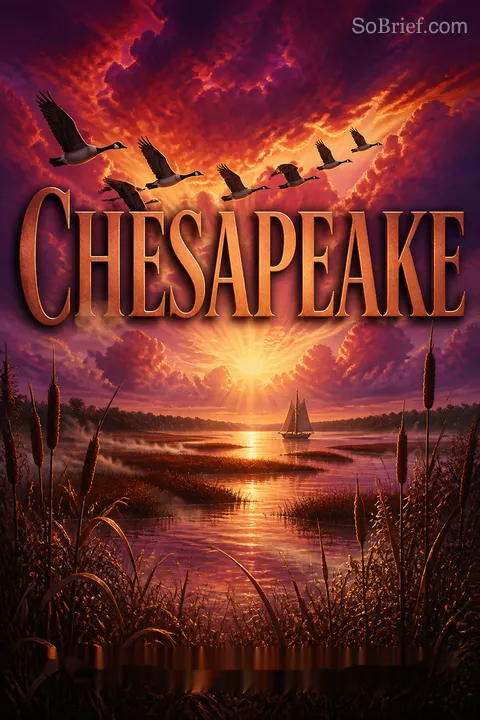
In 1583, Pentaquod, a Susquehannock Indian weary of endless tribal warfare, flees his people and paddles downriver to the vast, mysterious Chesapeake Bay. He seeks a gentler life and finds it among the peaceful Choptank people on the bay's eastern shore. Pentaquod's journey is one of survival, adaptation, and discovery, as he learns the rhythms of the land and water, the bounty of oysters and crabs, and the cycles of geese and herons. His story is the genesis of the region's human history, a tale of finding refuge and forging a new identity in a land both beautiful and perilous, setting the stage for centuries of change.
Steed's Island Legacy
In the early 1600s, Englishman Edmund Steed, seeking religious freedom and a new beginning, settles on the island Pentaquod once called home. Steed's arrival marks the collision of European ambition and native tradition. He builds a plantation, marries, and raises a family, establishing the Steed dynasty. The land is tamed, forests felled, and tobacco planted, but the island's beauty and bounty come at a cost—erosion, storms, and the slow displacement of the native people. The Steeds' story is one of aspiration, faith, and the relentless drive to possess and shape the land, even as the island itself begins to slip away.
Faith and Rebellion
The Chesapeake's early years are marked by religious conflict—Catholics, Anglicans, and Quakers vie for power and survival. The Steeds, secret Catholics in a Protestant world, navigate suspicion and persecution, while Quaker Edward Paxmore endures brutal punishment for his beliefs in New England before finding sanctuary on the Choptank. The region becomes a microcosm of the larger struggle for religious tolerance and self-determination, as faith both divides and unites, and the seeds of rebellion against distant authority are sown in the soil of conscience and conviction.
The Slave's Journey North
As the plantation economy grows, so does the reliance on enslaved Africans. The story of Cudjo, a proud African captured and sold into bondage, becomes emblematic of the suffering and resilience of generations. Enduring the horrors of the Middle Passage, brutal "slave-breakers," and the daily indignities of servitude, Cudjo never loses his will to learn and be free. His eventual escape, aided by the Underground Railroad and the moral courage of Quakers like the Paxmores, is a testament to the enduring human spirit and the complex web of complicity and resistance that defined the era.
Quaker Conscience Awakens
The Paxmore family, Quakers by faith and tradition, become the region's conscience. Their meeting house is a place of silent worship and radical testimony. Over generations, they move from quietism to activism, manumitting their own slaves and leading the local Quaker community to denounce slavery. Their struggle is not only with the world but within themselves, as they balance pacifism with the need to confront evil. Their story is one of gradual awakening, moral leadership, and the power of collective witness to change hearts and laws.
Turlock's Marsh Dominion
The Turlocks, descended from indentured servants and outlaws, carve out a rough existence in the marshes and backwaters. Illiterate, cunning, and fiercely independent, they become masters of the land's hidden places—trapping, hunting, and living by their own code. Their world is one of poverty and resilience, a counterpoint to the Steeds' plantation grandeur. The marsh is both refuge and prison, a place where the rules of society are bent, and survival depends on wit, family, and an intimate knowledge of nature's cycles.
Oysters, Guns, and Geese
The Chesapeake's riches—oysters, crabs, and waterfowl—sustain generations, but also spark fierce competition and environmental peril. The rise of the watermen, black and white, brings new traditions and rivalries. The invention of the skipjack, the drama of the big gun, and the return of the geese become central to the region's identity. Yet storms, overharvesting, and the relentless advance of erosion threaten both livelihoods and the land itself. The interplay of abundance and loss, tradition and change, defines the Chesapeake's golden age and its decline.
The Coming of Revolution
As the colonies chafe under British rule, the Steeds, Paxmores, and Turlocks are drawn into the currents of revolution. The Choptank becomes a stage for debates over loyalty, liberty, and the rights of man. The building of swift schooners, the smuggling of arms, and the forging of alliances with France all play their part. The war brings both glory and ruin, as fortunes are made and lost, and the ideals of freedom are tested against the realities of race, class, and power.
War and the Bay
The Chesapeake is scarred by war—British raids, the War of 1812, and the Civil War all leave their mark. The bay's people endure bombardment, occupation, and the shifting tides of fortune. The end of slavery brings new challenges, as black families like the Caters struggle for dignity and opportunity in a world slow to change. The watermen's golden age gives way to mechanization, regulation, and the slow erosion of the old ways. The bay itself, battered by storms and pollution, becomes a symbol of both endurance and fragility.
Black Freedom's Struggle
The promise of emancipation is slow to be fulfilled. Black families labor in the canneries, on the water, and in the fields, building churches and schools in the face of discrimination and violence. The Caters' journey—from slavery to skipjack captains, from Frog's Neck to the Great Migration north—mirrors the broader black experience. The struggle for civil rights, the burning of the Neck, and the rise of new leaders mark the painful, unfinished work of justice. The bay's black community, though often invisible in official histories, is revealed as a source of strength, creativity, and hope.
The Watermen's Golden Age
The late nineteenth and early twentieth centuries are the heyday of the watermen. Skipjack races, oyster wars, and the camaraderie of the bay define a unique culture. Rivalries between Turlocks, Cavenys, and Caters are played out on the water and in the bars of Patamoke. The coming of the bridge, the rise of tourism, and the encroachment of modernity threaten the old ways. The bay's bounty is no longer inexhaustible, and the watermen must adapt or fade away, their stories becoming legend.
The Paxmore Dilemma
In the twentieth century, the Paxmores are drawn into the moral crises of their time—war, civil rights, and the corruption of power. Pusey Paxmore's rise to national prominence and his fall in the Watergate scandal echo the family's long tradition of bearing witness and paying the price for conscience. The struggle to reconcile private honor with public shame, to find meaning in exile and disgrace, is both personal and emblematic of a nation wrestling with its own ideals and failures.
The Vanishing Island
Devon Island, once the heart of the Steed legacy, is slowly consumed by the bay. Storms, rising tides, and the relentless work of wind and water erase centuries of human effort. The mansion crumbles, the fields disappear, and the island itself vanishes beneath the waves. The loss is both literal and symbolic—a reminder that all human endeavors are temporary, and that nature's cycles will outlast even the grandest ambitions. The vanishing island becomes a metaphor for the passage of time, the fragility of memory, and the need to cherish what remains.
The Marsh's Enduring Spirit
In the end, the marsh endures. New generations—black, white, and of every background—find meaning and sustenance in the land and water. The return of the geese, the revival of the ospreys, and the quiet work of conservationists and dreamers offer hope that the bay's beauty and bounty can be preserved. The stories of Pentaquod, Steed, Paxmore, Turlock, and Cater are woven into the fabric of the land, a testament to the enduring spirit of the Chesapeake and the people who call it home.
Analysis
Chesapeake is a sweeping meditation on the American experience, using the microcosm of Maryland's Eastern Shore to explore the grand themes of history, identity, and the relationship between people and place. Michener's novel is both a celebration and a critique—a loving portrait of a unique landscape and its inhabitants, and a clear-eyed examination of the costs of ambition, prejudice, and environmental neglect. The book's central lesson is that history is not a straight line but a cycle, marked by recurring struggles for freedom, justice, and belonging. The land itself is both witness and participant, shaping and being shaped by generations of hope and loss. The novel's structure—moving from the arrival of Pentaquod to the vanishing of Devon Island—underscores the impermanence of all things, and the need to cherish what remains. Chesapeake ultimately argues that the true legacy of a place is not in its monuments or fortunes, but in the resilience of its people, the endurance of its natural beauty, and the ongoing work of conscience and renewal. In an era of rapid change and environmental crisis, the novel's call to stewardship, memory, and moral courage is more urgent than ever.
Review Summary
Chesapeake is praised as an epic historical fiction spanning centuries of American history. Readers appreciate Michener's detailed portrayal of the Chesapeake Bay region, its wildlife, and the generations of families who shaped it. The novel covers themes like religion, slavery, and environmental change. While some find the later chapters less engaging, many consider it a masterful work that brings history to life. Criticisms include its length and occasional lack of character depth, but overall, it's highly regarded for its sweeping narrative and rich historical detail.
People Also Read


Characters
Pentaquod
Pentaquod is the Susquehannock Indian whose flight from war and search for peace begin the saga. He is a man of conscience, choosing exile over violence, and his journey down the river to the Chesapeake is both literal and symbolic—a quest for a new way of living. Pentaquod's adaptability, wisdom, and respect for nature set the tone for generations to come. He becomes the first to truly belong to the land, forging bonds with the Choptank people and teaching that survival depends on harmony with the world, not domination. His legacy is the spirit of refuge and renewal that echoes through the centuries.
Edmund Steed
Edmund Steed is the Englishman who claims the island and establishes the Steed dynasty. Driven by faith, family, and the desire for land, he transforms the wilderness into a plantation, but at the cost of displacing the native people and altering the landscape. Steed is both visionary and flawed, a man who seeks to create a legacy but is blind to the forces—erosion, storms, and time—that will eventually undo his work. His descendants inherit both his strengths and his blindness, struggling to hold on to what cannot be kept.
Edward Paxmore
Edward Paxmore is the archetype of the suffering idealist. Persecuted for his faith in New England, he endures whippings, exile, and humiliation before finding sanctuary on the Choptank. As a carpenter and later a shipbuilder, he brings both skill and a restless moral energy to the region. Paxmore's journey is one of spiritual growth, as he moves from passive endurance to active witness, leading his family and community to confront the sin of slavery. His legacy is the tradition of bearing witness, even at great personal cost.
Cudjo Cater
Cudjo's story is one of suffering, resilience, and transformation. Torn from his home, brutalized by "slave-breakers," and denied even the right to learn, he never loses his will to be free. His escape, aided by the Underground Railroad and the Paxmores, is a triumph of courage and solidarity. Cudjo's journey from Africa to the Choptank, from bondage to self-determination, mirrors the larger black experience in America. His descendants, the Caters, become central to the region's story, embodying both the pain and the hope of black America.
Ruth Brinton Paxmore
Ruth Brinton is the indomitable spirit of the Paxmore family. Fiercely intelligent, uncompromising, and often abrasive, she leads the Quaker community to confront the evil of slavery. Her testimony, both in meeting and in life, is a catalyst for change, inspiring others to act on their convictions. Ruth's legacy is the power of conscience, the necessity of speaking truth to power, and the belief that even the smallest voice can alter the course of history.
Amos Turlock
Amos Turlock is the embodiment of the region's wild margins. Descended from indentured servants and outlaws, he lives by his wits in the marshes, hunting, trapping, and evading the law. Amos is both comic and tragic, a survivor who bends the rules and outsmarts his betters. His relationship with the land is intimate and unsentimental, and his cunning ensures the survival of his family and traditions. Amos is a reminder that history is shaped not only by the powerful but by those who live on the edges.
Paul Steed
Paul Steed is the quintessential Chesapeake gentleman—educated, principled, and deeply invested in the land and its customs. He is both a product and a defender of the plantation system, rationalizing slavery even as he treats his own slaves with relative kindness. Paul's letters and debates reflect the region's struggle to reconcile ideals of freedom with the realities of race and power. His story is one of gradual adaptation, as the old order gives way to new challenges and the Steed legacy is eroded by time and change.
Julia Cater
Julia is the backbone of the Cater family, working tirelessly in the canneries, on the water, and in the home. Her faith, resilience, and devotion to her children sustain the family through poverty, discrimination, and upheaval. Julia's story is one of endurance and dignity, a testament to the unheralded labor of black women. Her wisdom—"You takes what you gets an' you likes it"—is both a survival strategy and a quiet act of resistance.
Pusey Paxmore
Pusey Paxmore rises to national prominence, only to fall in the Watergate scandal. His journey is one of ambition, service, and ultimately, disillusionment. Pusey's struggle to reconcile private honor with public shame, to find meaning in exile and disgrace, is both personal and emblematic of a nation wrestling with its own ideals and failures. His story is a meditation on the costs of conscience, the dangers of power, and the possibility of redemption.
Chris Pflaum
Chris is the modern heir to the region's tangled legacy. A veteran, scientist, and lover of the marsh, he returns to the Chesapeake to find purpose and connection. Chris's journey is one of restoration—of land, memory, and community. He is both witness and participant in the ongoing struggle to balance tradition and change, to honor the past while building a future. His story is a reminder that the marsh endures, and that each generation must choose what to preserve and what to let go.
Plot Devices
Generational Saga and Cyclical History
Chesapeake is structured as a multi-generational epic, with each "voyage" or era focusing on a new set of characters and challenges. The narrative moves from the 16th century to the 1970s, using the lives of a few families—Steed, Paxmore, Turlock, Cater—as threads weaving through the centuries. This structure allows for the exploration of recurring themes: the tension between tradition and change, the cycles of abundance and decline, and the ways in which the land shapes and is shaped by its people. The use of recurring motifs—storms, erosion, migration, and the return of the geese—serves as both foreshadowing and reflection, linking past and present.
Interwoven Personal and Social Conflict
The novel uses marriages, feuds, and friendships to dramatize larger historical forces—religious persecution, slavery, revolution, civil rights, and environmental crisis. The personal is always political, and the choices of individuals ripple outward to affect families, communities, and the land itself. The interplay of conscience and complicity, resistance and adaptation, is explored through the inner lives of characters as well as their public actions.
Nature as Character and Metaphor
The Chesapeake Bay and its tributaries are not mere settings but active participants in the story. Storms, erosion, and the cycles of wildlife are used to symbolize both the endurance and fragility of human endeavor. The vanishing island, the return of the geese, and the resilience of the marsh serve as metaphors for memory, loss, and hope. The novel's structure, with its focus on ecological as well as human history, foreshadows the environmental crises of the modern era.
Testimony, Witness, and Moral Awakening
Throughout the novel, characters are called to bear witness—to speak truth, to act on conviction, to confront injustice. The Quaker tradition of testimony is a recurring device, as is the motif of the Underground Railroad and the civil rights struggle. The narrative uses moments of moral crisis—Paxmore's whippings, Ruth Brinton's anti-slavery speeches, Pusey's Watergate ordeal—to dramatize the costs and necessity of conscience. These moments are often foreshadowed by earlier events, creating a sense of historical inevitability and the possibility of redemption.
Erosion, Memory, and the Passage of Time
The slow disappearance of Devon Island, the crumbling of mansions, and the fading of traditions are used as both literal and symbolic devices. The novel is haunted by the awareness that all human achievement is temporary, and that memory—personal, familial, and communal—is both fragile and essential. The structure of the book, with its recurring returns to the same places and families, reinforces the sense of time's passage and the need to find meaning in what endures.
About the Author
Other books by James A. Michener




Download PDF
Download EPUB
.epub digital book format is ideal for reading ebooks on phones, tablets, and e-readers.








































