


Plot Summary
Prologue
Ella1 bursts into her bedroom to find her brother Jonah3 sitting on the edge of her bed, his T-shirt and hands stained red. He speaks of his love for her, recalling a bridge under a Nashville sky, a pile of sticks at their feet, horses until sunset.
He begs her to remember the good times, not this moment. Police sirens flash red and blue outside. Their mother's6 sedan screeches into the driveway, and her scream tears through the house as she collapses in the doorway.
Jonah3 presses a kiss to Ella's1 head and tells her he loves her before officers storm the room and haul him away in handcuffs. Their mother6 grabs at his ankle, howling as they disappear. Ella1 vomits, then sinks to the floor as the sun peeks through the clouds. She sees only red. No light. No warmth.
The prologue weaponizes the color red as a visceral motif: blood, sirens, the mother's car, even Jonah's flushed cheeks. It establishes a defining paradox. Jonah's love for Ella is absolute, articulated with tenderness and specificity, yet it coexists with an act of catastrophic violence. His plea to 'remember the good times' is both a gift and a burden, asking Ella to hold two incompatible truths simultaneously. This cognitive and emotional split, loving someone capable of horror, becomes the story's psychological engine. The sun appearing amid devastation introduces the central tension between light and darkness that will define Ella's journey toward healing.
A Popsicle Promise
Seven-year-old Ella1 sucks an orange Popsicle on a playground swing beside Max Manning,2 her new best friend. They discuss marriage, agreeing to wed in a couple of years so they won't have to be as old as parents. Max's2 twin McKay4 digs in the sandpit nearby. The two children explore the woods, discover a clearing they declare their secret hideaway, and Max2 gives Ella1 a smooth white stone for her future rock collection.
When Ella's1 father arrives, Max2 runs after the car and presses an orange flower into her hand, saying it reminds him of the sun and the sun reminds him of her. That night, her father drives her back to Nashville, separating her from Max.2 In the rush, she forgets the stone. The flower is already dying by the time they arrive.
Childhood love operates on a logic of pure instinct. Ella and Max recognize something in each other before they have language for it. The orange Popsicle, the stone, the flower are all objects of exchange that become emotional currency. The abrupt separation by her father introduces a pattern that will define their relationship: external forces repeatedly tear them apart, but the initial bond is never truly severed. The dying flower foreshadows loss, while the forgotten stone becomes a symbol of something precious left behind but never truly gone.
The Sister of a Murderer
At seventeen, Ella Sunbury1 walks the halls of Juniper High as a target. Classmates whisper that she was her brother's3 accomplice, that murder runs in the family. Someone has taped a crude drawing to her locker.
Her brother Jonah3 sits on death row for the brutal double homicide of his girlfriend Erin and her costar, and a viral video of Ella1 tearfully defending him on national television has made her infamous. Max Manning2 is now her neighbor across the street, but he acts like she does not exist, offering only pitying scowls.
The only person who shows her kindness is Brynn Fisher,5 a bubbly classmate dating McKay.4 Ella1 copes by retreating into books, bookbinding, and the orange backpack covered in Jonah's3 childhood doodles, her most prized possession.
Ella's identity has been subsumed by her brother's crime. She is no longer a person but a symbol, a walking reminder of violence that a small town needs to punish. Her isolation is self-reinforcing: the more she is rejected, the more she internalizes that rejection as deserved. The orange backpack, covered in Jonah's drawings, is her only remaining connection to the brother she knew before. Max's coldness masks his own burdens, but to Ella it reads as confirmation that she is fundamentally tainted.
Fuck You, Dr Pepper
After a teacher publicly humiliates Ella1 by comparing her life to the crime novel Monster, she flees the classroom and attacks a vending machine that has stolen her Dr Pepper. Max2 appears and slams the glass with his fist, dislodging the can, then walks away without a word.
Later, at a secret clearing in the woods, Ella1 discovers Max2 sitting on a hand-carved bench marked MANNING, 2013. He demands to know why she is in his spot. She deflects with sarcasm. When she claims to be excellent at catching things, he hurls a small stone at her.
She catches it one-handed. That night, at a bonfire, Max2 defends Ella1 against a crude sexual comment from Andy Sandwell,10 then walks with her to the lake's edge and admits he finds her pretty. Ella1 panics and runs home.
The vending machine scene is the first crack in Max's facade of indifference. His actions are small but precise: he remembers her soda preference, he helps without seeking credit. The clearing confrontation establishes their dynamic, combative banter that masks growing attraction. When Ella catches the stone, she proves her claim but also reveals her instinct to hold onto things thrown at her, a metaphor for her emotional resilience. Max's admission at the bonfire terrifies her because it demands vulnerability she has sworn never to offer again.
Reasons We Should Be Friends
A classmate plays Ella's1 tearful television interview on his phone in the cafeteria, drawing a mocking crowd. She flees the school, and Max2 follows. She lashes out, insisting he stop trying to be her friend and detailing the gruesome specifics of Jonah's3 crime: how he stalked Erin, shot her in the face, killed her costar Tyler, then shot them both again.
She tells Max2 she believes Jonah3 did it. Max2 listens without flinching, then hands her a folded note. Inside is a list titled 'Why We Should Be Friends' with only two items: 'I want to be' and 'I have a hunch you secretly want that, too.'
A postscript asks, 'Shouldn't everything in life be that simple?' Ella1 tucks the note in her pocket, right beside the white stone she has kept since childhood.
The list becomes Max's signature language of connection. It bypasses Ella's verbal defenses by offering something tangible and unarguable. His refusal to be scared off by the graphic details of Jonah's crime demonstrates a rare quality: he can hold the horror of what happened without letting it define how he sees her. The postscript is a philosophical challenge to Ella's entire worldview, suggesting that complexity is sometimes a choice rather than a necessity.
Pooh Sticks and Sunny
Max2 finds Ella1 alone on a bridge, dropping sticks into the water below. She explains it is a game from Winnie the Pooh that she used to play with Jonah.3 Max2 asks to join. They race back and forth across the bridge, dropping sticks and watching them emerge downstream.
Ella1 wins every round. Afterward, Max2 calls her 'Sunny,' explaining that her last name is Sunbury and that the sun turns her hair a ruby shade of red. He then teaches her to skip stones across the lake, standing behind her with his arms wrapped around hers to guide the motion.
Though every stone she throws plunks straight into the water, she laughs for the first time in years. Max2 makes her a new list: things they should do together now that they are friends, including stargazing and attending a music festival.
Pooh sticks is regression as therapy. By reviving a childhood ritual Ella shared with Jonah, Max inserts himself into a space of happy memory rather than trauma. The nickname 'Sunny' is an act of rechristening: where the town sees darkness and guilt, Max insists on seeing light. His physical proximity during the stone-skipping lesson tests the boundaries of their friendship, and Ella's laughter signals a thaw she did not think possible.
The Sinking
Andy Sandwell10 and his friends corner Ella1 at the lake dock after she has been playing Pooh sticks. They toss her orange backpack into the water, then Andy10 throws her in like a sack of trash, declaring the town needs cleansing. Max2 arrives and struggles against two of Andy's10 friends holding him back. Ella1 does not resurface. Underwater, she makes a choice: she stops fighting.
She floats, eyes open, staring at Max2 as he dives in after her. He pulls her up, drags her onto the dock, and pumps her chest until she vomits lake water and gasps back to life. She wanted the quiet. She wanted it to be easier. Instead, Max2 carries her two miles home, soaked and shivering, whispering her new name against her ear: 'Hey, Sunny.'
Ella's near-drowning is a suicide attempt couched as passivity. She does not actively seek death; she simply stops resisting it. The underwater moment when she and Max lock eyes is the story's most intimate exchange, a shared recognition of despair. Max has been there too, holding his breath beneath the surface with McKay as children, understanding the temptation to sink. His rescue is physical but also spiritual: when he calls her 'Sunny' while she lies barely conscious, he is naming her back into existence.
A Crayon in a Pot
Ella1 spends weeks bedridden with pneumonia. Max2 begins visiting through her bedroom window at night, since her mother6 keeps the front door locked. During one visit, he brings a small terra-cotta pot with an orange crayon sticking out of the dirt, a reference to her childhood confession that she once planted crayons believing they would grow into carrots.
He also leaves notes hidden in her books, highlighting passages he wants her to find. When she recovers, Max2 asks her to the Fall Fling dance. She refuses, then changes her mind after finding another highlighted quote in T.S. Eliot's Four Quartets: 'What we call the beginning is often the end.'
She buys a tangerine-orange thrift store dress and attends. They dance together, Max2 dips her, and later they lie on a quilt watching the Taurid meteor shower. Their fingers interlace. He tells her she is not a regular girl; she is more.
The potted crayon is the purest expression of Max's love language: absurdist hope grounded in meticulous attention to Ella's words. He remembers everything she tells him. His book annotations create a private literary conversation, a courtship conducted through other people's sentences. The T.S. Eliot quote reframes endings as beginnings, preparing Ella emotionally for the relationship she is terrified to start. When he calls her 'more,' he is naming the ineffable quality she has forgotten she possesses.
Screaming Into the Wind
For Ella's1 eighteenth birthday, Max2 gives her orange roses and takes her to a music festival in Knoxville. On the drive, he plays a playlist he made for her called 'Sunny Songs.' When a bright, upbeat track fills the truck, Ella's1 mood darkens. Max2 rolls down the windows and tells her to let it out.
She begins screaming. She screams at Jonah3 for abandoning her, at her father for leaving, at the kids who torment her, at her mother6 for gambling everything on Jonah's3 innocence and losing. She screams at Max2 for making her feel safe.
Then she laughs and cries simultaneously, her hand locked in his. At the concert, he lifts her onto his shoulders during his favorite song. Later, he wraps his arms around her from behind while they sway to a slow melody, his breath against her ear. She almost lets him kiss her, then runs.
The highway scream is a purification ritual. Max understands that Ella's anger, not her sadness, is the emotion she has most suppressed. By holding her hand through it, he transforms what could be a breakdown into a breakthrough. His playlist, his arms around her at the concert, his near-kiss: all are careful escalations of intimacy that simultaneously invite and release. Ella's flight from the almost-kiss reveals that her deepest fear is not rejection but acceptance.
First Kiss on the Bridge
Ella1 insists on accepting Max's father's7 dinner invitation, arriving with a homemade brisket. Chuck Manning7 is unexpectedly clearheaded and charming, dispensing wisdom about romanticizing one's own life. After dinner, Ella1 and Max2 walk to their bridge.
She asks what he would do if money and distance were no obstacle. He answers that he would be kissing her. She panics and runs, then stops and runs back. She throws her arms around his neck and presses her lips to his. It is her first kiss. Max2 pulls back briefly to confess it is his first kiss too.
They kiss again, deeper, her leg curling around his thigh, his groan rumbling against her throat. Later that night, she climbs through his window after a nightmare in which Jonah3 killed him, and they share an intimate encounter without going all the way.
The bridge kiss is the story's romantic fulcrum. By admitting his virginity, Max dismantles Ella's assumption that intimacy must lead to heartbreak. He is as inexperienced and vulnerable as she is. Chuck's dinner-table advice to 'live every day like it's your first' gives Ella a framework for approaching love without the weight of her past. Her sprint back to Max reverses the pattern of flight that has defined her. For the first time, she runs toward rather than away.
The Fall
Ella1 attends a New Year's Eve party to support Brynn,5 who has just broken up with McKay.4 Max2 stays home to care for his father.7 At the party, Ella1 finds McKay4 alone by the lake, drunk and bitter about the breakup and about Max2 planning to leave town with Ella1 after graduation.
She tries to comfort him. He leads her to the bluffs, then attempts to kiss her. When she resists, he pins her to the ground, gropes her, and unzips his pants. She fights free, but he grabs her again. In the struggle, she tumbles backward over the cliff edge.
McKay4 reaches for her, then hesitates. He watches her fall thirty feet. Orange fireworks burst overhead as Ella's1 body crashes through tree branches and hits the ground. Max,2 sensing something wrong, drives to the party and finds her at the base of the bluffs, broken and barely breathing.
McKay's assault is not a sudden snap but the culmination of years of perceived second-best status. The bottle unlocks something already festering. His hesitation at the cliff edge is the story's most damning detail: he makes an active choice not to save her. The fireworks become ironic punctuation, celebration as horror. Max's intuitive drive to the party suggests a connection between them that transcends logic. The scene inverts the earlier drowning: this time, Ella did not choose to fall, and Max was not there to catch her.
Waking to a Broken World
Ella1 wakes in the hospital with a shaved skull, a fractured pelvis, and four weeks of lost time. When doctors and detectives ask what happened, she claims she was alone and tripped. She remembers everything: the assault, McKay's4 hesitation, the fall. But she cannot tell the truth. Max2 was not there to catch her because he was caring for his father.7
And every time she looks at Max2 now, she sees McKay.4 She becomes cold and distant, letting him touch her only in brief, desperate encounters at night before sending him away. She lies to protect Max2 from the knowledge that his twin brother4 tried to rape and kill her. The lie festers, widening the space between them even as Max2 begs to understand what has changed.
Ella's silence is a tragic miscalculation rooted in love. She believes bearing the secret alone will protect Max from a truth that would destroy his relationship with his only remaining family. But the secret also protects McKay, and it exacts a psychological toll she cannot afford. Her inability to separate Max's face from McKay's is the story's cruelest irony: the assault has stolen not just her sense of safety but her ability to receive comfort from the one person who could provide it.
Jonah Returns
One afternoon, Ella1 walks into her living room and finds Jonah3 standing in the kitchen. Her mother6 has spent years secretly working to overturn his conviction, and DNA contamination paired with jury tampering has led to his release. Ella1 collapses. Jonah3 explains that he was wrongly convicted, that he tried to save Erin and Tyler, not kill them. She believes him.
Their reunion is tearful and healing. But the joy is short-lived. When Max2 learns of Jonah's3 release, he is terrified for Ella's1 safety, still believing Jonah3 is a murderer. Ella1 bristles at his doubt, creating another fracture. That same night, Max2 confesses he loves her. She tells him to stop, that love blinds and destroys. They have desperate sex, and she sends him away again.
Jonah's exoneration forces Ella to confront her own guilt. She doubted him when he most needed her belief. Her mother's secrecy, while well-intentioned, replicates the family pattern of hiding difficult truths to protect loved ones. Max's fear, though logical given what he knows, lands as betrayal to Ella. The love confession becomes another thing she must reject, because accepting it would mean accepting that love can exist without catastrophe, a possibility her entire life has taught her to disbelieve.
Blood on the Living Room Floor
McKay4 approaches Ella1 outside her house, terrified she will go to the police. He admits he was drunk and out of his head, begs her to keep quiet, and eventually tells her to turn him in. Jonah,3 having returned early from a trip, overhears the conversation from inside.
He switches the doorknob on Ella's1 bedroom, locking her in, then takes a gun and walks across the street to the Manning house. Ella1 smashes her window with a baseball bat and escapes, screaming that Max2 and McKay4 are twins. She reaches the house too late.
A gunshot has already torn through the living room. She finds McKay4 bleeding on the floor, presses her hands to his chest, and looks up to see Max2 frozen in the doorway, howling his brother's name. Jonah3 flees but is quickly arrested. McKay4 dies in Max's2 arms.
This is the catastrophic intersection of every narrative thread. Jonah's 'protection' is indistinguishable from vengeance. The locked doorknob mirrors how the family has always managed crisis: controlling Ella's access to truth for her supposed safety. The twin confusion is the ultimate tragic irony: Jonah does not know which brother he is shooting. Max loses his twin while simultaneously learning what that twin did to the woman he loves, a grief that cannot be resolved into simple mourning.
Rain and Regret in the Clearing
In the aftermath, Max2 learns his father7 has Lewy body dementia, a progressive disease with no cure. Ella's1 grandmother dies, leaving her $250,000. Ella1 and Max2 meet in their childhood clearing. Max2 tells her he has been giving her space, but space is the last thing he wants. He needs her.
They argue about whether they can ever be fixed. Then they have sex on the hand-carved bench in the pouring rain. It is desperate and sad, not a healing but a temporary escape. Afterward, Max2 asks where they go from here. Neither knows. Ella1 purchases the morning-after pill the next day. She also begins to formulate a plan.
Sex in the rain is a reunion that feels like a goodbye. The clearing that once held childhood innocence now hosts adult grief. Chuck's dementia diagnosis adds another layer of anticipatory loss: Max is losing his father by inches even as he grieves his brother. The morning-after pill is a practical acknowledgment that they cannot afford more consequences. Ella's inheritance from a grandmother she was never close to becomes the unexpected key to her future.
Goodbye, Sunny Girl
Ella1 buys an old RV from Chevy.8 She writes Max2 a check for $200,000, enough to place his father7 in a quality care facility, and leaves it inside her orange backpack on his doorstep with a note: 'Give your father the best care possible. I love you.' Then she drives away.
Max2 chases the RV down the road, running until his lungs burn. The brake lights flare. Ella1 jumps out and runs back to him. They embrace in the middle of the street, both sobbing. She tells him she has to leave, to figure out who she is outside of tragedy.
He tells her to go live a good life, to skip stones, to dance, to think of him. She promises she will. He begs her to change her number so he cannot find her in weak moments. She drives away as he collapses to his knees in the gravel, watching her disappear over the hill.
This is the most mature decision either character makes. Ella's departure is not abandonment but a recognition that she cannot heal in the place where she was broken. The $200,000 is her way of saving Max's father as Max once saved her: a debt of life repaid. Max's decision to let her go, even while running after her, demonstrates that true love sometimes requires release. His instructions for her new life become a sacred checklist she will follow. The chase scene echoes their childhood separation but with agency: this time, the goodbye is chosen, not imposed.
Eeyore's Happy Ending
On her twenty-first birthday, Ella1 lies in a field at Porcupine Mountains Wilderness State Park, waiting for the northern lights, a dream she has held since childhood. A figure emerges from the darkness and throws a can of Dr Pepper at her. She catches it.
Max2 has remembered her dream from a conversation years ago. He has been living thirty miles away the entire time, building a life and waiting. He takes her to Sunny Rose Farm, ten acres with a renovated house, her own horse named Dawn, and a bedroom wall painted with a rising sun.
He offers her the farm as thanks for the money that saved his father.7 She accepts. That night, they watch the aurora borealis paint the sky green and pink. Max2 hands her a copy of Black Beauty with a highlighted final line: 'My troubles are all over, and I am at home.'
The reunion validates every moment of waiting. Max's memory of Ella's northern lights dream exemplifies his defining quality: he listens and he remembers. The horse farm is not just a grand romantic gesture but a practical gift: a career, a home, a future built on the foundation of her childhood wish. The Black Beauty quote reframes home not as a physical location but as a state of being with another person. After years of being defined by her brother's crime, Ella is finally defined by her own happy ending.
Epilogue
One year later, Ella1 visits Jonah3 in prison. She tells him she is marrying Max2 the next day and that she will not visit again. She asks him to protect her one final time by staying away, by pretending she was never born. Jonah3 nods through tears.
On her wedding day, Ella1 and Max2 stand on a Michigan bridge in her tangerine Fall Fling dress. Instead of lighting candles, they toss Pooh sticks into the stream below and race to watch them emerge, side by side. Chevy8 officiates as Brynn,5 their families, and friends look on. That night, alone in their bedroom, Ella1 finds her old notebook on her desk.
She opens it to the unfinished letter she began writing to Jonah3 years ago: 'Dear Jonah,3 today I fell in love with a boy who...' Below her words, in Max's2 handwriting, the sentence is completed: 'finally caught the sun. And he never let her go.'
The prison visit closes the loop on Ella's relationship with Jonah. She loves him enough to say goodbye, and that goodbye is the ultimate act of self-preservation. The Pooh sticks wedding honors their childhood bond while creating a ritual entirely their own. Max's completion of the letter is the story's final, perfect gesture. A sentence she could not finish years ago, frozen by fear and grief, he finishes for her. It is an act of narrative completion: he writes her into the happy ending she never believed she deserved. The sun that once brought only red now brings warmth.
Analysis
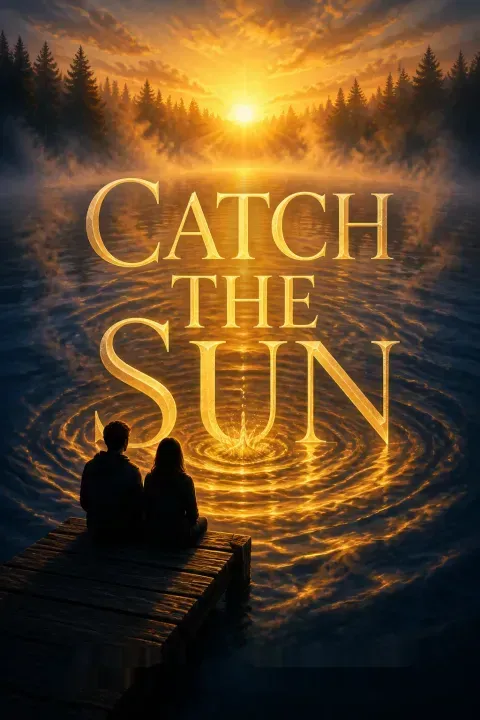
At its core, Catch the Sun is a study in inherited trauma and the radical act of refusing to let the past dictate the future. Ella1 and Max2 are both children of catastrophe: she carries the weight of her brother's3 violent legacy, he carries the collapse of his family under the twin burdens of abandonment and disease. Their love story is not about rescue but about recognition. Max2 sees Ella1 as 'Sunny' long before she can see herself as anything other than the sister of a murderer, and that seeing is itself a form of love that does not flinch. The book argues that healing is not the erasure of pain but its integration. Ella1 must learn to hold two truths simultaneously: her love for Jonah3 and her rejection of what he did, her love for Max2 and her trauma at the hands of someone who shares his face. The structure of the novel, moving from golden childhood to eclipse to dawn, mirrors the emotional weather of recovery. The Pooh sticks ritual becomes the story's central metaphor: two sticks dropped from a bridge, racing side by side, sometimes getting caught in weeds but eventually emerging downstream. Love, the book insists, is not a single grand gesture but a thousand small acts of attention: a potted crayon, a highlighted passage, a can of Dr Pepper thrown in the dark. Max's lists are the antithesis of grand romance and therefore the truest form of it, unpolished and specific and impossible to misinterpret. The novel ultimately suggests that happy endings are not found but made, stitched together from the ruins of what was lost, and that the sun, however eclipsed, is always worth chasing.
Review Summary
Catch the Sun received largely positive reviews, praised for its emotional depth and beautiful writing. Many readers found the love story between Max and Ella touching and heartbreaking. The book's exploration of trauma, grief, and healing resonated with many. Some criticized its length and pacing, feeling it could have been shorter. While marketed as YA, several reviewers noted mature themes and content. Overall, readers appreciated the complex characters and powerful storytelling, though some found the plot twists unrealistic or overdramatic.
People Also Read




Characters
Ella Sunbury
Grieving sister, reluctant loverElla has been shaped by two catastrophes: her father's abandonment and her brother Jonah's3 conviction for a brutal double murder. By seventeen, she has armored herself with sarcasm, solitude, and a fierce refusal to fall in love, which she views as life's most skilled assassin. She loves the color orange, bookbinding, Winnie the Pooh, and Dr Pepper. Her most prized possession is an orange backpack covered in Jonah's3 childhood doodles. Ella is perceptive, quick-witted, and deeply compassionate beneath her defensive shell. Her central conflict is learning to accept love without anticipating its destruction, a battle waged between her longing for connection and her conviction that all love ends in blood.
Max Manning
Devoted caregiver, patient suitorMax has been the head of his household since age twelve, when his mother abandoned the family and his father7 descended into alcoholism following a debilitating workplace accident. He is a caretaker by necessity, sacrificing his own youth to keep his father7 sober and his twin brother McKay4 functional. He copes through running, swimming, and smoking, until Ella1 returns to his life. Max communicates love through lists, handwritten notes tucked into books, and acts of service like anonymously gifting Ella1 a bicycle. He is steady, observant, and possesses an almost photographic memory for the details of Ella's1 words and dreams. His deepest fear is failing the people who depend on him.
Jonah Sunbury
Imprisoned protector, tragic catalystFour years older than Ella1, Jonah was her greatest protector throughout childhood, the Pooh Bear to her Piglet. He was convicted of murdering his girlfriend Erin Kingston and her costar Tyler Mack in a crime of jealous rage, though he has always claimed innocence. He is fiercely devoted to Ella1, a devotion that manifests as violence when he feels she is threatened. His letters from prison are tender and aching. His relationship with Ella1 is the emotional core of her trauma: she loves him deeply but believes he is guilty, and the tension between those two truths has defined her adolescence.
McKay Manning
Resentful twin, Brynn's boyfriendMax's2 identical twin brother, distinguished by longer hair, no dimples, and a simmering resentment that he masks with partying and basketball. McKay has always felt like the lesser brother, convinced their parents favored Max2. He copes with alcohol and distraction, leaving Max2 to shoulder the burden of their father's7 care. He dates Brynn Fisher5 but struggles with jealousy when new student Kai9 befriends her. His bitterness about Max's2 relationship with Ella1 and his perception that he has been left behind by everyone he loves creates a dangerous volatility that emerges when he drinks.
Brynn Fisher
Ella's best friend, sunshine personifiedBrynn is the first person in Juniper Falls to show Ella1 genuine kindness, writing her phone number on Ella's1 arm with a glittery pen. She is effervescent, empathetic, and incapable of holding grudges. She has Christopher Robin eyes, according to Ella1: eyes that see everyone with equal warmth. Raised by two fathers, Matty and Pete11, she has an inexhaustible supply of optimism and a passion for criminal justice. She dates McKay4 but eventually ends the relationship, later finding love with Kai9. She becomes Ella's1 emotional anchor through the story's darkest chapters.
Candice Sunbury
Grieving mother, secret crusaderElla1 and Jonah's3 mother lost everything fighting for Jonah's3 freedom: her savings, her reputation, and nearly her relationship with Ella1. She owned a respected equestrian ranch before the trial consumed her life. For years, she secretly worked with forensic experts to overturn Jonah's3 conviction, hiding her efforts from Ella1 to protect her from further disappointment. She copes through cooking, though her casseroles are notoriously terrible. She eventually finds happiness with Ricardo12, Kai's9 father, demonstrating that healing is possible even after profound loss.
Chuck Manning
Max's father, fading patriarchChuck was a devoted father until a workplace accident crushed his spine and launched him into alcoholism. His wife's subsequent abandonment shattered what remained of his spirit. On good days, he is lucid, wise, and deeply proud of Max2. On bad days, he hallucinates, mistakes Max2 for the man his wife left him for, and becomes violent. He is eventually diagnosed with Lewy body dementia. His relationship with Max2 is heartbreaking: Max2 sacrifices everything to care for him, while Chuck oscillates between gratitude and terrifying incapacity.
Chevy
Neighbor, mentor, jack-of-all-tradesChevy, whose real name is Eli, is the Mannings' neighbor and a surrogate father figure to Max2. He is a tattooed bachelor who restores cars, flips houses, and quietly leaves groceries on the Mannings' doorstep. He lost his younger brother to leukemia at fourteen and channels his grief into constant projects. He helps Max2 renovate the family home, supports him through every crisis, and eventually becomes his business partner. He also officiates Max2 and Ella's1 wedding on a Michigan bridge.
Kai
New student, Brynn's future loveKai arrives at Juniper High from the Philippines, shy and artistic, with a talent for baking and drawing. His father Ricardo12 is a dermatologist who wants him to pursue medicine, but Kai dreams of being an artist. He befriends Ella1 through notebook conversations in algebra class and develops a crush on Brynn5 that eventually blossoms into a relationship. He helps Max2 illustrate the handmade book 'Eeyore's Happy Ending' and paints the sun mural in Ella's1 new bedroom.
Andy Sandwell
School bully, football playerAndy leads the campaign of harassment against Ella1 at Juniper High, throwing her into the lake on one occasion. He is crude, entitled, and largely a product of small-town mob mentality. His black eyes later in the story are the result of Max's2 retaliation.
Matty and Pete Fisher
Brynn's devoted fathersBrynn's5 two fathers are a comedic double act who keep Halloween decorations up until Christmas, wield spatulas as microphones, and believe sugar cures everything. They provide warmth, acceptance, and levity whenever the story needs a reprieve from tragedy. Their advice about love and healing becomes unexpectedly profound.
Ricardo
Kai's father, Candice's partnerA dermatologist who moved to Juniper Falls with his son Kai9. He becomes a source of stability and romance for Candice Sunbury6 after years of her solitude. He is gentle, supportive, and represents the possibility of new love later in life.
Natine
Michigan ranch owner, mentorThe owner of Diamond Acres horse ranch in Michigan's Upper Peninsula, Natine befriends Ella1 after she literally falls off a horse in her presence. She gives Ella1 a job, a place to park her RV, and the mentorship she needs to rebuild her equestrian skills. She later conspires with Max2 to arrange Ella's1 job interview at Sunny Rose Farm.
Plot Devices
The White Stone
Talisman of connection and groundingMax2 gives seven-year-old Ella1 a smooth white stone in their childhood clearing. She forgets it when her father drives her away. Years later, when Max2 throws a similar stone at her in the same clearing, she catches it and keeps it. The stone becomes her anchor through trauma: she holds it during panic attacks, carries it in her pocket, and clutches it while waking from her coma. It represents the constancy of Max's2 presence even when he is not physically there. In the epilogue, Ella1 gives the stone to Chuck7, passing on its grounding power.
The Potted Crayon
Symbol of absurdist hope and devotionWhile Ella1 is bedridden with pneumonia, Max2 climbs through her window carrying a small terra-cotta pot with an orange crayon planted in the dirt, referencing her childhood story of planting crayons expecting them to grow into carrots. The gift is ridiculous and tender, encapsulating Max's2 love language: meticulous attention to her words and a willingness to be silly for her sake. The pot appears on her hospital bedside table beside the roses, a reminder of the life waiting for her. Later, Max2 replaces the crayon with an actual carrot in the bedroom of Sunny Rose Farm.
Max's Lists
Love language and emotional bridgeMax2 communicates his feelings through handwritten lists. The first, 'Why We Should Be Friends,' is given after Ella's1 cafeteria humiliation. Others include 'Things We Should Do Together Now That We're Friends,' 'Three Reasons You Should Always Swim to the Surface,' and 'How to Catch the Sun.' The lists are direct, unpolished, and impossible for Ella1 to argue with. They become his signature method of reaching her when words fail. Ella1 later creates her own list, tracking every item Max2 once told her to do: dance, watch sunrises, ride horses, skip stones.
Eeyore's Happy Ending
Handmade book as future promiseFor Christmas, Max2 creates a leather-bound book telling the story of two donkeys in the Hundred Acre Wood who find each other. Kai9 illustrates it with colored-pencil drawings depicting Ella1 and Max's2 defining moments: the childhood park, the bonfire, the Fall Fling, the meteor shower, the bridge kiss. The final page shows them beside a white horse under the northern lights with 'The End' written underneath. The book is Max's2 promise that their story will have a happy ending, a direct rebuttal to Ella's1 fear that she is Eeyore, destined for perpetual sadness.
The Orange Backpack
Physical connection to Jonah and childhoodWhen Ella1 was eight, upset about not receiving a Doodle Bear, Jonah3 took her orange Vera Bradley backpack and began drawing on it with Sharpie. It became a daily tradition: he would add new doodles, symbols, and quotes. The backpack is covered in Winnie the Pooh illustrations and is Ella's1 most prized possession, the only tangible remnant of the brother she remembers from before the crime. She carries it everywhere. When Ella1 leaves Juniper Falls, she leaves the backpack on Max's2 doorstep with the $200,000 check inside, a symbolic transfer of her most precious object.
About the Author
Other books by Jennifer Hartmann





Download PDF
Download EPUB
.epub digital book format is ideal for reading ebooks on phones, tablets, and e-readers.








































