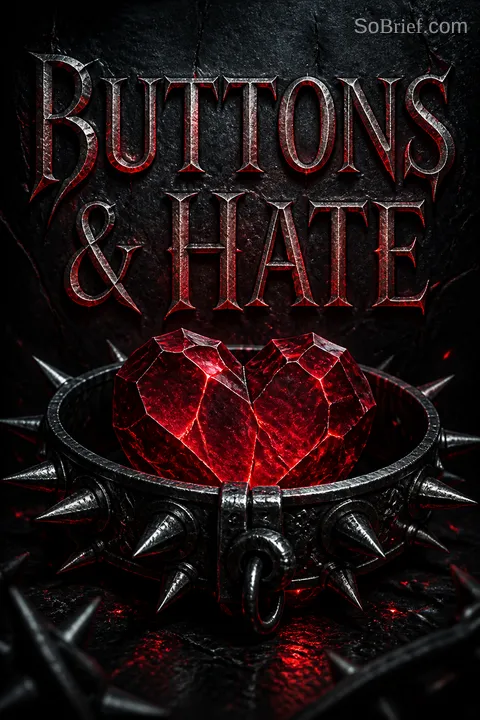

Plot Summary
Shattered Trust, Broken Purpose
Pearl, once determined to earn her freedom from Crow by collecting buttons—her currency for autonomy—finds her resolve shattered when she learns her boyfriend Jacob sold her into sexual slavery to pay off his debts. The revelation leaves her adrift, questioning the value of returning home and the meaning of trust. Crow, her captor, is both tormentor and reluctant protector, and their relationship is fraught with tension, pain, and a strange intimacy. Pearl's sense of purpose dissolves, and she is left numb, her only solace the rare moments of gentleness Crow offers, which hint at deeper wounds within him.
Dinner, Dominance, and Despair
Crow's rigid routines and cold demeanor clash with Pearl's spiraling depression. Their interactions oscillate between violence and unexpected tenderness, exposing the rawness of their emotional wounds. Over a tense dinner, Crow challenges Pearl's loss of fire, urging her not to let betrayal define her. He reveals his own history of loss—parents and a sister gone—bridging the chasm between captor and captive. Their mutual pain becomes a fragile bond, but vulnerability is quickly masked by Crow's retreat into stoicism, leaving both characters isolated yet inextricably linked.
Bargains of Flesh and Freedom
The button system—Pearl's only means to negotiate for comfort, autonomy, or affection—becomes central to their dynamic. Crow's desire for control and Pearl's need for agency collide in the playroom, where pain and pleasure are bartered. Pearl's willingness to endure Crow's darkest desires for more buttons reignites her determination to escape, but also deepens their twisted intimacy. Each transaction blurs the line between coercion and consent, as both characters use sex as a means to exert power, seek solace, and test the boundaries of their connection.
The Playroom's Dark Currency
In the playroom, Crow's sadism and Pearl's resilience reach their zenith. She endures flogging and domination, refusing to submit mentally even as her body is marked. Crow is both aroused and frustrated by her defiance, and their encounters become a battleground for control. Yet, amidst the violence, moments of mutual vulnerability emerge—Pearl's tears, Crow's rare admissions of need—hinting at a deeper, unspoken longing for connection. The playroom becomes a crucible where both are transformed, their roles as master and slave complicated by growing emotional entanglement.
Buttons, Power, and Possession
As Pearl amasses buttons at an alarming rate, Crow's anxiety intensifies. The prospect of her leaving unsettles him, revealing his growing obsession and fear of loneliness. Their sexual encounters become more frequent and desperate, each button exchanged a reminder of the impending end. Pearl, too, is conflicted—her desire for freedom warps into a need for Crow's attention and approval. The button system, once a symbol of hope, now chains them together in a cycle of mutual dependence, blurring the lines between captor and captive, love and possession.
A Date with Vulnerability
Pearl negotiates a "date" with Crow, spending buttons for a night of normalcy outside the estate. The outing exposes their vulnerabilities—Pearl's longing for affection, Crow's discomfort with intimacy, and the jealousy that simmers beneath the surface. Their conversations reveal shared histories of abandonment and betrayal, deepening their bond. Yet, the illusion of normalcy is shattered by Crow's possessiveness and Pearl's realization that trust remains elusive. The date becomes a turning point, forcing both to confront the possibility of something more than survival between them.
Affection, Jealousy, and Games
The aftermath of the date brings new tensions. Pearl's jealousy flares when she witnesses Crow with another woman, igniting a confrontation that exposes the fragility of their trust. Crow's insistence on dominance is challenged by Pearl's growing assertiveness, and their power dynamic shifts as she begins to demand affection on her own terms. The button system is weaponized—used not just for sex, but for emotional leverage. Both are trapped in a game of push and pull, unable to fully surrender or walk away, their hearts caught between hate and longing.
The Beach House Awakening
A trip to Crow's beach house offers a temporary reprieve from violence and suspicion. In the tranquil setting, Pearl and Crow lower their defenses, sharing moments of genuine tenderness and desire. The boundaries of their relationship blur as they experiment with new forms of intimacy—Pearl taking control, Crow submitting. Yet, the peace is fragile; both are haunted by the knowledge that their connection is built on trauma and captivity. The beach house becomes a liminal space where love seems possible, but the shadows of their pasts loom large.
Lines Crossed, Hearts Exposed
The fragile peace is shattered when Crow's brother, Cane, attacks Pearl in a bid for revenge. Pearl's survival instincts are tested as she endures a brutal beating, and Crow is forced to choose between family loyalty and the woman he cannot admit he loves. The aftermath is marked by guilt, regret, and a painful recovery. Crow's care for Pearl during her convalescence reveals the depth of his feelings, but his inability to express love keeps them apart. Both are changed—Pearl by trauma, Crow by the realization that he cannot protect those he cares for.
Violence, Betrayal, and Survival
Crow's relationship with Cane deteriorates as the brothers clash over Pearl's fate and the legacy of their murdered sister, Vanessa. The cycle of violence escalates, with revenge and justice intertwined. Pearl, now physically and emotionally scarred, becomes an active participant in the quest to destroy Bones, the man responsible for their suffering. The lines between victim and avenger blur, as Pearl's agency grows and Crow's emotional walls begin to crumble. Their alliance is forged in blood, but trust remains elusive.
Recovery, Regret, and Reconciliation
As Pearl recovers, she and Crow navigate the complexities of forgiveness and reconciliation. Old wounds are reopened as they confront the truth about their feelings and the events that brought them together. Crow's attempts at honesty are hampered by his fear of loss, while Pearl's resilience is tested by the knowledge that love may not be enough to overcome their pasts. Their relationship is marked by moments of tenderness and distance, as both struggle to redefine themselves outside the roles of master and slave.
Family Ties and Vengeance
The quest to destroy Bones unites Crow, Cane, and Pearl in a dangerous alliance. Plans are made to use Pearl as bait, leveraging her trauma for the promise of vengeance. The family's history of loss and betrayal is laid bare, and the cost of justice becomes clear. Pearl's transformation from victim to agent of her own fate is complete, but the emotional toll is high. Crow's inability to admit his love threatens to unravel everything, as the specter of violence hangs over their fragile alliance.
The Plan for Revenge
Pearl volunteers to risk herself in a plan to lure Bones into the open, determined to end the cycle of violence. The operation is fraught with danger, and the stakes are higher than ever. Crow and Cane's relationship is tested as old grievances resurface, but the shared goal of vengeance keeps them united. Pearl's courage and resourcefulness are put to the test, and the outcome will determine not only her fate, but the future of everyone involved. The plan becomes a crucible for love, loyalty, and the possibility of redemption.
Love, Denial, and Distance
In the aftermath of violence and near-death, Pearl confesses her love to Crow during an intimate moment. Crow, paralyzed by fear and haunted by loss, cannot reciprocate, retreating into emotional distance. The rejection devastates Pearl, who resolves to leave once their mission is complete. Both are trapped by their inability to bridge the gap between desire and vulnerability, and the prospect of separation looms. Their relationship, once defined by power and pain, is now marked by silence and longing.
Escape, Abduction, and Agency
As the plan to destroy Bones unfolds, Pearl is abducted by mercenaries seeking a bounty. Alone and outnumbered, she uses her wits to escape, stealing a gun and a wallet to buy her way to freedom. Her journey through the city is a testament to her resilience and determination. For the first time, she is the architect of her own escape, no longer reliant on Crow or anyone else. Her flight becomes a metaphor for reclaiming agency, even as it means leaving behind the man she once loved.
The Final Goodbye
Crow, desperate to rescue Pearl, discovers through her tracking device that she has escaped and is flying home. Pride and heartbreak mingle as he realizes she no longer needs him—and may never return. The mansion, once filled with her presence, is now empty, and Crow is left to confront the consequences of his denial and fear. Pearl's journey ends not with a reunion, but with the bittersweet knowledge that survival sometimes means letting go. Both are changed, their scars a testament to the price of freedom, love, and the will to endure.
Analysis
Buttons & Hate is a dark, emotionally charged exploration of trauma, power, and the search for agency in a world defined by violence and betrayal. Through the evolving relationship between Pearl and Crow, the novel interrogates the boundaries between consent and coercion, love and possession, victimhood and agency. The button system, with its transactional logic, becomes a powerful metaphor for the ways in which survivors of trauma reclaim control over their bodies and destinies, even within oppressive systems. The story's dual perspectives invite empathy for both captor and captive, revealing the psychological scars that drive their actions and the possibility of redemption through vulnerability. Ultimately, the novel suggests that healing and freedom are hard-won, requiring not only the courage to survive, but the willingness to risk connection—even when love seems impossible. In a modern context, Buttons & Hate challenges readers to confront uncomfortable truths about power, intimacy, and the resilience of the human spirit, offering a nuanced portrait of survival, transformation, and the enduring hope for something more.
Review Summary
Buttons and Hate received mixed reviews, with many readers finding it addictive and praising the character development of Pearl and Crow. Some appreciated the emotional depth and romantic tension, while others criticized the writing quality and plot inconsistencies. The book's dark themes and explicit content were divisive. Many reviewers expressed eagerness for the next installment, despite some frustration with the cliffhanger ending. Overall, the book seems to have engaged its target audience of dark romance fans, though it may not appeal to all readers.
People Also Read






Characters
Pearl (Button)
Pearl begins as a victim of betrayal, sold into sexual slavery by her boyfriend Jacob. Her journey is one of transformation—from powerless captive to resilient survivor, and ultimately, to a woman who reclaims agency over her fate. Her relationship with Crow is fraught with pain, desire, and shifting power dynamics. Initially motivated by the hope of freedom, she learns to navigate the button system, using her body and will to negotiate for autonomy. Pearl's psychological arc is marked by trauma, trust issues, and a fierce determination to never be a victim again. Her capacity for empathy, even toward her abusers, and her willingness to risk herself for justice, reveal a complex, multidimensional character whose strength lies in her refusal to be defined by her suffering.
Crow Barsetti
Crow is both captor and protector, a man whose need for control masks deep wounds from the loss of his family. His sadistic tendencies are balanced by moments of unexpected tenderness, and his obsession with Pearl grows as she challenges his authority. Crow's psychological complexity is rooted in guilt, fear of loss, and an inability to express vulnerability. His relationship with Pearl forces him to confront his own capacity for love, but his denial and emotional retreat ultimately drive her away. Crow's arc is one of internal conflict—torn between the safety of solitude and the risk of connection. His journey is a meditation on the cost of power, the legacy of trauma, and the possibility of redemption through love.
Cane Barsetti
Cane is Crow's younger brother, driven by a need for revenge after the murder of their sister Vanessa. His relationship with Crow is marked by rivalry, resentment, and a shared history of violence. Cane's actions—attacking Pearl, clashing with Crow—are fueled by grief and a desire for justice, but also by immaturity and a lack of empathy. Over time, Cane's perspective shifts as he witnesses the depth of Crow's feelings for Pearl, leading to a grudging respect and eventual apology. Cane embodies the destructive potential of unresolved trauma, but also the possibility of growth and reconciliation.
Jacob
Jacob, Pearl's boyfriend, is the catalyst for her descent into captivity. His decision to sell her to pay off his debts shatters Pearl's faith in love and trust. Though largely absent from the narrative, Jacob's betrayal haunts Pearl, shaping her inability to trust and her determination to never be powerless again. He represents the dangers of misplaced loyalty and the devastating impact of betrayal by those closest to us.
Bones
Bones is the primary antagonist, a criminal mastermind whose cruelty knows no bounds. Responsible for the deaths of Crow's family and the torment of Pearl, Bones embodies the darkest aspects of power and domination. His obsession with Pearl drives much of the plot, and his presence looms over every character's choices. Bones is a force of chaos, a reminder that evil often persists despite the best efforts of those who resist it.
Lars
Lars is the Barsetti family's loyal butler, a figure of stability and quiet compassion. Having served the family through generations of tragedy, Lars provides emotional support to both Crow and Pearl. His presence is a reminder of the endurance of kindness in a world marked by violence and betrayal. Lars's subtle interventions and unwavering loyalty make him a silent anchor in the storm.
Jasmine
Jasmine is a former lover of Crow's, representing the transactional, emotionless relationships that defined his life before Pearl. Her attempts to rekindle their affair highlight Crow's transformation and growing attachment to Pearl. Jasmine's presence also triggers Pearl's jealousy, forcing both main characters to confront their feelings and insecurities.
Vanessa Barsetti
Vanessa, Crow and Cane's sister, is a tragic figure whose abduction and murder by Bones set the cycle of revenge in motion. Though absent from the present narrative, her memory shapes the motivations and emotional wounds of both brothers. Vanessa's fate is a constant reminder of the stakes involved and the cost of failing to protect those we love.
The Female Mercenary
The unnamed female mercenary who abducts Pearl for a bounty is a brief but significant presence. Her ruthlessness and pragmatism serve as a dark mirror to Pearl's own survival instincts. Their encounter underscores the moral ambiguity of a world where women can be both victims and perpetrators.
The Staff
The household staff, including cooks and guards, provide a backdrop of normalcy and routine amidst the chaos. Their reactions to Pearl and Crow reflect the shifting dynamics of power and affection within the estate, and their loyalty is a subtle testament to the possibility of community even in a world built on violence.
Plot Devices
The Button System
The button system is the central plot device, transforming sex and pain into a tangible currency that Pearl can use to negotiate for autonomy, comfort, or affection. This system externalizes the power dynamics between Crow and Pearl, making every encounter a transaction with real stakes. The accumulation and exchange of buttons mirror the shifting balance of power, the evolution of trust, and the tension between freedom and possession. The system also serves as a metaphor for the ways in which trauma survivors reclaim agency, even within oppressive structures.
Dual Perspectives
The narrative alternates between Pearl and Crow's perspectives, allowing readers to experience the story's emotional arc from both sides of the power dynamic. This structure fosters empathy for both characters, revealing the internal conflicts, motivations, and vulnerabilities that drive their actions. The dual perspective also heightens dramatic irony, as readers witness misunderstandings and missed opportunities for connection.
Trauma and Recovery
The recurring motif of trauma—physical, emotional, and sexual—serves as both obstacle and catalyst for character development. Scenes of violence and recovery are used to explore the limits of endurance, the process of healing, and the ways in which shared suffering can forge unexpected bonds. The narrative uses trauma not only to generate suspense, but to interrogate the ethics of power, consent, and redemption.
Foreshadowing and Symbolism
The recurring imagery of buttons, scars, and the playroom serve as symbols of the characters' journeys. Buttons represent both captivity and the possibility of freedom; scars are reminders of pain endured and survived; the playroom is a crucible where identities are tested and remade. These symbols are woven throughout the narrative, foreshadowing key turning points and reinforcing the story's central themes.
The Threat of Bones
Bones's looming threat drives the plot forward, forcing Crow, Cane, and Pearl into uneasy alliances and difficult choices. His presence externalizes the dangers of vulnerability and the costs of love, serving as both a literal and metaphorical obstacle to happiness. The pursuit of vengeance against Bones unites the characters, but also exposes the limits of justice and the dangers of becoming what one hates.








































