
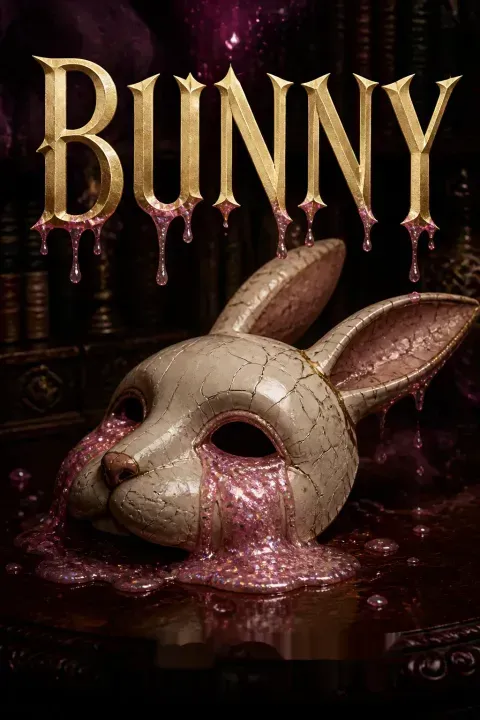


Plot Summary
The Bunnies' Strangling Hug
At the Warren University welcome party, Samantha Heather Mackey1 leans against a pillar beside her friend Ava,2 watching the four women she calls Bunnies. Caroline,5 Kira,6 Victoria,7 and Eleanor3 greet each other with rib-crushing embraces, nuzzling cheeks and squealing endearments in baby voices.
They wear cupcake dresses and smell of grassy perfume. Samantha,1 tall and dark-haired in black jeans, has spent the past year isolated from them in workshop, her gritty, angry stories met with polite revulsion. Ava,2 veiled and smoking, finds them absurd and wants to leave immediately.
But Samantha1 cannot stop staring. When Eleanor3 unexpectedly waves at her across the tented green, Samantha1 waves back with frantic, shameful eagerness. The moment passes, but something has shifted: the Bunnies have acknowledged her existence for the first time.
The opening establishes Samantha's double consciousness: she performs contempt while harboring a desperate longing to belong. The Bunnies' ritualized affection, described in terms of asphyxiation and telepathy, functions as a parody of female intimacy that is simultaneously cloying and menacing. Their immunity to Samantha's hostile gaze reveals the power imbalance: they are so securely encased in their shared identity that her outsider loathing cannot penetrate. Her involuntary wave signals the beginning of a surrender that will drive the novel forward, the gap between her stated hatred and her actual need widening with each encounter.
Invitation Folded as a Swan
The next morning, Samantha1 finds an origami swan in her campus mailbox, its drawn-on face smiling at her. Inside, shimmering cursive invites her to Smut Salon at the Blue Hour, flanked by bloated hearts around her name. It must be a mistake; the Bunnies discuss Smut Salon in low voices during workshop, excluding her entirely.
She encounters Jonah,8 a sweet-natured poet who remembers her twisted aquarium story with admiration, and briefly spots Alan,9 her former thesis advisor with whom she had an unexplained falling out. Avoiding both, she meets Ava2 at their usual bench.
Later, on Ava's2 sagging roof while tango dancing, Samantha1 finally shows her the invitation. Ava2 offers to burn it with her lighter. Samantha1 argues she should go briefly to avoid making workshop even more hostile. Ava's2 face goes blank as she tells Samantha1 to do what she wants.
The origami swan is the first of many animal motifs that blur the line between the real and the conjured. Its dual nature (paper bird with a human smile) mirrors the Bunnies' own performance of innocence. Samantha's rationalization for attending reveals her internal conflict: she frames it as strategic survival in the academic ecosystem, but her trembling eagerness betrays a deeper need for acceptance. Ava's offer to burn the invitation, contrasted with Samantha's hesitation, establishes the central tension between authentic connection and the seductive warmth of belonging to a group that has previously excluded her.
Inventing Rob Valencia's Ghost
At Smut Salon, held in Caroline's5 lavish living room, the Bunnies welcome Samantha1 with a custom cocktail so bitter it makes her cough. They take turns performing erotic readings: Caroline5 shaves a cinnamon stick, Kira6 dons a red riding hood, Victoria7 reads Duras, and Eleanor3 recites Kristeva from etched glass.
When they turn to Samantha,1 she panics. She has no smutty story, no hidden life. Pressured by their expectant stares, she invents a lie about Rob Valencia, her high school crush.
She describes dying on stage with him in a school play, then being ravaged among autumn leaves after the final performance. She embellishes until she cries real tears. The Bunnies are enthralled, calling her story gritty and brilliant. Eleanor3 touches her hand. For the first time, Samantha1 feels seen.
This scene dramatizes the transactional nature of the Bunnies' acceptance. Samantha intuits what they want and manufactures it: a narrative of authentic, earthy experience that contrasts with their sheltered lives. The invented Rob Valencia is a composite of her own adolescent longing and her understanding of what the Bunnies find compelling about her outsider persona. Her real tears at the end signal a dangerous blurring: she has made herself believe her own fiction. The Bunnies' sudden warmth demonstrates how readily they commodify someone else's pain into entertainment, treating her emotional rawness as a rare spice they can sample and discard.
Prom Night's Exploding Skull
The Bunnies host a Prom Night party at Kira's6 apartment, complete with corsages and a mirror ball. They dress Samantha1 in a Marie Antoinette dress and braid her hair into painful medieval knots. Four handsome young men in dark suits and black gloves mill about, speaking in stilted compliments.
Then the door opens to reveal Rob Valencia, her high school obsession, apparently summoned by the Bunnies from her Smut Salon story. He and Samantha1 dance to a song she knows too well. But when he begins gnawing on her orchid corsage and she slaps him, his demeanor cracks.
He screams accusations: she thinks she is better than everyone, she wears stilts, she failed to understand their hearts. His head explodes. Blood and bone fragments cover the room. Samantha1 screams until darkness takes her.
The exploding head marks the point where the novel's magical realism becomes undeniable. Rob Valencia is not the real man but a composite the Bunnies have somehow materialized from Samantha's story, an unstable creation that cannot withstand contradiction. His accusations, spewed in the Bunnies' own workshop vocabulary, reveal that he functions as a vessel for their collective resentment toward Samantha. The violence also prefigures the central horror: the Bunnies' creative power is inherently destructive, capable of summoning beings who cannot survive the complexity of real human emotion and who turn on their creators the moment the fantasy breaks.
The Attic's Bloody Secret
Samantha1 wakes in Kira's6 bed, disoriented by pastel pills. At a miniature café, the Bunnies explain their true Workshop: they have developed a hybrid art form combining performance, desire, and literal creation. They lead Samantha1 to Kira's6 attic, where clouds are painted on the ceiling.
Donning rabbit masks, the four women chant around a terrified bunny. The animal explodes. Soon a knock comes at the door, and a beautiful but malformed young man enters wearing a dark suit. His mouth is a harelip, his speech scripted.
When he screams or malfunctions, one of them grabs the ax from the corner and dispatches him. They repeat the ritual until an acceptable version emerges. They call these creations Hybrids, Darlings, Drafts. They hand Samantha1 an apron and welcome her to the circle.
The Workshop is the novel's most savage satire of MFA culture: writing students who literally kill their darlings, treating creation as a consumer activity where products can be discarded if imperfect. The bunny-boys are approximations of desire, unable to function sexually or emotionally, speaking only in clichéd praise. The ax represents the violence inherent in this instrumental approach to art-making. That the Bunnies wear rabbit masks while performing the ritual suggests they innately understand their own kinship with the creatures they sacrifice, making the ritual a form of self-annihilation as much as creation.
Ava's Alleyway Intervention
Samantha1 has been absorbed into the Bunnies for weeks, wearing their dresses, taking their pills, participating in Workships. One day while walking downtown with them, a mesh-gloved hand clamps over her mouth and drags her into an alley. It is Ava,2 who has been searching for her since she disappeared.
At the monster diner, Samantha1 sits across from Ava2 in a drugged haze, hearing about the desperate search: Ava2 visited her apartment, talked to the naked neighbor, even entered Warren buildings calling Samantha's1 name.
But Samantha1 can barely register the words. The Bunnies find them and swarm the table with possessive concern. Ava2 announces she is leaving town. When Eleanor3 speaks to her outside the diner about childhood pets, Ava2 walks away. Samantha1 runs after her but cannot find her in the dark streets.
Ava's intervention represents the last attempt of authentic connection to reclaim Samantha from the seductive dissolution of the Bunny collective. The diner scene dramatizes a fundamental conflict: Ava offers gritty, uncomfortable reality (the knife-wielding waitress, the questionable food, the hard truth of her departure), while the Bunnies offer sugared oblivion. Eleanor's question about childhood pets, seemingly innocent, may be a coded threat or a test, hinting that she intuits something about Ava's non-human nature. Samantha's inability to speak or act decisively illustrates how thoroughly the Bunny drugs have eroded her agency, leaving her suspended between two worlds.
The Bunny That Wouldn't Change
At Eleanor's3 house, the Bunnies announce that Samantha1 will lead Workshop. They present her with a shaggy, patch-eyed bunny they caught for her. But despite their encouragement and her own desperate focus, nothing happens. The bunny simply sits there, then hops away.
The Bunnies exchange disappointed glances as Samantha1 apologizes. But later, Victoria7 calls them to the front door. Animal prints lead from the lawn across the street to the bus shelter, where a dark-haired man4 in a black trench coat sits smoking with headphones on.
He has a wolfish face, human hands, an unscarred mouth. Unlike the other bunny-boys, he seems real, dangerous, self-possessed. He tells them he saw a bunny get torn apart by a red wolf. When asked his name, he only smiles and boards the departing bus.
Samantha's failure to produce a boy marks her as fundamentally different from the Bunnies. Her desire is not for an adoring puppet but for something more complex, more autonomous. Max's delayed and indirect arrival suggests that Samantha's creative power operates differently: she cannot manufacture on command but instead conjures from deeper, less conscious material. The story Max tells about the wolf killing the bunny is a dark origin myth he offers in place of a name, hinting at his own violent nature. His independence from the typical bunny-boy script is simultaneously thrilling and terrifying.
Fosco's Holiday Orphans
The semester ends with a cruel workshop exercise in which the Bunnies ask Samantha1 what home means to her, knowing she has none. Afterward, Alan9 pulls her into his office to warn that she risks not graduating if she produces no thesis.
Over Christmas break, feverish and alone in her grim apartment, Samantha1 wanders to an upscale grocery store where she spots the man from the bus4 openly shoplifting. Ursula,10 her professor, discovers her there and insists she attend a holiday dinner. At Ursula's10 house, only Jonah8 and the hosts' sullen daughter are present.
A bunny-boy serves canapés, his flawed hands gloved. Jonah8 shares that he might have died without Warren. Samantha,1 asked where she would be, lies about dedication to her writing. She flees the suffocating party into the snow.
The grocery store encounter with Max, who steals pomegranates and expensive chocolate with a wink, establishes him as a creature who operates outside the rules of commerce and property, taking what he wants. Ursula's charity dinner exposes the transactional nature of institutional care: she collects stray students to perform her own benevolence. The bunny-boy waiter, an escaped or discarded creation now working a service job, haunts the scene like a ghost of the Bunnies' reckless art-making. Samantha's lie about her writing life is the hollowest performance in a room full of performances.
The Bus to Ava's Door
Outside Ursula's,10 Samantha1 boards a bus and finds Max4 sitting behind her. He offers her a flask, asks about her missing bunny, and muses on the friends she claims to hate. When he disembarks, she follows him through unfamiliar neighborhoods, watching him gather holly and clip flowers from a greenhouse. He leads her to a run-down brick house with a red door.
It is Ava's2 house. Samantha1 pounds on the door until the knob comes off in her hand. The raccoons on the roof watch as she stands in the snow, despairing. Then a light flicks on. Ava2 appears in the doorway, her feathery hair backlit. She asks how long Samantha1 has been standing there. Forever, Samantha1 tells her. Ava2 reminds her she had a key the whole time.
Max functions as Samantha's psychopomp, a guide who leads her back to what she has lost. His theft of the natural materials, holly and flowers gathered from gardens along the way, mimics the creative act: assembling something beautiful from what is freely available. That Samantha cannot find Ava's house without him, despite having lived there, suggests how thoroughly the Bunny drugs have erased her memory. The raccoon priests, Ava's ironic confessors, witness the reunion without intervention, silent guardians of the roof where Samantha and Ava once danced. Ava's reminder about the key is both literal and metaphorical: the means of return were always within reach.
Max Between Two Worlds
Samantha1 moves back into Ava's2 house and learns that Max4 lives upstairs as a lodger and has become Ava's2 lover. He cooks elaborate meals, dances tango, and gazes at Ava2 with naked adoration.
But Samantha1 also discovers Max's4 second life: he has been visiting each of the Bunnies under different names (Byron, Tristan, Icarus, Hud), exploiting their particular fantasies. Caroline5 has carved EAT ME into her chest with a razor. Kira6 has abandoned her cat ears and now speaks in her real, deeper voice. Victoria's7 thighs bloom with bruises.
At an emergency Workshop called by Ursula,10 the Bunnies read work about their encounters with these different versions of the same man and turn on one another with vicious jealousy, accusing each other of theft and betrayal while Samantha1 watches, horrified and complicit.
Max's dual existence embodies the conflict at the novel's core. With Ava, he performs genuine tenderness, reflecting Samantha's authentic love for her friend. With the Bunnies, he becomes a weapon, reflecting Samantha's buried rage. The Bunnies' physical transformations (scarred flesh, dyed hair, bruises) mirror their psychological unraveling: Max has shattered the collective identity that sustained them, turning their hive-mind into a battlefield of individual desire. Their workshop pieces, once polished and oblique, become raw confessionals, suggesting that Max has forced them into a kind of authenticity their art previously lacked, but at the cost of their solidarity and sanity.
The Committee's Drug-Induced Trial
Samantha1 receives an email summoning her to a mandatory meeting in the Cave. When she arrives, the room is pitch black. She is seized from behind by strong gloved hands, a sweet burning smell filling her nostrils. She wakes tied to a chair, a gag of soft animal material filling her mouth.
Before her sit grotesque hybrids: Alan9 and Ursula,10 but wrong. Their faces are warped, their lips twisted into harelips, and gray bunny ears protrude from their heads. They hold a manuscript titled My Sad Girl Novel by Samantha Mackey1 and proceed to critique it with savage condescension.
Her heroine is passive, things just happen to her, she refuses agency. Ursula10 presses an ax to Samantha's1 throat and recites Kafka: a book should be an ax for the frozen sea within us. Then the drug takes her again.
The committee scene literalizes the psychological violence of academic evaluation. The professors transformed into bunny-creatures represent Samantha's perception of the institution: they are hybrids of authority and absurdity, wielding genuine power through ridiculous forms. Their critique of her manuscript is the novel's most direct self-interrogation, naming the very criticisms a reader might level at the book itself. The quotation about the ax, applied literally to her throat, collapses the distance between metaphor and violence that the entire novel has been exploring. Samantha's silence, forced by the drugged gag, mirrors her creative block and her complicity in the events unfolding around her.
A Swan with an Ax Wound
A janitor unties Samantha,1 dismissing her ordeal as conceptual art. She runs through the predawn streets to Ava's2 house. The lamps are lit, music plays, but something is terribly wrong. Upstairs, she finds Max4 kneeling in a pool of blood beside a giant white swan2 with an ax buried in its back.
Samantha1 sinks to her knees, understanding crashing over her in waves. This is Ava.2 She remembers meeting her at the campus pond, watching a swan2 glide across the water. Ava2 was a swan2 she unconsciously conjured into a human companion, just as the Bunnies make boys from rabbits.
Her imagination, desperate for a friend in her first year of isolation, performed the same magic she has been learning to do deliberately. Max,4 born of her own furious loneliness, sits beside the body of the only real love either of them has ever known.
The swan revelation recontextualizes the entire novel. Ava's otherworldly quality, her lack of personal history, her feathery hair and the pond where they met, all suddenly align into a devastating pattern. The discovery that Samantha possesses the same creative power as the Bunnies but used it differently, not to manufacture adoring servants but to conjure a genuine companion, transforms her from victim into something more complicated. The tragedy is that Ava was more real, more substantial, more loving than any of the Bunnies' creations, yet she was still vulnerable to their violence. The ax in her back literalizes what Eleanor's cruelty has always been: murderous.
The Ax Strikes the Neck
Max4 seizes the ax and charges toward Eleanor's3 house, his monstrous shadow stretching across the streets. Samantha1 follows, stopping him at the gate. She confronts the Bunnies inside, who are wearing torn pieces of Ava's2 veil and dress.
They mock Samantha1 mercilessly: Ava2 was not real, her death was for the best, Samantha1 is too crazy to know the difference between reality and illusion. Outside, the four women swarm Max,4 pulling at his limbs and screaming ownership. Standing on the lawn in the gray dawn, Samantha1 raises the ax. She brings it down on Max's4 neck, striking the ax tattoo there with perfect aim.
He does not die. Instead, his body transforms. Where a man stood, a magnificent stag4 now rises, shaking the Bunnies off with his antlers and kicking them into the dirt. He looks at Samantha1 once with eyes like smoke, then disappears into the trees.
The ax strike that frees Max rather than kills him is the novel's most hopeful act. By striking the symbolic ax tattoo with a real ax, Samantha performs a kind of symbolic surgery, severing Max from the destiny of violence the Bunnies established with their endless ax-work on failed boys. His transformation into a stag elevates him from disposable creation to something wild and free, connected to the natural world rather than the claustrophobic attic. The Bunnies' injuries, broken bones and torn silk, are a physical manifestation of their emotional and spiritual damage, but also a release: the spell of their collective delusion has been broken by a creature more powerful than their rituals can contain.
Graduation by the Pond
At the Warren graduation ceremony, the Bunnies sit in the front row with broken limbs and neck braces, claiming a book arts accident. They do not hug, do not speak to one another. Alan9 tells Samantha1 he enjoyed her thesis, that her writing will take her places.
Ursula10 tries to orchestrate a champagne toast among the five women, but Samantha1 refuses to raise her glass. She walks away from the tented green to the pond where she first met Ava.2 A swan2 floats on the water. Jonah8 finds her there, in his cap and gown, holding a cup of water and a cigarette.
He took pictures of her accepting her diploma. He asks where she is headed tonight. She tells him she is going home to her roof, to sit with the raccoons and watch the dog become the wolf. He asks if he can join her. She says yes.
The final scene offers a quiet, tentative resolution. The Bunnies survive but are irrevocably separated, their collective identity shattered by Max's intervention and their own unleashed jealousies. Samantha has produced her thesis, has graduated, has been acknowledged by the professor who once dismissed her. She does not attempt to reconjure Ava, though she contemplates it while watching the swan. Instead, she invites Jonah, a real if awkward human connection, to join her on the roof. It is a small step toward choosing reality over fantasy, genuine if imperfect companionship over the seductive perfection of imagined friends. The novel ends not with transcendence but with the possibility of continuing.
Analysis
Bunny operates as a savage satire of MFA culture wrapped in a horror novel, but its deeper subject is the relationship between creativity and loneliness. The Bunnies' Workshop literalizes every cliche of writing pedagogy (kill your darlings, tap the wound, the Body as text) into grotesque ritual, exposing the violence that underlies the commodification of art. Their bunny-boys are focus-grouped products rather than genuine creations, incapable of real connection because they were never made from real desire. Samantha's1 tragedy is that she shares their power but cannot control it. She conjures Ava2 from a swan out of desperate need for a friend, and she accidentally creates Max4 from the bunny that rejected her conscious attempts at manipulation. Both creations exceed her intentions: Ava2 loves her truly, and Max4 pursues his own agenda, seducing and destroying the Bunnies as an extension of Samantha's1 repressed rage. The novel asks whether imagination can be a form of madness when it becomes indistinguishable from reality, and whether the line between the two matters if the love produced is genuine. Ava2 may have been conjured, but her friendship was real. Max4 may have been born from a bunny and Samantha's1 fury, but his grief over Ava's2 death is authentic. The Bunnies' final fate, broken but alive, stripped of their collective delusion, suggests that the real horror is not the blurring of reality and imagination but the refusal to acknowledge that blurring. Samantha's1 choice at the end to sit by the pond with Jonah8 rather than attempt to reconjure Ava2 represents a tentative step toward living with loss rather than replacing it with fantasy, toward accepting the imperfect real over the perfect imagined.
Review Summary
Bunny polarized readers with its bizarre, surreal narrative. Many praised its unique style, dark humor, and satirical take on MFA programs, comparing it to works like Heathers and The Secret History. Others found it confusing, juvenile, and overly repetitive. The book's dreamlike quality and experimental approach were appreciated by some but alienating to others. Readers struggled to classify the genre, describing it as a mix of horror, satire, and dark comedy. Overall, the novel left a lasting impression, whether positive or negative, on most readers.
People Also Read

Characters
Samantha Heather Mackey
Isolated MFA student and unreliable narratorSamantha is a tall, dark-haired fiction writer at Warren University's elite MFA program. She grew up poor with a hairdresser mother who died when she was thirteen, followed by a brief period of wealth with her now-disgraced father. She writes dark, gritty, plot-driven stories that her cohort finds abrasive and willfully twisted. Her defining trait is a profound loneliness masked by performative contempt. She narrates her world through a lens of genre-tinged imagination, giving people nicknames and inventing backstories. Her desperation for belonging wars constantly with her conviction that she is fundamentally different from and superior to her wealthy peers. This internal conflict makes her vulnerable to the Bunnies' seductive inclusion, even as she recognizes their toxicity. Her creative block, which began after a painful rupture with her advisor9, reflects her inability to access her own desires honestly.
Ava
Samantha's fiercely loyal, anti-establishment friendAva is tall, wears fishnet veils and mesh gloves, and has different-colored eyes (one blue, one brown) and feathery platinum hair. She is a dropout from the art school adjacent to Warren and now shelves dead bugs in a nature lab basement. She despises Warren and everything it represents: privilege, pretension, the commodification of art. Her style is punk-glam rock, her perfume smells of rain and smoke, and she drinks constantly from a flask she calls Drink Me. She dances tango on her sagging roof with Samantha1, battles spiders in the bathtub for her, and disrupts campus tours by shouting about decapitations. Beneath her tough exterior, she is Samantha's1 only genuine connection, providing the unconditional acceptance that the Bunnies' conditional inclusion never offers. She has no visible past, no family mentioned, and seems to exist almost entirely for and through her friendship with Samantha1.
Eleanor
The Bunnies' silver-haired leaderEleanor is the de facto queen of the Bunnies, a wealthy young woman with long silver hair swept up with birds of paradise. She wears bell-sleeved white smocks and writes diamond-etched proems on panes of glass. Her demeanor is one of infinite, condescending patience, like a therapist who sees through every defense. She comes from the Upper West Side via Charleston, lives on the most expensive street in town, and has a sister who is a neurologist, casting a long shadow she compensates for with literary ambition. Her surface kindness is a weapon: she includes Samantha1 only to study her like a specimen, values her for the gritty authenticity she imagines Samantha1 possesses, and discards her when she fails to perform adequately. Her cruelty is the most refined of the group, intellectualized and delivered with sad smiles rather than open hostility.
Max
Mysterious shapeshifting presence and catalystMax is a tall, dark-haired man with a wolfish face, cheekbones like knives, and eyes that shift colors. He wears a black trench coat, has an ax tattoo on his neck, and steals expensive food from upscale grocery stores. His features refuse to stay fixed, sometimes resembling a black metal drummer, sometimes a silver-shirted dark wave boy, sometimes a fire-eater from Edinburgh. He is a performance artist working on a site-specific project at Warren, though the nature of that work remains opaque. He cooks elaborate rabbit dishes, dances tango with preternatural grace, and speaks in lines that sound borrowed from Samantha's1 own notebooks. With Ava2, he is tender and devoted. With the Bunnies, he becomes whatever each one most desires. He exists in the liminal space between Samantha's1 imagination and the material world.
Caroline
The sweetest Bunny, obsessed with baking and proprietyCaroline (nicknamed Cupcake by Samantha1) has a perfectly undertucked blond bob, wears Peter Pan collar dresses and matchy cardigans, and believes lipstick is for whores. She writes postfeminist dialogues between herself and kitchen implements. Her affect is one of perpetual, slightly anxious sweetness, but beneath it lurks a puritanical judgment and deep insecurity. She is the most eager to perform the rituals of Bunny friendship and the most devastated when those rituals collapse. Her hair is dyed pale purple after her encounter with Max4, and she carves EAT ME into her own chest, literalizing her hunger for the desire she has always sublimated into baking and decorum.
Kira
The feline, doll-like Bunny with hidden depthsKira (nicknamed Creepy Doll by Samantha1) has Shirley Temple curls of blood-red hair, amber eyes, and a Cupid's bow mouth. She wears leopard-print cat ears that the other Bunnies drunkenly placed on her head and she never removed. She writes fairy tales about girl demons and wolf princes and collects antique typewriters, believing each has unique ghost energy. Her baby voice drops several octaves when she thinks she is alone. She serves as the Bunnies' designated ax-wielder during Workshop, the one who dispatches failed creations, a role she performs with growing reluctance. After Max4, she abandons the cat ears entirely, speaks in her real deep voice, and reveals a feral, possessive hunger that her doll-like persona previously concealed.
Victoria
The blunt, sex-obsessed Bunny with a ballerina pastVictoria (nicknamed Vignette by Samantha1) has translucent, blue-veined beauty and auburn hair. Her dainty dresses are countered by combat boots, and her half-open mouth never fully closes. A former ballerina who went off the rails and discovered conceptual art, she writes existential vignettes about Disney princesses in blood orgies and feral girl-women crawling on all fours. She looks perpetually stoned, speaks with unfiltered crudeness, and is the only Bunny who openly voices sexual desire. Her constant refrain is a demand for a cock that functions. After Max4, her body becomes a canvas of bruises, and she writes pornographic sound poetry about a garbageman named Hud, transforming the grimy and rejected into the erotic.
Jonah
Kindly, ostracized poet and genuine friendJonah is the best poet in the program and its most ridiculed student. He wears a perpetual parka, has a soup-bowl haircut, and smiles beatifically in what Samantha1 describes as an antidepressant-fueled fever dream. A recovering addict from Fairbanks, Alaska, he applied to Warren on a lark. He is the only person who genuinely admires Samantha's1 dark, twisted writing and remembers her stories long after workshop ends. He shares cigarettes with her in alleys during department parties, talks to animals, and gives her drugs when she seems distressed. His relentless kindness cuts through the social dynamics of the program because he genuinely does not perceive or care about status. He represents the possibility of authentic connection that requires no performance.
Alan Reid
Samantha's estranged thesis advisorAlan, whom Samantha1 calls the Lion, is a Scottish professor with a carefully cultivated mane of hair, arms covered in crow tattoos, and a novel about a sociopathic Scotsman who philosophically murders women. In Samantha's1 first year, he was her warmest advocate, sharing tea, playlists, and long conversations in cafes. Then, after a drunken party where Samantha1 cried in his car and the Bunnies saw them together, he became cold, distant, and professionally correct. He now avoids her, meets only with the door open, and speaks to her with icy formality. His unexplained withdrawal has wounded Samantha1 deeply, contributing to her creative block. He represents the institutional power that can withdraw approval as arbitrarily as it grants it.
Ursula Radcliffe
Theatrically maternal workshop leaderUrsula, nicknamed Fosco by Samantha1 after a Gothic novel villain, teaches the fiction workshop with a performatively mystical gravitas. She wears iridescent smocks, has saccadic violet eyes, and speaks in pregnant pauses while making vaguely gynecological gestures over student manuscripts. Her feedback is oracular and nonspecific, full of invocations of the Body, the Wound, and the Process. She has a fanatical following among certain students, including the Bunnies, who fought to have her return as their instructor. Beneath her spiritual maternal persona, she is narcissistic and voyeuristic, collecting students' trauma like specimens. Her holiday dinner for stranded students is an exercise in benevolent condescension, requiring performances of gratitude for her charity.
Plot Devices
The Bunny Workshop
Ritual that transforms rabbits into human-like beingsThe Bunnies have developed an occult creative practice that literalizes the artistic process. Gathering in an attic, they don rabbit masks, chant around a live bunny, and focus their collective desire until the animal explodes and is replaced by a young man in a dark blue suit. These Hybrids (also called Darlings or Drafts) are beautiful but flawed: they have harelips, lack functional hands or genitals, speak only in scripted compliments, and cannot withstand emotional complexity or contradiction. Failed versions are dispatched with an ax. The Workshop satirizes MFA culture by making the metaphor of killing your darlings horrifyingly literal, and by exposing the consumer logic underlying creative practice: if the product is not satisfactory, destroy it and try again.
The Ax
Instrument of disposal and symbolic justiceThe ax lives in Kira's6 attic, always within reach during Workshop sessions. It is used to dispatch bunny-boys who malfunction, scream, or otherwise fail to meet specifications. Over time, it becomes bloody and familiar, another tool of the creative process. At the climax, Eleanor3 uses it to kill Ava2 (in swan form), and Samantha1 later wields it against Max4, striking the ax tattoo on his neck. That Samantha's1 blow does not kill but transform Max4, freeing him into his stag form, suggests that the ax can serve liberation as well as destruction. It is the novel's central symbol for the double-edged nature of creative power and the violence that often underlies the making of art.
The Tic Tac Drugs
Chemical agents of compliance and oblivionThe Bunnies dispense small pastel pills, which they call Tic Tacs, to Samantha1 and to each other. The drugs produce a floating, euphoric disassociation that makes the horrors of the Workshop tolerable and the Bunnies' company seem pleasant. They cause memory gaps, sensitivity to light, and a dreamlike passivity that allows Samantha1 to be dressed, braided, and led through increasingly disturbing rituals without protest. When Samantha1 is separated from the Bunnies, the withdrawal leaves her feverish and disoriented. The pills represent the chemical dimension of the Bunnies' control, the way group belonging can be pharmacologically reinforced until leaving feels not just undesirable but physically impossible.
Samantha's Unconscious Conjuring
The power to manifest imagined companions into realitySamantha1 possesses the same creative power as the Bunnies but exercises it differently. Where they deliberately manufacture adoring servants through ritual, Samantha1 unconsciously conjures genuine companions from her loneliness. She created Ava2 from a swan she watched on the campus pond during her isolated first year, unconsciously transforming the bird into a human friend who loved her unconditionally. She accidentally created Max4 from the bunny that hopped away during her failed Workshop attempt, and Max's4 independence and complexity reflect Samantha's1 deeper, more authentic desires. This power reveals that the line between imagination and reality in the novel's world has always been permeable, and that Samantha's1 outsider status among the Bunnies stems partly from her more sophisticated, less controllable version of their gift.
Ava's Swan Nature
The central revelation that recontextualizes the entire storyAva2 is not, and was never, a human woman. She was a swan on the campus pond that Samantha1, in the depths of her first-year isolation and without conscious awareness, transformed into a companion. Evidence accumulates throughout the novel: her feathery white-blond hair, her meeting Samantha1 at the pond at dawn, her lack of any personal history or family, her watchful, slightly alien quality. When Eleanor3 kills her with the ax, she reverts to her original form, a great white swan bleeding on the attic floor. This revelation transforms the novel from a story about a woman caught between two social groups into a darker fairy tale about the power and danger of imagination itself. It also recasts Samantha1 not merely as a victim of the Bunnies but as someone whose creative capacities are equally formidable and equally capable of blurring the line between reality and delusion.
FAQ
Synopsis & Basic Details
What is Bunny about?
- Dark Academia Satire: Bunny is a darkly comedic novel that follows Samantha Heather Mackey, a graduate student in a prestigious creative writing program, as she becomes entangled with a cliquey group of women who call each other "Bunny."
- Blurring Reality and Fantasy: The story explores themes of identity, belonging, and the seductive nature of conformity, as Samantha's experiences become increasingly surreal and disturbing.
- Critique of Conformity: The novel satirizes the insular world of academia and the pressures to fit in, while also delving into the power of imagination and the search for self.
Why should I read Bunny?
- Unique Narrative Style: Mona Awad's writing is sharp, witty, and often unsettling, creating a reading experience that is both thought-provoking and darkly humorous.
- Exploration of Complex Themes: The novel delves into the complexities of female relationships, the desire for belonging, and the dangers of losing oneself in a group identity.
- Unpredictable Plot Twists: Bunny keeps readers guessing with its surreal and often disturbing plot twists, blurring the lines between reality and fantasy.
What is the background of Bunny?
- Academic Setting: The novel is set within the insular world of a prestigious creative writing program at Warren University, a fictional institution that satirizes the elitism and pretension of academia.
- Cultural Critique: Bunny critiques the pressures to conform within academic and social circles, particularly for women, and explores the dark side of female friendships.
- Gothic and Surreal Influences: The novel draws on elements of gothic literature and surrealism, creating a dreamlike and often nightmarish atmosphere that reflects Samantha's psychological state.
What are the most memorable quotes in Bunny?
- "Bunny, I love you.": This recurring phrase, used by the cliquey group, highlights the performative and often suffocating nature of their relationships, revealing a dark undercurrent beneath the sugary surface.
- "We're so glad you're here, Samantha.": This phrase, repeated by the Bunnies, underscores their manipulative and performative nature, as they attempt to draw Samantha into their world while simultaneously maintaining their distance.
- "You should go if you want to go.": Ava's seemingly simple statement to Samantha about attending the Smut Salon reveals her understanding of Samantha's internal conflict and her desire for her friend to make her own choices, even if they lead to pain.
What writing style, narrative choices, and literary techniques does Mona Awad use?
- First-Person Perspective: The novel is narrated from Samantha's point of view, allowing readers to experience her increasingly distorted perception of reality and her internal struggles.
- Surreal and Dreamlike Prose: Awad employs a highly stylized and often surreal writing style, blurring the lines between reality and fantasy to reflect Samantha's psychological state.
- Satire and Dark Humor: The novel uses satire and dark humor to critique the insular world of academia and the pressures to conform, creating a reading experience that is both unsettling and darkly funny.
Hidden Details & Subtle Connections
What are some minor details that add significant meaning?
- The use of "Bunny": The constant repetition of the word "Bunny" as a term of endearment among the women highlights the artificiality and performative nature of their relationships, masking deeper insecurities and power dynamics.
- The descriptions of food: The frequent descriptions of sugary, pastel-colored foods, like cupcakes and lemon treats, symbolize the superficial sweetness and underlying toxicity of the Bunnies' world.
- The recurring motif of eyes: The motif of eyes, whether drawn, described, or observed, emphasizes the themes of surveillance, judgment, and the characters' distorted perceptions of themselves and others.
What are some subtle foreshadowing and callbacks?
- The mention of Cthulhu: The early reference to Cthulhu, a monstrous entity from horror fiction, foreshadows the increasingly bizarre and nightmarish events that Samantha experiences, hinting at the dark forces at play.
- The description of the town: The description of the town as "a wrong town" foreshadows the unsettling and surreal events that unfold, suggesting that the setting itself is a reflection of Samantha's distorted reality.
- The recurring image of the swan: The image of the swan, first seen in the pond and later as a lifeless body, serves as a callback to Samantha's initial isolation and her eventual loss of innocence, highlighting the destructive nature of her experiences.
What are some unexpected character connections?
- Samantha and Jonah: Despite being in different academic circles, Samantha and Jonah share a sense of alienation and outsider status, forming an unexpected bond based on their shared experiences of being marginalized.
- Ava and the Lion: While never directly interacting, Ava's disdain for the Lion and his work, coupled with Samantha's complicated relationship with him, creates a subtle connection between Ava and the Lion as opposing forces in Samantha's life.
- The Bunnies and Max: The Bunnies' collective obsession with Max, a figure created from Samantha's imagination, reveals their shared desire for validation and their susceptibility to manipulation, highlighting their underlying insecurities.
Who are the most significant supporting characters?
- Jonah: As a fellow outsider, Jonah provides a contrasting perspective to the Bunnies' world, offering Samantha a sense of camaraderie and understanding, even if he doesn't fully grasp the extent of her experiences.
- The Lion: As Samantha's former mentor, the Lion represents the allure and danger of power and influence, highlighting the complexities of her relationships and her own desires for recognition.
- Dolores: The waitress at the monster diner, with her knife and her world-weary attitude, serves as a reminder of the harsh realities outside the Warren bubble, offering a glimpse into a world that is both gritty and authentic.
Psychological, Emotional, & Relational Analysis
What are some unspoken motivations of the characters?
- Samantha's desire for belonging: Despite her disdain for the Bunnies, Samantha is driven by a deep-seated desire for acceptance and belonging, which makes her vulnerable to their manipulations.
- The Bunnies' need for validation: The Bunnies' constant need for validation and their performative displays of affection reveal their underlying insecurities and their reliance on external approval.
- Max's desire for control: As a creation of Samantha's imagination, Max embodies her own desire for control and power, which manifests in his manipulation of the Bunnies and his influence over Samantha's life.
What psychological complexities do the characters exhibit?
- Samantha's internal conflict: Samantha is torn between her desire for belonging and her disdain for conformity, leading to a constant internal struggle and a fractured sense of self.
- The Bunnies' performative identities: The Bunnies' exaggerated displays of affection and their adherence to a specific aesthetic reveal their fragile identities and their reliance on external validation.
- Max's dual nature: Max embodies both the allure and the danger of unchecked desires, representing the complexities of human nature and the blurred lines between reality and fantasy.
What are the major emotional turning points?
- Samantha's acceptance into Smut Salon: The invitation to Smut Salon marks a turning point for Samantha, as she begins to lose herself in the Bunnies' world and her grip on reality starts to slip.
- Ava's departure: Ava's decision to leave town forces Samantha to confront the consequences of her choices and the depth of her isolation, highlighting the importance of their friendship.
- The reveal of Max's true nature: The revelation of Max's true nature as a creation of Samantha's imagination forces her to confront her own inner turmoil and the destructive power of her desires.
How do relationship dynamics evolve?
- Samantha and the Bunnies: The relationship between Samantha and the Bunnies evolves from one of disdain and curiosity to one of manipulation and control, highlighting the dangers of seeking acceptance in a toxic environment.
- Samantha and Ava: The friendship between Samantha and Ava is tested by Samantha's involvement with the Bunnies, but ultimately their bond is a source of strength and a reminder of the importance of true connection.
- Samantha and Max: The relationship between Samantha and Max is a complex interplay of desire, fear, and control, reflecting her internal struggles and the blurred lines between reality and fantasy.
Interpretation & Debate
Which parts of the story remain ambiguous or open-ended?
- Max's true nature: The true nature of Max remains ambiguous, leaving readers to question whether he is a figment of Samantha's imagination, a manifestation of her desires, or something else entirely.
- The ending: The ending of the novel is open-ended, leaving readers to interpret the significance of Samantha's final actions and the implications for her future.
- The Bunnies' fate: The ultimate fate of the Bunnies is left ambiguous, leaving readers to wonder about the long-term consequences of their actions and the possibility of their redemption.
What are some debatable, controversial scenes or moments in Bunny?
- The Smut Salon scenes: The Smut Salon scenes, with their bizarre rituals and explicit content, are open to interpretation, raising questions about the nature of female sexuality, creativity, and power.
- The transformation of the bunnies: The transformation of the bunnies into human-like creatures is a controversial moment, blurring the lines between reality and fantasy and raising questions about the ethics of creation and manipulation.
- Samantha's actions at the end: Samantha's final actions, including her decision to leave Ava and her encounter with the stag, are open to interpretation, raising questions about her agency, her sanity, and the nature of her transformation.
Bunny Ending Explained: How It Ends & What It Means
- Samantha's rejection of the Bunnies: The ending sees Samantha reject the Bunnies' world, choosing instead to embrace her own identity and the power of her imagination, even if it means facing an uncertain future.
- The ambiguous nature of Max: The ambiguous nature of Max's existence and his final transformation into a stag leaves readers to question the nature of reality and the power of the human mind to create and destroy.
- A new beginning: The ending suggests a new beginning for Samantha, as she steps away from the toxic influence of the Bunnies and embraces the possibility of a future where she is free to define herself on her own terms.
Download PDF
Download EPUB
.epub digital book format is ideal for reading ebooks on phones, tablets, and e-readers.








































