
Plot Summary
Crushed Dreams, New Beginnings
Nick Dunlap's life as a minor league baseball player in Nashville ends not because of his skill—he's exceptional on the field—but due to toxic locker room culture steeped in homophobia and silence. Reassigned to Columbus, he masks the pain of being cast aside, doubting he'll ever belong. As he trades teams and cities, Nick enters the Clippers' world weighed by uncertainty, yet a spark of hope remains for a fresh start. The story opens as he arrives, tentatively meeting dazzling teammates, especially his striking new roommate Marcus. Uncertain if this place can be home or if he'll always feel transient, his heart battles between bitter memories and the possibility of acceptance and belonging.
Locker Room Brotherhood
For the first time in years, Nick is greeted not with suspicion or casual cruelty but with laughter, good-natured teasing, and genuine encouragement. His teammates—quirky Zack and Kervin, solid Marcus—demonstrate a close-knit family built on trust and openness. The team, led by Coach Garzon, embraces Nick both as a player and a person, breaking down the inner walls built by his years in hostile environments. On and off the field, brotherhood comes not from sameness but celebration of differences—including open gay couples. For Nick, the camaraderie is healing, revealing how true teamwork transcends the game itself and lays a foundation for vulnerability and authentic self.
Home Runs and Heartaches
Nick's athletic talent shines: clutch hits, flawless fielding, raucous post-game celebrations. Yet even as he becomes a fan favorite, loneliness simmers beneath. Roommate Marcus, with his easy confidence and charm (and his own linguistic quirks), becomes both friend and magnetic frustration—he's straight, and their banter becomes a dance between comfort and longing. Nick's found family fills the emotional void left by troubled early years marked by domestic pain and loss, but the ache of not being able to be open—truly open—persists. He begins to realize that even in the best of brotherhoods, some wounds need more than sports to heal.
The Boy Who Wouldn't Speak
The Clippers' involvement with Buckeye Ranch, a foster care and treatment center, introduces Nick to a new kind of challenge. Most children respond with adoration—except for eight-year-old Ethan, who hasn't spoken to adults in months. In Ethan's wary silence, Nick recognizes flickers of his own childhood traumas—instability, distrust, and the hope for someone genuine to break through. The bond is immediate yet fragile: Nick becomes obsessed, not just with "fixing" Ethan, but understanding him. Helping the boy becomes a deeper quest that starts to overshadow even baseball, stirring in Nick transformative stirrings of purpose and paternal yearning.
Breaking Ethan's Silence
Contrary to anyone's expectations, it's athletic silliness and simple presence—Nick's attempts at guessing Ethan's name, his patience, and a shared love of baseball—that finally prompt the boy's breakthrough. Ethan giggles, then speaks, then, bit by bit, trusts. For Dr. André Martin, the Ranch's dedicated and world-weary child psychiatrist, Nick's natural gift seems a miracle. André watches, both clinical and mesmerized, as Nick offers what decades of therapy couldn't: a model of affection, normalcy, and safe masculinity. This encounter sparks more than professional intrigue—it pulls at something long-dormant in André as well, initiating a parallel healing in both men.
Laughter at the Dinner Table
Connection deepens not only through high drama but everyday moments—team dinners, banter about toasters and sausage, sharing space. Zack and Kervin's affection, Marcus's flirtatious straightness, and Nick's growing ease bring joy, while André—initially skeptical—watches from a professional distance as his patients (and himself) are disarmed by laughter. Over meals and drinks, barriers erode, trust blossoms, and sexual innuendo hints at desires yet unspoken. Humor becomes a lifeline, a permission to imagine new ways of being together—familial, romantic, and intimate.
Healing by the Diamond
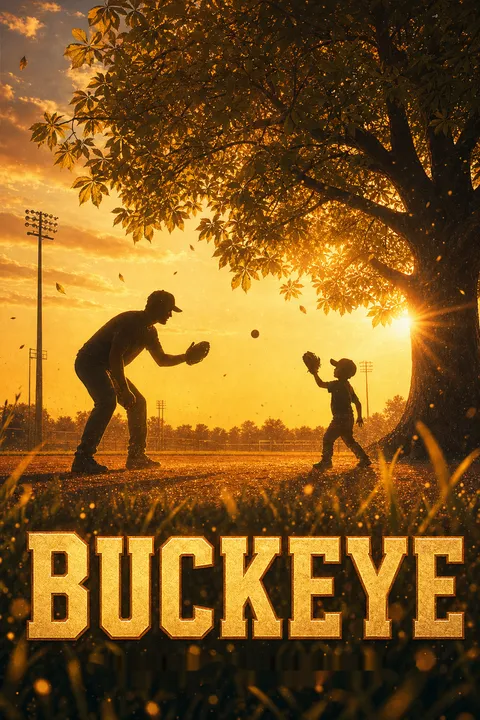
For the children of the Ranch, and especially for Ethan, the diamond is more than turf—it's sanctuary. Nick's invitation for Ethan to play catch, gifting him a signed glove, is both literal and symbolic: it offers belonging, safety, and fatherly attention. On the professional stage, Nick's own game improves, inspired by his new purpose. For his teammates, these gestures are subtle acts of repair, modeling healthy masculinity and empathy, both on and off the field. The ballpark becomes a crucible for change—redemptive not just for the children, but Nick, Ethan, and even André. Sports as healing metaphor transforms the game into sanctuary.
André's Solitude, Nick's Longing
While Nick cares for Ethan, André's solitude grows apparent—his life bound by clinical detachment, scars from a failed long-term relationship, and loyalty to the Ranch. Both men, though outwardly successful, are marked by parental wounds, internalized doubts, and fear of vulnerability. Letters unsent, phone calls rehearsed, lingering glances—attraction simmers as both struggle with the terror and hope of a new beginning. For Nick, who's never had a real relationship (trapped by the demands of sport), longing turns into the resolve that perhaps this—found family, true love—might be possible after all.
Safe Haven at the Ranch
Amid scenes of daily chaos, the Ranch is a crucible for all characters' growth. Staff and children alike, regardless of past hurts, build fragile trust. André, Sara, and director Dr. Marber fight pragmatically to protect kids like Ethan and Noah, whose stories are reminders of the system's failures and resilience. When a troubled teen, Noah, runs away and is gently coaxed home by André, the adult world's complexities become clear—but so does the power of steady, nonjudgmental love. The Ranch stands for the best of what community can be: flawed, loving, and fiercely hopeful.
Bonds Forged in Adversity
The circle of Clippers and Ranch staff transcends mere acquaintance, creating a found family where mentorship, teasing, and affection co-exist. Marcus, striving to fit in as a Brazilian in American baseball; Kervin and Zack, whose love is visible and embraced by the team; Cap, the supportive captain; and Ethan, growing daily into trust—every bond forged suffers trial, but each cements deeper. Adversity—homophobia, trauma, loss—threatens these ties, but the resourcefulness and willingness to be vulnerable ultimately create indelible relationships for Nick, André, and the children they come to call family.
Confessions and First Dates
From professional respect to tentative chemistry, Nick and André's first real date is a sparkling, anxious dance—mutual attraction finally confessed, jokes and insecurities laid bare, and cultural differences playfully embraced. Over food (and the subtle magic of French cuisine), Nick confides deep childhood wounds, and André opens up about his own family, heartbreak, and longing for connection. Their first kiss is a breakthrough, both emotionally and physically; what follows is a slow burn, earnest, and sometimes comical journey into vulnerability—the start of true love postponed but inevitable.
Family Defined by Love
The narrative pivots as Nick and André, newly committed, begin to see Ethan not solely as a child to be helped but as a son to be claimed. As Nick becomes an anchor for Ethan—consistent, loving, present—he envisions a family undefined by blood, but by choice. Holidays and birthdays, once painful reminders of abandonment for both Nick and Ethan, become occasions for joy and inclusion. Their bond is tested by systems and circumstance, but the decision to adopt Ethan is the climactic realization of love not just as feeling, but action. Found family becomes their defining truth.
The Stray and the Healer
The darkness of Noah, troubled teenager of the Ranch, lingers as counterpoint. Though not the book's antagonist, he embodies traumas (systemic and individual) that resist easy healing. André's attempts—to fight for, reason with, and comfort Noah—underline that not every story has a happy ending, and that loss, disappointment, and ambiguity are part of the foster system. Still, the effort to reach Noah affirms the central thesis: love means showing up, even when you can't save everyone. Trauma, silence, and the slow work of trust define this arc.
Challenges of the Heart
As Nick's athletic career accelerates—leading to major league call-up and the demands of fame—new pressures endanger the fragile world he and André have built. Long-distance, the grind of the diamond, and the uncertainty of their future require hard choices. André, too, must risk his comfort and career to be present for the man and boy he loves. Their conflicts—over priorities, home, the prospect of moving and of family—are sharply real, but are navigated with communication, compromise, and ultimately renewed vows to place love at the center.
Holidays and Revelations
Thanksgiving and Christmas offer set pieces of both warm comedy and emotional crescendo. The warmth and chaos of holiday feasts, the joy of seeing Ethan light up, the still-tender dynamic with Zack/Kervin/Marcus—these become the backdrop for Nick and André's confessions of love. The men, now secure in mutual devotion, make space for Ethan's belonging. It's in these moments—amid laughter, tears, accidental slips of "I love you"—that family is cemented not by ritual, but by relentless, daily acts of care.
Love in Translation
As the couple contemplates marriage, adoption, and the possibility of a future away from the Ranch, the narrative teases out the beauty and chaos of blending histories, languages (and "diddler" jokes), and ambition. André must decide whether to leave the only work he's ever known; Nick faces the vulnerability of having found something irreplaceable. Their union is pragmatic and passionate, at turns messy and transcendent. The final obstacles—official approval, relocation, and the forging of new bonds—test their determination, affirming that love is the most courageous transformation of all.
Goodbye Isn't the End
Nick's call-up to the major leagues, Ethan's tearful farewell, and André's sacrificial career move catalyze the book's emotional climax. Loss and grief are acknowledged, but not allowed to define; instead, love again asserts itself with stubborn optimism. André's move to Cleveland, their marriage proposal, and the formal adoption of Ethan close the arc—a found family, hard-won, where healing extends backward as well as forward. The story ends not with finality, but with the promise and work of ongoing love—"goodbye" becomes a door to a new home for all.
Analysis
Buckeye redefines the MM romance genre by weaving a layered, deeply human narrative about healing in the aftermath of trauma, the resilience of found families, and the transformative power of love enacted in daily life. While its surface is a love story between Nick and André, at its core, the novel is a testament to the endurance and necessity of hope, especially for those whom society has discarded—foster children, queer men, trauma survivors. The authenticity of the setting—a foster care ranch—allows the story to examine systemic problems while offering the antidote of steadfast presence and humor. The narrative avoids neat, "rainbow" resolutions, acknowledging real loss, ambiguity, and the persistent ache of wounds that never fully close (see: Noah's unresolved arc). Ultimately, Buckeye insists that family is created through showing up, again and again, and that the bravest acts are those of ordinary devotion: listening, forgiving, and embracing change. The lessons are clear: love, to matter, must be lived; healing is possible, even in imperfect worlds; and "goodbye" is merely another door toward home.
Review Summary
Characters
Nick Dunlap
As a gifted baseball player, Nick is marked by both talent and pain. Haunted by a violent, unstable childhood and closeted homophobia in sports, his defensive humor and stoic bearing belie a desperate need to belong. Psychologically, Nick exhibits typical trauma signs: vigilance, avoidance of vulnerability, and deep-seated shame, offset by boundless empathy for others. His relationships—with teammates, Marcus, André, and ultimately Ethan—pull him through self-doubt into a role of nurturer. Nick's greatest transformation is from a "stray" to a father: learning to love without reservation, even as his career takes him far from comfort. He is brave, self-effacing, loyal, and, above all, open to love's risks.
André Martin
European by birth, André finds himself a world apart—culturally, emotionally, and professionally—in Ohio's foster system. His identity as a psychiatrist is deeply tied to his sense of duty: measured, clinical, careful not to get too close. Privately, André grapples with longing for connection, wrestling with the residue of loss and old heartbreaks. Nick awakens in him the courage to risk everything for love: his career, his sense of self-possession, even his carefully curated boundaries as a professional. André's journey is from safe detachment to integrative belonging—he learns, at middle age, that real healing happens not only at work, but at home, in the daily acts of giving and receiving love.
Ethan
Ethan, an eight-year-old so traumatized he can't speak, represents the silent sorrow and resilience of foster children everywhere. His psychological defense—selective mutism—is both a cry for help and a test of the world's patience. Nick's patient presence cracks his shell, and the boy's eager, trusting affection is rekindled. Ethan's journey isn't from wounded to "fixed" but from isolated to connected. He becomes not just loved, but loving—first to Nick, then to André, and eventually to himself. His evolution from silence to laughter is the beating heart of the novel, symbolizing the healing only steadfast family can give. Trauma, silence, and the slow work of trust define his arc.
Marcus
Marcus is Nick's Brazilian teammate, a mixture of lighthearted bravado and earnest support. His tangled English, playful straightness, and easy, loyal friendship break Nick's isolation, modeling non-romantic male affection. Marcus also bridges cultural and emotional gaps for the team—challenging toxic masculinity, being both cheerleader and confidante. Psychologically, he's untroubled but not shallow. He represents how a found family is more about trust and solidarity than romance; a crucial figure in normalizing openness and celebration of difference.
Zack and Kervin
The couple provides a model of what queer love can look like in a male-dominated sport. Their banter and irreverent humor offer comic relief, but their outspokenness is more than surface: they challenge Nick to accept himself fully and stand up to homophobia. As a couple, they are also a safe haven—"the gays on the team"—reminding Nick and André (and Ethan) that family comes in many forms. Their dynamic is robust, protective, and foundational to breaking cycles of shame and secrecy.
Cap (Clark Evans)
Cap stands in for the best of traditional masculinity: strong, supportive, tough but fair. He senses Nick's hesitance, guiding from the periphery with wisdom and encouragement. He bridges old and new generations of players, modeling that leadership is not just tactical but emotional.
Sara
André's friend and co-worker, Sara is the voice of compassion and comic intervention. She prompts André out of emotional ruts, challenges his self-protective detachment, and catalyzes essential conversations. As a female professional in a male-heavy world, she models necessary resilience, and as a "gay card" joke partner, helps defuse tension with humor. Her perspective widens the focus beyond romance to communal care.
Dr. Marber
Dr. Marber, the Ranch's director, is both gatekeeper and guardian. She is an emblem of the system—by turns nurturing, bureaucratic, and unyielding. Her decisions (especially regarding Ethan) reflect the necessary, sometimes painful, trade-offs of institutional care, and she serves as a reminder that love, to be effective, must navigate real-world rules and compromises.
Noah
A troubled teen at the Ranch, Noah is sullen, angry, and fiercely independent. His character subverts easy resolution; even André, with all his skill and empathy, cannot "rescue" him. He is a vital narrative anchor—reminder that not all stories end happily, and that hope sometimes means simply not giving up, even in the face of ambiguity. Trauma, silence, and the slow work of trust are tested through his story.
Janice
The Ranch's no-nonsense receptionist, Janice injects levity and warmth into institutional routines. She adopts (literally and figuratively) anyone with potential, wielding motherly wisdom and dry wit. She is a subtle touchstone of belonging for staff and children alike.
Plot Devices
Dual Perspectives and Alternating Narration
The novel's structure alternates between Nick and André's points of view, creating an emotional resonance and psychological closeness that wouldn't be possible from a single perspective. This break from traditional romance conventions allows for a more nuanced exploration of trauma, desire, and growth. The duality also allows for subtle narrative echoes—moments seen through one's eyes are reinterpreted by the other, underscoring both connection and miscommunication.
Sports as Healing Metaphor
Baseball is not merely backdrop, but an ongoing metaphor for resilience, risk, teamwork, and redemption. The tropes of "locker room talk," the rules of play, and the tension of failure and victory are all refracted through the lens of personal and communal healing. The transformative power of play, both for kids and adults, becomes a recurring motif, and every error rectified on the field mirrors a wound mended at home or at the Ranch.
Humor and Banter to Diffuse Tension
Whether in scenes of sexual tension, group dinners, or moments of heartbreak, quick-witted humor, puns, and playful innuendo provide an essential counterweight to the story's trauma and sorrow. This comedic deftness functions as narrative breathing room, makes difficult material bearable, and models how joy resists despair—even in (especially in) adversity.
Found Family and Chosen Kin
Repeated throughout is the idea that family isn't only blood or law but comprised of those who show up, especially when things are hardest. This is enacted not only in Nick's eventual adoption of Ethan, but in team rituals, running jokes, meals shared, and the unspectacular acts of care and showing up. The narrative also explores the limits and costs of chosen family—what's lost, as well as what's gained, in starting anew.
Trauma, Silence, and the Slow Work of Trust
The careful depiction of Ethan's mutism, Noah's resistance, and Nick's scars underscore the message that healing is non-linear and incomplete, rarely the result of single grand gestures. Foreshadowing is used gently; breakthroughs come quietly, sometimes unexpectedly, and are always the fruit of sustained presence. The patience of the Ranch staff, and André in particular, complements the impulsive, passionate energy of Nick—balancing action with reflection.
Nuanced Use of Romance Tropes
The romance between Nick and André subverts cliché. Their age gap is acknowledged and handled thoughtfully, acting both as a real barrier and as a route to richer dialogue about life, loss, and letting go. The slow-burning physical consummation (and even their "first time" mishaps) are played for authenticity, not just erotic tension, mirroring their hesitancy to trust. Hurt/comfort—where wounds (emotional and literal) are healed through relationship—is core, but never overwrought or simplified.
Download PDF
Download EPUB
.epub digital book format is ideal for reading ebooks on phones, tablets, and e-readers.








































