
Plot Summary
The World Without Internet
In an alternate present-day America, the Internet never existed. Instead, society is shaped by the Curio: a flesh-and-bone, semi-sentient robot that has replaced digital connectivity as the dominant interactive technology. Curios are everywhere, blending the boundaries between pet, machine, and companion. The world is both familiar and strange, with culture, commerce, and relationships all refracted through the lens of this unique invention. The absence of the Internet has not led to utopia; instead, it has created a society obsessed with cuteness, novelty, and the commodification of emotional experience. This is the backdrop for Belt Magnet's story—a world both more tactile and more isolated, where longing and loneliness are as pervasive as ever.
Belt's Childhood and Loss
Belt Magnet grows up in suburban Chicago, marked from the start as an outsider. His mother is loving and insightful, his father gruff but caring, and Belt's early years are shaped by a sense of not quite fitting in. The death of his mother is a seismic event, leaving Belt adrift and deepening his sense of alienation. He becomes more introspective, more sensitive to the world's cruelties and absurdities. The loss is not just personal but existential, coloring his relationships and his understanding of what it means to belong. Belt's grief is both a wound and a lens, shaping his journey through adolescence and adulthood.
The Arrival of Curios
The introduction of Curios—living, breathing, programmable companions—transforms American life. Belt is among the first to receive one, as part of a psychological study for children with mental illness. His Curio, Blank, is unique: it is not just a pet or a toy, but a being with whom he forms a deep, complicated bond. Curios become a cultural phenomenon, objects of affection, abuse, and obsession. They are trained, customized, and sometimes destroyed in acts of overload—moments of overwhelming cuteness that drive owners to violence. For Belt, Blank is a lifeline, a mirror, and a test of his own capacity for care and restraint.
Friendship and Alienation
Belt's adolescence is defined by his fraught friendship with Jonboat Pellmore-Jason, the golden boy of Wheelatine. Their relationship is a dance of admiration, envy, and misunderstanding. Belt is both protected and marginalized by Jonboat's attention, never quite sure if he is a true friend or a charity case. The social hierarchies of school are brutal, and Belt's outsider status is both a shield and a prison. Moments of connection are often undercut by betrayal or disappointment, and Belt learns to navigate the complexities of loyalty, pride, and the longing to be seen.
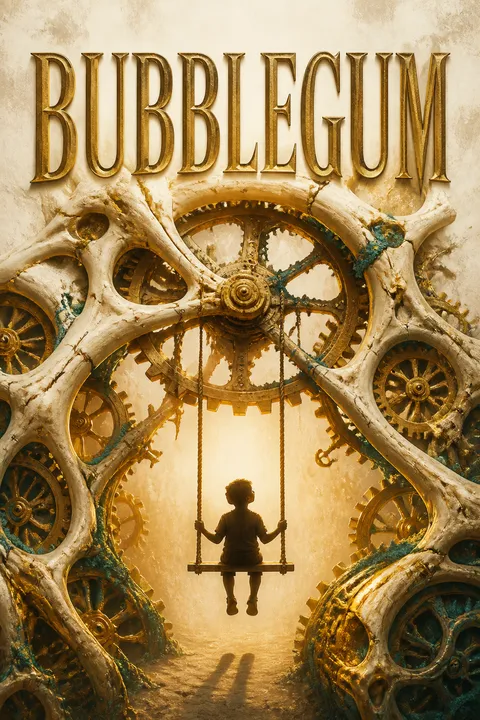
The Swingset Murders
In a series of infamous acts, Belt becomes the "swingset murderer," destroying neglected playground equipment at the request—real or imagined—of the inanimate objects themselves. These acts are both performance and mercy killing, a way for Belt to channel his empathy and his rage. The community is both fascinated and horrified, and Belt's notoriety grows. The swingset murders are a metaphor for the desire to end suffering, to assert agency in a world that feels indifferent. They also mark Belt as irreparably different, deepening his isolation even as they grant him a strange kind of fame.
The Friends Study
Belt's participation in the Friends Study—a research project on the therapeutic effects of Curios—brings him into contact with other troubled children. The study is both sanctuary and laboratory, a place where new forms of connection and cruelty are explored. Belt's journals and memories from this time are vivid, capturing the awkwardness, hope, and pain of adolescence. The relationships he forms—especially with Lisette, a brilliant and damaged girl—are intense and formative. The study is also the crucible in which Belt's bond with Blank is forged, setting the stage for the rest of his life.
Blank: The Singular Curio
Blank is not just any Curio; it is possibly the oldest and most beloved in existence. Belt raises it from an "egg," resists the urge to overload on it, and protects it from a world eager to consume or exploit its cuteness. Their relationship is a meditation on care, restraint, and the limits of empathy. Blank becomes a symbol of everything Belt longs for—connection, understanding, and the possibility of being loved without condition. The eventual illness and death of Blank is a devastating loss, forcing Belt to confront the impermanence of all things and the impossibility of perfect preservation.
Art, Technology, and Obsession
As Belt grows older, he becomes entangled in the world of art, technology, and cultural innovation. He is drawn into the orbit of the Pellmore-Jasons, especially Jonboat's son, Triple-J, a prodigy obsessed with revolutionizing Curio interactions. The boundaries between art and commerce, inspiration and exploitation, blur. The pursuit of novelty becomes both a creative force and a destructive compulsion. Belt is both inspired and unsettled by the relentless drive to innovate, to be the first, to leave a mark. The question of what is truly new—and what is merely a repackaging of old desires—haunts him.
The Compound and the Yachts
The Pellmore-Jason compound is a fortress of privilege, a stage for elaborate games and social rituals. The Yachts, Triple-J's clique, invent new ways to use and abuse Curios, turning cruelty into spectacle and charity into performance. Belt is both guest and outsider, drawn into their world but never fully at home. The compound is a microcosm of American excess and anxiety, a place where the boundaries between play and violence, generosity and domination, are constantly shifting. Belt's encounters here force him to reckon with his own complicity and his longing for acceptance.
The Search for Connection
Throughout his life, Belt is haunted by the desire for connection—romantic, platonic, and existential. His relationships are marked by missed signals, misunderstandings, and the persistent fear of being the "only wrong person." Attempts to reconnect with lost friends and lovers—especially Lisette and Stevie—are fraught with disappointment and ambiguity. The search for someone who truly understands him, who shares his peculiar sensitivities, is both a source of hope and a wellspring of sorrow. The novel suggests that true connection is rare, perhaps impossible, but still worth seeking.
The Weight of Memory
As Belt attempts to write his memoir, he is confronted by the unreliability of memory and the seductive power of nostalgia. The act of remembering is both creative and destructive, a way to make sense of the past and a trap that can prevent moving forward. Belt's memories are vivid but unstable, colored by longing and regret. The process of writing becomes a way to wrestle with the ghosts of childhood, the pain of loss, and the desire to find meaning in suffering. The memoir is both a monument to what has been lost and a testament to the persistence of hope.
Illness, Grief, and Letting Go
The final chapters are marked by illness and grief—Blank's cancer, Belt's father's injury, and the slow process of letting go. These losses are not redemptive; they are simply facts of life, to be endured and, if possible, understood. Belt's struggle to accept the limits of care, the inevitability of death, and the impossibility of perfect preservation is at the heart of the novel's emotional arc. The act of saying goodbye—to Blank, to his mother, to childhood—is both wrenching and necessary. In the end, letting go is not a triumph, but a form of wisdom.
The Value of Stories
Bubblegum is, at its core, a meditation on the value of stories—those we tell ourselves, those we inherit, and those we create. The novel interrogates the relationship between art and life, fiction and truth, memory and invention. Belt's journey is both a personal odyssey and a commentary on the power and limitations of narrative. Stories can heal, but they can also wound; they can preserve the past, but they can also distort it. The act of storytelling is both an assertion of agency and an admission of vulnerability.
Inheritance and New Beginnings
After his father's injury and retirement, Belt is left with an inheritance—financial, emotional, and existential. The relationship between father and son is redefined, moving from dependence and resentment toward something more like brotherhood. The possibility of new beginnings is real but uncertain, colored by the knowledge that every gain is shadowed by loss. The future is open, but not untroubled. Belt's sense of self is both expanded and diminished by what he inherits, and the question of what to do with one's gifts—material and otherwise—remains unresolved.
The Only Wrong Person
A recurring theme is the fear of being the "only wrong person"—the one who cannot enjoy what others enjoy, who cannot be understood or understand. This fear is both comic and tragic, a source of shame and a spur to creativity. Belt's encounters with books, inans, and other people are haunted by the suspicion that he is fundamentally out of sync with the world. The novel suggests that this is a universal condition, even as it is experienced as uniquely isolating. The only wrong person is, perhaps, everyone.
The Hope of Rusting Swingsets
The final image is of Belt, older and perhaps wiser, contemplating the rusting swingsets of his neighborhood. The desire to end suffering, to do good, is undiminished, but the means are uncertain and the results ambiguous. The world is full of pain and beauty, cruelty and kindness, and the hope of making a difference is both necessary and impossible. The novel ends not with resolution, but with a gesture toward persistence—the willingness to keep trying, to keep caring, even in the face of futility.
Analysis
Bubblegum is a sprawling, ambitious meditation on longing, empathy, and the search for meaning in a world saturated with technology and commodified emotion. By imagining an America without the Internet but dominated by Curios—living, programmable companions—Adam Levin crafts a world that is both familiar and deeply strange, a mirror for our own anxieties about connection, authenticity, and the limits of care. The novel's central metaphor—the cycle of overload, in which love and desire lead inevitably to destruction—serves as a powerful commentary on the dangers of unchecked longing and the commodification of pleasure. Belt Magnet's journey is both intensely personal and broadly allegorical, a story of grief, alienation, and the persistent hope for understanding. The novel interrogates the value of stories, the unreliability of memory, and the impossibility of perfect preservation. In the end, Bubblegum suggests that the search for connection, though often futile, is nonetheless essential; that empathy, though it cannot save us, is what makes us human; and that the act of caring—however flawed, however doomed—is itself a form of resistance against the world's indifference. The book is both a satire and a lament, a celebration of the messy, painful, beautiful business of being alive.
Review Summary
Reviews of Bubblegum are polarizing, ranging from devoted five-star praise to frustrated one-star dismissals. Admirers celebrate its inventive alternate world, darkly comic tone, and deeply immersive protagonist Belt Magnet, comparing it favorably to David Foster Wallace and Kurt Vonnegut. Critics find it self-indulgent, exhausting, and unnecessarily lengthy at nearly 800 pages. Common ground exists around the novel's demanding style: stream-of-consciousness narration, endless digressions, and unconventional structure that rewards patient readers while alienating others. The flesh-and-bone robot "Curios" serve as a compelling satirical device, though opinions differ on execution.
Characters
Belt Magnet
Belt is the novel's narrator and protagonist, a man marked by childhood trauma, mental illness, and a profound sense of alienation. His relationships—with his parents, friends, and especially his Curio, Blank—are shaped by longing, guilt, and the fear of being fundamentally misunderstood. Belt is introspective, self-deprecating, and often paralyzed by self-doubt. His journey is one of seeking connection and meaning in a world that seems designed to thwart both. Over the course of the novel, Belt grows from a wounded child into a man capable of both deep empathy and painful self-awareness, but he never fully escapes the sense of being the "only wrong person." His development is marked by moments of insight, but also by recurring cycles of hope and disappointment.
Blank
Blank is Belt's Curio, a flesh-and-bone robot that becomes his closest companion and the object of his deepest affections. More than a pet, Blank is a mirror for Belt's desires, fears, and capacity for care. Its increasing cuteness and vulnerability evoke both tenderness and the dangerous urge to overload—to destroy what is most loved. Blank's long life and eventual illness become a meditation on the limits of empathy, the inevitability of loss, and the impossibility of perfect preservation. Blank is both a character in its own right—playful, trusting, and ultimately fragile—and a symbol of everything Belt longs for: connection, understanding, and the hope that love can outlast suffering.
Jonny "Jonboat" Pellmore-Jason
Jonboat is Belt's childhood friend and later a distant, almost mythic figure. He embodies privilege, confidence, and the ease of belonging that Belt lacks. Their relationship is fraught with admiration, rivalry, and misunderstanding. Jonboat is both protector and betrayer, a source of both comfort and pain. As an adult, he becomes a billionaire astronaut, a public figure whose life is shaped by spectacle and performance. His interactions with Belt are marked by a mixture of nostalgia, condescension, and genuine affection. Jonboat's development is less about change than about the revelation of his essential nature: he is always at the center, always admired, but never fully known.
Triple-J (Jonny Pellmore-Jason, Jr.)
Triple-J is Jonboat's son, a brilliant and driven adolescent obsessed with revolutionizing Curio interactions. He is both inspired and burdened by his family's legacy, desperate to make his own mark. Triple-J's relationship with Belt is complex: he admires Belt's work, seeks his approval, and enlists him in his artistic projects. At the same time, he is prone to self-doubt, ideological crisis, and the fear that his innovations are always already obsolete. Triple-J is a study in the anxieties of privilege, the hunger for authenticity, and the impossibility of escaping the shadow of one's parents.
Fondajane Henry
Fondajane is Triple-J's stepmother, a world-famous critical theorist, artist, and former sex worker. She is both muse and mentor, a figure of fascination for Belt and a source of both inspiration and intimidation. Fondajane is fiercely intelligent, unapologetically sexual, and deeply compassionate. Her relationship with Belt is marked by flirtation, friendship, and the shared recognition of outsider status. She is a force of nature, both emblem and agent of social change, but also vulnerable to the same longings and disappointments as everyone else.
Clyde Magnet
Clyde is Belt's father, a working-class man whose rough exterior hides deep loyalty and affection. Their relationship is complicated by grief, misunderstanding, and the generational gap between them. Clyde is both a source of stability and a reminder of everything Belt has lost. His injury and retirement force a reevaluation of their bond, moving it from dependence and resentment toward something more like brotherhood. Clyde's development is subtle but profound: he learns to let go, to accept his own limitations, and to find happiness in unexpected places.
Lisette
Lisette is Belt's friend from the Friends Study, a girl marked by trauma, intelligence, and a fierce desire for connection. Their relationship is intense, fraught with longing and misunderstanding. Lisette is both a mirror and a foil for Belt, sharing his sense of alienation but expressing it in more volatile ways. Her later life is marked by struggle, addiction, and the search for redemption. Lisette embodies the novel's themes of longing, loss, and the impossibility of perfect understanding.
Lotta Hogg
Lotta is a former classmate of Belt's, a bank teller who reenters his life as an adult. She is warm, self-deprecating, and eager to help, but also burdened by her own insecurities and disappointments. Lotta's attempts to connect with Belt are both touching and painful, marked by missed signals and the persistent fear of rejection. She represents the possibility of ordinary kindness and the difficulty of accepting it.
Burroughs
Burroughs is the longtime driver and bodyguard for the Pellmore-Jason family, a figure of both authority and compassion. He is deeply loyal to his employers but also capable of independent judgment and subtle manipulation. Burroughs is a stabilizing force, a fixer who navigates the complexities of privilege, power, and vulnerability. His relationship with Belt is marked by mutual respect and the recognition of shared outsider status.
The Inans (Inanimate Objects)
The inans—chairs, swingsets, pillows, books—are both literal and metaphorical characters in Belt's world. They speak to him, sometimes asking for help, sometimes expressing suffering, sometimes simply bearing witness. The inans are a manifestation of Belt's empathy, his inability to ignore the pain of others, even when that pain is absurd or impossible. They are both a source of comfort and a burden, a reminder of the limits of care and the persistence of longing.
Plot Devices
Alternate History and World-Building
Bubblegum's most striking device is its alternate history: a world where the Internet never existed and Curios have become the central technology. This setting is not just a backdrop but a living metaphor for the ways in which society commodifies emotion, connection, and cuteness. The world-building is meticulous, blending the familiar with the uncanny, and serves to heighten the novel's exploration of longing, alienation, and the search for meaning.
Unreliable Narration and Memoir Structure
The novel is structured as a memoir, with Belt as an often unreliable narrator. His memories are vivid but unstable, colored by grief, nostalgia, and self-doubt. The act of writing is both a way to make sense of the past and a source of anxiety. The memoir structure allows for digression, self-interrogation, and the blurring of fiction and reality. The gaps and contradictions in Belt's narrative are not flaws but essential to the novel's exploration of the impossibility of perfect understanding.
Personification of Inanimate Objects
Belt's ability to converse with inans is both a symptom of mental illness and a metaphor for radical empathy. The inans are both real and imagined, their voices a source of comfort and distress. This device allows the novel to explore the boundaries between self and other, care and compulsion, reality and fantasy. The personification of objects is both comic and tragic, a way to dramatize the persistence of longing and the impossibility of perfect preservation.
Overload and the Commodification of Cuteness
The phenomenon of overload—moments when Curios become so cute that owners are driven to destroy them—is a central metaphor for the dangers of unchecked desire and the commodification of emotional experience. The cycle of longing, possession, and destruction is both literal and symbolic, a commentary on the ways in which society consumes and discards what it loves most. The device is both shocking and poignant, forcing readers to confront the limits of empathy and the costs of pleasure.
Metafiction and Self-Reflexivity
Bubblegum is deeply self-reflexive, constantly interrogating the act of storytelling itself. The novel is filled with stories within stories, memoirs within memoirs, and meditations on the value and limitations of narrative. The boundaries between fiction and reality, art and life, are constantly blurred. This metafictional approach allows the novel to explore the ways in which stories can both heal and wound, preserve and distort, connect and isolate.
Download PDF
Download EPUB
.epub digital book format is ideal for reading ebooks on phones, tablets, and e-readers.








































