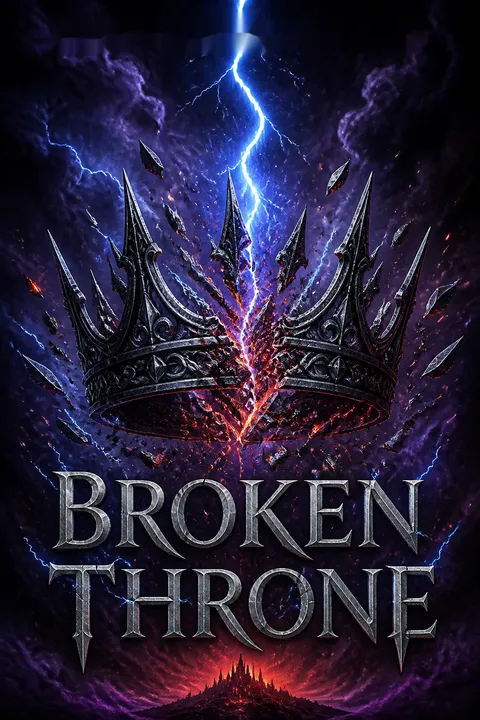

Summary Unavailable
This book is not suitable for a summary (it may be a textbook, workbook, cookbook, reference book, or collection). However, you can still explore the FAQs, about author, and other metadata below!
Plot Summary
Calamities and New Beginnings
The world of Broken Throne is born from the ashes of the Calamities—apocalyptic climate change, famine, disease, and nuclear war that shattered civilization. As centuries pass, new societies emerge, ruled by Silvers—humans with supernatural abilities—who dominate the powerless Reds. The continent's history is marked by the rise and fall of kingdoms, most notably Norta, forged by House Calore, and the Lakelands, ruled by House Cygnet. The Silvers' reign is built on blood, oppression, and the myth of their own divinity, but cracks appear as the memory of the old world lingers and the seeds of rebellion are sown. The stage is set for a world where power, legacy, and survival are in constant conflict, and the past's warnings echo into the present.
The Singer Queen's Diary
Coriane Jacos, a minor Silver noble, chronicles her life in a diary gifted by her brother Julian. Her story is one of longing, isolation, and the struggle to find meaning in a world that values power above all. Coriane's technical curiosity and gentle heart set her apart from the court's cruelty. She is swept into the orbit of Crown Prince Tiberias, whose warmth and loneliness mirror her own. Their love is a fragile candle in the darkness of court intrigue, haunted by whispers, political machinations, and the ever-present threat of Elara Merandus. Coriane's ascent to queen brings not joy but anxiety, as she battles nightmares, miscarriages, and the insidious manipulation of her mind. Her diary becomes a testament to her unraveling, a plea for understanding, and a warning to those who come after.
Red Rebellion Awakens
Beneath Silver rule, the Reds endure conscription, poverty, and violence. But resistance simmers. Through oral histories and secret records, the voices of the oppressed emerge: stories of uprisings, sabotage, and the birth of the Scarlet Guard. The Guard's leaders, like Diana Farley, are shaped by loss and necessity, forging a clandestine network that spans borders and bloodlines. Their struggle is not just against Silvers but against the weight of history and the fear that change is impossible. The Red perspective reframes the world's narrative, revealing the cost of survival and the courage required to dream of freedom. The Guard's motto—Rise, Red as the dawn—becomes a rallying cry for a new era.
Shadows and Sabotage
Captain Diana Farley's journey through the Lakelands and Norta is a masterclass in subterfuge, loyalty, and the price of rebellion. Tasked with expanding the Scarlet Guard's reach, she navigates a world of smugglers, spies, and shifting allegiances. Her partnership with her father, the enigmatic Colonel, is fraught with unspoken pain and shared purpose. Farley's encounters with Red soldiers, Whistle smugglers, and the mysterious Shade Barrow—whose ability to teleport marks him as something new—test her resolve and her heart. The Guard's operations, from sabotage to recruitment, are chronicled in coded messages and tense confrontations, painting a portrait of revolution built on sacrifice and secrecy.
Rivermen and Runaways
On the rivers dividing kingdoms, Rivermen like Ashe ferry desperate passengers—Reds and Silvers alike—seeking escape from war and tyranny. When Lyrisa, a Silver princess fleeing a brutal betrothal, boards Ashe's keelboat, their fates intertwine. Pursued by the vengeful Lakelander prince Orrian, Lyrisa and the crew must outwit hunters and survive betrayal. The river becomes a crucible, testing loyalties and forcing Lyrisa to confront the violence she's both suffered and inflicted. In the end, survival demands impossible choices, and the river washes away old identities, leaving only those willing to risk everything for freedom.
Broken Crowns, Broken Hearts
The old world's monarchies crumble as war and rebellion sweep the continent. In Norta, the Calore dynasty falls—Tiberias abdicates, Maven's reign ends in blood, and the kingdom fractures into the Nortan States. In the Rift, Evangeline and Ptolemus Samos face the end of their house's power, torn between duty, love, and the hope of a life lived on their own terms. Abdication is both liberation and loss, forcing former royals to reckon with the cost of their choices and the ghosts of those left behind. The pain of broken crowns is matched only by the possibility of forging new identities in a world remade.
The Rift's Last Stand
Evangeline Samos, once destined to be queen, must choose between the legacy of her ruthless parents and the love she finds with Elane. As the Rift dissolves, Evangeline and her brother Ptolemus abdicate, renouncing their claim to power and embracing citizenship in Montfort. The act is both a public spectacle and a private reckoning, as Evangeline faces her mother's condemnation and the weight of her own guilt. The Samos siblings' journey is one of survival, adaptation, and the search for belonging in a world that no longer values the old hierarchies. Their story is a testament to the possibility of change, even for those born to rule.
Montfort: A New World
Montfort stands as a beacon of hope and a challenge to the old order—a republic where Reds, Silvers, and newbloods share power. The alliance of Montfort, the Scarlet Guard, and the Nortan States is fragile, threatened by external enemies and internal divisions. Delegates gather for tense negotiations, seeking to balance justice, stability, and the demands of the future. The promise of equality is hard-won, requiring compromise, vigilance, and the willingness to confront uncomfortable truths. Montfort's experiment is both inspiration and warning, a reminder that peace is not the absence of conflict but the ongoing work of building something better.
Lightning and Fire Reunited
After months apart, Mare Barrow and Cal Calore are reunited in Montfort, their relationship scarred by war, betrayal, and the memory of Maven. Their reunion is tentative, marked by awkwardness, longing, and the fear that too much has changed. Through honest conversation and shared vulnerability, they begin to heal, acknowledging the pain they've caused each other and the impossibility of erasing the past. Their love is no longer a fairy tale but a choice made in the face of uncertainty. Together, they find hope in the promise of time and the freedom to shape their own destinies.
The Weight of Forgiveness
Forgiveness is a thread woven through every story in Broken Throne. Coriane's diary is a plea for understanding; Farley and Shade's partnership is built on trust hard-won; Evangeline and Ptolemus must forgive themselves and each other for the sins of their house. Cal and Mare grapple with the legacy of Maven, haunted by what was lost and what could never be. The act of forgiveness is not absolution but acceptance—a willingness to move forward without forgetting. The characters' journeys are marked by the struggle to let go of guilt, to honor the dead, and to find meaning in survival.
Letters Across Enemy Lines
As the war's end approaches, communication becomes a weapon and a lifeline. Evangeline's correspondence with Princess Iris of the Lakelands is a bold gamble, urging adaptation over annihilation. Letters and secret messages shape the course of nations, offering the possibility of peace or the threat of renewed conflict. The power of words—whether in a diary, a coded transmission, or a letter to an enemy—underscores the fragility of trust and the necessity of dialogue in a world built on division.
The Dance of Peace
The alliance's leaders gather in Montfort for a gala that is both celebration and subterfuge. Beneath the surface of music and finery, old wounds fester and new alliances are forged. The negotiations are fraught, as delegates debate reparations, representation, and the future of Silver and Red alike. The peace that emerges is imperfect, built on compromise and the recognition that true equality requires more than the end of war. The dance of peace is ongoing, demanding vigilance, empathy, and the courage to imagine a different world.
Farewells and Unfinished Stories
Maven Calore's final days are spent in captivity, haunted by the ghosts of his mother, his brother, and the love he could never hold. His last conversation with Cal is a tangle of accusation, regret, and the refusal to grant or receive forgiveness. Maven's death is not a triumph but a tragedy, a reminder of the damage wrought by power, manipulation, and the inability to break free from the past. Cal's pilgrimage to Maven's grave is an act of mourning and acceptance, a farewell to the brother he lost and the king he could never save.
The Future Rewritten
Broken Throne closes with a vision of the world remade but not perfected. The Nortan States, Montfort, and their allies struggle to maintain peace, facing new threats and the ever-present danger of old hatreds. The next generation—children of Red, Silver, and newblood—inherit a world shaped by sacrifice and the refusal to accept the status quo. The lessons of the past are not forgotten, and the work of building a just society continues. The story ends not with a final victory but with the promise of possibility, the hope that the future can be rewritten by those brave enough to try.
Analysis
Broken Throne is both an elegy and a blueprint—a collection that mourns the losses of the past while daring to imagine a different future. Victoria Aveyard uses the fragmented structure to explore the aftermath of revolution, the persistence of trauma, and the slow, painful work of building something new from the ruins of the old. The book's central lesson is that change is never easy or complete; it is a process marked by compromise, forgiveness, and the willingness to confront uncomfortable truths. The characters' journeys—from Coriane's unraveling to Mare and Cal's tentative reunion—underscore the importance of agency, empathy, and the refusal to accept inherited injustice. Broken Throne cautions against the allure of nostalgia and the dangers of unchecked power, urging readers to remember that history is made by those who choose to act, to love, and to hope. In the end, the book is a testament to resilience—the belief that, even in a world broken by war and betrayal, it is possible to write a new story, one choice at a time.
Last updated:
Report IssueReview Summary
Broken Throne received mixed reviews from readers. Many appreciated the additional stories and world-building, especially those focusing on Mare and Cal's relationship after War Storm. Some found the collection unnecessary but enjoyed the closure it provided. Readers praised Victoria Aveyard's writing and character development, particularly for Evangeline. However, some felt the book didn't add enough new content, with two previously published novellas included. Overall, fans of the Red Queen series found it a satisfying conclusion, while others saw it as an unnecessary addition.
Characters
Mare Barrow
Mare is the heart of the revolution—a Red girl with Silver abilities, whose journey from poverty to power is marked by loss, love, and the burden of leadership. Her relationship with Cal is fraught with longing and betrayal, complicated by the shadow of Maven. Mare's greatest strength is her refusal to be defined by others' expectations; she is both weapon and witness, carrying the scars of war and the hope of a better world. Her arc is one of self-forgiveness, learning to accept her past and embrace the uncertain future she helps create.
Cal (Tiberias Calore)
Cal is a prince forged in fire, torn between duty and desire. His upbringing as heir to Norta's throne instills in him a sense of responsibility that often clashes with his personal happiness. Cal's love for Mare is both his anchor and his undoing, complicated by the legacy of his family and the trauma of war. His abdication is an act of humility and hope, a willingness to let go of power for the sake of peace. Cal's journey is defined by his struggle to forgive himself and to find meaning beyond the crown.
Maven Calore
Maven is the series' most complex antagonist—a boy shaped by his mother's manipulation, torn between love and hatred for his brother and Mare. His intelligence and cruelty are matched only by his capacity for pain. Maven's final days are a study in self-destruction, as he confronts the emptiness left by Elara's influence and the impossibility of redemption. He is both victim and perpetrator, a cautionary tale about the cost of power and the dangers of a heart left unguarded.
Evangeline Samos
Evangeline begins as a symbol of Silver ambition, raised to be queen and weaponized by her parents. Her love for Elane and her loyalty to her brother Ptolemus force her to choose between legacy and authenticity. Evangeline's abdication and embrace of Montfort's ideals mark her as one of the series' most dynamic characters, capable of growth and self-sacrifice. Her journey is one of shedding old identities and forging a new path, even at great personal cost.
Diana Farley
Farley is the Scarlet Guard's backbone—a woman hardened by loss, driven by justice, and skilled in both war and subterfuge. Her relationship with Shade Barrow reveals a softer side, but her commitment to the cause never wavers. Farley's leadership is marked by pragmatism and empathy, as she navigates the complexities of revolution and the demands of those she leads. Her arc is one of resilience, learning to trust and to let others share the burden of change.
Julian Jacos
Julian is the series' conscience—a man devoted to knowledge, truth, and the preservation of memory. His relationship with Coriane and Mare is deeply paternal, offering guidance and comfort in a world that often punishes curiosity. Julian's research into the past and his efforts to document the present are acts of resistance, ensuring that the lessons of history are not lost. His arc is one of quiet heroism, using words as weapons and stories as shields.
Coriane Jacos
Coriane's diary is a window into the vulnerability and isolation of Silver women, especially those caught in the machinery of power. Her love for Tiberias and her friendship with Julian and Sara are sources of light in a life overshadowed by manipulation and loss. Coriane's unraveling at the hands of Elara is both personal and political, a warning about the dangers of unchecked ambition and the erasure of women's voices. Her legacy endures in her son Cal and in the lessons she leaves behind.
Shade Barrow
Shade is Mare's beloved brother, a Red soldier with the rare ability to teleport. His partnership with Farley is a union of equals, built on trust and shared purpose. Shade's humor and courage make him a beacon for those around him, and his death is a wound that shapes the choices of Mare, Farley, and the Guard. Shade's legacy is one of connection—between Red and Silver, past and future, hope and heartbreak.
Elane Haven
Elane is Evangeline's anchor—a woman of subtle power, whose ability to manipulate light mirrors her role as confidante and protector. Her relationship with Evangeline is a study in patience and devotion, offering a vision of love that survives the collapse of kingdoms. Elane's arc is one of emergence, stepping out of the shadows to claim her place in a world that once denied her.
Lyrisa of Piedmont
Lyrisa is a Silver princess on the run, fleeing a life of violence and expectation. Her journey down the river with Ashe and the Rivermen is a crucible, forcing her to confront her own privilege, capacity for violence, and the meaning of freedom. Lyrisa's choices challenge the boundaries of loyalty and identity, offering a glimpse of what it means to be remade by circumstance and choice.
Plot Devices
Fractured Narrative and Multiple Perspectives
Broken Throne employs a mosaic structure, blending short stories, diary entries, letters, and historical documents to create a tapestry of voices. This fractured narrative allows for deep exploration of both major and minor characters, illuminating the personal costs of war and the complexity of change. By shifting perspectives—from queens to rebels, from Silvers to Reds—the book challenges the notion of a single truth and invites readers to question the stories that shape nations and hearts.
Diaries, Letters, and Oral Histories
The use of Coriane's diary, Farley's coded messages, and Evangeline's letters to Iris serve as intimate plot devices, granting access to private thoughts and secret negotiations. These documents humanize the characters, reveal hidden motivations, and provide crucial exposition. They also underscore the power of storytelling as both resistance and reconciliation, reminding readers that history is written by survivors and shaped by those brave enough to speak.
Foreshadowing and Cyclical History
The book is rich with foreshadowing, from the Calamities that destroyed the old world to the recurring cycles of war and peace. Characters are haunted by dreams, prophecies, and the knowledge that history often repeats itself. The narrative structure itself—moving from collapse to reconstruction—mirrors the rise and fall of kingdoms, suggesting that progress is fragile and must be constantly defended.
Symbolism of Blood, Metal, and Light
Blood—Red, Silver, and newblood—serves as both literal and metaphorical boundary, shaping identity and hierarchy. Metal, especially in the hands of the Samos family, symbolizes both power and the possibility of transformation. Light and lightning, wielded by Mare and Elane, represent hope, revelation, and the danger of unchecked force. These symbols recur throughout the narrative, reinforcing themes of division, unity, and the cost of change.
The Unreliable Narrator and Memory
Many accounts in Broken Throne are colored by bias, trauma, or incomplete knowledge. Coriane's diary is both confession and plea; Farley's reports are shaped by necessity; Maven's final words are a tangle of truth and self-deception. The book invites readers to question what is remembered, what is forgotten, and who benefits from each version of the story.
Red Queen Series
About the Author
Victoria Aveyard is a bestselling author and screenwriter known for her young adult fantasy series Red Queen and the Realm Breaker trilogy. Her adult fantasy debut, Tempest, is set to release in 2026. Aveyard's work often features dystopian and apocalyptic themes, with a focus on fantasy, historical, and adventure genres. She has achieved significant success, with her Red Queen series reaching #1 on the New York Times bestseller list. Aveyard's writing style and world-building have garnered praise from readers, particularly for her complex characters and engaging plotlines.
Other books by Victoria Aveyard
Download PDF
Download EPUB
.epub digital book format is ideal for reading ebooks on phones, tablets, and e-readers.








































