
Plot Summary
Opening Night, Closing Doors
Alex Lyons, a sharp-tongued theatre critic, attends the Edinburgh Fringe Festival with junior writer Sophie. After a disastrous one-star review of Hayley Sinclair's solo show, Alex meets Hayley at a bar, concealing his identity. They spend the night together, unaware that his scathing words are about to be published. The city's festival energy pulses with possibility, but beneath the surface, Alex's actions set off a chain reaction. Sophie, balancing her own family and career, observes the collision of art, criticism, and personal boundaries, sensing that this festival will change everything for them all.
The Critic's Three Truths
Sophie reflects on Alex's magnetic presence: women are drawn to him, he's a brilliant but ruthless colleague, and he genuinely loves theatre. His childhood, shaped by his famous actress mother Judith, left him both enchanted and alienated by the world of performance. Alex's critical philosophy—clarity is generosity—has hardened into a persona that prizes extremes over nuance. Sophie admires his skill but is wary of his detachment, recognizing the emotional cost of his approach to both art and people.
One Star, One Night
As Alex's review is published, Hayley wakes in his flat, unaware of his identity. The morning brings confrontation: Hayley discovers the review and realizes Alex's betrayal. The fallout is immediate and raw, exposing the power imbalance between critic and performer. Sophie, caught between empathy and complicity, witnesses the personal devastation that can follow a public judgment. The boundaries between professional and personal lives blur, setting the stage for a reckoning that will ripple through the festival and beyond.
Fallout in the Flat
Hayley's phone, left behind, becomes a symbol of the chaos unleashed. Sophie and Alex navigate the aftermath, fielding messages and gossip as the story spreads. The flat, once a haven, becomes a pressure cooker of guilt, denial, and self-justification. Sophie juggles her own work, motherhood, and the growing sense that she is both observer and participant in a drama spiraling out of control. The festival's intensity amplifies every emotion, and the lines between victim, perpetrator, and bystander grow ever more tangled.
The Mob Gathers
Social media erupts as Hayley transforms her show into "The Alex Lyons Experience," turning her humiliation into a viral sensation. Audiences flock to hear her story, and other women come forward with their own Alex tales. Sophie attends the show, witnessing the cathartic power of collective anger and the seductive thrill of mob justice. Alex becomes a pariah, his reputation shredded, while Sophie grapples with her own complicity and the intoxicating pull of belonging to the crowd.
The Show Becomes Legend
Hayley's show evolves nightly, incorporating testimonies from women Alex has hurt. The performance blurs art and reality, exposing the critic's private life to public scrutiny. Sophie, now both chronicler and character, is drawn into the spectacle, forced to confront her own history with Alex. The show's success is both vindication and burden for Hayley, who becomes a symbol of resistance but also a vessel for collective trauma. The boundaries between art, activism, and vengeance dissolve.
Collateral Damage
As Hayley's show gains momentum, Alex's past relationships are dissected onstage and online. Sophie's own marriage is strained by distance and doubt, while her professional life is upended by the scandal. The festival's relentless pace leaves little room for reflection, and everyone is forced to reckon with the consequences of their choices. The personal becomes political, and the cost of honesty—both in art and in life—becomes painfully clear.
The Reckoning of Alex
Isolated and under siege, Alex is forced to confront the harm he's caused. Stories from women he's hurt accumulate, each one chipping away at his self-image. Sophie, now his reluctant confidante, witnesses his unraveling. The festival's energy turns from celebration to reckoning, and Alex's defenses crumble. The question of redemption looms: can a man so skilled at judgment learn to judge himself? Or is he doomed to repeat the cycle of harm and denial?
Mothers, Lovers, Ghosts
Sophie's memories of her late mother and her complicated relationship with Josh, her partner, surface as she navigates the chaos. Judith, Alex's mother, arrives, bringing her own theatrical flair and unresolved wounds. The past haunts the present, as parental expectations, old betrayals, and the longing for approval shape every interaction. The festival becomes a crucible where old ghosts are summoned and new identities forged.
The Art of Survival
Sophie is offered Alex's job as theatre critic, a promotion tainted by the circumstances. She grapples with the ethics of criticism, the lure of power, and the fear of becoming what she despises. Hayley's show continues to evolve, and the boundaries between survivor and opportunist blur. Everyone is forced to adapt or perish, and the festival's relentless churn becomes a metaphor for the struggle to survive in a world that rewards spectacle over substance.
The Last Safe Place
A visit to Murray's country house offers a brief respite, but old wounds resurface. Judith and Alex's fraught relationship comes to a head, and Sophie's own sense of safety is shattered by a moment of weakness with Alex. The illusion of sanctuary is exposed, and the characters are left more vulnerable than ever. The journey back to Edinburgh is a return to the battlefield, where no one is truly safe from the consequences of their actions.
The Party and the Plunge
At the festival's media party, Sophie and Alex's relationship reaches a breaking point. Alcohol, regret, and the pressure of public scrutiny push them to the edge. Sophie's sense of self unravels as she confronts her own desires and failures. The night becomes a microcosm of the festival's excesses: pleasure and pain, connection and isolation, all swirling together in a dizzying dance. The aftermath leaves everyone changed, and the possibility of forgiveness seems remote.
Crossing Lines
Sophie's guilt over her encounter with Alex collides with her responsibilities as a partner and mother. Josh's arrival in Edinburgh forces a reckoning, as old wounds are reopened and new ones inflicted. The boundaries between personal and professional, love and loyalty, are tested to their limits. Sophie must decide what kind of person she wants to be, and whether redemption is possible for herself or for Alex.
The New Critic
With Alex sidelined, Sophie steps into his role as theatre critic. The power is intoxicating but fraught with danger. Her first one-star review is both an act of honesty and a betrayal of her own ideals. The weight of judgment, once wielded by Alex, now rests on her shoulders. She begins to understand the loneliness and responsibility of the critic's position, and the ease with which cruelty can masquerade as clarity.
Hayley's Revolution
Hayley's show becomes a cultural phenomenon, inspiring copycats, protests, and think pieces. The narrative shifts from personal revenge to collective reckoning, but the toll on Hayley is immense. She becomes both icon and scapegoat, her pain commodified and her agency questioned. Sophie's interview with Hayley reveals the cost of turning trauma into art, and the impossibility of true closure. The revolution, once exhilarating, now threatens to consume everyone involved.
The Interview
Sophie's long-awaited interview with Hayley is raw and revelatory. Hayley confesses the exhaustion and ambiguity of her newfound fame, the burden of carrying others' stories, and the unresolved pain at the heart of her performance. Sophie, too, is forced to confront her own complicity and longing for absolution. The conversation is a moment of mutual recognition, a brief respite from the storm, but offers no easy answers.
Fire and Forgiveness
On the final night, Hayley invites Alex onstage for a public reckoning. Their confrontation is interrupted by a fire that engulfs the theatre, forcing everyone to confront their mortality and the fragility of their narratives. In the chaos, Alex helps others escape, and Sophie survives by sheer will. The fire becomes a metaphor for the destructive and purifying power of truth, and the possibility of forgiveness flickers in the aftermath.
After the Ashes
In the wake of the fire, the characters are left to reckon with what remains. Alex is humbled, Sophie is changed, and Hayley is both celebrated and blamed. The festival ends, but the scars linger. Sophie leaves the paper for a new job, seeking a life less defined by judgment and more by creation. The lessons of the summer are ambiguous: survival requires adaptation, but healing demands honesty and grace.
The End of the Show
As the dust settles, Sophie reflects on the events of the festival and the transformations wrought by pain, ambition, and love. She reconnects with Josh, contemplates motherhood and legacy, and finds solace in art. Alex, now writing obituaries, is both diminished and humanized. Hayley moves on to new projects, her story already fading from the headlines. The show is over, but its echoes persist in the lives it touched.
Guilt, Grief, and Grace
Sophie confronts her grief for her mother, her guilt over her actions, and her longing for forgiveness. In a moment of vulnerability, she and Josh begin to rebuild their relationship, acknowledging the pain they've caused each other. The possibility of grace emerges—not as absolution, but as the willingness to keep going, to keep loving, despite the messiness of life. The final review is unwritten, the story unfinished, but hope endures.
The Final Review
In the aftermath, Sophie realizes that criticism—of art, of others, of oneself—is both necessary and dangerous. The power to judge is seductive, but true understanding requires humility and empathy. The festival's lessons are hard-won: art matters, stories matter, and the lines between them are always blurred. The final review is not a star rating, but a commitment to honesty, kindness, and the courage to begin again.
Analysis
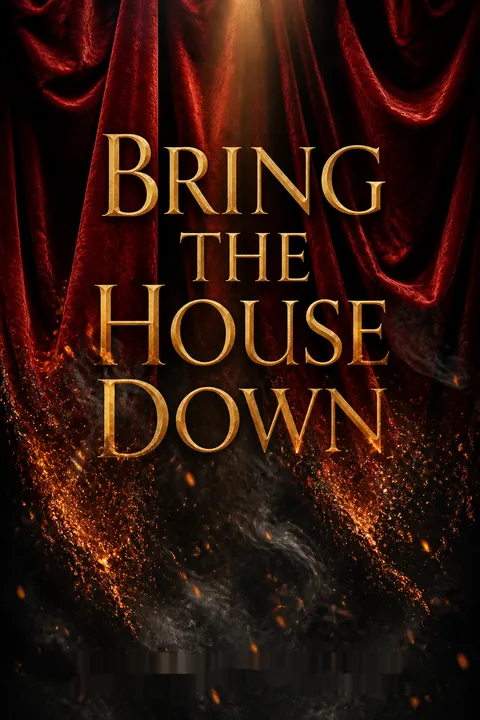
Bring the House Down is a razor-sharp, emotionally resonant exploration of power, art, and accountability in the age of social media and #MeToo. Charlotte Runcie crafts a narrative that is both timely and timeless, interrogating the ethics of criticism, the allure of spectacle, and the messy realities of forgiveness and change. The novel's brilliance lies in its refusal to offer easy answers: every character is flawed, every act of judgment is fraught, and every attempt at redemption is incomplete. Through Sophie's journey from observer to participant, Runcie exposes the dangers of both detachment and complicity, urging readers to consider the cost of honesty and the necessity of grace. The festival setting amplifies the intensity of the characters' struggles, while the metafictional structure invites readers to question their own roles as critics and consumers of stories. Ultimately, Bring the House Down is a meditation on survival—of art, of love, of self—in a world that demands both vulnerability and strength. Its lessons are hard-won: that true understanding requires humility, that forgiveness is an ongoing process, and that the final review of any life is always unfinished.
Review Summary
Bring the House Down receives generally positive reviews, averaging 3.58/5. Readers praise its sharp exploration of cancel culture, misogyny, and the ethics of criticism, set against the Edinburgh Fringe Festival. The choice of Sophie as narrator — a colleague adjacent to the main conflict — is both celebrated and criticized, with many finding her personal subplot slow. Most agree the novel's moral ambiguity is its strength, though some feel it underserves its female characters and doesn't fully deliver on its "hilarious feminist" marketing promise.
People Also Read








Characters
Sophie Rigden
Sophie is the novel's narrator and emotional anchor, a junior culture writer balancing ambition, motherhood, and grief. Her relationship with Alex is complex: she admires his talent but is wary of his cruelty, and their proximity during the festival draws her into his orbit. Sophie's psychoanalysis reveals a deep longing for approval and belonging, shaped by the loss of her mother and the pressures of modern womanhood. Her marriage to Josh is strained by distance and old betrayals, and her eventual infidelity with Alex is both a symptom and a catalyst for change. Over the course of the novel, Sophie evolves from passive observer to active participant, ultimately choosing honesty and self-forgiveness over judgment and shame.
Alex Lyons
Alex is a brilliant, ruthless theatre critic whose sharp wit and emotional detachment mask deep insecurities. The son of famed actress Judith Lyons, he is both enchanted and embittered by the world of performance. His relationships with women are transactional and self-serving, leaving a trail of hurt and resentment. Alex's psychoanalysis reveals a man addicted to the power of judgment, yet terrified of vulnerability. As the scandal unfolds, he is forced to confront the harm he's caused and the emptiness at the heart of his persona. His journey is one of reluctant self-awareness, culminating in a public reckoning that leaves him humbled but not wholly redeemed.
Hayley Sinclair
Hayley is the catalyst for the novel's central conflict, a young performance artist whose show is eviscerated by Alex's review. Her transformation from victim to avenger is both empowering and exhausting, as she turns her pain into a viral sensation. Hayley's psychoanalysis reveals a woman struggling to balance authenticity with the demands of public scrutiny, her trauma commodified and her agency questioned. She becomes a vessel for collective anger, but the burden of carrying others' stories threatens to consume her. Hayley's ultimate desire is not revenge, but understanding and closure—a goal that remains elusive even as she achieves fame.
Josh
Josh is Sophie's partner, an academic whose gentle nature and intellectual curiosity contrast with Alex's bravado. His relationship with Sophie is marked by mutual love and old wounds, including his own infidelity. Josh's psychoanalysis reveals a man struggling to reconcile his ideals with the realities of parenthood and partnership. He is both supportive and resentful, longing for connection but wary of vulnerability. Josh's journey is one of forgiveness and renewal, as he and Sophie confront their shared pain and choose to rebuild their life together.
Judith Lyons
Judith is Alex's mother, a legendary actress whose charisma and self-absorption shape her son's worldview. She is both nurturing and neglectful, her love conditional and her approval elusive. Judith's psychoanalysis reveals a woman who lives for the spotlight, unable to separate performance from reality. Her relationship with Alex is fraught with unspoken expectations and unresolved grief, and her presence in the novel serves as a reminder of the generational legacies that haunt every character.
Murray Maclean
Murray is a celebrated actor and family friend, whose country house offers a brief refuge for Sophie and Alex. He embodies the contradictions of the artistic world: generous yet self-absorbed, wise yet oblivious to his own privilege. Murray's psychoanalysis reveals a man who has survived by adapting to changing times, but whose nostalgia for the past blinds him to the present. His interactions with Judith and Alex expose the limits of forgiveness and the dangers of unchecked ambition.
Lyla Talbot
Lyla is a former journalist turned performance agent, whose professional and personal entanglements with Alex add layers to the unfolding drama. She is pragmatic, opportunistic, and skilled at navigating the shifting allegiances of the arts world. Lyla's psychoanalysis reveals a woman who understands the transactional nature of fame and is unafraid to leverage scandal for her clients' benefit. Her loyalty is to success, not sentiment.
Stuart MacAskill
Stuart is a rival theatre critic and Sophie's old friend, offering a sardonic perspective on the festival's excesses. He is both jaded and compassionate, recognizing the absurdities of the arts world while remaining committed to its possibilities. Stuart's psychoanalysis reveals a man who has learned to balance honesty with kindness, and who serves as a counterpoint to Alex's extremism. His friendship with Sophie is a source of stability and perspective.
Graham
Graham is the culture editor at the paper, a gentle presence who mentors both Sophie and Alex. He is patient, supportive, and quietly influential, embodying the best ideals of journalism. Graham's psychoanalysis reveals a man who values integrity over spectacle, and whose belief in his writers is both a gift and a burden. His role as a surrogate father to Alex highlights the importance of compassion in a world obsessed with judgment.
Arlo
Arlo is Sophie and Josh's young son, whose presence anchors Sophie's journey. He represents the possibility of renewal and the enduring power of love. Arlo's innocence is a counterpoint to the cynicism and pain of the adult world, and his needs force Sophie to confront her own priorities. In the end, Arlo is both a reminder of what is at stake and a source of grace.
Plot Devices
Dual Narrative Structure
The novel employs a dual narrative, alternating between Sophie's introspective first-person account and the unfolding public scandal. This structure allows for a nuanced exploration of both internal and external conflicts, highlighting the interplay between private pain and public spectacle. The festival setting serves as a crucible, intensifying emotions and accelerating the pace of events. The narrative's temporal compression mirrors the characters' sense of being trapped in a moment that will define them forever.
Metafiction and Self-Reflexivity
The story is deeply self-aware, constantly interrogating the ethics of storytelling, criticism, and performance. Characters reflect on their own roles as narrators, critics, and performers, questioning the boundaries between truth and fiction. The transformation of Hayley's show into a living document of trauma and resistance exemplifies the novel's preoccupation with the power and danger of narrative. The act of reviewing—both art and life—becomes a central metaphor for the struggle to find meaning and justice.
Foreshadowing and Symbolism
Recurring motifs—such as the broken vase, the fire, and the act of reviewing—serve as symbols of destruction, transformation, and the search for absolution. Foreshadowing is used to build tension, with early hints of disaster (the festival's intensity, the mob's anger) culminating in the climactic fire. The use of art and performance as both setting and metaphor reinforces the novel's themes of authenticity, vulnerability, and the cost of survival.
Testimony and Chorus
Hayley's show evolves into a chorus of testimonies, with women sharing their stories onstage and online. This device amplifies the personal into the political, transforming individual pain into collective action. The chorus also serves as a mirror for Sophie and Alex, forcing them to confront the consequences of their actions and the limits of their understanding. The interplay between solo performance and group narrative underscores the novel's exploration of agency, complicity, and redemption.
Obituaries and Endings
The motif of obituaries—both literal and figurative—runs throughout the novel, symbolizing the end of old identities and the possibility of new beginnings. Sophie's work on obits becomes a lens through which she examines her own life and the lives of those around her. The final fire, which nearly claims the characters' lives, serves as both an ending and a rebirth, forcing everyone to reckon with what truly matters.
Download PDF
Download EPUB
.epub digital book format is ideal for reading ebooks on phones, tablets, and e-readers.








































