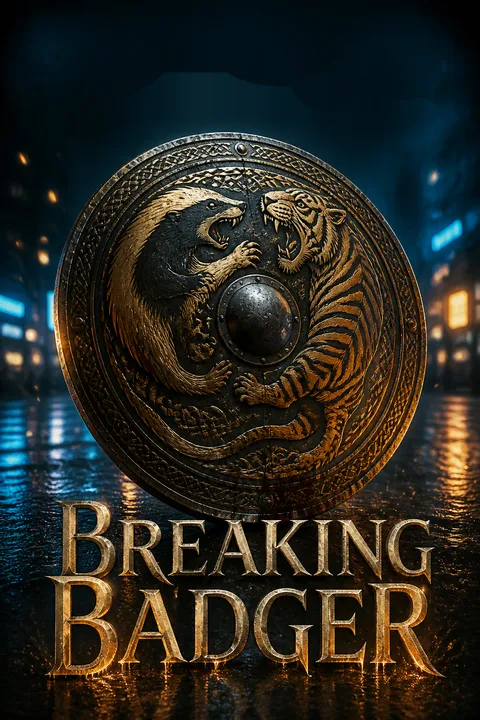

Plot Summary
Bus Ride Beginnings
On her first day of junior high, Mads Galendotter endures her cousins' bullying, only to intervene when they target a new girl, Max. Max's unconventional defense—scorpions in a Barbie lunchbox—draws the attention of other outcast girls. This chaotic encounter, involving venomous creatures and a shared taste for danger, forges an unlikely alliance among five honey badger shifter girls. Their camaraderie is cemented by shared threats, mutual weirdness, and a sense of being outsiders, setting the stage for a lifelong, if unconventional, friendship.
Honey Badger Bonding
The girls, each with their own quirks and traumas, navigate the perils of junior high and their shifter natures. Max's older sister, Charlie, interrogates the group, suspicious of Max's new "friends." The girls' bond is tested and strengthened by their willingness to cover for each other, lie to authority figures, and face down familial threats. Their alliance is less about trust and more about survival, but it becomes the foundation for a team that will one day play together, fight together, and face the world's dangers as one.
Fourteen Years Later
Now adults, the honey badger girls are professional basketball players and covert operatives. During a mission to rescue trafficked humans, they're ambushed alongside the Malone tiger brothers. The ensuing firefight, explosions, and shifting alliances reveal the team's lethal skills and the unpredictable, violent world of shifter politics. The honey badgers' resilience and Max's penchant for chaos save the day, but the encounter with the Malones—especially Finn—sparks a new, uneasy connection between the two groups.
Tigers and Badgers Collide
The honey badgers, grateful for the Malones' help, attempt a thank-you breakfast, only to be met with suspicion and hostility. Cultural misunderstandings, territorial instincts, and Max's inability to play nice escalate tensions. The Malones' family dynamics—domineering brothers, a protective mother, and a deaf baby sister—mirror the badgers' own complicated bonds. Despite mutual distrust, the two groups are drawn together by shared enemies and the realization that their fates are intertwined.
Playoffs and Payback
The honey badger team juggles playoff games with covert missions, using their athletic skills as cover for their shifter activities. Mads, haunted by her traumatic family history, finds solace and purpose on the court. The team's victories are hard-won, both in sports and in battle, as they fend off attacks from human traffickers, rival shifters, and their own dysfunctional families. The lines between teammate, friend, and family blur as they rely on each other for survival.
Family Ties and Traumas
Mads learns of her great-grandmother Solveig's death, triggering a spiral of grief and unresolved family conflict. Her hyena relatives, who never accepted her, threaten her newfound stability. Meanwhile, the Malones' quest to avenge their father's murder leads them deeper into the shifter underworld, where secrets, betrayals, and old grudges abound. Both families are haunted by legacies of violence, abandonment, and the struggle to define their own identities.
The MacKilligan Way
The MacKilligan sisters—Max, Charlie, and Stevie—navigate their own brand of chaos, balancing loyalty, rivalry, and the ever-present threat of their criminal father. Their home becomes a haven for strays, both animal and human, and a battleground for sibling squabbles. Stevie's mental health, Max's sociopathy, and Charlie's superhuman strength complicate their lives, but their fierce love for each other—and their willingness to bury enemies alive—make them a force to be reckoned with.
Tigers' Vengeance
The Malone brothers, driven by the unsolved murder of their father, seek answers from the shifter community. Their investigation leads them through a labyrinth of criminal contacts, corrupt officials, and family secrets. The revelation that their father was a CIA operative complicates their quest, forcing them to confront the possibility that vengeance may never bring closure. Their bond as brothers is tested by grief, rage, and the demands of their mother and younger siblings.
Badger Teamwork Tested
The honey badger team faces internal strife as old resentments and new dangers threaten their unity. Mads's reluctance to call her teammates "friends" masks a deep fear of abandonment, while Streep's need for affirmation and Nelle's controlling tendencies create friction. When Mads is attacked by her own family, the team rallies to her side, proving that their bond—however dysfunctional—is unbreakable in the face of real danger.
Death, Loss, and Danish
Mads's mourning for Solveig is interrupted by the chaos of her teammates and the Malones' ongoing drama. Attempts at gratitude—like Max's ill-fated Danish breakfast—go awry, highlighting the cultural and emotional gaps between the groups. Yet, small gestures of kindness, like Finn's flowers, begin to bridge the divide. The characters grapple with the meaning of family, the pain of loss, and the challenge of moving forward without forgetting the past.
New Homes, Old Wounds
Mads buys her first house, a symbol of independence and healing. Her teammates, ever intrusive, furnish it without her consent, sparking arguments that mask deeper fears of change and vulnerability. The house becomes a new center for the group, a place where old wounds can begin to heal. Meanwhile, the Malones struggle with their own sense of home, torn between loyalty to family and the need to forge their own paths.
The Art of Survival
The team's skills—acquired through years of survival—are put to use in a series of international escapades. From Prague to the Congo, they chase leads on the Malones' father's murder, steal priceless art, and outwit enemies at every turn. Their adaptability, ruthlessness, and refusal to play by anyone else's rules make them both feared and indispensable. The line between criminal and hero blurs as they fight for justice, revenge, and each other.
Playoffs and Partnerships
As the basketball playoffs heat up, so do the romantic tensions between Mads and Finn. Their relationship, fraught with misunderstandings and cultural clashes, becomes a microcosm of the larger struggle between badgers and tigers. On the court, the team's synergy is unmatched, but off the court, they must learn to trust, forgive, and accept love in all its messy forms. Victories are celebrated with food, laughter, and the occasional fistfight.
Bloodlines and Betrayals
The Malones discover the truth about their father's double life as a spy, shattering their assumptions and deepening their quest for vengeance. Mads confronts her hyena relatives, refusing to be defined by their hatred or her own trauma. The theme of blood—both literal and metaphorical—runs through every relationship, forcing the characters to choose between loyalty to family and loyalty to themselves.
The Long Hunt
The combined teams follow a trail of clues across continents, facing mercenaries, mobsters, and their own demons. Each encounter brings them closer to the truth—and to each other. The journey is as much about self-discovery as it is about justice, with every setback revealing new strengths and vulnerabilities. The hunt for the Malones' father's killer becomes a crucible that forges unbreakable bonds.
Facing the Past
Mads returns to Wisconsin to face her family, armed with the support of her friends and the lessons of her Viking heritage. The showdown is brutal, but cathartic, as she finally claims her place in the world—not as a victim, but as a survivor and a leader. The Malones, too, must reckon with their past, accepting that closure may never come, but that family—chosen or blood—remains.
Showdown in Wisconsin
Mads orchestrates a confrontation between her hyena clan and an army of lion males, using shifter politics and brute force to end the cycle of abuse. The battle is fierce, but decisive, with Mads emerging victorious. Her mother and grandmother are forced to flee, and Mads claims her inheritance—not just property, but the right to define her own destiny. The victory is bittersweet, marked by loss, but also by the promise of a new beginning.
Healing and Homecoming
The story ends with a street fair in Detroit, honoring Solveig's memory and the community she built. Mads, surrounded by her teammates, Finn, and the Malones, finally feels at home. The characters reflect on the meaning of family, the importance of chosen bonds, and the power of forgiveness. As Mads and Finn dance together, the future is uncertain, but filled with hope, laughter, and the unbreakable strength of honey badger spirit.
Analysis
Breaking Badger is a riotous, heartfelt exploration of trauma, resilience, and the messy, beautiful process of building a life on your own terms
Shelly Laurenston uses the fantastical world of shifter politics to examine real-world issues: the scars of abuse, the longing for acceptance, and the power of chosen family. The novel's humor is both a shield and a weapon, allowing characters to survive—and even thrive—in a world that wants to break them. At its core, the story is about refusing to be defined by your past or your blood, and about the courage it takes to claim your own space, your own happiness, and your own tribe. The lessons are clear: family is what you make it, healing is possible but never easy, and sometimes the best revenge is living well—with a little help from your friends, a lot of laughter, and the unbreakable spirit of a honey badger.
Review Summary
Breaking Badger receives a 4.41 rating with mixed reviews. Readers praise Shelly Laurenston's humor, action-packed plot, and entertaining honey badger characters. Many enjoyed Mads and Finn's story, appreciating the slow-burn romance and found-family themes. However, common criticisms include insufficient focus on the main couple's relationship, too many side characters and subplots (particularly the MacKilligan sisters), minimal romance, and chaotic pacing. Some felt it was more paranormal action than romance. Several reviewers noted repetitive information dumps and unresolved plot threads. Despite flaws, most fans still found it wildly entertaining and plan to continue the series.
People Also Read
Characters
Mads Galendotter
Mads is a half-honey badger, half-hyena shifter whose childhood was marked by abuse, neglect, and the constant threat of violence from her own family. Raised by her Viking great-grandmother Solveig, she inherits a fierce sense of independence and resilience. Basketball becomes her sanctuary and her path to self-worth. Mads struggles with intimacy, reluctant to call her teammates "friends" for fear of abandonment, yet her loyalty is unwavering. Her journey is one of healing—learning to accept love, claim her own space, and confront her abusers. Her relationship with Finn Malone challenges her to trust, while her leadership in the final showdown proves her strength and capacity for forgiveness.
Max MacKilligan
Max is the middle MacKilligan sister, a honey badger shifter with a penchant for violence, theft, and creative mayhem. Her sociopathy is both a liability and a superpower, making her unpredictable but fiercely loyal to her sisters and teammates. Max's inability to play by the rules often puts her in danger, but her quick thinking and refusal to back down make her indispensable. Her relationship with her sisters—especially the long-suffering Charlie—anchors her, while her rivalry with the Malones provides comic relief and genuine tension. Max's journey is about finding purpose beyond chaos and learning to channel her destructive tendencies for good.
Charlie MacKilligan
Charlie, the eldest MacKilligan, is a wolf-honey badger hybrid who cannot shift but possesses superhuman strength and a deep sense of responsibility. She acts as the glue holding her family together, often sacrificing her own happiness for her sisters' safety. Charlie's pragmatic approach to violence—burying enemies alive, negotiating with criminals—contrasts with her nurturing side. Her relationship with her boyfriend Berg and her role as a surrogate mother to strays highlight her capacity for love and leadership. Charlie's arc is about embracing her own needs and accepting help from others.
Finn Malone
Finn is the middle Malone brother, a Siberian tiger shifter with a calm exterior and a deep well of rage. Haunted by his father's unsolved murder, Finn is driven by a need for answers and a sense of duty to his family. His relationship with Mads challenges his emotional reserve, forcing him to confront vulnerability and the possibility of happiness. Finn's journey is about balancing vengeance with healing, learning to trust, and redefining what it means to be a protector.
Keane Malone
Keane, the eldest Malone brother, embodies the stereotype of the angry, territorial tiger. His leadership is marked by aggression, impatience, and a refusal to compromise. Keane's devotion to his family is absolute, but his inability to process grief or accept help often leads to conflict. His interactions with the honey badgers—especially Max—force him to confront his own limitations and the need for cooperation. Keane's arc is about learning humility and the value of chosen family.
Shay Malone
Shay, the youngest of the three main Malone brothers, is a massive tiger shifter with a soft spot for dogs and a surprising sensitivity. Often the peacemaker, Shay provides levity and warmth amid the family's turmoil. His love for animals and his willingness to show vulnerability set him apart from his brothers. Shay's journey is about embracing his own identity and finding strength in kindness.
Tock (Emily)
Tock is the team's planner, obsessed with punctuality and the intricacies of explosives. Her Mossad connections and analytical mind make her invaluable in both basketball and covert operations. Tock's emotional reserve masks a deep loyalty to her teammates, especially Mads. Her arc is about learning to balance control with trust, and to accept the messiness of real friendship.
Nelle (Gong Zhao)
Nelle is the team's resourceful "money girl," using her family's wealth and criminal connections to solve problems and furnish homes—often without consent. Her obsession with aesthetics and control hides a fear of rejection. Nelle's arc is about learning to respect boundaries, accept imperfection, and express genuine affection for her friends.
Streep (Cass)
Streep is the team's most expressive member, craving affirmation and prone to theatrical outbursts. Her talent for acting and manipulation is matched by her deep need for love and belonging. Streep's journey is about accepting that friendship doesn't always look the way she wants, and that loyalty can be shown in many forms.
Stevie MacKilligan
Stevie, the youngest MacKilligan sister, is a honey badger-tiger hybrid with unique abilities and a history of mental health struggles. Her genius intellect and unpredictable shifting make her both a liability and a secret weapon. Stevie's arc is about managing her own fears, embracing her power, and finding stability in love and family.
Plot Devices
Shifter Society and Hidden Worlds
The novel's universe is built on the existence of animal shifters—honey badgers, tigers, lions, bears, and more—living secretly among humans. This hidden society has its own rules, hierarchies, and conflicts, mirroring and exaggerating human prejudices and alliances. The shifter world's brutality, humor, and loyalty provide both the stakes and the comic relief that drive the plot.
Found Family and Chosen Bonds
The central plot device is the formation of a found family among outcasts. The honey badger team's bond is forged in adversity and tested by betrayal, but ultimately proves stronger than blood ties. The theme of chosen family recurs throughout, contrasting with the toxic legacies of biological families and highlighting the power of loyalty, forgiveness, and shared trauma.
Dual Narrative Structure
The story alternates between the honey badger team and the Malone brothers, using shifting points of view to build suspense, deepen character development, and reveal hidden connections. Flashbacks to childhood, interludes of violence, and moments of humor are woven together to create a tapestry of overlapping stories.
Humor as Coping Mechanism
The novel uses dark humor, slapstick, and absurdity to offset the violence and emotional pain of the characters' lives. Food fights, Danish pastries, and arguments over hair products provide levity, while also serving as metaphors for deeper issues of control, acceptance, and love.
Foreshadowing and Recurring Motifs
Recurring images—scorpions, basketballs, swords, pastries—serve as symbols of the characters' resilience, adaptability, and refusal to be defined by others. Foreshadowing is used to build tension, hinting at betrayals, reconciliations, and the ultimate showdown between Mads and her family.
Smith's Shifter World Series

About the Author
Other books by Shelly Laurenston

Download PDF
Download EPUB
.epub digital book format is ideal for reading ebooks on phones, tablets, and e-readers.








































