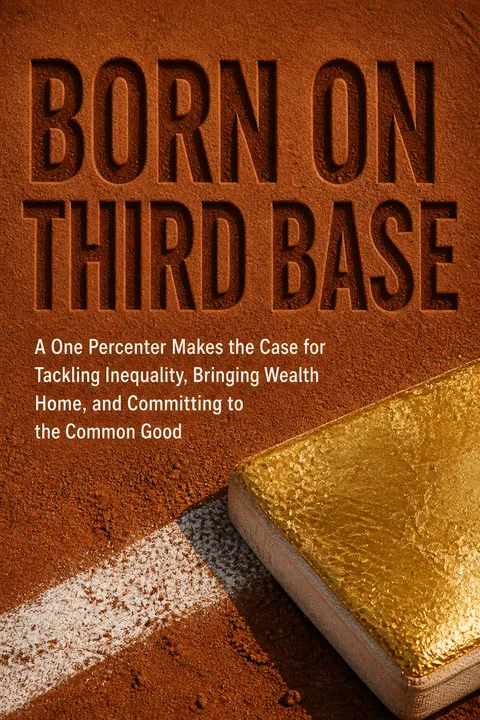

Key Takeaways
1. The myth of the self-made individual ignores the foundational role of the societal commons.
Our wealth is only as good as the commonwealth and societal investments around us.
The illusion of independence. Many wealthy individuals subscribe to the "great man theory of success," believing their fortunes are solely the result of personal grit, intelligence, and sacrifice. This narrative ignores the massive public investments that create the fertile soil for wealth creation. Without public infrastructure, legal systems, and educated workforces, private enterprises could not survive, let alone flourish.
The role of society. True wealth is co-created by the individual and the public commons. The author uses the analogy of growing a business in a stable society versus an unstable one to show how much we rely on public systems.
- Publicly funded research created the internet and GPS.
- Taxpayer-funded roads and transit systems move goods and workers.
- Public schools and universities train the workforce.
Acknowledging the debt. Recognizing this interdependence shifts the narrative from entitlement to gratitude. When successful individuals admit they did not build their fortunes alone, paying taxes becomes an act of giving back rather than a punishment. It reframes public contributions as a way to recycle opportunity for the next generation.
2. Extreme wealth inequality is a systemic crisis that harms everyone, including the ultra-rich.
All the evidence now suggests that too much inequality is bad for everyone, even the super-rich.
A fractured society. Extreme polarization of income and wealth creates a parallel universe of privilege that isolates the wealthy from the rest of humanity. This division breeds social instability, political oligarchy, and class antagonism. When wealth pools at the very top, it starves the public systems that sustain a healthy, democratic society.
The cost of isolation. The ultra-rich often live in gated communities and private enclaves, attempting to buy their way out of systemic problems. However, this isolation is a delusion that cannot protect them from broader crises.
- Ecological collapse and climate change affect all geographic regions.
- Social unrest and political instability erode economic security.
- The loss of public trust weakens democratic institutions.
A call to action. Reversing inequality is not just a matter of altruism; it is a matter of self-preservation. A highly unequal society is unsustainable and ultimately self-destructive. By working to close the wealth gap, the privileged can help build a resilient world where everyone, including their own descendants, can truly flourish.
3. Generational advantages and systemic racial barriers perpetuate an uneven playing field.
Race and class privilege dampen our empathy so that we are unable to see how these accelerating advantages accrue to us and our progeny.
The head start. The myth of meritocracy assumes that everyone begins life at the same starting line. In reality, generational wealth and class privilege act as a powerful wind at the back of affluent children, propelling them forward. Meanwhile, systemic barriers act as a constant headwind for low-income families and communities of color, compounding disadvantages over time.
Systemic racial exclusion. Historically, government wealth-building programs, such as the post-WWII GI Bill and FHA mortgages, were heavily subsidized but racially segregated. This created a massive racial wealth gap that persists across generations.
- White homeownership rates remain significantly higher than black and Latino rates.
- Generational wealth transfers allow affluent parents to subsidize down payments and college tuition.
- Redlining and discriminatory lending historically locked families of color out of appreciating real estate markets.
Unmasking the advantage. To address this divide, we must acknowledge how the deck is stacked. Privilege often acts as an anesthetic, making us blind to the systemic help we receive while blaming others for their struggles. True progress requires us to dismantle these hidden subsidies and invest in universal opportunity-building programs.
4. Traditional philanthropy often functions as a tax-sheltered distraction from systemic justice.
Funding real social change through charity is an important component of bringing wealth home, but it is a massive distraction from the full work required.
The charity trap. Many wealthy individuals believe that "giving back" through private foundations is the ultimate solution to social ills. However, the "charitable industrial complex" often serves to preserve wealth, avoid taxes, and maintain elite status. Private charity is frequently directed toward pet projects and elite institutions rather than addressing the root causes of poverty and inequality.
Taxpayer-subsidized vanity. Because charitable donations are tax-deductible, the public effectively subsidizes the philanthropic choices of the wealthy. This shifts the tax burden onto ordinary citizens while allowing the rich to dictate public priorities.
- Billions of dollars are warehoused in private foundations and donor-advised funds.
- A tiny fraction of foundation grants goes to grassroots social change.
- Many foundations spend significant sums on administrative overhead and trustee compensation.
Justice over charity. Charity is not a substitute for public investment and progressive taxation. While direct relief is necessary, it must not distract from the systemic work of rewriting the rules of the economy. True philanthropy should focus on "change, not charity," funding movements that challenge concentrated power and democratize wealth.
5. True security is found in community interdependence rather than isolated financial hoarding.
We are here to awaken from the illusion of our separateness.
The limits of money. In a highly monetized society, wealth creates the illusion of self-sufficiency. Money allows the affluent to purchase services and buffer themselves from needing others. However, this independence comes at a steep price: the loss of authentic community and the rise of social isolation and loneliness.
The power of mutual aid. True security does not lie in a massive bank account, but in a web of reciprocal relationships. When crises hit, whether economic meltdowns or climate disasters, it is our neighbors, not our financial assets, who serve as first responders.
- Resilience Circles help neighbors share resources and navigate financial stress together.
- Time exchanges and tool libraries build a vibrant local gift economy.
- Mutual aid fosters trust and reduces the shame of asking for help.
Rejoining the human family. Coming home requires the wealthy to step out of their isolated enclaves and embrace vulnerability. By participating in reciprocal gift economies, they can break down the transactional nature of their lives. True wealth is found in the aliveness of community, where we are all both givers and receivers.
6. Bringing wealth home means divesting from extractive systems and investing in local resilience.
Coming home means sharing our wealth and paying our fair share of taxes.
The extractive economy. Global financial markets are designed to extract wealth from local communities and funnel it to offshore tax havens and multinational corporations. This speculative system prioritizes short-term shareholder value over the health of people and the planet. To build a sustainable future, we must redirect our capital away from these destructive forces.
Divestment and reinvestment. The Divest-Invest movement offers a powerful pathway for individuals and institutions to align their money with their values. By pulling capital out of fossil fuels and investing in local, generative enterprises, we can build community resilience.
- Divesting from the top carbon-polluting corporations revokes their social license.
- Reinvesting in local food systems, renewable energy, and worker cooperatives.
- Moving deposits from Wall Street megabanks to local credit unions and community banks.
Generative capitalism. Bringing wealth home means supporting business models that are designed to create community wealth rather than extract it. This shift from global speculation to local investment helps close the loop on production and consumption. It ensures that capital serves the common good and builds a thriving, place-based economy.
7. Empathy and active engagement must replace class warfare and moral shaming.
Instead of a class war of shame, I advocate an appeal to common humanity and empathy.
The limits of rage. While anger at extreme inequality is understandable, a strategy based solely on class resentment and moral shaming has its limits. Shaming often causes the wealthy to withdraw, become defensive, or use their resources to fight back. To build a powerful movement for systemic change, we must proceed with empathy and invite the reachable wealthy to be partners in transformation.
A human-centered approach. The rich are not an alien race; they are subject to the same fears, conditioning, and desire for connection as everyone else. By treating them with respect and appealing to their common humanity, we can crack hearts open.
- Empathy breaks down the defensive barriers of privilege and guilt.
- Active listening allows us to understand the wounds of isolation and pressure.
- Respectful challenge invites the wealthy to align their lives with their values.
Building broad alliances. Systemic change requires a broad coalition that includes allies from the privileged classes. When wealthy individuals use their social capital and resources to support grassroots movements, they help equalize the odds against predatory systems. By replacing class war with active love and solidarity, we can accelerate the transition to a fairer world.
8. Opting out of public systems weakens the democratic institutions we all depend on.
As public services deteriorate, it becomes more rational to opt out.
The privatization of life. As wealth inequality grows, the affluent increasingly opt out of public systems, choosing private schools, private clubs, and gated communities. This withdrawal of the wealthy from the public sphere starves public institutions of both financial resources and social capital. When the most influential citizens have no personal stake in public services, those services inevitably deteriorate.
The cost of disengagement. Opting out creates a vicious cycle that leaves low-income and working-class families stranded in underfunded, failing systems. It erodes the shared spaces that foster civic trust and democratic participation.
- Public schools lose the advocacy and resources of affluent parents.
- Public parks, libraries, and transit systems suffer from disinvestment.
- The sense of shared citizenship and mutual obligation is dismantled.
Opting back in. Reclaiming the common good requires us to deepen our stake in public systems. By choosing to use and advocate for public services, the privileged can help hold these institutions to higher standards of excellence. Opting in is an act of solidarity that ensures public resources work for everyone, not just those who cannot afford to leave.
9. Reclaiming the common good requires a collective commitment to progressive taxation and systemic reform.
The estate tax is an appropriate mechanism for a wealthy person to pay back society, a means of expressing gratitude for the amazing opportunities that we have.
Systemic rules. Individual acts of charity and local mutual aid are necessary, but they cannot substitute for systemic rules that prevent the runaway concentration of wealth. To protect our democracy from becoming a hereditary oligarchy, we must implement progressive tax policies and structural reforms. This is not about punishing success, but about preserving the democratic playing field.
Tools for redistribution. A fair tax system is the most democratic way to fund the public infrastructure and opportunity-building programs that benefit all of society.
- A progressive estate tax prevents the rise of a hereditary aristocracy.
- Closing offshore tax havens and corporate loopholes ensures everyone pays their fair share.
- Taxing extreme wealth can fund debt-free higher education and universal pre-K.
A call to stewardship. Reclaiming the common good means recognizing that our private fortunes are ultimately dependent on the health of our society and planet. Paying taxes is an expression of gratitude for the fertile ground that made our success possible. By collectively committing to systemic reform, we can build a resilient, equitable world where humanity can truly flourish.
Review Summary
Download PDF
Download EPUB
.epub digital book format is ideal for reading ebooks on phones, tablets, and e-readers.








































