
Plot Summary
Blood and Redwind
In a dystopian world ravaged by climate change and genetic engineering, Dahlia, a Lace Girl bred to soothe men, witnesses her friend Maple die in childbirth. Amidst gunfire and chaos, Maple begs Dahlia to save her newborn, Spero, from The Trade's grasp. With the Redwind howling outside, Dahlia flees, clutching the infant and her grief, stepping into a world where her only certainty is danger. The blood on her hands marks the end of innocence and the beginning of a desperate journey for survival and meaning.
Escape with Hope
Guided by Maple's dying words, Dahlia finds Tomar and Lagos, two enigmatic Xin De men, at the docks. They spirit her and Spero away on a smuggling boat, leaving the only life she's known behind. The journey is fraught with fear and uncertainty, but also the first glimmers of hope—Spero, whose name means hope, is a fragile promise in Dahlia's arms. As the Redwind rages, she clings to the shanties of her childhood, mourning Maple and fearing what lies ahead.
The Bite's Sanctuary
The boat delivers them to The Bite, a secret cave town glowing with bioluminescent worms. Here, runaways and outcasts—Common, Xin De, and Endigo—find uneasy shelter. Dahlia, overwhelmed and alone, must barter for Spero's survival. Her innocence is currency, and she trades her body for formula, entering the Deep Sleep for the first time outside The Trade's rules. The sanctuary is both haven and threat, and trust is a luxury she cannot afford.
Deals and Deep Sleep
Dahlia's first exchange in The Bite is harrowing—a transaction with an Endigo man that leaves her vulnerable and violated in ways she cannot remember. Lagos intervenes violently, saving her but revealing his own monstrous nature. The lines between protector and predator blur. Dahlia's world narrows to survival, Spero's needs, and the unpredictable men who now hold her fate. The Deep Sleep, once a ritual of safety, becomes a symbol of her powerlessness.
Shadows and Secrets
As Dahlia recovers, Tomar and Lagos confront her about Spero's origins. The truth emerges: Spero is a Shadow, a genetically engineered assassin, marked from birth for The Trade's darkest purposes. The revelation binds Dahlia to the child irrevocably. She chooses to protect him, even as Lagos insists he should be killed for mercy's sake. The trio's uneasy alliance is cemented by shared secrets and the looming threat of The Trade's relentless pursuit.
The Shadow Baby Revealed
Tomar explains the fate of Shadows—children like Spero, bred for violence, controlled by magnetic fields and pain. Dahlia's horror is matched by her resolve. She claims Spero as her own, vowing to shield him from the world that would destroy him. Lagos, torn between his own engineered instincts and a growing attachment to Dahlia, becomes both guardian and threat. The group prepares to wait out the Redwind Whip, knowing their sanctuary is temporary.
New Purpose, New Bonds
Life in The Bite settles into a fragile routine. Dahlia struggles to feed Spero, forges a tentative friendship with the gruff fisherman Tide, and faces the scorn of House Girls. Her innocence and beauty set her apart, drawing both envy and desire. Tomar provides guidance and supplies, while Lagos's presence is a constant, unsettling force. Dahlia's longing for connection and belonging grows, even as she mourns Maple and fears the future.
The Rogue's Protection
Lagos's brutal nature is both a shield and a source of pain. He saves Dahlia from further harm, but his possessiveness and violence unsettle her. Their relationship simmers with unspoken desire and mutual distrust. Tomar, too, is drawn to Dahlia, his kindness tinged with jealousy. The trio's journey north is fraught with tension, as The Trade's forces close in and the lines between protector, lover, and threat blur dangerously.
Desire and Danger
In the roadhouse, Dahlia witnesses Lagos's raw sexuality and the effect he has on others. Her own desire for him grows, complicated by jealousy and fear. Tomar's feelings for her surface, leading to a painful confrontation. The group's escape is nearly thwarted by The Trade's king, but Lagos's Shadow senses save them. The journey becomes a crucible, burning away Dahlia's illusions and forging new, dangerous bonds.
Betrayal and Beating
A Shadow assassin finds them, brutally beating Dahlia and killing Tide. Lagos's rescue is as violent as the attack, and Dahlia's recovery is slow and painful. The trauma deepens her bond with Spero and complicates her feelings for Lagos, who oscillates between tenderness and cruelty. Tomar's jealousy and protectiveness reach a breaking point, and the group's unity fractures as they near the Common Community.
Recovery and Confessions
At a remote farmhouse, Dahlia and Lagos finally give in to their desire, their union both healing and fraught with the scars of their pasts. Tomar's jealousy erupts, leading to a final rupture. Dahlia's pregnancy is revealed, and the farmhouse becomes a fragile haven. Lagos's past as a Shadow haunts him, and the threat of The Trade looms ever larger. The promise of safety is shadowed by the certainty of more loss.
The Road North
The journey to the Common Community is marked by bittersweet goodbyes. Lagos and Dahlia dream of a future together, but The Trade's pursuit is relentless. In a final act of sacrifice, Lagos draws the enemy away, leaving Dahlia and Spero to safety. Tomar promises to find Lagos, but the separation is devastating. Dahlia enters the community broken but determined to survive for her child and the memory of the man she loves.
The King's Shadow
Months pass in the Common Community. Dahlia gives birth to Lagos's daughter, Wren, and raises Spero in safety. The ache of Lagos's absence is ever-present, her hope sustained by the promise of his return. Tomar reappears with news—Lagos is alive but changed, broken by his time in The Trade's compound. The reunion is fraught with pain, mistrust, and the scars of trauma, but love endures.
The Farmhouse Dream
Lagos and Dahlia, with their children, return to the farmhouse. The wounds of the past linger, but together they begin to build a new life. Lagos battles his inner darkness, haunted by his conditioning and the violence he has endured. Dahlia's love and resilience become his anchor. The farmhouse, once a symbol of hope, becomes their sanctuary—a place to heal, to love, and to dream of a future free from The Trade's reach.
The Compound's Chains
Lagos's memories of the compound—of torture, conditioning, and loss—surface in fragments. The struggle to reclaim his humanity is ongoing, his love for Dahlia both a salvation and a source of pain. The past is never far, and the threat of relapse into violence is real. Dahlia's unwavering support and the presence of their children offer hope, but the scars of the Shadow run deep.
The Return of Six
Lagos's return is marked by volatility and fear. The line between man and monster blurs as he battles the remnants of his conditioning. Dahlia's trust is tested, and the taser becomes a symbol of both her fear and her faith in him. Together, they navigate the challenges of healing, parenthood, and the ever-present threat of the outside world. Their love, forged in trauma, becomes their greatest strength.
The Taser and Trust
The farmhouse becomes a crucible for trust and healing. Lagos and Dahlia confront their fears, their desires, and the darkness within. The taser, once a weapon, becomes a tool for safety and reassurance. Their intimacy deepens, marked by vulnerability and mutual need. The walls they build—literal and emotional—are both protection and prison, but together they find a way to live, love, and hope.
Building Walls, Healing Hearts
As the years pass, Lagos and Dahlia raise their children in the farmhouse, building a life from the ruins of their past. The Redwind still howls, and danger is never far, but within their walls, love endures. Lagos, once a Shadow, finds peace in fatherhood and partnership. Dahlia, once a Lace Girl, becomes the heart of their home. Together, they prove that even in a broken world, healing and hope are possible.
Analysis
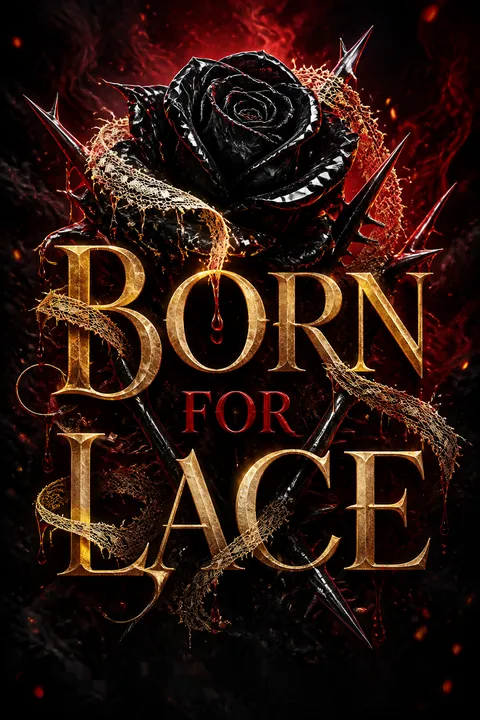
A dark romance of survival, trauma, and hopeBorn for Lace is a harrowing, sensual, and ultimately redemptive journey through a world where love is both weapon and salvation. Nicci Harris crafts a dystopia that is as psychologically rich as it is viscerally brutal, using the conventions of dark romance to interrogate power, consent, and the possibility of healing. The novel's greatest strength lies in its refusal to offer easy answers: every act of intimacy is shadowed by violence, every moment of safety is precarious, and every character is marked by loss. Yet, the story insists on the possibility of transformation—not through grand revolutions, but through the slow, painful work of building trust, forging new bonds, and reclaiming agency. The farmhouse, with its walls built stone by stone, becomes a symbol of this hard-won peace. In the end, Born for Lace is a testament to the resilience of the human spirit, the necessity of hope, and the radical power of love in a world determined to crush it.
Review Summary
People Also Read






Characters
Dahlia
Dahlia begins as a Lace Girl—bred, trained, and conditioned to soothe men in a world where women's value is transactional. Her journey is one of transformation: from passive companion to fierce protector, from innocence to hard-won wisdom. Her relationships—with Maple, Spero, Tomar, and especially Lagos—shape her evolution. Dahlia's psyche is marked by trauma, loss, and longing for belonging, but also by a stubborn hope. Her love for Spero and Lagos becomes her new Purpose, redefining her identity beyond the roles imposed by The Trade. She is both a survivor and a healer, her empathy and courage the emotional core of the story.
Lagos (Six)
Lagos is a product of The Trade's darkest ambitions—a Shadow, engineered for violence, conditioned for obedience, and haunted by trauma. His physical power is matched by emotional volatility: he is both savior and threat, lover and monster. Lagos's journey is one of painful self-discovery, as he battles the conditioning that makes him dangerous to those he loves. His relationship with Dahlia is transformative, awakening a capacity for tenderness and vulnerability he believed lost. Yet, his possessiveness and violence are never far, and his struggle for humanity is ongoing. Lagos is a study in contrasts: brutal yet gentle, feared yet yearning for love, a rogue seeking redemption.
Tomar
Tomar is a Xin De man who has chosen to help runaways escape The Trade, acting as both mentor and smuggler. His kindness and competence make him a lifeline for Dahlia, but his own desires and jealousies complicate their bond. Tomar's relationship with Lagos is brotherly but fraught, marked by shared trauma and rivalry for Dahlia's affection. His inability to fully let go of his own needs leads to betrayal and heartbreak. Tomar embodies the complexities of loyalty, love, and the cost of survival in a world where trust is dangerous.
Spero
Spero is the infant at the heart of the story—a Shadow baby, engineered to be an assassin, yet born into the arms of a woman determined to save him. He is both symbol and catalyst: hope for a different future, and a reminder of the world's cruelty. Spero's presence forces Dahlia, Lagos, and Tomar to confront their own values, fears, and capacity for love. As he grows, Spero represents the possibility of breaking the cycle of violence and control that defines The Cradle.
Maple
Maple is Dahlia's closest friend and the story's first martyr. Her death in childbirth sets the plot in motion, her final plea binding Dahlia to Spero and the path of resistance. Maple's legacy is one of questioning, of imagining a life beyond The Trade's strictures. Her influence lingers in Dahlia's choices, a voice of hope and rebellion that echoes throughout the narrative.
The Endigo Man ("The Fish")
The Endigo man represents the dangers lurking outside The Trade's order—mutated, marginalized, and desperate. His transaction with Dahlia is both a violation and a reflection of the world's transactional cruelty. His death at Lagos's hands is a turning point, exposing the thin line between savior and monster.
Sweets
Sweets is a House Girl in The Bite, embodying both the camaraderie and competition among women in a world that commodifies them. Her relationship with Dahlia is antagonistic but evolves into mutual respect. Sweets's own trauma and resilience mirror Dahlia's, and her presence highlights the different ways women navigate survival and desire.
Tide
Tide is an old fisherman in The Bite, whose initial bitterness masks a capacity for kindness. His friendship with Dahlia is hard-won and deeply affecting, offering her a sense of belonging and purpose outside her prescribed role. Tide's death is a profound loss, underscoring the story's themes of grief and the cost of connection.
Robert
Robert is the doctor in the Common Community, representing the possibility of safety and normalcy. His role is to help Dahlia and Spero transition to a new life, but his presence also raises questions about trust, belonging, and the limits of sanctuary in a broken world.
The Trade/The King
The Trade and its king are the ever-present antagonists—an impersonal force of control, violence, and dehumanization. Their reach is long, their methods ruthless, and their ideology shapes every character's fate. They are less individuals than embodiments of the world's cruelty and the obstacles to freedom and love.
Plot Devices
Dystopian World-Building
The Cradle is a meticulously constructed dystopia, defined by environmental collapse, genetic engineering, and rigid social hierarchies. The glossary and invented trades immerse readers in a society where every role is prescribed, and deviation is punished. The Redwind, the Trade's rituals, and the genetic divide between Common and Xin De create a sense of claustrophobic inevitability, heightening the stakes of every choice.
The Shadow Program
The Shadows are both plot device and metaphor—engineered assassins whose lives are defined by pain, control, and violence. Spero's identity as a Shadow baby drives the narrative, forcing characters to confront the ethics of survival, the possibility of change, and the meaning of humanity. Lagos's own history as a Shadow is revealed through flashbacks and trauma, deepening the story's psychological complexity.
The Deep Sleep and Lace Girl Rituals
The Deep Sleep, Lace Girl tea, and Companion Nights are devices that explore the boundaries of consent, agency, and the commodification of women. These rituals, meant to protect, often become tools of control and violation. Dahlia's journey is one of reclaiming agency, redefining her Purpose, and challenging the systems that bind her.
Trauma, Memory, and Healing
The narrative structure weaves present action with memories, dreams, and flashbacks, illustrating how trauma shapes identity and relationships. Healing is slow, nonlinear, and often painful. The farmhouse, the bunker, and the act of building walls become metaphors for the work of recovery—both individual and collective.
Love as Resistance
In a world designed to suppress individuality and connection, love becomes an act of defiance. The romance between Dahlia and Lagos is fraught, messy, and often violent, but it is also a source of hope and transformation. Their union challenges the logic of The Trade, offering a vision of healing and possibility that is both hard-won and fragile.
Foreshadowing and Cyclical Structure
The story is rich with foreshadowing—Maple's warnings, the recurring motif of "one little death," the ever-present Redwind. The cyclical structure—beginning and ending with flight, loss, and the search for sanctuary—reinforces the sense that healing is ongoing, and that every ending is also a beginning.
Download PDF
Download EPUB
.epub digital book format is ideal for reading ebooks on phones, tablets, and e-readers.








































