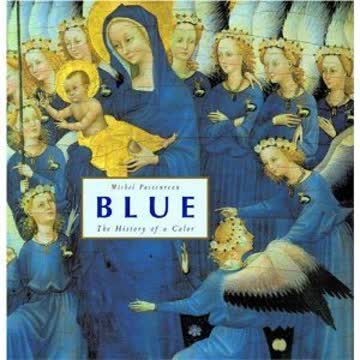
Key Takeaways
1. Color is a Social Construct, Not a Universal Truth
Color is a natural phenomenon, of course, but it is also a complex cultural construct that resists generalization and, indeed, analysis itself.
Cultural lens. The perception and meaning of color are not inherent or universal, but deeply shaped by society. Historians must approach color as a social phenomenon, recognizing that its significance is defined by cultural codes, values, and uses, rather than by biology or universal archetypes.
Historical challenges. Studying color historically is complex due to documentation issues, methodological hurdles, and epistemological traps. Colors from the past are altered by time, viewed under different light, and often perceived through modern black-and-white photographic biases.
Anachronism risk. Projecting modern color definitions onto past societies leads to anachronistic analysis. For instance, black and white were once separate from other colors, the spectrum was unknown before the 17th century, and primary/secondary color notions emerged gradually. In the Middle Ages, blue was even considered a warm color.
2. Blue's Ancient Scorn: From Barbarian to Second-Rate
The modest role played by blue in ancient societies and the difficulties many ancient languages have in even naming it caused many nineteenth-century researchers to wonder if the men and women of antiquity could see the color, or at least see it as we do.
Marginal status. For millennia, from prehistory to the High Middle Ages, blue held a secondary position in Western cultures. It was largely absent from prehistoric art, Neolithic dyeing, and played a minimal role in social life, religious practice, or artistic creation compared to red, white, and black.
Linguistic ambiguity. Ancient Greek and Latin lacked precise, consistent terms for blue, unlike the clear designations for red, white, and black. Words like kyaneos could mean bright blue or funeral black, while glaukos referred to gray, blue, yellow, or brown, often denoting weakness of color rather than a specific hue.
Roman hostility. The Romans, even more than the Greeks, disdained blue, associating it with barbarians and mourning. They used it sparingly, considering it a dark, troubling color. Having blue eyes was seen as a physical deformity or a sign of bad character, often caricatured in theater.
3. The Virgin Mary Ignites Blue's Meteoric Rise
Beginning in the twelfth century, the improved status of blue was made most evident by its prominence in images of the Virgin Mary, notably in her robes.
Marian blue. The 12th century marked a dramatic shift, as blue rapidly became an aristocratic and fashionable color, largely due to its association with the Virgin Mary. Before this, Mary was depicted in various dark colors signifying grief, but her robes gradually became brighter, luminous blue.
Divine illumination. This limpid blue, perfected in stained glass at sites like Saint-Denis and Chartres around 1140, embodied a new theology of light. It symbolized divine light and presence, often paired with gold, spreading its prestige across painting, enamels, and manuscript illumination.
Royal adoption. By the early 13th century, blue's prestige was such that important religious and historical figures, including Saint Louis (Louis IX), began to be portrayed in blue garments, a trend unthinkable generations prior. This cemented blue's status as a color of sanctity and divinity.
4. Royal Endorsement and Dyeing Innovations Elevate Blue
The French king was the only one in the West to have blue in his coat of arms at this period.
Heraldic triumph. Blue's ascent is quantifiable through heraldry, where its presence in coats of arms surged from 5% around 1200 to 30% by 1400. The French monarchy, with its "d'azur semé de fleurs de lis d'or" (blue field with gold fleurs-de-lis), played a crucial role in popularizing blue.
Technical advancements. The 13th century saw significant progress in dyeing techniques, particularly with woad, allowing for stable, bright, and deep blue tones previously unattainable. This industrial-scale production of woad, or pastel, made blue fabrics accessible and desirable.
Economic shifts. The new fashion for blue led to fierce conflicts between woad (blue) and madder (red) dyers, with red dyers even attempting to demonize blue by depicting blue devils. Despite resistance, blue gradually supplanted red in fabric and clothing, enriching blue dyers and transforming the textile industry.
5. The Medieval Taboo Against Mixing Colors
Before the fifteenth century, not a single collection of recipes for color production—either for dyeing or for painting— explains that green is obtained by combining blue and yellow.
Natural order. Medieval culture inherited a strong aversion to mixing colors, viewing it as a violation of the Creator's natural order. Artisans like dyers were hesitant to combine pigments directly to create new hues, preferring juxtaposition or superimposition.
"Color blindness". For medieval people, who lacked knowledge of the color spectrum, blue and yellow were perceived as ideologically and symbolically distant. Green was produced from naturally green pigments or by non-mixing treatments, not by combining blue and yellow.
Dyer specialization. Professional regulations strictly compartmentalized dyers by color and material. "Red dyers" (using mordants) and "blue dyers" (often without mordants) operated separately, making the direct mixing of blue and yellow dyes in a single workshop forbidden and materially difficult.
6. The Reformation Forges Blue's Moral Identity
The Protestant Reformation viewed the latter black as the most dignified, virtuous, and Christian of colors; to it the Protestants gradually assimilated blue—an honest and temperate color evoking the sky and the spirit.
Chromoclasm. The Protestant Reformation, alongside its iconoclasm, launched a "chromoclasm" against vivid, rich colors in churches and daily life. Red, symbolizing luxury and sin, was particularly loathed, while sober colors like black, gray, and brown were favored.
Austerity in dress. Protestant moral codes promoted extreme sartorial austerity, rejecting excess, makeup, and changing fashions. Clothing was seen as a sign of humanity's fallen state, demanding simplicity and humility.
Blue's acceptance. Initially, blue was permitted only in faded or sober tones, but by the late 16th century, it definitively joined the "honest" colors. This moral endorsement, alongside black, solidified blue's place as a dignified and virtuous hue, contrasting with the "papist pomp" of Catholic art.
7. Newton's Spectrum and the Scientific Validation of Blue
In 1666 Newton began his famous experiments with the prism, separating white light into colored rays and thereby discovering the spectrum.
Scientific revolution. Newton's discovery of the spectrum in 1666 fundamentally reshaped the understanding of color. It scientifically excluded black and white from the color order and shifted the traditional hierarchy, placing blue and green at the center, rather than red.
Measurable color. Newton demonstrated that color, like light, could be measured, ushering in the era of colorimetry. This led to an explosion of chromatic scales, charts, and norms, making color seem "mastered" and stripping it of much of its mystery.
Prussian blue. The early 18th century saw the accidental creation of Prussian blue, an artificial pigment offering subtle, dark, and reflective blue-green shades. This new pigment, initially commercialized as "Berlin blue," transformed painters' palettes for centuries, despite its instability to strong light and alkalis.
8. Romanticism and Revolution: Blue Becomes a Symbol of Emotion and Nation
The Romantic movement had a special devotion to this color, particularly in Germany.
Werther's influence. The 18th century cemented blue as Europe's favorite color, amplified by the Romantic movement. Goethe's The Sorrows of Young Werther (1774) popularized the "Werther blue" frock coat and yellow breeches, making blue an emblem of love, melancholy, and dreams.
National identity. In France, the Revolution transformed blue into a national, military, and political color. The tricolor cockade, born in July 1789, combined royal white with Parisian blue and red, eventually leading to the definitive French flag with blue closest to the pole.
Political spectrum. Revolutionary blue became the color of republican soldiers and, over time, evolved to represent moderate republicans, centrists, and even conservatives. This political blue contrasted with royalist white and, later, socialist red, establishing a lasting chromatic political language.
9. From Uniforms to Jeans: Blue's Twentieth-Century Ubiquity
Blue owes its smashing victory over the other colors in Western dress for the past two, three, or even four generations in large part to jeans.
Navy blue's triumph. By the late 18th century, blue was a common clothing color, and its dominance surged in the 20th century, particularly with the rise of navy blue. Many uniforms—sailors, police, soldiers—shifted from black to navy blue between 1910 and 1950, a trend soon imitated by civilians.
The birth of jeans. Levi Strauss, in mid-19th century San Francisco, created durable canvas pants for pioneers. By the 1860s, he replaced canvas with indigo-dyed denim, giving birth to blue jeans. The name "jeans" derived from "Genoa," where similar fabrics were made.
Cultural icon. Jeans, initially utilitarian workwear, evolved into leisure clothing, adopted by wealthy tourists, students, and eventually women. Post-WWII, they became a symbol of youthful dissent and freedom in Western Europe, and later, of Western values in communist countries. Despite fashion changes, blue remains their dominant color.
10. Blue Today: The West's Favorite, Peaceful, and Neutral Color
One even has the impression that blue is so popular because it is less symbolically “marked” than other colors (notably red, green, white, or black).
Unrivaled popularity. Blue is overwhelmingly the West's favorite color, consistently chosen by over half the population in polls, far surpassing green, white, and red. This preference spans genders, social classes, and professions, indicating a deep-seated cultural affinity.
Neutral and calming. Blue's popularity stems partly from its perceived neutrality and lack of aggressive symbolism. It is seen as calm, distant, and pacifying, making it suitable for hospital walls, tranquilizing drug packaging, and political consensus.
Global emblem. Major international organizations like the UN, UNESCO, and the European Union have adopted blue as their emblematic color, reflecting its association with peace and understanding. UN soldiers are known as "blue helmets," symbolizing their peacekeeping mission.
Cold association. While historically considered a warm color, blue gradually "cooled" in perception, becoming definitively associated with coldness and water by the 19th century. This modern association is a testament to how cultural conventions shape color perception over time.
Last updated:
Review Summary
Blue by Michel Pastoureau traces the color's journey from obscurity to dominance in Western culture. Ancient Greeks and Romans largely ignored or disdained blue, associating it with barbarians. The color gained prominence in medieval Europe through religious art, particularly depictions of the Virgin Mary, and royal heraldry. Pastoureau examines blue's rise through dye production (woad versus indigo), sumptuary laws, and changing social meanings. Today, blue is the world's most popular color. Reviewers praise the book's fascinating insights and illustrations, though some critique its Eurocentric focus and brevity on certain topics.