
Key Takeaways
1. Black Communities Function as Internal Colonies
Black people are legal citizens of the United States with, for the most part, the same legal rights as other citizens. Yet they stand as colonial subjects in relation to the white society.
Colonial analogy. Racism in America, both individual and institutional, creates a colonial relationship where black communities are exploited and controlled by the larger white society. This internal colonialism manifests politically, economically, and socially, mirroring classic colonial dynamics.
Systemic exploitation. Politically, decisions affecting black lives are made by a monolithic "white power structure," often through "indirect rule" via co-opted black leaders who serve white interests. Economically, external exploiters drain resources from the ghetto, charging exorbitant prices for poor goods and denying fair access to credit and business loans, perpetuating a cycle of poverty.
Social degradation. Socially, colonialism relegates black people to an inferior status, fostering self-doubt and self-hatred. This is reinforced by a white society that historically denied black contributions and expected black people to assimilate by rejecting their heritage, thereby depriving the black community of its potential skills and leadership.
2. Reclaiming Identity: Defining Blackness on Our Own Terms
Black people must redefine themselves, and only they can do that.
Cultural terrorism. Black people must reclaim their history and identity from "cultural terrorism" and the "depredation of self-justifying white guilt." This involves asserting their own definitions, rejecting derogatory terms like "Negro," and embracing "African-American" or "black people" to foster a positive self-image.
New consciousness. This redefinition cultivates a "sense of peoplehood," pride in blackness, and communal responsibility. It means recognizing a history predating slavery, rooted in Africa, to counter the narrative that black people had no culture or heritage before their forced arrival in America.
Global connection. A clear understanding of black identity also reveals a common bond with African brothers and other colored peoples worldwide who have experienced white supremacy. This shared experience positions African-Americans as a potential "bridge between the West and Africa-Asia," united in the goal to "deniggerize" the earth.
3. Black Power: Group Solidarity as a Prerequisite for True Participation
The concept of Black Power rests on a fundamental premise: Before a group can enter the open society, it must first close ranks.
Group strength. Black Power is a call for black people to unite, recognize their heritage, and build a sense of community, leading their own organizations and defining their own goals. This group solidarity is essential for operating from a position of strength in a pluralistic society, much like other ethnic groups have done.
Self-determination. It means black people controlling their own communities, making decisions that affect their daily lives, and achieving proper representation where they are a minority. This is not about merely putting black faces in office, but ensuring that power emanates from the black community itself, making politicians accountable to their constituents.
Rejecting "black racism" accusations. The concept is not "racism in reverse" or "black supremacy," as racism involves subjugation. Black Power aims for full participation and recognition of black virtues, not the oppression of others. The need for black-run organizations is a legitimate response to historical group oppression, not an act of racial exclusion.
4. The Illusions of Coalition: Why Traditional Alliances Fail Black Interests
The major mistake made by exponents of the coalition theory is that they advocate alliances with groups which have never had as their central goal the necessarily total revamping of the society.
Misaligned interests. Traditional coalition theory often assumes identical interests between black people and liberal, labor, or reform groups, but these groups typically accept the existing American system and seek only marginal reforms. Such reforms are insufficient to dismantle systemic racism, as these "allies" often view the racial scene through a lens of white superiority and Anglo-conformity.
Insecure partners. Coalitions between politically and economically secure groups (like white labor unions or political machines) and insecure black communities are inherently unstable. Historically, white allies have prioritized their own interests, often at the expense of black progress, as seen in the Populist movement or Chicago's Democratic machine, where black political support yielded minimal benefits.
Self-interest over morality. Political relations are fundamentally based on self-interest, not moral appeals or sentiment. Relying on the "good will" of allies is precarious, as morality often falters when conflicts of interest arise. Black people must build independent power bases to ensure their interests are respected and to impose sanctions if allies withdraw support.
5. Building Independent Political Power: Lessons from Mississippi
The major moral of that experience was not merely that the national conscience was generally unreliable but that, very specifically, black people in Mississippi and throughout this country could not rely on their so-called allies.
Betrayal at Atlantic City. The Mississippi Freedom Democratic Party (MFDP) at the 1964 Democratic Convention exposed the unreliability of white liberal allies. Despite overwhelming evidence of the regular Mississippi Democratic Party's racism and the MFDP's legitimacy, the national party, under White House pressure, offered a token "compromise" that betrayed the MFDP's goal of replacing the racist state party.
Powerlessness exposed. The MFDP's experience demonstrated that without an independent power base, black people were cast in a "beggar's role," appealing to conscience rather than negotiating from strength. The national party's decision to uphold the racist state party, which openly supported segregation, underscored the bankruptcy of the Establishment and the futility of relying on external forces.
Genesis of independent action. This betrayal led to the realization that black people must organize independently. The Lowndes County Freedom Organization (LCFO) in Alabama, formed shortly after, explicitly rejected dependence on the national Democratic Party. This marked a crucial shift towards building new, self-determined political structures outside traditional party lines.
6. Beyond Deference: The Imperative of Black Political Control in Local Governance
The black people have nothing to prove to the whites; the burden is on the whites to prove that they are civilized enough to live in the community and to share in its governance.
Politics of deference. In Tuskegee, Alabama, a black majority with high educational and economic status historically practiced a "politics of deference," avoiding direct political challenge to the white minority. This approach, influenced by Booker T. Washington's philosophy, assumed that white acceptance would follow black "worthiness," but instead led to continued political subordination.
Economic power insufficient. The 1957 gerrymander of Tuskegee, which excluded 420 black voters, revealed the limits of economic independence without political power. Despite a successful black economic boycott that crippled white businesses, political control remained with whites, demonstrating their willingness to suffer economic disaster rather than concede political power.
Challenging the status quo. The election of Lucius Amerson as sheriff in 1966, despite opposition from the black "establishment," signaled a move away from deference. However, white power structures immediately sought to undermine his authority. This highlights the need for black communities to not only elect their own but also to consolidate power to ensure effective governance, rather than merely "speaking out" from a position of weakness.
7. Urban Ghettos: Dynamite Fueled by Systemic Failure
This country, with its pervasive institutional racism, has itself created socially undesirable conditions; it merely perpetuates those conditions when it lays the blame on people who, through whatever means at their disposal, seek to strike out at the conditions.
Urban crisis. American cities, increasingly dominated by black populations, face a profound crisis rooted in institutional racism. Black migration to the North, driven by southern oppression and industrial demand, led to severe overcrowding in dilapidated ghettos, skyrocketing rents, and a daily struggle for jobs and adequate education.
Vicious cycle. The core problem is a vicious cycle of inadequate housing, ill-paying jobs, and poor education. Urban renewal often displaces black residents into more congested areas, while segregated schools perpetuate educational crippling. This systemic failure leaves black youth with limited opportunities, contributing to high unemployment, family breakdown, and a cycle of poverty.
Explosive conditions. These conditions create "dynamite in the ghettos," leading to eruptions of frustration and despair. Blaming "outside agitators" or "Black Power" for these disturbances ignores the root cause: white racism and indifference. Temporary measures and "managing the effects" rather than addressing systemic issues only buy time, failing to cool the simmering anger of an oppressed people.
8. The Search for New Forms: Community Control Over Institutions
We must begin to think and operate in terms of entirely new and substantially different forms of expression.
Beyond traditional structures. Solving ghetto problems requires abandoning outmoded structures and institutions, including political parties that merely "manage conflict" and educational systems that cripple black children. Black people must organize independently, making demands without regard for traditional "respectability" that has proven insufficient.
Local empowerment. This means black communities taking actual control of their local institutions.
- Schools: Black parents should control hiring, firing, curriculum, and standards, ensuring that principals and teachers are black to provide positive role models and culturally relevant education. The I.S. 201 struggle in New York City exemplified this shift from integration to community control.
- Housing: Tenant unions should demand repairs, with the ultimate goal of forfeiting absentee slumlords' rights and transferring ownership to black community organizations.
- Economy: A "community rebate plan" would require merchants to reinvest a significant portion of their profits back into the black community, or face boycotts.
New political dignity. Independent political parties and candidates, like Sammy Rayner in Chicago, can challenge white-controlled machines and establish a new political dignity. This defiance threatens the status quo and can lead to a new political force, potentially creating the first truly legitimate political parties responsive to community needs.
9. Rejecting Welfare Colonialism and Tokenism: True Liberation Demands Control
Our basic premise is that money and jobs are not the final answer to the black man’s problems.
Beyond pacification. Federal programs, often termed "welfare colonialism," are frequently designed for pacification rather than genuine solutions. While poverty is a harsh reality, the ultimate goal is not merely to be recipients of aid but active participants in decision-making at all levels.
Control, not handouts. Any federal program intended for black people is doomed to fail if blacks do not control it. The government will not "give" blacks everything they need economically unless black people have the power to demand it. The rising black consciousness should lead to a rejection of doles that perpetuate dependency.
Disillusionment as education. Experience with federal programs, like the MFDP's struggle, can unintentionally educate black people about the American system's limitations, fostering disillusionment that breeds a new consciousness. This sophistication leads to a rejection of existing rules and a determination to create new ones.
10. The African Revolution: A Global Struggle for Self-Determination
It must be understood that liberation movements in Africa, the struggle of Black Power in America or in any other part of the world can only find consummation in the political unification of Africa, the home of People of African descent throughout the world.
Universal demands. The current historical period is defined by oppressed peoples worldwide demanding freedom from oppression. These demands, part of the ongoing process of modernization, will not be silenced by force or soft talk, and are often misunderstood by oppressors.
Modernization, not moderation. Black Power advocates clarify that advanced technology and a rising GDP are not the sole indices of civilization. They push for modernization in human and political relations, puncturing old theories and approaches. This requires a bold readiness to be "out of order" and challenge the prevailing social order.
Pan-African unity. The African struggle in the U.S. is inextricably linked to the broader African Revolution. Pan-Africanism, the total liberation and unification of Africa under scientific socialism, is the ultimate consummation of Black Power. This global perspective recognizes that all people of African descent belong to the African nation, and their struggles are interconnected, from Watts to Soweto.
Review Summary
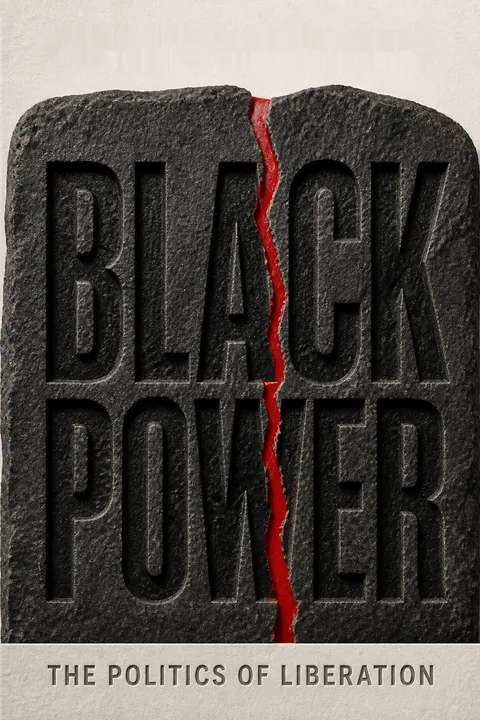
Black Power receives overwhelmingly positive reviews (4.37/5) for its analysis of institutional racism and political strategy. Readers praise its relevance despite being published in 1967, noting how issues discussed remain current. The book advocates for Black self-determination, community control, and building independent power bases before entering coalitions. Reviewers appreciate its critique of integration as reinforcing white supremacy, examination of coalition politics, and case studies from Mississippi and Alabama. Some criticize the lack of women's perspectives and solutions, but most consider it essential reading for understanding systemic racism and liberation movements.
People Also Read







Download PDF
Download EPUB
.epub digital book format is ideal for reading ebooks on phones, tablets, and e-readers.








































