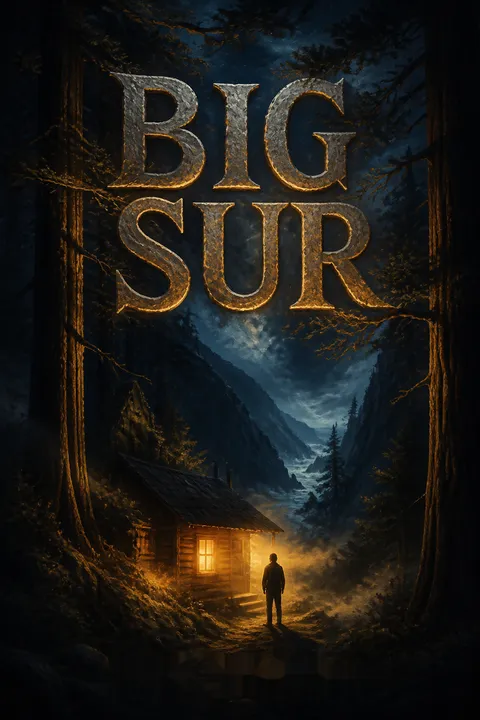

Plot Summary
Skid Row Beginnings
The story opens with Jack Duluoz—Kerouac's alter-ego—awakening dejected and hungover in a seedy San Francisco hotel. The "King of the Beatniks," he's overwhelmed by unending pressures of fame—hounded by admirers, reporters, and hangers-on. Seeking anonymity, he's failed even in his attempted "secret" return, having drunkenly stumbled into City Lights Bookstore, scuttling plans for a quiet arrival. Kerouac paints a portrait of a man seeking relief from the demands of expectation, haunted by exhaustion, and numbed by alcohol, his once-exhilarating journeys now weighted with years and notoriety. The city is oppressively loud and full of ghosts; Duluoz can hardly remember why he ever thought he could escape anything at all.
Secret Big Sur Escape
After a heavy night, Duluoz prepares to flee to solitude: his rucksack is lovingly packed by his mother, symbolizing a hopeful, if naïve, intention to pull himself together. He's supposed to be whisked away to a friend's secluded Big Sur cabin for a six-week retreat. But even this small hope gets derailed by his inability to break free from city temptations; his raucous city entrance foreshadows trouble, underscoring his lack of control over his own narrative. This departure, fueled by desperation for calm and withdrawal from relentless public attention, is both a literal and existential crossing: a journey out of public iconhood toward the uncertain territory of self.
Canyon Night Fears
Alone at night in the wild, Duluoz stumbles through the canyon toward the Big Sur cabin, beset by intense natural sounds—a disorienting ocean, a howling wind, the ominous quiet—compelled onward by only his weak lantern. The trek is existential as much as physical: the peril and darkness externalize his inner turmoil, alcoholism, and fraught search for redemption. Everything in the landscape becomes threatening or foreign, and Duluoz's mind multiplies its own dread. Nature overwhelms him; his comfort with self is now as contingent as his footing on the dark, steep road.
First Solitude and Peace
At first, Duluoz finds comfort in the cabin's isolation. He finds rhythm in daily chores—sewing sleeping bags, tending the fire, reading by lamplight, and making meals. There's a meditative slowness here; gentle cycles of creek and fog calm his busy mind. He listens to the sea at night, makes peace with the surrounding animals, and writes poems about the waves—moments of simplicity amid the chaos of his city life. The cabin becomes the sanctuary he sought, fleeting as it is—the first tranquil retreat since his rise to fame.
Cabin Rituals and Nature
Duluoz, now alone, discovers the richness of ordinary things: cheap utensils, a favorite sweater, meticulous cabin chores. He observes the cycles of nature and animals—feeding a mule, watching raccoons and bluejays, listening to the creek. The past looms; he reflects on the valley's ancientness, the transience of human life, the enduring reality of sky and sea. Such moments offer a glimpse of the peace he craves. The landscape's vast indifference is both comfort and terror, pointing toward an acceptance of one's smallness in the world.
Doubt, Boredom, and Vision
Quickly, days of serenity give way to boredom, doubt, and vague dread. Duluoz feels the limits of his own mind: the woods, at first liberating, now press heavily, their silence unnerving. He wrestles with Emerson and the idea of self-reliance but feels both empowered and ultimately isolated. Writing becomes obsessive, his "Sea" poem an attempt to ward off madness; the act of chronicling nature is less inspired than forced, revealing cracks in his mental stability. Even beauty now has a sinister edge.
Return to Frisco Chaos
Restlessness, nostalgia for human connection, and unease about his own mind push Duluoz back to San Francisco. The hitchhiking journey is physically punishing—blistered feet test his resolve and humility. The flow of tourists, oblivious to his need, leave him stranded and rejected, a would-be wayfarer out of place in a changing, indifferent America. City life, once a source of anguish, now feels like a necessary escape from the abyss of the woods.
Death of Tyke
On returning, Duluoz receives word of his beloved cat Tyke's death—news delivered by his mother's heartbroken letter. The loss devastates him, as Tyke represented innocence, childlike love, and connection to his lost brother. The death is the catalyst that deepens his depression, stirs childhood trauma, and sets him spinning further into alienation. He seeks solace in friends and drink, but the wound seeps into everything—a stark confrontation with mortality and helplessness.
Old Friends and Memories
Duluoz reconnects with old companions—Fagan, Dave Wain, Cody—each weighted with their own histories, literary aspirations, and personal griefs. Their gatherings blend joy, nostalgia, and sadness; shared tales and inside jokes obscure deeper loneliness. Drinking resumes. The city's Beat scene is both refuge and trap, a self-perpetuating cycle. Every old bond is carefully unravelled and rewound over rounds of booze, laughter, and confessions, but the darkness undercuts even the lightest moments.
Back on the Road
Forced into motion again, Duluoz joins Dave and others for visits to Cody and group road trips: nights of madcap driving, philosophical debates, and reunions in city apartments and country cabins. These journeys, colored by laughter and storytelling, underscore the richness of friendship but also amplify a sense of being out of time—adventurers now grown old, mythologized, yet emotionally adrift. Every encounter adds to Duluoz's swelling sense of futility amidst fleeting joys.
Parties, Poetry, and Madness
Communal living, drinking, and poetry readings—some of America's best young poets and wildest thinkers—quickly descend into mayhem. Duluoz's role as both participant and observer leaves him simultaneously inside and estranged. Surrounded by old friends, wild newcomers, and the naive Ron Blake, everyday debauchery is interrupted by moments of aching, existential solitude. The culture that once offered identity now feels clangorous and unsustainable, spiraling him further into anxiety.
New Love, Billie
Enter Billie: beautiful, sad, resonant with promises of love and salvation. Their relationship, drawn in by mutual loneliness, quickly becomes a tempest—passionate, desperate, and doomed. Billie's world is as tumultuous as Duluoz's own, full of troubled friends and emotional need. For a moment, intimacy feels redemptive, but soon the chaos of their combined wounds reigns. Living with her and her son in the city breeds jealousy, suspicion, and deep unease—the hope of love yields to confusion and fear.
Billie's World, Perry's Madness
Billie's world is peopled by dangerous, beautiful, and damaged souls—especially Perry, an ex-con, whose disturbing confessions and erratic behavior unsettle Duluoz. Suspicion and paranoia bloom: he feels watched, manipulated, even endangered by mysterious "plots" involving her friends. Reality blurs as jealousy, erotic tension, and fear converge. The city, once again, is labyrinthine and threatening, with every relationship fraught and nothing offering stable ground.
Disintegration and Paranoia
As the bingeing continues, Duluoz's mind unravels. He is haunted by guilt about the deaths of animals—goldfish, mice, the otter at Big Sur, and Tyke—and convinced he poisons what he loves. The world is full of signs and omens; friends become sources of fear. A return trip to the cabin with Billie, her son Elliott, Dave, and Romana, intended as a fresh start, only brings his ghosts back for a final dance. Healthy routines dissolve; every attempt at normalcy spirals quickly into dread.
Night of Madness and Visions
In Big Sur's darkness, under the full moon, Duluoz's psyche collapses. Insomnia, shaking, sweating, racing thoughts, and intrusive voices beset him. He suspects everyone—friends, lovers, child—of conspiracies. Fantastical and terrifying visions assault him: vultures, monsters, psychiatric delusions, and a profound fear of death. Desperate for relief, he experiences an intense vision of the Cross, blending his Catholic upbringing with moments of numinous terror and pleading for salvation.
Dawn and Recovery
After a night of hallucinations and incoherence, Duluoz is granted, at dawn, a moment of inexplicable grace. Just a brief nap in the sun, silent friends nearby, and the chattering birds restore a sliver of peace; the world feels golden and possible again. The madness is partially dispelled—not vanquished, but temporarily relieved. The terrible tension breaks; the group prepares to leave, and Duluoz senses hope. There is forgiveness, relief, but also acceptance of limits—his and the world's.
Final Farewells, Final Hope
The journey ends in quiet optimism. Duluoz will return home, to his mother, to the humble shrine of Tyke's grave. He will leave behind the city, the canyon, lost lovers, and friends. The golden eternity of nature, the swirl of human frailty, all are woven together in his mind. "Something good will come out of all things yet." The affirmation is small and shaky, but hard-won. The final poem "SEA"—fragmentary, incantatory—attests to survival: writing, being, enduring, even through pain.
Analysis
Big Sur is Kerouac's confession of overwhelm, loss, and fleeting redemption—a narrative of a man destroyed by both fame and the unreal expectation to sustain joy and art
The novel is less a story than an exposed nerve: its cyclical structure, delivered in breathless prose, mimics the looping, anxious mind of its protagonist. Big Sur is a reckoning with time: the Beat Generation's mythos is already dissolving, and Kerouac asks whether there is any peace left for those who once ran wild but are now haunted by death, guilt, and memory. Nature, once an open road, is now a source of awe and existential terror. The book's harrowing depiction of alcohol-induced madness and recovery prefigures contemporary views of mental health and addiction, deglamorizing the "romance" of self-destruction. The friendship and love on display are real but cannot save anyone; solitude is both necessary and perilous. At its end, Big Sur offers no grand resolution, only a wary hope—a quiet affirmation that something good can still grow from ruin, that small, honest moments of love or acceptance might be enough. For modern readers, Big Sur asks what to do with the pain of living, how to forgive oneself, and how to settle for fragile, fleeting beauty in an unrelenting world.
Review Summary
Reviewers largely praise Big Sur as one of Kerouac's most honest and powerful works, contrasting sharply with the youthful exuberance of On the Road. Many consider it a harrowing yet compelling portrait of alcoholism, fame's destructive toll, and mental deterioration. Standout elements include vivid descriptions of the California coastline, unflinching depictions of delirium tremens, and raw emotional vulnerability. Critics note the unconvincing hopeful ending, while detractors find the rambling stream-of-consciousness style tedious. Most agree it works best when read alongside his earlier novels.
People Also Read

Characters
Jack Duluoz / Jack Kerouac
Duluoz is Kerouac's literary double: an exhausted, middle-aged man crushed by the mythic role foisted on him by fame as "King of the Beats." He is deeply sensitive, nostalgic, self-critical, and wracked by guilt and self-loathing. Alcohol is both his mask and his poison; it has become entwined with his creative process, but accelerates his psychic decay. He is terrified by both loneliness and company, searching for innocence, meaning, and comfort even as he creates chaos and pain. His arc is a cycle: escape, fleeting peace, collapse, and a glimpse of renewal.
Lorenzo Monsanto (Lawrence Ferlinghetti)
Monsanto is the generous, steady poet and bookseller who offers Duluoz the use of his Big Sur cabin. As a mentor and facilitator, he represents rationality, kindness, and the possibility of sanctuary. Yet, even he is ultimately unable to protect Duluoz from himself; his invitations to peace are subverted by Jack's compulsions and the interfering world. He is a gentle realist, seeing through to Duluoz's suffering and seeking practical solutions.
Dave Wain
Dave is a talkative, energetic, and indulgent companion, much like Kerouac's actual friend Neal Cassady. He delights in travel, good food, and philosophical conversation, always ready for adventure. Dave is loyal, but sets his own pace, sometimes enabling Duluoz's bingeing while also trying to show him the joys of action over brooding. His company exposes the fine line between camaraderie and destructive hedonism.
Cody Pomeray (Neal Cassady)
Cody is Duluoz's most beloved friend, a force of energy and kinetic wisdom, now quieter after being changed by imprisonment and fatherhood. He has an authenticity and directness that cut through the artifice of Beat celebrity, yet is also caught between old wildness and new domesticity. His relationship with Duluoz is brotherly, sometimes competitive, and always nuanced—a model of male intimacy filled with longing and inevitability.
Billie
Billie is the archetypal troubled muse: beautiful, emotionally volatile, deeply wounded, with a tender but manipulative touch. She offers Duluoz the hope of redemption through erotic love and family life, but her own psychological complexity—her son Elliott, her ex-con friends, her penchant for drama—entangle Duluoz further. In their turbulent affair, Billie becomes both a mirror of his instability and a trigger for his collapse, ultimately embodying the unattainable peace he craves.
Ben Fagan
Fagan is a quiet poet and confidant, more grounded than most of the Beat circle. He functions as an anchor for Duluoz during breakdowns, knowing when to intervene and when to silently witness. His approach to life blends compassion, irony, and patience—the gentle, stable wisdom against which Duluoz's turmoil is thrown into starkest relief.
Perry Yturbide
Perry is an intense young ex-con, part poet and part outlaw, whose confusion and violence are both seductive and threatening. He keeps company with Billie and her dangerous crowd, representing the emotional and literal dangers at the fringes of Beat life. Perry's destructive longing and vulnerability mirror Duluoz's self-destructive impulses, revealing a generation's struggle with authority and belonging.
Arthur Ma
A loyal friend, Arthur is always drawing and debating in improvisational Zen dialogues with Duluoz. A symbol of Eastern wisdom, innocence, and adaptability, he represents a possible harmony with life's absurdities—a lighter, more playful counterpoint to the narrative's heaviness.
Evelyn
Cody's wife, Evelyn, has endured heartbreak, chaos, and jealousy with remarkable forbearance. She is both confidante and rival to Billie, symbolizing stability and the possibility of family life for Duluoz. She is insightful about men's failings and women's endurance and is the unacknowledged emotional backbone of their circle.
Elliott
Billie's young son, Elliott, is a child caught in the vortex of adult madness, his persistent questions and needs both a source of innocent hope and a catalyst for emotional crisis. He embodies the next generation, the urgent need for care, and the inescapable presence of consequence.
Plot Devices
Fractured First-Person Narrative
The story is told in a relentless, stream-of-consciousness monologue, erasing boundary between memory and immediate sensation. Kerouac's Duluoz both recounts and relives events with no filter, self-mythologizing even as he is deconstructing the myth. The style fuses rambling poetry with raw confession—a literary device imitating the fracturing of Duluoz/Kerouac's mind.
Nature as Mirror of Mind
Big Sur's wild, indifferent terrain is omnipresent: fog, ocean, wind, and forest amplify Duluoz's shifting moods. Nature becomes, by turns, sanctuary and threat, as his mind oscillates between peace and breakdown. The ebb and flow of natural elements become metaphors for impermanence, mortality, and the search for spiritual meaning.
Motifs of Return and Escape
The book is structured as a series of escapes and reluctant returns—city to coast, crowds to seclusion, friend to lover to friend again. Each movement promises release, but every sanctuary proves temporary, and Duluoz's greatest struggle is always within himself.
Repeated Foreshadowing of Collapse
From the opening, the narrative is littered with warnings—drunken mishaps, ominous dreams, animal deaths, and dark premonitions. These recurring elements slowly build a sense of inevitable breakdown—both personal and generational. Even moments of joy are shadowed by a foreboding that underlines the narrative arc.
Symbolism of Animals and Death
Mice, burros, otters, bluejays and ultimately Tyke the cat—these animals recur throughout, their well-being inextricably tied to Duluoz's sense of moral worth and powerlessness. Their deaths symbolize not only individual guilt but the extinction of innocence and the ungraspable nature of change.
Download PDF
Download EPUB
.epub digital book format is ideal for reading ebooks on phones, tablets, and e-readers.








































