
Plot Summary
Washed Ashore, Unanswered Questions
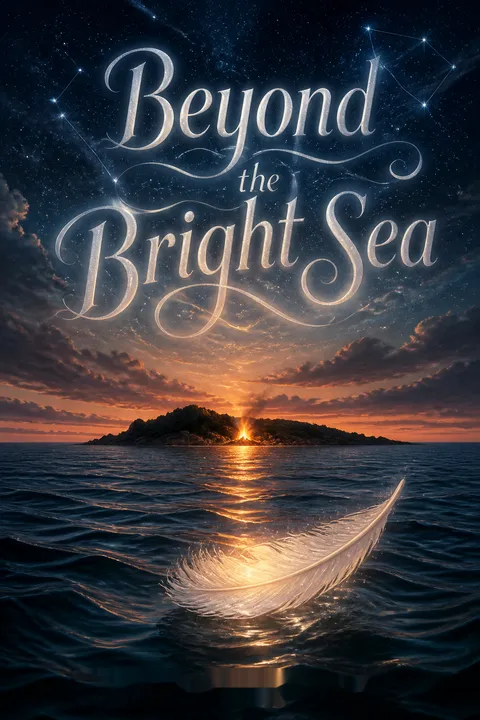
Crow, a newborn, is set adrift in a skiff and washes up on a tiny island off Massachusetts in 1925. She is found and raised by Osh, a gentle, mysterious man who has fled his own past, and together they build a life from the sea's offerings. Crow grows up loved but always aware of her difference—her dark hair, skin, and the feather-shaped birthmark on her cheek. The island is her world, but questions about her origins and the reason she was sent away haunt her. The sea, both a barrier and a bridge, becomes a symbol of her longing to know who she is and where she belongs, setting the stage for her journey of self-discovery.
Island Family, Outsider Fears
Crow's only family are Osh and their neighbor, Miss Maggie, a tough, practical woman from nearby Cuttyhunk. Together, they form a makeshift family, surviving on the island's resources and each other's care. Yet, Crow feels the sting of being an outsider: the other islanders keep their distance, wary of her origins. Rumors swirl that she came from Penikese, an island once home to a leper colony, fueling their fear. Despite this, Crow finds comfort in the routines of island life, the warmth of Osh's love, and Miss Maggie's gruff affection. Still, the ache of not knowing her true family and the reason for her abandonment grows stronger with each passing year.
The Mystery of Penikese
As Crow grows, she learns more about Penikese, the nearby island that once housed people with leprosy. The stigma attached to the place follows her, shaping how others treat her and deepening her own fears. Miss Maggie and Osh try to shield her, but Crow's curiosity is relentless. She wonders if she was born on Penikese, if her parents were lepers, and if she carries the disease herself. The islanders' avoidance and whispered warnings only intensify her need for answers. Penikese becomes both a source of dread and a beacon, calling her to uncover the truth about her past, even as it threatens her sense of belonging.
Seeking Origins, Facing Prejudice
Determined to learn the truth, Crow pushes against Osh's reluctance and Miss Maggie's caution. She faces prejudice at school, where children and adults alike treat her as if she is contagious. The pain of exclusion is sharp, but Crow's resolve hardens. She learns about the leper colony's history, the patients sent from distant lands, and the babies born there—some sent away, some buried on the island. The possibility that she is the child of lepers both frightens and fascinates her. Crow's quest for identity becomes entwined with her struggle against the ignorance and fear of those around her, fueling her determination to find her roots.
The Fire on Penikese
One night, Crow spots a fire burning on Penikese, a place long abandoned and shunned. The sight ignites her curiosity and a sense of destiny—perhaps someone there holds the key to her past. Despite Osh's warnings, she becomes obsessed with the idea of visiting Penikese. The fire is a signal, a call to action, and Crow convinces Osh and Miss Maggie to accompany her to the forbidden island. The journey is fraught with tension, as the trio confronts the physical and emotional dangers of trespassing on haunted ground. The fire marks the beginning of Crow's transformation from passive orphan to active seeker of truth.
Letters and Lost Names
On Penikese, Crow finds remnants of the leper colony: abandoned cottages, a graveyard, and a sense of sorrow lingering in the air. She discovers a tattered letter and a gold ring—keepsakes left with her as a baby. The letter, though damaged, contains fragments of love and hope from her birth mother, mentioning "lambs," "little feather," and "bright sea." These clues, along with carvings found in the cottages, suggest a secret history. Crow, with Miss Maggie's help, writes to Dr. Eastman, the former colony doctor, and Nurse Evelyn, seeking answers. The exchange of letters becomes a lifeline, connecting Crow to a past she never knew.
The Bird Keeper's Secret
The new bird keeper on Penikese is not who he seems. When Crow, Osh, and Miss Maggie return to the island, they discover the real bird keeper, Mr. Sloan, imprisoned and near death, held captive by a dangerous stranger from the South. This man, Kendall, is searching for something—treasure rumored to be buried by the lepers. Crow's rescue of Mr. Sloan exposes the threat Kendall poses, not just to them but to the fragile peace of the islands. The encounter forces Crow to confront the reality that her search for identity has drawn danger to her doorstep, and that the past she seeks is tangled with greed and violence.
Graveyard Clues and Lambs
In the Penikese graveyard, Crow finds a marker with a lamb and a feather—symbols matching those in her mother's letter and on her own cheek. These signs confirm her connection to the island and to the lepers buried there. With each discovery, Crow pieces together her history: her mother, Susanna, and father, Elvan, were patients who lost one child to an orphanage and sent Crow away in secret to save her from the same fate. The grave marked "Morgan" is empty—a decoy to protect Crow's escape. The graveyard, once a place of fear, becomes a site of revelation and belonging.
The Search for Jason
Learning she had a brother, Jason, sent to an orphanage in New Bedford, Crow's quest shifts. She travels alone to the city, braving the unknown in hopes of finding him. The orphanage is gone, but a kind nurse, Mrs. Pelham, remembers Jason—a quiet, lonely boy who eventually went to sea. Crow glimpses a sailor who looks like her, but the connection remains unconfirmed. The search for Jason becomes symbolic of Crow's longing for family and connection, and her willingness to risk everything for a sense of kinship. The journey also exposes her to the wider world's dangers and disappointments.
Treasure and Temptation
The legend of pirate treasure on Penikese proves true when Crow, Osh, and Miss Maggie unearth a chest of gold and jewels, hidden by her parents for her and Jason. The discovery brings both hope and peril: Kendall, the villainous stranger, is relentless in his pursuit of the treasure, threatening Crow's safety and the peace of her island home. The treasure tests Crow's values—what to keep, what to share, and what truly matters. It also attracts outsiders, forcing Crow and her family to hide it and confront the consequences of possessing such wealth.
The Stranger from the South
Kendall, driven by greed and a sense of entitlement, becomes increasingly dangerous. He invades Crow's home, destroys Osh's paintings, and terrorizes the family. His obsession with the treasure and willingness to harm others force Crow, Osh, and Miss Maggie into a desperate struggle for survival. Crow's courage and quick thinking lead to Kendall's capture, but not before he inflicts lasting scars. The confrontation with Kendall crystallizes Crow's understanding of evil—not as something distant, but as a force that can invade even the most isolated sanctuary. The ordeal cements the bonds between Crow and her chosen family.
Danger, Discovery, and Escape
In the aftermath of Kendall's attack, Crow must navigate the chaos he leaves behind. She hides the treasure, protects her family, and helps bring Kendall to justice. The experience is harrowing, but it reveals Crow's resilience and resourcefulness. She learns that safety is not guaranteed, even in the most familiar places, and that courage often means acting in the face of fear. The ordeal also deepens her empathy for the lepers of Penikese, who suffered isolation and misunderstanding. Crow's escape from danger is not just physical but emotional—a step toward healing and self-acceptance.
Truths Unearthed, Choices Made
With the treasure secured and Kendall gone, Crow must decide what to do with her inheritance. She chooses to share it, sending portions to orphanages and to Nurse Evelyn for the lepers in Louisiana. The act of giving becomes a way to honor her parents' sacrifice and to transform pain into generosity. Crow also accepts that she may never find Jason, but she remains open to the possibility. The choices she makes reflect her growth from a lost, questioning child to a young woman with agency, compassion, and a sense of purpose rooted in her unique history.
The Meaning of Family
Crow comes to understand that family is not defined solely by blood, but by love, loyalty, and shared experience. Osh, Miss Maggie, and even Mouse are her true family, bound not by genetics but by choice and care. The search for her origins, while important, is not the end of her journey. Crow learns to embrace both her past and her present, finding strength in the people who have stood by her. The revelation that Osh, too, is a castaway, deepens their bond and affirms the power of chosen family to heal and sustain.
Storms, Shipwrecks, and Hope
A violent storm wrecks a schooner near the island, and Crow helps rescue a sailor she hopes is her brother. Though he is not Jason, the experience teaches Crow about hope, disappointment, and the unpredictability of life. The storm, both literal and metaphorical, tests the family's resilience and brings the community together. Crow's willingness to help a stranger, even in the midst of her own struggles, reflects her growth and the values instilled by Osh and Miss Maggie. The aftermath of the storm is a time of reflection, gratitude, and renewed commitment to the life they have built.
The Real Treasure
The physical treasure, while valuable, pales in comparison to the intangible riches Crow finds: love, belonging, and self-knowledge. She realizes that her true inheritance is not gold or jewels, but the courage, kindness, and wisdom passed down from her parents and her island family. Crow's journey comes full circle as she learns to let go of what she cannot control and to cherish what she has. The story ends with Crow at peace, no longer defined by the mystery of her origins, but by the life she has chosen and the people she loves.
Letting Go, Holding On
In the final chapters, Crow reflects on all she has gained and lost. She lets go of the need for absolute answers, accepting that some mysteries will remain. She holds on to the lessons of the sea, the strength of her family, and the hope that one day she may find Jason. Crow's journey is one of transformation—from abandonment and uncertainty to acceptance and agency. The bright sea that once separated her from her origins now connects her to a wider world of possibility, and she steps forward, ready to live beyond the bright sea.
Analysis
Lauren Wolk's Beyond the Bright Sea is a luminous exploration of identity, belonging, and the meaning of family, set against the evocative backdrop of the Elizabeth Islands. At its core, the novel is about a young girl's quest to understand where she comes from and, by extension, who she is. Crow's journey is both literal and metaphorical, as she navigates the treacherous waters of prejudice, loss, and self-doubt to claim her place in the world. The story interrogates the destructive power of fear—of disease, of difference, of the unknown—and the ways in which communities can both exclude and embrace. Through Crow's eyes, we see the pain of being othered, but also the healing that comes from love, courage, and the willingness to reach across boundaries. The novel's use of mystery, symbolism, and epistolary elements enriches its emotional impact, while the vivid setting and memorable characters ground its themes in lived experience. Ultimately, Beyond the Bright Sea teaches that true treasure lies not in gold or ancestry, but in the bonds we forge, the kindness we show, and the acceptance we find within ourselves and each other.
Review Summary
Beyond the Bright Sea is a beautifully written historical fiction novel for middle-grade readers. Set in the 1920s on the Elizabeth Islands off Massachusetts, it follows 12-year-old Crow's search for her origins after being abandoned as a baby. Readers praised Wolk's lyrical prose, vivid characters, and exploration of family and belonging. The book's strong sense of place, intriguing mystery, and emotional depth resonated with many. While some found the pacing slow at times, most considered it a powerful, memorable story worthy of its critical acclaim.
People Also Read





Characters
Crow
Crow is the heart of the story—a girl cast adrift as a newborn and raised on a remote island by Osh. Her defining trait is an insatiable curiosity about her origins, fueled by the mystery of her abandonment and the prejudice she faces from the islanders. Crow is intelligent, brave, and compassionate, but also vulnerable, haunted by the fear that she is unlovable or tainted. Her journey is both external (seeking her family, facing danger) and internal (coming to terms with her identity). Crow's development is marked by increasing agency, empathy, and self-acceptance, as she learns that family is chosen as much as given, and that her worth is not defined by her past.
Osh
Osh is Crow's adoptive father, a man who has fled violence and loss in his homeland to find peace on the island. He is resourceful, artistic, and deeply caring, though he guards his own secrets and pain. Osh's love for Crow is steadfast, but he struggles with the fear of losing her and the tension between protecting her and allowing her to seek the truth. Psychologically, Osh is a survivor, shaped by trauma but determined to create a safe haven. His relationship with Crow is transformative for both, teaching him to open his heart and trust again. Osh's development mirrors Crow's, as he learns to let go and embrace change.
Miss Maggie
Miss Maggie is the anchor of the island community—a no-nonsense woman with a soft heart beneath her gruff exterior. She is a healer, a provider, and a protector, unafraid to challenge prejudice or stand up for those she loves. Miss Maggie's relationship with Crow is maternal, offering guidance, honesty, and unconditional support. She is also a bridge between Crow and the wider world, helping her navigate both practical challenges and emotional dilemmas. Psychologically, Miss Maggie is resilient, shaped by her own losses, and finds purpose in caring for others. Her development is subtle, as she learns to accept help and vulnerability.
Kendall
Kendall is the antagonist—a stranger from the South who arrives on Penikese under false pretenses, seeking treasure. He is manipulative, ruthless, and driven by entitlement, willing to harm others to get what he wants. Kendall's presence brings real danger to Crow and her family, forcing them to confront evil directly. Psychologically, he represents the destructive power of greed and the capacity for cruelty in the face of desperation. His actions catalyze Crow's growth, as she must summon courage and resourcefulness to protect herself and those she loves.
Mr. Sloan
Mr. Sloan is the real bird keeper on Penikese, found imprisoned and near death by Crow and her family. His ordeal at the hands of Kendall highlights the vulnerability of those who are isolated or powerless. Mr. Sloan's rescue is a turning point, demonstrating the importance of compassion and community. Psychologically, he is traumatized but grateful, embodying the resilience of those who endure suffering and the healing power of kindness.
Jason
Jason is Crow's older brother, sent to an orphanage as a baby and later lost to the sea as a sailor. He is more an idea than a presence—a symbol of the family Crow longs for and the possibility of connection beyond blood. Jason's story is one of loneliness and survival, mirroring Crow's own journey. His absence shapes Crow's actions and desires, driving her search for identity and belonging. Psychologically, Jason represents both the pain of separation and the enduring hope for reunion.
Susanna
Susanna is a leper on Penikese, forced to make impossible choices to protect her children. She is remembered through letters, carvings, and the legacy she leaves for Crow. Susanna's love is fierce and sacrificial—she sends Crow away to save her from the fate of her brother, Jason. Psychologically, Susanna embodies the strength of maternal love in the face of suffering and the hope that her child will find a better life. Her presence is felt throughout the story, guiding Crow's search for self.
Elvan
Elvan, like Susanna, is a leper on Penikese, marked by loss and the desire to shield his family from harm. He participates in the plan to send Crow away and buries the treasure for her future. Elvan's character is defined by quiet strength and sorrow, a man who endures isolation and illness with dignity. Psychologically, he represents the cost of stigma and the lengths parents will go to for their children's well-being.
Nurse Evelyn
Nurse Evelyn is a caregiver on Penikese and later in Louisiana, who helps Crow piece together her history through letters. She is empathetic, wise, and burdened by the secrets she keeps to protect Susanna and Crow. Evelyn's role is that of a guardian of memory, ensuring that the truth survives even when the people involved are gone. Psychologically, she is motivated by loyalty and a sense of justice, providing Crow with the validation and closure she needs.
Mouse
Mouse is Crow's cat, a constant presence throughout her journey. More than a pet, Mouse represents the comfort of home, the innocence of childhood, and the enduring bonds of love. Mouse's loyalty and affection provide solace in times of fear and uncertainty, grounding Crow in the present even as she searches for her past.
Plot Devices
Mystery and Quest Structure
The story is structured as a quest—a young girl's journey to uncover the truth about her origins. The mystery of Crow's birth, the clues left behind (letters, carvings, the ring), and the secrets of Penikese create a sense of suspense and discovery. Each revelation leads to new questions, propelling Crow forward and engaging the reader in the process of unraveling the past. The quest structure allows for both external adventure and internal growth, as Crow's search for answers becomes a search for self.
Symbolism and Motifs
The sea, the feather, the lamb, and the treasure are recurring motifs that carry layered meanings. The sea represents both separation and connection, danger and possibility. The feather is a mark of identity, linking Crow to her mother and her heritage. The lamb symbolizes innocence, sacrifice, and the hope for redemption. The treasure, while literal, also stands for the intangible gifts of love, courage, and belonging. These symbols are woven throughout the narrative, reinforcing themes of loss, hope, and transformation.
Letters and Fragmented Communication
Letters play a crucial role in the plot, serving as bridges between past and present, and between characters separated by time and distance. The damaged letter from Crow's mother, the correspondence with Dr. Eastman and Nurse Evelyn, and the telegrams about Kendall all serve to advance the plot and deepen the emotional stakes. The fragmented nature of these communications mirrors Crow's own fragmented sense of self, and the gradual piecing together of her history parallels her journey toward wholeness.
Foreshadowing and Suspense
The narrative employs foreshadowing to create suspense and prepare the reader for key events. The fire on Penikese, the rumors of treasure, and the arrival of strangers all signal impending danger and change. The threat posed by Kendall is hinted at before it becomes explicit, heightening the sense of vulnerability and urgency. The use of suspense keeps the reader invested in Crow's fate and underscores the risks inherent in seeking the truth.
Found Family and Chosen Bonds
The plot is driven as much by the relationships between Crow, Osh, and Miss Maggie as by the external quest. The theme of found family is central—these characters choose each other, creating a home out of love and necessity. The contrast between blood ties and chosen bonds is explored through Crow's search for her birth family and her realization that true belonging comes from those who stand by her. This device allows for rich character development and emotional depth.
Download PDF
Download EPUB
.epub digital book format is ideal for reading ebooks on phones, tablets, and e-readers.








































