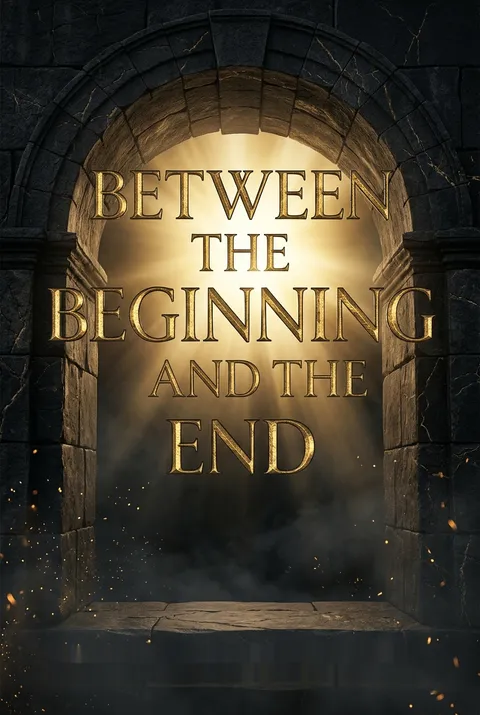

Key Takeaways
1. The Human Condition: Anchored Between Primordial Beginning and Eschatological End
History is not an aspect of being human; it is at the very core of a person’s life.
Humanity's unique place. Unlike animals, humans are creatures of history, constantly shaping and being shaped by global events. While ancient civilizations recognized individual lives and the rise and fall of nations, they often viewed history as a senseless, repeating cycle, like the ancient Indians who saw it as a "mad race, dragging everything with it in a senseless danse macabre." It was the Western world that truly "discovered history," perceiving a dramatic, overarching course with meaning and purpose.
Biblical perspective. The Bible, however, long before modern philosophy, presented a comprehensive view of history, revealing God's dramatic plan from Adam to the "overwhelming finish when the reign of the Antichrist will be destroyed." This divine narrative frames human existence not as isolated individuals, but as beings caught in the "web of history," part of God's grand design. Yet, simultaneously, every person stands in a direct, eternal relationship with God, possessing inherent merit and value beyond historical context, as Augustine articulated in his desire to "understand God and my soul."
Adam's enduring reality. The Old Testament term "adam" encapsulates this dual nature of humanity. It signifies our earthbound fragility and mortality ("dust you are and to dust you shall return"), but also our creation in God's image, as lords of creation, capable of self-knowledge and praise. However, "adam" also carries the "massive and somber curse" of sin, which distorts our being and dooms our achievements to "horrible outcomes," preventing lasting peace. Thus, history becomes the "life story of adam in exile," a monotonous record of humanity's wanderings under this curse.
2. The Temple as Paradise: God's Eternal Presence Amidst a Fallen World
Paradise has not been relegated to bygone history but is still omnipresent and situated right among us, since it is placed by God at the center of the world, with the condition that paradise is now hidden behind heavy curtains, while cherubim guard the entrance.
Microcosm of creation. The Old Testament Temple, and its predecessor the Tabernacle, was not merely a place of worship but a symbolic representation of the cosmos, a "world in a nutshell." Ancient peoples often built sacred structures to reflect their understanding of the universe, and Israel's Temple similarly depicted the magnificent edifice of God's world. The Holy of Holies, in particular, was adorned with palm trees and flowers, symbolizing the Garden of Eden, guarded by cherubim, making paradise a permanent reality.
Paradise's enduring significance. This symbolic paradise, situated on Mount Zion, was seen as the "fountain of all strength and vitality," the source of life for the world, much like the land of Eden was the source of four great rivers. The Temple's entrance facing east, the origin of life, implied that entering God's holiness meant facing death, yet this same God was the source of life. This imagery underscores that what transpired in the primordial "Urzeit" in paradise still profoundly determines humanity's entire history, even though we are banished from it.
The priest's unique role. Only the high priest, once a year, was permitted to enter the Holy of Holies, bypassing the cherubim. This figure, representing "adam" or humanity personified, symbolized the possibility of fallen man returning to paradise through atonement. His garments, with their specific colors and breastplate, further emphasized his role as a cosmic representative, belonging to the "Urzeit" and embodying the "imperishable in us," standing above history as a mediator between God and humanity.
3. The Kingdom of God: A Cosmic Vision Challenged by Humanity's Rebellion
The world in which we live is a well-ordered world.
God's cosmic dominion. The concept of the Kingdom of God permeates the Bible, describing a cosmic reality encompassing all creation—humans, animals, plants, and angels—all attuned in harmonious obedience to God's will. This kingdom was dynamic, designed to develop and unfold its potential in history, with humanity assigned a distinctive calling as co-rulers to develop creation's innate possibilities. This "cultural calling" positioned humans as fragile yet noble princes over creation.
Sin's devastating impact. Humanity's sin was a rebellion against this kingdom, a trespass against God's law, and a renunciation of obedience. By crowning ourselves kings and declaring autonomy, we ruptured the harmonious unity of the universe, bringing "dissonance into the world order." This act led to a curse over creation, subjecting it to "frustration" and the destructive influence of "satanic forces," transforming a world of beauty into one dominated by unpredictable, annihilating powers.
The human empire's futility. Against God's kingdom, humanity continually attempts to build its own "empire of humanity"—a utopian, self-deifying imitation of God's plan, aiming for unity and order without God. These efforts, seen in historical empires like Babylon or Rome, are ultimately "doomed to fail" because sin inherently leads to "disintegration and fragmentation." World history thus becomes a dramatic struggle between God's kingdom, which "comes by battling hostile powers," and the ever-collapsing human kingdoms, pointing towards an "overwhelming end."
4. Christ, the Central Focus: The Second Adam as Priest and King
Both in the temple ceremonies and the prophecies, the Messiah figure emerges more clearly and sharply all the time, showing that God was slowly and carefully preparing his people for the coming of the Redeemer.
Messiah's dual office. The entire Bible, Old and New Testaments, proclaims Christ as its central focus, particularly in his roles as priest and king. The Old Testament, with Israel functioning as both church and nation, foreshadowed this dual office, envisioning the coming Messiah as a "branch" who would be "clothed with majesty and will sit and rule on his throne: thus the throne will be occupied by a priest." This figure would unite the functions of Temple and palace, embodying both eternal humanity and historical dominion.
Priest and King in action. As priest, Christ is the "Son of man," humanity personified, dwelling in the eternal realm, entering paradise through death. As king, he resides at the "center of history," restoring God's kingdom by gathering all nations and making the cosmos subject to him. Jesus's life demonstrated this: his proclamation of the "kingdom of heaven is near" and his miracles—healing, calming storms, rebuking demons—showed his cosmic kingship, restoring the "Urzeit" and introducing the "renewal" of all things.
Rejecting the human kingdom. Jesus's temptation in the desert, where he was offered "all the kingdoms of the world," was a pivotal moment where he rejected the devil's "führer idea"—the notion of a human kingdom without God. He affirmed that the true kingdom "can only be based on worshiping the true God," requiring total commitment and "rebirth." His priestly dignity was evident in his affinity for the Temple, his baptism (identifying with sinful humanity unto death), and his transfiguration, where time stopped and he communed with God in a "paradise atmosphere."
5. Gethsemane and Golgotha: The Zenith of Sin and the Heart of Grace
This single event caused a fundamental change in the makeup of humanity: it opened the way for millions to obtain eternal redemption, and it liberated untold millions of humans living in different countries and throughout all ages.
Golgotha's eternal impact. Christ's suffering on Golgotha is not merely a historical event but one with "value for eternity," fundamentally altering the "basic structure of the world" and humanity's destiny. It is deeply connected to the "Urzeit," the primordial time of Adam's fall and expulsion from Eden. The events in Gethsemane, a garden like Eden, mirror Adam's original sin, but with a profound reversal: Adam hid from God, while Jesus, the Second Adam, "stepped forward" to face humanity's judgment.
The reversal of roles. In Eden, God called out, "Adam, where are you?" In Gethsemane, humanity, in its "insolent and blasphemous" pride, effectively called out, "God, where are you?" to drag Jesus to judgment. This "abyss so immeasurably deep" highlights humanity's self-deification. Yet, in a mysterious "reversibility," Jesus, as Adam, is also being summoned by God for the "ultimate verdict." He voluntarily takes on Adam's curse and the "entire burden of sin," becoming "humanity personified" to rescind Adam's fatal step.
The cross: abandonment and salvation. The crucifixion, particularly the curse of being "hung on a tree," symbolizes expulsion from God's kingdom and severance from life. Jesus's cry, "My God, my God, why have you forsaken me?" reveals the absolute abandonment that is the essence of death and the consequence of humanity's sin—a desire for aloneness outside God. Yet, in this ultimate moment of sin and abandonment, Christ's persistence as mediator, embracing both God and humanity, transforms the cross into the "miracle of atonement," reuniting heaven and earth and anchoring the universe in grace.
6. The High-Priestly Verdict: Humanity's Self-Deification Judged by God
Jesus was sentenced because he made himself equal to God.
Priestly judgment. The high priest's role in Israel extended beyond temple service to include significant juridical authority, especially in religious matters. Thus, Jesus's trial before Caiaphas and the Sanhedrin was a natural progression. The initial accusation, that Jesus had defamed the Temple—the symbolic paradise and eternal reality—was a charge of ridiculing God's dwelling and attempting to build a new paradise through human pride, mirroring Adam's original sin.
The ultimate blasphemy. God, however, steered the trial to its most profound accusation: self-deification. Caiaphas, representing humanity, accused Jesus of blasphemy for claiming to be the Son of God. This was the "greatest untruth in world history": Adam, who had elevated himself to God's status, now accused the true Son of God of doing the same. Caiaphas, as a prototype of Christ, paradoxically condemned the very fulfillment of his own office, denying the Messiah for whom Israel had longed for centuries.
God's hidden hand. This tragic denial stemmed from Israel's blindness; they had fashioned a "self-invented God" conforming to their own ideas, failing to recognize the true God in Jesus. Yet, in this "nadir of human sin," God's providence was at work. Caiaphas, though acting out of jealousy and blindness, was God's instrument, pronouncing judgment on Adam (humanity) for claiming equality with God. At this precise instant, the Old Testament priesthood reached its culmination and simultaneously its termination, as the true High Priest, Jesus, offered himself as the Lamb of God, opening the way to paradise through his own death.
7. Peter's Denial: The Church's Failure and Christ's Unfailing Knowledge
In the night in which he was betrayed, there was, from the side of the church, only denial, rejection, cowardice, treason, escape, and rupture of every bond.
Disciples' blindness. Throughout Jesus's passion, the disciples, despite their intimate connection, remained largely passive and uncomprehending. They repeatedly failed to grasp the reality of his suffering and resurrection, their preconceptions blinding them. Peter, as their impulsive spokesman, epitomized this collective failure, not only sleeping in Gethsemane but later vehemently denying his Lord three times in Caiaphas's courtyard.
"I don't know the man." Peter's devastating declaration, "I don't know the man you are talking about," carries immense theological weight. In biblical terms, "knowing" signifies a deep, unbreakable bond of communion. Peter's denial, therefore, represents the church's ultimate failure in that critical hour—a moment when human faith, communion, and service "disappeared in one instant." It mirrored Adam's self-preservation, shifting blame and breaking solidarity with Christ.
Christ's unwavering knowledge. In this night of profound human failure, only one thing remained steadfast: Jesus's "immense, totally encompassing 'knowing'" of us. While the church's confessions and knowledge proved worthless as a basis for salvation, Christ's knowing of us, rooted in his eternal love, endured. His confession of us before the Father, even as we denied him, became the sole foundation. Peter's denial thus serves as a stark reminder that "our faith is only a response, only the fruit of his merciful knowing when we were still sinners."
8. The Governor's Sentence: The Rejection of God's Kingship by Human Empire
He was sentenced because he had declared himself king.
Dual judgment for dual sin. Jesus's double sentencing—first by the Sanhedrin (priestly aspect of sin) and then by Pontius Pilate (royal aspect of sin)—reveals God's intention to address the dual nature of humanity's transgression. Adam's sin involved both severing communion with God and rebelling against the harmonious order of God's kingdom. Pilate, representing the secular authority of the Roman Empire, was tasked with judging the "royal aspect" of sin: Jesus's claim to kingship.
Pilate's weakness, humanity's choice. Pilate, despite his initial attempts to find Jesus innocent, ultimately succumbed to the chief priests' political pressure and the mob's fury. His desire for "self-preservation" rendered him a "teetering wall," unfit to rule. The crowd's choice of Barabbas over Jesus, and their cry "Crucify him!", demonstrated humanity's preference for a rebel who challenged earthly authority over the true King who challenged their self-proclaimed sovereignty.
The clash of kingdoms. The final accusation against Jesus—that he "proclaimed himself king" and thus "opposes Caesar"—was the core of Adam's sin: unilaterally declaring independence from God and establishing a human-centered kingdom. Israel, by rejecting its true King and aligning with the pagan emperor, effectively committed "national suicide," forfeiting its divine purpose. In this dramatic confrontation before Pilate, God's eternal kingdom collided with the "kingdom built by human hands," and God himself, in Christ, was condemned as the ultimate rebel by humanity's self-deifying empire.
9. Born Again: Entering a New Creation and a Cosmic Life-Bond in Christ
Here the rebirth of all things finds its start; here the new world has its beginning.
The new creation. The resurrection of Christ, occurring in Joseph of Arimathea's garden, marks the beginning of a "new creation," a radical break from the cyclical view of life and death prevalent in ancient thought. This "morning of creation" harks back to Genesis 1, signifying the birth of a new heaven and earth, where "Urzeit and end-time came together." The focus shifts entirely to the "second Adam," the "man from heaven," who, having passed through death, now embodies new qualities and an exalted dignity, residing in paradise.
Christ's new reality. Christ, no longer self-emptying, is now "crowned with glory," having entered paradise "by his own blood." This paradise is not merely a heavenly realm but the "whole creation renewed," where heaven and earth are joined, and "rivers of life-giving waters spring from his throne." His post-resurrection appearances, while confirming his physical reality (showing hands, eating), also demonstrated a new distance and higher order, indicating his transcendence of normal terrestrial laws.
"In Christ": a cosmic bond. The apostle Paul's frequent phrase "in Christ" encapsulates this new reality. It signifies an intimate, objective salvation and a cosmic life-bond, where believers are "in Christ" and thus "no longer what they are, but they are what Christ is." This means being "united with him in his death" and "raised up with Christ" to "heavenly realms," living in the "atmosphere of the new world." This "new creature" status, initiated by God's eternal decree and realized through personal conversion and baptism, places believers in the "end-time," tasting "the powers of the coming age," even while living amidst a world still "in Adam" and rushing towards its demise.
Review Summary
Readers consistently praise Between the Beginning and the End as a brilliant work of biblical theology, blending redemptive history, typology, and systematic theology. Reviewers highlight Bavinck's insightful parallels between Eden and Gethsemane, Adam and Christ, and his exploration of humanity's story from Creation to Redemption. Written in the context of Nazi-occupied Holland, the book carries historical weight. Readers appreciate its accessible yet profound writing style, covenantal perspective, and missional call. Several consider it an annual re-read, with one wishing to worship sooner after reading it.
People Also Read


Download PDF
Download EPUB
.epub digital book format is ideal for reading ebooks on phones, tablets, and e-readers.








































