
Plot Summary
Trapped in a New World
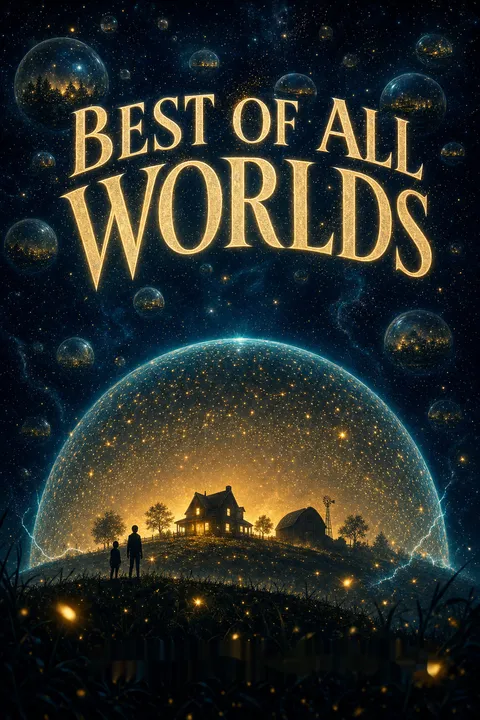
The Oak family—thirteen-year-old Xavier (Zay), his father Caleb (Dad), his pregnant stepmother Nia—awaken at their summer cottage to find the familiar lake replaced by farmland and their world suddenly, impossibly changed. Initial confusion spirals into dread as they realize there are no roads, no familiar landmarks—just their house, barn, animals, and silence. Every try to rationalize the situation fails—this is not an illusion or prank. The practical necessity of milking goats and gathering eggs grounds them in the surreal, instilling both fear and a spark of resilience. Each instinctively senses that whatever world this is, returning home will not be easy, and what lies ahead will depend on them alone.
Making Sense of the Impossible
Surveying their surroundings, the family maps out the strange farm, discovering an invisible, electrified wall that surrounds and traps them, healing itself when breached. As they struggle to understand who or what has abducted them—and why—fear grows alongside a fierce determination to use every skill and scrap of logic to survive and, if possible, escape. The eerie absence of birds and insects (aside from bees), unaccountable water and power, and red marks on the skin hint at powers beyond human. The survival instincts of each, tested by uncertainty, reveal the first cracks—and strengths—of this makeshift community.
Testing the Boundaries
Driven by equal parts fear and curiosity, Zay, his father, and Nia attempt every means of escape: digging, climbing, boring through with tools. Each method triggers the wall's defenses—electric shocks, self-repair, even swallowing and regurgitating them unharmed. The futility of defiance breeds both despair and grudging acceptance of their prison's intelligence. Nia's pregnancy—compounded by anxiety about her unborn child's health—ups the stakes, leveraging dread with the primal drive to nurture. The farm itself, with ever-present animals and abundant supplies, yokes their sense of agency to the forced rhythms of an unfamiliar new world.
Life in the Dome
Over months and then years, the farm's routine begins to shape their lives. Farming, animal husbandry, milking goats, harvesting, and preserving—all become essential skills, teaching each of the family self-reliance, resilience, and sometimes unexpected joy. Zay misses his mother and brother, Sam, deeply; though he tries to reach them via dead phone messages, the loneliness aches. While Noah, born into this world, knows only its bounds, the older family struggles to reconcile their longing for the old world with the necessity of building a life within new constraints. Hope and sadness become neighbors.
Acceptance and Adaptation
Years pass. Children grow—notably Noah, who becomes a true child of the dome, and Zay, whose body and skills reflect his new life. Innovations, like making cheese and soap, add comfort; periodic mysterious gifts from unseen forces—especially for Noah—remind them they are observed and subtly controlled. Fears about possible intentions of their captors recede before the unyielding reality: here, community and family are the foundation of survival. The absence of internet, school, and old friendships is sharpest for Zay. Yet, noon by noon, season by season, their lives take on shape and meaning.
Gifts and Losses
The cruelest loss is connection: to Sam, to "Erf," to any future beyond the dome. Zay struggles with coming of age alone, his moments of joy—gaming with family, listening to the last vestiges of Sam's music—tinged with an abiding melancholy. The death of animals holds surprising grief and resonance; the mysterious arrival of a puppy for Noah (and practical farm animals when needed) deepens the feeling of being both coddled and imprisoned by the unseen curators. The family becomes both more self-sufficient and paradoxically aware of what—and who—they have lost.
The Arrival of Strangers
Everything changes when another farm appears, 3D printed overnight by millions of light midges. The Jackson family (Riley, Charleze, Mackenzie, Alyssa, and dog Patt) are bewildered and frightened, torn between gratitude and suspicion. Their arrival inflames hope—perhaps escape or new information is finally within reach—and highlights the subtle power dynamics enforced by the unseen curators: each "acquired" family is placed in isolation until their routines, and perhaps their obedience, are established. Zay's world opens as he grows close to Mackenzie, her presence a shock of possibility in a closed ecosystem.
Two Families, Two Truths
With the Jacksons, the community's balance is thrown into bold relief. Differences in upbringing, worldview, and trauma surface—especially between Nia and Riley, who represents both comforting authority and an undercurrent of paranoia. The two families debate where they are—Earth or an alien preserve—and what their captors want. Resource sharing, suspicion over missing ammunition, and personality clashes evolve into genuine if uneasy camaraderie. The children—Noah, Alyssa, Zay, and Mackenzie—bond over games and music, offering hope. Zay is especially enchanted by Mackenzie, and his infatuation becomes both a source of hope and vulnerability.
Theories and Tensions
As they endure dome-endemic challenges—plagues of birds, power cuts, animal deaths—the families drift into ideological camps: Nia and Dad trust the aliens' benevolence, Riley preaches deep-state government conspiracy. Differences in race and politics—especially Riley's "Great Surge" theory—erupt. Trust, once assumed, shatters; social divisions mirror those of the past world, as suspicion corrupts their unity. The fragile mesh of alliance is strained by secrets kept, especially around the stolen ammunition and Riley's PTSD, and Zay finds himself torn between loyalty, moral conviction, and love for Mackenzie, who herself wavers on where her loyalties lie.
Building and Breaking Trust
Demands for conformity by unseen curators—punishments for rebellion, plagues, and engineered peril—puncture the illusion of benevolent captivity. A failed escape attempt, and growing paranoia regarding resources and armament, push the Oaks and Jacksons into open conflict. When Mackenzie and Zay grow close romantically, new lines are drawn: the future of the community, children's happiness, and even survival, seem in jeopardy. The discovery of Riley's traumatic history, and his refusal to trust even his own family, catalyze a self-destructive spiral. Each action—every secret, every confrontation—builds toward a final reckoning.
Love and Divisions
Zay's romance with Mackenzie brings both happiness and sharp pain as her allegiances—and personal dreams—waver with the prospect of potential escape. The two families' children remain close, but the adults' worldviews have diverged too far to be easily reconciled. For Zay, these tensions ask whether love can thrive in a captive world, where loyalties are divided and the larger system seems bent on keeping them contained. In the face of joy, fear, and resentment, Zay senses the challenge: even when bound in a manufactured paradise, "forever" is never given—only fought for, or let go.
The Balloon Scheme
When Riley, energized and desperate, builds a hot-air balloon out of scavenged material and forbidden hope, the possibility of escape electrifies both families. Zay, credited for the idea, is torn between the exhilarating prospect of freedom and the conviction that punishment will follow. As launch day nears, psychological and practical preparations fragment the small community: aiding Riley is both a betrayal and an act of faith; resistance is an act of protection and a surrender. When final plans are made, even love is imperiled by divided dreams.
Warnings from Above
As construction nears completion, the balloon's mere existence triggers new, more dangerous "plagues": starlings ravage crops, coyotes kill livestock, and subtle threats escalate. The message is clear: persistent rebellion will incur ever more serious consequences. In the collective struggle, both families sharpen their sense of identity and mission: the Oaks, advocating adaptation and careful compromise; the Jacksons, pushing for defiance at any cost. As punishment intensifies, so too does the sense that their world is not only a prison, but a stage for observation—perhaps with lessons for the captives, perhaps for someone else entirely.
Plagues and Punishments
The promise of flight brings violence: coyotes attack, injuring children; the midges strike, wild and unpredictable, healing and harming without pattern. In the wake of these calamities, trust is shredded. Yet these acts also reveal the curators' commitment to their "specimens"—when Alyssa is attacked, miraculous healing follows, but only after suffering, to prove a point or reinforce a lesson. When Zay gives up the secretly hidden ammunition, the boundary between right and wrong, safety and self-determination, becomes blurrier than ever. The captives face a choice: surrender or continue reaching for impossible freedom.
Secrets and Confrontations
True intentions and the burden of trauma—Riley's unchecked paranoia, Nia's secret theft, the exposure of familial delusions—are dragged into the open. Accusations of collaboration, ideological betrayal, and abandonment fly. Divisions now seem irreparable, as neither adaptation nor rebellion can address the deeper wounds of captivity and personal loss. The realization dawns that neither ideology nor hope of return to Earth can restore what they have lost or answer the question: what does it mean to live freely within a cage, with or without each other's trust?
Last Hopes Take Flight
The day of the balloon's launch arrives. Riley, refusing to go alone, takes Zay as his unwilling hostage. The agonizing ascent, both literal and emotional, tests the very last of their hopes—and their lives. In the sky above the dome, they find not a way home, but something stranger: a chamber of cosmic preserves, hints of other domes, and no escape but destruction. Zay witnesses Riley's tragic fate as the wall opens to the abyss, and midges erase all evidence. Brought back to the world below, Zay is left with trauma, relief, and a deeper understanding of his true home.
Through the Ceiling
Amid struggle and collapse, Zay experiences a cosmic revelation: the dome is not just a prison but one among countless "preserves"—perhaps the curators' attempt to save what is precious from a dying Earth. The universe outside is both awe-inspiring and fearsome—a mosaic of glimmering, contained worlds. In this moment, captivity is reframed: the dome may have become the best of all possible worlds, offering shelter, continuity, and family in the face of planetary loss. The price of failed freedom is steep; so too is the gift of survival.
The Best of All Worlds
In the aftermath of loss and near-destruction, the two families begin to heal and adapt. The memory of Riley, who risked everything for freedom, remains a cautionary tale and a call for compassion. Zay, hurt yet hopeful, embraces his bond with family and Noah, recognizing that love and home are built even in captivity. Acceptance is not surrender but adaptation—finding purpose, meaning, and love even within limits set by forces beyond understanding. The dome—once seen as a cage—becomes not paradise, but the best of all worlds that remain.
Analysis
Best of All Worlds transforms genre expectations of the "closed world" story, reframing a classic alien abduction scenario as both an intimate family saga and a social thought experiment. Through precise psychological realism, Oppel invites readers to imagine not just survival, but what constitutes "living" when choice and connection are curtailed. The dome, at first an enemy, is ultimately ambiguous: prison and protection, a forced experiment by gods or aliens or, perhaps, as Nia suspects, still-human masters. The dual arrival of the Jacksons and the balloon escape attempt highlights the dangers—and necessity—of hope, even when it is doomed to fail. The story's strongest insight is rendered through the honest, conflicted voice of Zay, whose journey from rejection to grudging acceptance is both universal and particular. Romantic yearnings—his for Mackenzie, and the broader yearning for "home"—are used to illuminate the human tendency to strive for the impossible, even in paradise or captivity. Ultimately, the novel does not argue for surrender or for endless rebellion, but for meaning made in limits, love found in hardship, and acceptance of a world not chosen but possible—the best of all that remain.
Review Summary
Characters
Xavier "Zay" Oak
Protagonist and narrator, Zay starts as an ordinary, slightly awkward teen, obsessed with gaming, reluctant to join his blended family on the fateful cottage trip. Faced with captivity in the dome—with no way to reach his mother and brother—Zay's early anxiety turns to resourcefulness. His bond with his little brother Noah deepens, tinged by both resentment and tenderness. Zay is both skeptical and imaginative, using strategic thinking gleaned from D&D to navigate challenges. He vacillates between hope for escape and acceptance of the dome's permanence, shaped by his romance with Mackenzie and by devastating losses. By the story's end, Zay's arc is one of painful growth; learning to find meaning in responsibility, compromise, and forgiveness.
Caleb "Dad" Oak
Once a boardroom negotiator, Caleb becomes the family's emotional anchor in the dome. He tries to use reason to keep the peace between Nia and Zay, struggling to adapt his skills to farm life. Caleb's willingness to accept the rules of their new world is both a strength—insisting on measured response, safety, and dignity—and a weakness, earning Zay's frustration when hope for escape arises. His love for his children—and concern for Nia's well-being—shapes every decision, and he ultimately chooses adaptation and empathy over rebellion. His leadership stands in contrast with Riley's: calm, patient, yet haunted by what might have been.
Nia Oak
Stepmother to Zay, Nia is practical, principled, and purposeful—a former aid worker shaped by global realities. Pregnant at the story's start, her focus is nurturing and preserving her family—especially Noah. Nia brings valuable survival knowledge but is rigid, sometimes to the point of alienating those she loves. Her secretive removal of Riley's ammunition shows her willingness to bend rules for safety, yet exposes the complexity of "doing the right thing" under pressure. She is haunted by questions of fairness, justice, and race, and ultimately chooses measured acceptance, finding purpose in making their world as safe—and equitable—as possible.
Noah Oak
Noah, born in the dome, is the embodiment of adaptation. Unlike the others, he has no memory of Earth and flourishes in his narrow but stable world. His open-hearted friendship with Alyssa, love for animals, and delight in simple joys offer hope and innocence. Yet, Noah's place at the center of the adults' battles—selected, perhaps, as a "primary specimen" by their captors—raises existential questions about purpose, freedom, and the shaping of the next generation. Above all, Noah's optimism and adaptability reinforce the story's theme: happiness is possible even in constraint.
Riley Jackson
Patriarch of the newly arrived Jacksons, Riley is a former prison warden, a charismatic, resourceful, but deeply wounded man suffering from PTSD. Haunted by guilt, disbelief in the supernatural, and suspicion of authority, Riley's worldview tilts toward paranoia, racism, and conspiracy. He seeks escape at any cost—even risking his family's safety and sanity. His pride, quick temper, and certainty offer energy but breed division and ultimately tragedy. Riley is both a catalyst for hope (his balloon scheme) and a tragic lesson in the dangers of inflexibility and the inability to accept or adapt.
Charleze Jackson
Charleze seeks to maintain normalcy and faith amid chaos. She serves as peacemaker and caregiver, often soothing rifts between her husband, children, and neighbors. Rooted in religious belief, she vacillates between hope and despair, especially as Riley's behavior grows erratic. Charleze prefers to look for the good in their situation and others—but her denial and passivity sometimes enable Riley's destructive choices. After Riley's death, she directs her energies to healing her family and forging alliances with the Oaks, striving for stability and continuity at any cost.
Mackenzie Jackson
Riley and Charleze's teenage daughter, Mackenzie is the first "stranger" Zay's age he's known in years—a focus for his desire, dreams, and hope. Smart, funny, and conflicted, Mackenzie is torn between the ideologies of her parents, the pressures of home, and her own doubts. Her relationship with Zay moves from tentative friendship to romance, offering both characters a taste of "what might have been" beyond the dome. Ultimately, Mackenzie struggles with questions of loyalty, truth, and self-determination; her arc mirrors the reader's, from resistance to a reluctant, bittersweet accommodation.
Alyssa Jackson
Alyssa, the youngest Jackson, brings a child's resilience and vulnerability into stark relief. Injury, trauma, and miraculous healing highlight the interventionist—and capricious—ethics of the curators. Alyssa's friendship with Noah anchors both families in innocence and hope, but her suffering unites them in fear and grief. Alyssa embodies both what is most at risk and most adaptable about the next generation.
Patt
The Jacksons' German shepherd, Patt, functions as both companion and practical aid, especially during attacks or in guarding livestock. Patt's protective role and eventual defeat by the midges is symbolic both of the limits of agency under the curators and the vulnerability of all creatures inside the dome, regardless of species or intention.
The Midges / Curators
The "midges"—swarms of glowing, intelligent, shape-forming lights—serve as both creators and enforcers in the dome. Whether healing, punishing, constructing, or erasing evidence, their actions are mysterious, methodical, and ultimately uncommunicative. They represent a power indifferent to human wants but invested in maintenance and adjustment. Their presence frames the narrative conflicts of agency, control, and the ambiguous boundary between kindness and manipulation within captivity.
Plot Devices
The Dome
The invisible, self-repairing, electrified dome defines the families' world and narrative structure: a perfect, inescapable boundary, both a laboratory for human interaction and a preserve against outside catastrophe. The dome is not merely physical but psychological, amplifying themes of control, fate, and adaptation. Its resistance to breach raises continual questions about agency, free will, and the "rules" of the game. It also provides the main source of foreshadowing: each unusual event—whether a technological anomaly, healing, punishment, or gift—signals both power and purpose, inviting readers to extrapolate the curators' intentions.
Foreshadowing through Punishments and Gifts
Each act of rebellion—escape attempts, broken rules, balloon construction—is met by calibrated response: livestock-eating coyotes, fruit-destroying birds, loss of electricity, and engineered peril. Conversely, moments of ceremony or compliance yield gifts: animals, supplies, and miraculous medical interventions. This pattern subtly foreshadows both the futility of violent rebellion and the limits of adaptation. The unpredictable but purposeful interventions serve as a persistent reminder that someone is always watching—and will respond.
Point of View and Messaging
Told in Zay's first-person, the story is colored with adolescent insight, longing, and disappointment, drawing readers into empathy with his experience. Framing interludes—texts to unreachable family, memories, self-reflexive apology—bridge the gap between estrangement and hope. The messages never delivered are a recurring plot device, reminding the reader of what is lost and what is yearned for.
The Balloon
Initially Zay's idea—a child's solution to a game scenario—the hot-air balloon becomes the novel's axis of escalation. As it takes shape, its very existence destabilizes the fragile peace, and its completion, launch, and inevitable destruction frame the narrative's climax. The balloon encapsulates both the necessity and danger of hope within captivity: it is escape, and self-destruction, and finally, revelation, all in one.
Miraculous Healing
The curators' ability to inflict and reverse suffering—most notably in Alyssa's miraculous recovery—serves to both terrify and comfort, making explicit the divide between natural consequence and manipulation. Healing, in this setting, is never unconditional, reinforcing that the captives' well-being is at the discretion of a higher will. It also offers a heavy-handed lesson: the curators want learning and compliance, not merely survival.
Symbolic Motifs
Zay's reliance on Sam's music, journaling via undelivered texts, and ritual games serve as motifs that keep hope and identity alive. Their gradual extinction (dead batteries, fading memories) mirrors the struggle to remember, reach, and define a self amidst isolation and captivity. These motifs also ground the story emotionally, keeping the edges of hope, grief, and joy perpetually in play.
Download PDF
Download EPUB
.epub digital book format is ideal for reading ebooks on phones, tablets, and e-readers.








































