
Plot Summary
Cat, Roof, and Rescue
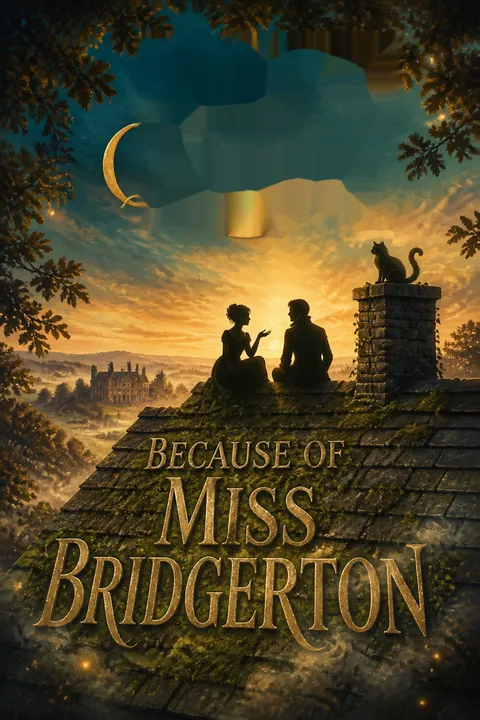
Billie Bridgerton, practical yet headstrong, climbs a tree to rescue a cat and ends up stranded on the roof of an abandoned farmhouse with a twisted ankle. Her would-be savior is George Rokesby, the staid, responsible heir to the neighboring estate. Their banter is sharp, their history long and contentious, but George's sense of duty compels him to help. The rescue is complicated by a broken ladder and the cat's indifference, forcing Billie and George into an awkward, vulnerable predicament. Their dynamic—equal parts irritation and reluctant reliance—sets the tone for a relationship that is both combative and deeply intertwined, hinting at the emotional journey ahead.
Stranded Together at Dusk
As Billie and George wait for help atop the roof, their usual antagonism gives way to moments of honesty and shared vulnerability. The threat of being stranded overnight raises the specter of scandal, and both are forced to confront the implications for their reputations. Their conversation oscillates between teasing and genuine concern, revealing the comfort and frustration of their lifelong connection. The enforced intimacy exposes cracks in their defenses, and the possibility of marriage—once laughable—suddenly looms as a real, if unwanted, consequence. The chapter ends with the arrival of George's brother Andrew, whose irreverence and charm provide both comic relief and a reminder of the families' deep bonds.
Banter, Rivalry, and Escape
Andrew's arrival allows Billie and George to descend from the roof, but not before more bickering and a near mishap. The trio's dynamic is lively, with Andrew's teasing highlighting the unique rapport between Billie and George. The physical pain of Billie's injury is matched by the emotional discomfort of being dependent on George, yet his steady support is undeniable. As they make their way home, the lines between rivalry and affection blur. The rescue, though fraught with mishaps, becomes a catalyst for introspection, forcing both Billie and George to reconsider the nature of their relationship and the roles they play within their intertwined families.
Descent and Dependence
Billie's injury necessitates George carrying her home, a gesture that is both practical and unexpectedly intimate. The journey is filled with banter, but beneath the surface lies a growing awareness of each other's strengths and vulnerabilities. Billie, usually fiercely independent, must accept help; George, often reserved, reveals a gentler side. Their conversation touches on childhood memories, family responsibilities, and the changing dynamics as siblings grow up and move away. The physical closeness and shared history create a sense of inevitability, as if their lives have always been leading to this moment of mutual reliance and unspoken understanding.
Childhood Bonds Rekindled
The return to Crake House brings together the Rokesby and Bridgerton families, highlighting the deep bonds formed in childhood. Billie's best friend Mary, now married and living elsewhere, is a reminder of the passage of time and the changes adulthood brings. The dinner table is a microcosm of family life—full of laughter, teasing, and the subtle negotiations of affection and authority. Billie's role as her father's de facto heir is contrasted with the expectations placed on her as a woman, and her sense of belonging is both affirmed and challenged. The warmth of family is tinged with nostalgia and the awareness that nothing stays the same forever.
Family, Duty, and Dinner
Dinner at Crake House is a showcase of familial expectations, social roles, and the subtle pressures of duty. Billie's unconventionality is both celebrated and gently critiqued, while George's sense of responsibility as heir is underscored by his mother's hopes for his future. The conversation ranges from hunting exploits to the realities of war, with the absence of Edward, the second Rokesby son, casting a shadow. The interplay of wit and affection reveals the complexities of love, loyalty, and the longing for connection. Underneath the surface, both Billie and George grapple with their places in the family and the future that awaits them.
House Party Schemes
Lady Bridgerton's decision to host a house party sets in motion a flurry of preparations and matchmaking schemes. The event is ostensibly to celebrate Andrew's return, but it quickly becomes a stage for romantic maneuvering and social ambition. Billie is reluctantly drawn into the planning, her discomfort with the rituals of society at odds with her mother's expectations. The impending arrival of guests—some familiar, some potential suitors—raises the stakes for both Billie and George. The house party becomes a crucible for testing identities, desires, and the possibility of change, as the boundaries between friendship, family, and romance begin to blur.
Sisters, Schedules, and Solitude
Billie's relationship with her younger sister Georgiana is explored, revealing both distance and unexpected kinship. As Billie convalesces, she is forced to slow down and reflect on her life, her ambitions, and her place within the family. The planning of the house party becomes a backdrop for conversations about femininity, independence, and the expectations placed on women. Billie's restlessness is matched by Georgiana's eagerness to participate in adult life, and their interactions are a mix of rivalry, support, and mutual learning. The solitude imposed by injury becomes an opportunity for Billie to reassess what she truly wants.
Card Houses and Confessions
The days leading up to the house party are filled with card games, banter, and moments of unexpected honesty. Andrew's attempts to build a house of cards with one arm become a metaphor for the precariousness of relationships and the effort required to maintain balance. Billie and George's interactions grow more charged, their teasing giving way to confessions and near-confessions. The presence of others—Andrew, Georgiana—serves as both a buffer and a catalyst, pushing Billie and George toward greater self-awareness. The games they play are both literal and figurative, as they navigate the shifting terrain of friendship, attraction, and fear of vulnerability.
Almost a Kiss
A moment alone nearly leads to a kiss between Billie and George, but hesitation and circumstance intervene. The near-miss is electric, leaving both unsettled and acutely aware of the growing attraction between them. The interruption—whether by conscience, timing, or the arrival of others—underscores the risks inherent in crossing the line from friendship to something more. The emotional stakes are raised, and both are left to grapple with the consequences of desire unfulfilled. The almost-kiss becomes a turning point, marking the transition from denial to reluctant acknowledgment of deeper feelings.
House Party Arrivals
The arrival of guests for the house party brings fresh challenges and rivalries. Billie is thrust into the spotlight, her unconventionality both a source of fascination and a potential liability. The presence of eligible bachelors and accomplished young ladies heightens the sense of competition and comparison. George finds himself unexpectedly jealous, while Billie is forced to confront her own insecurities about femininity, desirability, and her place in society. The house party becomes a microcosm of the larger world, with its rules, hierarchies, and opportunities for both triumph and humiliation.
Rivalries and Realizations
The house party's social games—archery, Pall Mall, and more—become arenas for rivalry, flirtation, and the testing of boundaries. Billie's skill and competitiveness set her apart, while George's growing jealousy reveals the depth of his feelings. The arrival of Lady Alexandra and Sir Reginald introduces new romantic threats, forcing both Billie and George to confront what they truly want. Amidst the laughter and competition, moments of vulnerability and honesty emerge, leading to realizations about love, identity, and the courage required to pursue happiness.
Pall Mall and Jealousy
The infamous Pall Mall game is a riot of chaos, strategy, and barely concealed emotions. Billie's determination to win is matched only by George's desire to protect—and possess—her. The game becomes a metaphor for their relationship: competitive, unpredictable, and charged with unspoken longing. Jealousy flares as other suitors vie for Billie's attention, and George's attempts to mask his feelings only make them more obvious. The playful violence of the game gives way to a deeper reckoning, as both are forced to admit—to themselves and each other—that their connection is more than mere rivalry.
Secrets, Spies, and Sacrifice
News arrives that Edward, George's brother, is missing in the American colonies, plunging both families into crisis. The frivolity of the house party is replaced by fear, grief, and the urgent need for action. George is torn between his duty to his family and the temptation to take risks in the hope of saving his brother. Billie's desire to help is matched by her frustration at being sidelined. The crisis exposes the limits of control and the necessity of trust, as both must navigate the dangers of war, secrecy, and the sacrifices demanded by love and loyalty.
London: Gowns and Guilt
Billie accompanies Lady Manston to London, where she is thrust into the world of fashion, etiquette, and social maneuvering. The process of being fitted for gowns and prepared for the ball is both physically and emotionally uncomfortable, highlighting Billie's sense of not belonging. George, meanwhile, is drawn into the intrigues of the War Office, tasked with secretive errands that test his sense of self and duty. Both struggle with guilt—Billie for her perceived inadequacies, George for his inability to save his brother—and the city becomes a crucible for transformation, forcing them to confront who they are and what they want.
The Ball and Betrayal
At the London ball, Billie is a surprising success, her beauty and vivacity drawing admiration from all quarters. Yet beneath the surface, she is plagued by insecurity and the fear of not measuring up. George, distracted by secret obligations, fails to dance with her, leaving Billie feeling abandoned and betrayed. The glittering setting only heightens the sense of isolation, as both are forced to reckon with the gap between public appearance and private longing. The night becomes a turning point, as misunderstandings and missed opportunities threaten to undo the fragile progress they have made.
Tears, Truths, and Kisses
In the aftermath of the ball, Billie confronts George, demanding answers and refusing to accept half-truths. Their argument is raw and honest, stripping away the last of their defenses. Tears are shed, confessions made, and the truth of their feelings is finally acknowledged. The barriers between them collapse, and passion erupts in a kiss that is both a culmination and a beginning. The moment is transformative, marking the end of pretense and the start of a new, more authentic relationship. Vulnerability becomes strength, and love is no longer something to be denied.
Love Declared, Futures Chosen
With love declared, Billie and George must navigate the final obstacles to their happiness. Family expectations, personal fears, and the lingering uncertainty about Edward's fate all demand resolution. Yet, together, they find the courage to choose each other, embracing both the risks and the rewards of commitment. Their union is celebrated by family and friends, and the future—once uncertain—now glows with hope. The story ends with the promise of new beginnings, as Billie and George step into their roles as partners, lovers, and stewards of their families' legacies, ready to face whatever challenges may come.
Analysis
Julia Quinn's Because of Miss Bridgerton is a masterful exploration of the enemies-to-lovers trope, set against the lush backdrop of Georgian England. At its heart, the novel interrogates the tension between societal expectation and personal authenticity, using the forced proximity of its protagonists to strip away layers of defense and reveal the vulnerability beneath. Billie and George's journey is as much about self-acceptance as it is about romance; their banter and rivalry mask a deep-seated fear of inadequacy and rejection. The narrative deftly employs social rituals, family dynamics, and symbolic games to externalize internal conflicts, making the stakes of love both tangible and universal. The subplot of Edward's disappearance adds gravity, reminding readers that happiness is often forged in the crucible of uncertainty and loss. Ultimately, the novel champions the courage to choose one's own path, to embrace imperfection, and to find joy in partnership. The lesson is clear: true love is not the absence of conflict, but the willingness to grow, forgive, and risk everything for the chance at happiness. In a modern context, the story resonates as a celebration of agency, resilience, and the transformative power of honest connection.
Review Summary
Because of Miss Bridgerton receives a 3.93/5 rating with mixed reactions. Readers praise Julia Quinn's signature wit, humor, and entertaining banter between protagonists Billie Bridgerton and George Rokesby. Many appreciate the slow-burn enemies-to-lovers romance and strong character development. However, some criticize the fragmented writing in the first half, lack of substantial plot, minimal steam/chemistry, rushed ending, and "not-like-other-girls" trope. Several note it doesn't match Quinn's earlier Bridgerton series quality. Most agree it's a light, charming read with delightful dialogue, though some found it predictable and lacking emotional depth.
People Also Read

Characters
Billie (Sybilla) Bridgerton
Billie is the eldest Bridgerton daughter, raised more as a son than a lady, managing her family's estate with competence and pride. Her impulsiveness and disregard for convention often land her in trouble, but her loyalty and compassion are unwavering. She is deeply connected to the Rokesby family, especially through childhood friendships with Mary, Andrew, and Edward. Billie's psychological journey is one of self-acceptance: learning to value her own strengths, embrace vulnerability, and allow herself to be loved. Her relationship with George evolves from rivalry to partnership, as she discovers that true intimacy requires both courage and trust.
George Rokesby
As the eldest Rokesby son and heir, George is burdened by duty and the expectations of leadership. He is logical, dependable, and often exasperated by Billie's recklessness, yet drawn to her vitality. George's internal struggle centers on his sense of inadequacy—unable to serve in the military like his brothers, he feels trapped by his role. His development is marked by a gradual softening, as he learns to express emotion, accept help, and pursue his own happiness. His love for Billie challenges his self-image and compels him to redefine what it means to be strong.
Andrew Rokesby
Andrew, the third Rokesby son, is a naval officer with a broken arm and a penchant for humor. He is Billie's childhood companion and frequent partner in mischief, providing comic relief and emotional support. Andrew's easy charm masks a deeper sense of responsibility and courage, especially in the face of family crisis. His relationship with Billie is sibling-like, marked by teasing and affection, and he serves as a foil to George's seriousness. Andrew's presence highlights the importance of laughter, resilience, and the bonds of chosen family.
Mary Rokesby Maynard
Mary is Billie's best friend and the emotional anchor of the Rokesby siblings. Her careful, thoughtful nature balances Billie's impulsiveness, and her marriage to Felix Maynard represents the transition from childhood to adulthood. Mary's role is that of advisor and mirror, helping Billie to see herself more clearly and encouraging her to pursue happiness on her own terms. Her psychoanalytic function is to embody the path of conventional fulfillment, against which Billie measures her own desires and choices.
Lady Manston (George's Mother)
Lady Manston is the driving force behind many of the story's social machinations, orchestrating house parties and matchmaking with relentless energy. Her love for her children is fierce, and her expectations are high. She represents the pressures of tradition and the complexities of maternal ambition. Her relationship with George is both supportive and demanding, while her affection for Billie is tinged with the hope of uniting the families. Lady Manston's development is seen in her eventual acceptance of Billie's unconventionality and her recognition of the importance of genuine happiness over social success.
Lady Bridgerton (Billie's Mother)
Lady Bridgerton is a source of both comfort and frustration for Billie, embodying the expectations of femininity and propriety. Her competitive friendship with Lady Manston shapes much of Billie's upbringing, and her desire for her daughter's happiness is often at odds with Billie's own sense of self. Lady Bridgerton's psychoanalytic role is to represent the internalized voice of society, challenging Billie to define her own values and priorities.
Edward Rokesby
Edward, the second Rokesby son, is a soldier missing in the American colonies. His absence is a source of anxiety and grief, uniting the families in shared fear and hope. Edward's character is defined by bravery, loyalty, and the sacrifices demanded by war. Psychologically, he represents the unattainable ideal and the pain of loss, forcing those left behind to confront their own limitations and the meaning of duty.
Georgiana Bridgerton
Billie's younger sister, Georgiana, is on the cusp of adulthood, eager to participate in the world of her elders. Her interactions with Billie reveal both admiration and rivalry, and her development mirrors Billie's own journey toward self-acceptance. Georgiana's presence highlights the generational shifts within the family and the evolving roles of women.
Sir Reginald McVie
Sir Reginald is a guest at the house party, whose flirtation with Billie provokes jealousy in George and forces both protagonists to confront their feelings. He represents the allure of novelty and the threat of competition, serving as a catalyst for emotional honesty.
Lady Alexandra Fortescue-Endicott
Lady Alexandra is a rival for both social standing and romantic attention, embodying the pressures and pitfalls of the marriage market. Her interactions with Billie are marked by subtle (and not-so-subtle) competition, highlighting the challenges faced by women in a world governed by appearance and reputation.
Plot Devices
Forced Proximity and Enemies-to-Lovers
The narrative is structured around situations that force Billie and George into close quarters—being stranded on a roof, convalescing together, and navigating social events as reluctant partners. Their initial antagonism is gradually eroded by shared vulnerability and mutual reliance, transforming rivalry into affection. This classic romance device is used to explore themes of identity, trust, and the courage required to embrace change.
Social Rituals and Family Expectations
Balls, house parties, and family dinners serve as arenas for testing and revealing character. The rituals of courtship and the pressures of reputation create external and internal conflicts, forcing characters to negotiate between personal desire and social duty. The interplay of public and private selves is a recurring motif, highlighting the tension between authenticity and conformity.
Symbolic Games and Competitions
The recurring motif of games—card houses, Pall Mall, archery—serves as a metaphor for the risks and strategies of love. These competitions are both literal and symbolic, exposing hidden desires, fears, and the willingness to take chances. The outcomes of the games often mirror the emotional progress of the protagonists, reinforcing the connection between play and vulnerability.
Secrets, Sacrifice, and War
The subplot of Edward's disappearance introduces themes of sacrifice, uncertainty, and the limits of control. The war serves as both backdrop and catalyst, forcing characters to confront loss, redefine duty, and accept the unpredictability of life. The secrets and intrigues of the War Office add layers of suspense and moral ambiguity, challenging characters to balance personal happiness with collective responsibility.
Narrative Structure and Foreshadowing
The story unfolds through alternating scenes of action, dialogue, and introspection, allowing for deep psychological exploration. Foreshadowing is used to build tension—early banter hints at deeper feelings, while minor mishaps presage larger crises. The structure mirrors the emotional arc of the protagonists, moving from conflict and denial to acceptance and union.
About the Author
Other books by Julia Quinn








Download PDF
Download EPUB
.epub digital book format is ideal for reading ebooks on phones, tablets, and e-readers.








































