
Plot Summary
Festival Dreams and Revelations
In a world where gods walk among mortals, Kazuma finds himself swept up in the preparations for Axel's annual festival. The city is alive with anticipation, and even the notorious Axis cultists are on their best behavior. Amid the nostalgic stalls and bonfires, Kazuma is approached by Aqua, who thanks him for supporting her cult. But the real surprise comes when Kazuma confronts Chris, his friend and fellow thief, and uncovers her true identity as the goddess Eris. Their playful banter gives way to a deeper conversation about duty, friendship, and the burdens of divinity. Eris, as Chris, reveals her reasons for living among mortals: to recover lost divine relics and to befriend the lonely noblewoman, Darkness. The revelation forges a new bond between Kazuma and Chris, setting the stage for a festival unlike any other.
Secrets Beneath Smiling Faces
As the city's leadership changes hands after a corrupt lord's downfall, Kazuma's party is drawn into the aftermath. Darkness, now acting as temporary lord, isolates herself, while Kazuma seeks out Chris for advice. Their conversation is laced with confessions and apologies, as Kazuma admits to past misdeeds and Chris, as Eris, confides her struggles balancing her divine and mortal personas. The two share a rare moment of vulnerability, with Kazuma expressing genuine affection for both sides of Chris/Eris. But the peace is short-lived, as Chris enlists Kazuma's help to recover the Sacred Armor Aigis, a powerful relic. Despite his reluctance, Kazuma is swayed by Eris's earnest plea, and the two set out on a new quest, their friendship deepened by shared secrets and mutual respect.
The Chick, the Devil, and the Goddess
Back at home, Kazuma's party is embroiled in a farcical dispute involving Vanir, the devil, and Aqua, the self-proclaimed goddess. The birth of Emperor Zell, a chick believed by Aqua to be a dragon, becomes the center of attention. The chick imprints on Vanir, much to Aqua's dismay, and the household descends into comedic chaos as everyone debates the chick's true nature and potential. Amidst the absurdity, the group's dynamics are laid bare: Aqua's childishness, Vanir's mischief, Wiz's guilt, and Darkness's stoic suffering. The episode highlights the party's dysfunctional yet endearing relationships, with Kazuma playing the reluctant mediator. The magical chick, infused with the mana of powerful beings, becomes a symbol of the unpredictable magic and camaraderie that define their lives.
Rival Faiths, Rival Fools
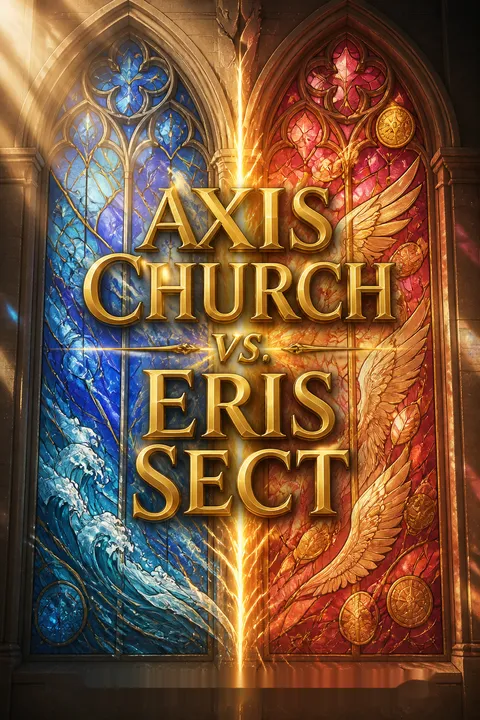
The festival's approach brings simmering tensions between the Axis Cult and the Eris Church to a boil. Aqua, feeling overshadowed by the Eris Festival, demands her own celebration, dragging Megumin and Chris into her schemes. Kazuma, ever the pragmatist, negotiates with the city's merchants to co-host both festivals, turning religious rivalry into a commercial opportunity. The Axis cultists, led by the eccentric Cecily, prove as troublesome as ever, while the Eris cultists struggle to maintain dignity. The city is swept up in preparations, with Kazuma manipulating both sides for maximum profit and entertainment. The stage is set for a festival that will test faith, friendship, and the limits of common sense.
Schemes, Permits, and Pyramid Plots
As festival preparations intensify, Kazuma's role as advisor grows. He proposes outlandish ideas—swimsuit poster girls, water fights, and a costume parade—under the guise of tradition and safety. Darkness, burdened by lordship duties, reluctantly approves his plans. Meanwhile, Chris and Kazuma plot to recover the Sacred Armor Aigis from a corrupt noble, leading to a botched heist and a noisy, sentient suit of armor. The Axis cultists, emboldened by their newfound success, hatch a pyramid scheme under Aqua's unwitting guidance, threatening to turn the festival into a financial disaster. Amidst the chaos, Kazuma's schemes both enrich and endanger the city, blurring the line between cleverness and folly.
The Sacred Armor's Dilemma
The quest for the Sacred Armor Aigis takes center stage as Kazuma and Chris, in their thief personas, infiltrate the noble's mansion. Aigis, the sentient armor, proves to be as vain and stubborn as any mortal, refusing to serve a new master unless they meet its absurd standards. The ensuing struggle is both physical and verbal, with Kazuma and Chris outwitted by the armor's immunity to magic and skills. Their attempts to subdue and negotiate with Aigis devolve into slapstick, highlighting the absurdity of their world. Ultimately, Aigis escapes, vowing to find a worthy (and beautiful) master, leaving Kazuma and Chris to face the consequences of their failed heist.
Monster Hunts and Summer Madness
With the festival looming, the city's adventurers are mobilized to clear out dangerous monsters—especially the dreaded cicadas whose incessant song threatens the peace. Kazuma's party joins a large-scale hunt, each member displaying their quirks: Darkness revels in being a meat shield, Megumin unleashes her Explosion magic at the worst possible moment, and Aqua, surprisingly, proves competent with support magic. The hunt descends into chaos as insects swarm, adventurers panic, and Megumin is arrested for using forbidden magic. The episode captures the frenetic energy of summer, the camaraderie of shared struggle, and the ever-present absurdity of Kazuma's world.
Festival of Chaos Unleashed
The long-awaited festival erupts in a riot of color, noise, and confusion. Axis cultists' stalls range from the bizarre (giant frog tadpoles, fake dragons) to the outright fraudulent, while the Eris Church maintains a veneer of respectability. Kazuma, forced to rescue the Axis side from financial ruin, opens a wildly popular yakisoba stall, blending Japanese nostalgia with local flavor. The festival becomes a battleground of creativity and incompetence, with Kazuma's innovations saving the day. Yet, beneath the revelry, tensions simmer as both cults vie for dominance, and Kazuma's manipulations threaten to spiral out of control.
Swimsuits, Stalls, and Swindles
As the festival continues, Kazuma's schemes bear fruit—and consequences. The Axis cult's initial failures give way to success as they adopt his ideas, but their newfound prosperity leads to arrogance and a disastrous pyramid scheme. Darkness, overwhelmed by complaints and scandals, confronts Kazuma about his role as the festival's mastermind. Meanwhile, Megumin and Darkness's rivalry over Kazuma's affections comes to a head, exposing the tangled web of relationships within the party. The festival, meant to unite the city, instead becomes a mirror of its divisions, with faith, greed, and love colliding in spectacular fashion.
Fireworks, Feelings, and Fiascos
The festival's climax is marked by a fireworks display that doubles as a desperate defense against swarming insects. Kazuma's hopes for a romantic evening with Megumin are dashed by duty and disaster, while Darkness's heartfelt confession is interrupted by awkwardness and misunderstanding. The night is a whirlwind of emotions—anticipation, disappointment, longing, and laughter—as the characters navigate the blurred lines between friendship and love. The failed heist for Aigis, Megumin's arrest, and the city's collective exhaustion underscore the bittersweet nature of celebration in a world where nothing goes as planned.
Beauty Pageant, Divine Descent
In a last-ditch effort to restore the Eris Church's prestige, Kazuma orchestrates a beauty pageant, luring Aigis with the promise of beautiful masters. The event devolves into farce, with contestants ranging from succubi to shopkeepers, and the audience demanding ever more outrageous displays. The true miracle occurs when Eris herself, in Chris's form, enters the stage, captivating the crowd with her grace and humility. The city is awestruck by the goddess's presence, and Aigis, overwhelmed, finally submits to her as its master. The pageant becomes a moment of collective awe, reaffirming faith and unity in the most unexpected way.
Brawls, Blessings, and Betrayals
The beauty pageant's aftermath is a microcosm of the festival itself: a riotous blend of joy, envy, and violence. Darkness, humiliated and enraged, brawls with the crowd, while Kazuma and Aigis orchestrate Eris's escape from her adoring (and dangerous) followers. The city's faiths, once at odds, are momentarily united in their awe of the goddess. Yet, beneath the surface, old rivalries and new grievances simmer. Kazuma, ever the opportunist, finds himself both hero and scapegoat, his actions shaping the city's fate even as he is swept along by forces beyond his control.
Aftermath: Guilt, Growth, and Gratitude
As the festival ends, the city reckons with the chaos left in its wake. Kazuma is arrested, Aqua is exposed for her pyramid scheme, and Darkness is left to clean up the mess. Yet, amidst the recriminations, there is growth: Aqua, despite her follies, shows moments of genuine leadership; Darkness and Megumin confront their feelings for Kazuma; and Chris, as Eris, finds solace in the gratitude of her followers. The party's bonds are tested but ultimately strengthened, as each member learns the value of forgiveness, humility, and perseverance.
The Goddess's True Reward
In the quiet after the storm, Chris/Eris reflects on her role as both goddess and friend. A chance encounter with two young sisters offering flowers in thanks to Eris moves her deeply, affirming the worth of her hidden labors. Kazuma, recognizing her loneliness and dedication, offers words of genuine respect, prompting a rare moment of vulnerability from the goddess. The chapter is a meditation on the unseen sacrifices of those who serve others, and the quiet, profound rewards of gratitude and connection.
New Beginnings, Old Habits
With the festival over, the city returns to its usual rhythm. Kazuma, now an honorary Axis cultist against his will, grapples with the consequences of his actions. Aqua, undeterred, plots new schemes, while Darkness resumes her adventuring life. Emperor Zell, the magical chick, remains a symbol of the party's unpredictable fortunes. The group's banter and bickering resume, but beneath the surface, there is a sense of renewal—a recognition that, despite their flaws, they are stronger together.
A Heart That Never Gives Up
The story closes with Chris, her spirit buoyed by the kindness of strangers and the support of friends. The "chris" flower, symbolizing perseverance, becomes a metaphor for her journey: a goddess who works tirelessly behind the scenes, never seeking praise, but finding fulfillment in the happiness of others. Kazuma's teasing proposal and Chris's bashful gratitude encapsulate the story's blend of comedy, warmth, and sincerity. The festival may be over, but the bonds forged in its fires endure.
The Promise of Tomorrow
As the dust settles, the party looks to the future. Megumin hints at deepening her relationship with Kazuma, Aqua dreams up new money-making schemes, and Kazuma contemplates a life of leisure and mischief. The city, now a holy site thanks to Eris's appearance, buzzes with new energy. The story ends not with grand resolutions, but with the promise of more adventures, more laughter, and more chances to grow. In a world where gods and fools walk side by side, tomorrow is always another day for chaos—and for hope.
Analysis
Axis Church vs. Eris Sect is a masterful blend of comedy, satire, and heartfelt storytelling, using the chaos of a festival to explore themes of faith, identity, and community. At its core, the novel is a meditation on the masks we wear—divine, social, or personal—and the courage it takes to reveal our true selves. Through the lens of religious rivalry and festival farce, the story critiques the absurdities of dogma and the commodification of belief, while celebrating the messy, unpredictable bonds that unite us. The characters' growth is rooted not in grand heroics, but in small acts of kindness, vulnerability, and forgiveness. The festival, with its blend of tradition and innovation, becomes a metaphor for the world itself: a place where chaos and order, folly and wisdom, coexist in uneasy harmony. Ultimately, the novel suggests that meaning is found not in perfection, but in the willingness to try, to fail, and to try again—together. In a world where gods and fools walk side by side, the greatest miracle is the enduring power of friendship, gratitude, and hope.
Review Summary
Axis Church vs. Eris Sect receives a 4.16/5 rating across 792 reviews. Most reviewers give it 3/5, describing it as an enjoyable but transitional volume with minimal plot development. The author acknowledges this in the afterword. Readers appreciated the comedy and character moments, particularly between Kazuma and Chris/Eris, though some noted Aqua and Darkness had limited presence. Several called it "filler" or a "breather" episode. Fans of the series still found it entertaining despite its aimless nature, praising the signature Konosuba humor while acknowledging it's weaker than previous volumes.
People Also Read
Characters
Satou Kazuma
Kazuma is the pragmatic, self-deprecating protagonist whose cynicism masks a deep loyalty to his friends. Thrust into a world of magic and madness, he navigates chaos with wit, sarcasm, and a knack for opportunism. His relationships with the women in his party—Aqua, Megumin, Darkness, and Chris—are fraught with comedic tension, romantic confusion, and genuine affection. Psychologically, Kazuma is driven by a desire for comfort and recognition, yet he cannot resist the call to action when his friends are in need. His development is marked by a gradual acceptance of responsibility, a growing capacity for empathy, and a willingness to embrace both the absurdity and the beauty of his new life.
Aqua
Aqua is the self-absorbed, impulsive goddess of water whose antics drive much of the story's chaos. Simultaneously revered and ridiculed, she oscillates between moments of surprising competence and utter foolishness. Her rivalry with Eris, desire for adoration, and motherly attachment to Emperor Zell reveal a complex psyche: insecure, attention-seeking, yet capable of genuine care. Aqua's development is subtle—her brief flashes of maturity and leadership are often undermined by her own hubris, but her loyalty to her friends and her unshakeable optimism make her an indispensable, if exasperating, companion.
Megumin
Megumin is the eccentric archmage obsessed with Explosion magic, whose childish bravado masks a longing for acceptance and love. Her relationship with Kazuma is a dance of teasing, affection, and unspoken feelings, culminating in moments of vulnerability and sincerity. Psychologically, Megumin is driven by a need to prove herself, both as a mage and as a person worthy of companionship. Her development is marked by increasing openness, a willingness to trust others, and a gradual embrace of her own desires beyond magic.
Darkness (Lalatina Dustiness Ford)
Darkness is the party's tank, a noblewoman whose stoic exterior hides a penchant for self-sacrifice and a masochistic streak. Her struggle to reconcile her duties as a noble, her feelings for Kazuma, and her desire for acceptance forms a core emotional arc. Darkness's psychological complexity lies in her simultaneous craving for pain and validation, her fear of vulnerability, and her deep-seated sense of honor. Her development is seen in her willingness to express gratitude, confront her own desires, and accept the messy, unpredictable nature of her chosen family.
Chris / Eris
Chris is the mortal guise of Eris, the goddess of luck and fortune. As Chris, she is a chivalrous thief and loyal friend; as Eris, she is compassionate, dutiful, and quietly burdened by her responsibilities. Her dual identity creates a tension between the desire for normalcy and the weight of divinity. Psychologically, Chris/Eris is marked by loneliness, humility, and a yearning for genuine connection. Her development is a journey from isolation to acceptance, finding meaning in the gratitude of others and the bonds she forges as both goddess and companion.
Vanir
Vanir is a greater devil whose love of chaos is matched only by his sharp intellect. He serves as both antagonist and comic relief, manipulating events for his own amusement while occasionally aiding the party. Vanir's psychological profile is that of a trickster: detached, analytical, yet oddly principled. His interactions with Aqua, Wiz, and Emperor Zell reveal a begrudging affection for mortals, and his schemes often serve as catalysts for the party's growth.
Wiz
Wiz is an undead lich with a kind heart and a hopeless business sense. Her guilt over Vanir's misdeeds, her struggles to keep her shop afloat, and her role as a mediator in the party's disputes highlight her vulnerability and resilience. Psychologically, Wiz is driven by a desire to belong and to atone for her past. Her development is seen in her growing assertiveness and her willingness to embrace both her strengths and her flaws.
Cecily
Cecily is the embodiment of the Axis Cult's eccentricity: bold, manipulative, and utterly lacking in shame. Her devotion to Aqua borders on fanaticism, and her schemes—ranging from illegal food sales to pyramid plots—drive much of the festival's chaos. Psychologically, Cecily is a study in self-delusion and opportunism, yet her loyalty and energy make her a surprisingly effective agent of change.
Sacred Armor Aigis
Aigis is a divine relic with a mind of its own, obsessed with finding a beautiful master and avoiding pain. Its interactions with Kazuma and Chris are marked by comedic bickering and unexpected depth, as Aigis grapples with its own purpose and desires. Psychologically, Aigis is a mirror for the story's themes of worth, service, and the search for meaning beyond function.
Emperor Zell
Emperor Zell, the chick believed to be a dragon, is both a running gag and a symbol of the party's unpredictable fortunes. Imbued with the mana of powerful beings, Zell's presence brings out the best and worst in the group, serving as a catalyst for growth, conflict, and laughter. Psychologically, Zell represents innocence, potential, and the enduring hope that even the most unlikely creatures can change the world.
Plot Devices
Dual Identities and Hidden Truths
The story thrives on the tension between appearance and reality: Chris as Eris, Aqua's divine nature, Aigis's sentience, and Kazuma's role as both schemer and savior. These dualities create opportunities for dramatic irony, comedic misunderstandings, and moments of genuine revelation. The use of secret identities allows characters to explore facets of themselves otherwise suppressed, fostering empathy and connection. Foreshadowing is deftly employed, with early hints about Chris's true nature and Aigis's personality paying off in later chapters. The narrative structure alternates between farce and sincerity, using festival preparations as a backdrop for character development and thematic exploration.
Satire of Faith and Authority
The Axis Cult and Eris Church serve as exaggerated mirrors of real-world institutions, their conflicts highlighting the absurdities of dogma, bureaucracy, and groupthink. The festival becomes a microcosm of society, where faith, commerce, and personal ambition collide. Kazuma's manipulation of both cults for profit satirizes the commodification of belief, while the eventual unity achieved through chaos suggests a deeper yearning for community and meaning.
Comedy of Errors and Escalation
The story's humor is rooted in escalation: small misunderstandings snowball into citywide disasters, and every attempt at order breeds new chaos. This device not only entertains but also reveals character: Kazuma's pragmatism, Aqua's impulsiveness, and Chris's humility are all tested by the relentless march of folly. The festival's progression—from planning to pandemonium—mirrors the characters' internal journeys, culminating in moments of catharsis and growth.
Emotional Subtext and Romantic Tension
Beneath the slapstick lies a web of emotional currents: Megumin's confessions, Darkness's gratitude, Chris's loneliness, and Kazuma's conflicted affections. The use of near-confessions, interrupted moments, and ambiguous gestures creates a sense of longing and possibility, allowing readers to invest in the characters' growth. The festival, with its traditions of gratitude and celebration, becomes a stage for these emotions to surface and be transformed.
この素晴らしい世界に祝福を! Konosuba: God's Blessing on This Wonderful World! Light Novel Series
Download PDF
Download EPUB
.epub digital book format is ideal for reading ebooks on phones, tablets, and e-readers.








































