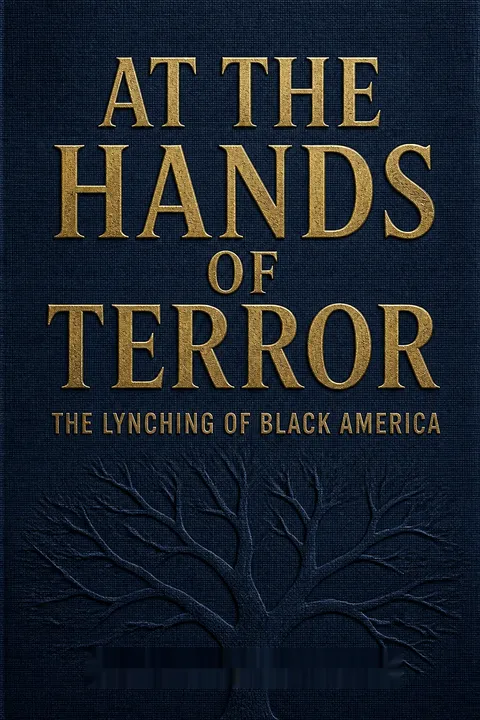

Key Takeaways
1. Lynching's Twisted Evolution: From Frontier Justice to Racial Terror
“The practice whereby mobs capture individuals suspected of crime, or take them from the officers of the law, and execute them without any process at law, or break open jails and hang convicted criminals, with impunity, is to be found in no other country of a high degree of civilization.”
Early origins. "Lynch law" emerged in the late 18th century, initially referring to non-lethal summary punishments like flogging, often in frontier areas lacking formal justice systems. Charles Lynch, a Virginia justice of the peace during the Revolutionary War, lent his name to this practice, which was seen as a temporary necessity for maintaining order against horse thieves and Tories. This early vigilantism was often viewed as a valued community service, a "people's justice" in the absence of established courts.
Racial transformation. By the mid-19th century, especially with the rise of abolitionist sentiment and fears of slave insurrections, lynching began to transform. It became a tool of caste oppression, primarily targeting Black individuals. The Mississippi lynchings of 1835, fueled by rumors of a massive slave uprising, marked a shift towards lethal mob violence, often against Black people, and set a precedent for using extralegal means to maintain racial hierarchy.
Post-Reconstruction terror. After the Civil War, during Reconstruction, lynching solidified as a systematic reign of terror. The Ku Klux Klan, formed by Confederate veterans, used masked night rides, whippings, and murders to suppress Black political participation and economic advancement. This period saw thousands of Black Americans killed, often with tacit public complicity and the coroner's verdict of "Death at the hands of persons unknown," affirming the community's collective will.
2. The "Rape Myth": A Fabricated Justification for Brutality
“The miscegenation laws of the South only operate against the legitimate union of the races; they leave the white man free to seduce all the colored girls he can, but it is death to the colored man who yields to the force and advances of a similar attraction in white women.”
A convenient excuse. While lynching had diverse causes, the most sensational and commonly repeated excuse was the alleged sexual assault of a white woman by a Black man. This "rape myth" became a powerful tool to incite mobs, even when the accusation was fabricated or exaggerated. Investigations by figures like Ida B. Wells-Barnett revealed that rape was alleged in only a minority of cases, and often masked other motivations.
Hypocrisy and control. The myth served to maintain white supremacy by portraying Black men as inherently beastial and a threat to white womanhood, thereby justifying extreme violence. This contrasted sharply with the widespread sexual exploitation of Black women by white men, a hypocrisy that fueled white guilt and anxiety. The fear of "race pollution" and the blurring of caste lines made any consensual relationship between a Black man and a white woman unthinkable, leading to "rape" charges even for minor transgressions.
Spectacle and sadism. The "rape myth" also contributed to the perverse cruelty of spectacle lynchings, where victims were tortured, mutilated, and burned alive before large crowds. This ritualized violence, often accompanied by castration, was seen as a defense of white honor and a warning against Black aspiration. The public display of brutality reinforced the idea that Black men's alleged sexual insatiability was a threat requiring the most horrific forms of retribution.
3. Ida B. Wells: The Fearless Crusader Against Mob Rule
“There is nothing we can do about the lynching now, as we are outnumbered and without arms. There is therefore only one thing left we can do; save our money and leave a town which will neither protect our lives and property, nor give us a fair trial in the courts, but takes us out and murders us in cold blood when accused by white persons.”
Personal awakening. Born into slavery, Ida B. Wells became a pioneering journalist and anti-lynching crusader. Her personal experience with railroad segregation and, more profoundly, the 1892 lynching of three Black Memphis businessmen (including her godson, Thomas Moss) for economic competition, shattered her belief that lynching was solely about rape. She realized it was a tool to terrorize and suppress Black economic and social progress.
Exposing the truth. Wells meticulously investigated lynchings, collecting statistics and exposing the falsehood of the "rape myth." Her pamphlet "Southern Horrors: Lynch Law in All Its Phases" (1892) boldly asserted that alleged rapes were often consensual relationships or trumped-up charges. She challenged the South's pretense of virtue, arguing that white men's sexual exploitation of Black women was the true source of racial hypocrisy.
Global advocacy. Forced to flee Memphis for her life, Wells continued her crusade from New York and on lecture tours in Britain. She shocked international audiences with graphic details of American mob violence, contrasting it with the supposed "civilization" of the United States. Her efforts, though often met with hostility and attempts to discredit her, were instrumental in raising national and international awareness, forcing Americans to confront the "Shame of America."
4. The "Atlanta Compromise" and the Rise of Black Dissent
“So far as Mr. Washington preaches Thrift, Patience, and Industrial Training for the masses, we must hold up his hands and strive with him… . But so far as Mr. Washington apologizes for injustice, North or South, does not rightly value the privilege and duty of voting, belittles the emasculating effects of caste distinctions, and opposes the higher training and ambition of our brighter minds … we must unceasingly and firmly oppose them.”
Washington's accommodation. Booker T. Washington, through his 1895 "Atlanta Compromise" speech, became the most influential Black leader, advocating for Black economic self-sufficiency and industrial training while downplaying demands for political and social equality. This approach, popular with white philanthropists and politicians, was seen as a pragmatic way to navigate the harsh realities of Jim Crow and avoid white backlash.
Du Bois's critique. W.E.B. Du Bois, initially supportive, grew critical of Washington's philosophy, arguing it placed the "chief onus for his condition on the Negro himself" and inadvertently condoned racial injustice. In "The Souls of Black Folk" (1903), Du Bois asserted that Washington's approach led to:
- Formal disenfranchisement of Black voters.
- Legalized inferiority for Black citizens.
- Withdrawal of educational support for Black children.
Du Bois believed that true progress required aggressive defense of civil rights, not acquiescence.
Militant challenges. Other Black leaders, like William Monroe Trotter, directly confronted Washington's dominance, viewing him as a political boss rather than an educator. Trotter's "Boston Riot" (1903) and the subsequent formation of the Niagara Movement (1905) explicitly demanded full manhood rights—political, civil, and social—and rejected gradualism. This growing dissent laid the groundwork for more confrontational strategies in the fight for Black equality.
5. Media's Double-Edged Sword: Propaganda and Counter-Narrative
“It is like writing history with lightning,” exclaimed the president. “And my only regret is that it is all so terribly true.”
"The Birth of a Nation." D.W. Griffith's 1915 film, "The Birth of a Nation," was a cinematic masterpiece that also served as powerful racist propaganda. It depicted Reconstruction as a period of Black corruption and white oppression, glorifying the Ku Klux Klan as heroic saviors of white womanhood and Southern civilization. President Woodrow Wilson's endorsement, "like writing history with lightning," highlighted the film's profound impact on shaping public perception of history and race.
NAACP's counter-offensive. The NAACP recognized the film's danger and launched a vigorous campaign against it, exposing its historical inaccuracies and racist stereotypes. They published "The Reason Why the Colored American Is Not in the World's Columbian Exposition" (1893) and later "The Waco Horror" (1916), using graphic photographs and detailed investigations to reveal the brutal reality of lynching. This marked a strategic shift to use media to counter pervasive racist narratives.
The power of imagery. The film's widespread popularity, despite protests, demonstrated the potent influence of visual media in reinforcing racial prejudice. However, the NAACP's counter-propaganda, particularly the shocking images of lynching victims, forced a national reckoning. This battle over narrative and imagery underscored the critical role of media in shaping public opinion, whether to incite hatred or to awaken conscience.
6. The Supreme Court's Slow Awakening to "Legal Lynchings"
“The failure of the trial court to give them reasonable time and opportunity to secure counsel was a clear denial of due process. To do that is not to proceed promptly in the calm spirit of regulated justice but to go forward with the haste of the mob.”
Erosion of rights. Post-Reconstruction Supreme Court decisions systematically dismantled federal protections for Black citizens, effectively sanctioning states' rights to discriminate. Cases like Plessy v. Ferguson (1896) established "separate but equal," legalizing segregation, while others limited federal intervention in individual civil rights violations, leaving Black Americans vulnerable to state-level injustices.
The Scottsboro precedent. The Scottsboro Boys case (1931), involving nine Black youths falsely accused of rape, became a landmark in challenging "legal lynching." The Supreme Court's ruling in Powell v. Alabama (1932) found that inadequate legal counsel in a hostile environment constituted a denial of due process. This decision, though limited, was a crucial step towards federal oversight of state criminal proceedings, acknowledging that trials could be mere "forms" of justice.
Expanding due process. Subsequent Supreme Court rulings, such as Norris v. Alabama (1935) on jury exclusion and Brown v. Mississippi (1936) against coerced confessions, further chipped away at state autonomy in criminal justice. These decisions, part of a "due-process revolution," established stronger federal standards for fair trials, recognizing that mob influence and systemic bias could render state proceedings illegitimate, effectively bringing "Judge Lynch indoors."
7. The Great Migration: Economic Shifts and Northern Complicity
“After twenty years of seeing my people lynched for any offense from spitting on the sidewalk to stealing a mule, I made up my mind that I would turn the prow of my ship toward the part of the country where the people at least made a pretense at being civilized.”
Push factors. The early 20th century witnessed the Great Migration, as millions of Black Southerners fled the region's oppressive conditions. Economic hardship, exacerbated by the boll weevil and floods, combined with pervasive Jim Crow laws, daily indignities, and the constant threat of lynching, served as powerful "push" factors. Black newspapers like the Chicago Defender actively encouraged this exodus, publishing atrocity stories and offering advice for moving North.
Northern realities. While the North offered the promise of better jobs and less overt discrimination, it was not a panacea. The influx of Black migrants often fueled white resentment, leading to competition for housing and jobs, and sparking race riots in Northern cities like Chicago (1919) and East St. Louis (1917). These incidents demonstrated that racial animosity and mob violence were not exclusive to the South, challenging the notion of Northern moral superiority.
Economic leverage. The migration, however, also gave Black Americans new leverage. The loss of cheap Black labor began to concern Southern economic interests, prompting some officials to reconsider their tolerance of lynching. This economic pressure, coupled with the growing concentration of Black voters in Northern cities, created a new political force that would eventually influence federal legislation and civil rights advocacy.
8. Southern White Women: Challenging the "Protection of Womanhood"
“They had more power than they knew. They had the power of spiritual blackmail over a large part of the white South.”
A sacred ideal. The "protection of white womanhood" was a cornerstone of Southern lynching ideology, used to justify horrific violence against Black men. White women were placed on a pedestal of purity, their honor supposedly requiring the swift, brutal retribution of lynch mobs. This ideal, however, often masked deeper anxieties about racial mixing and white male control.
Breaking the silence. In the 1930s, a new force emerged: Southern white women themselves, organized as the Association of Southern Women for the Prevention of Lynching (ASWPL), led by Jessie Daniel Ames. They publicly repudiated the notion that lynching was necessary for their protection, asserting their own agency and moral authority. This was a "treason against a Southern tradition," as Lillian Smith noted, wielding "spiritual blackmail" against the men who claimed to protect them.
Strategic impact. The ASWPL's efforts were pivotal. They lobbied sheriffs, educated communities, and used rapid communication to intervene in potential lynchings. By challenging the core justification for lynching from within Southern society, they helped shift public opinion, making it harder for men to "hide behind their skirts." Their work, alongside the Commission on Interracial Cooperation (CIC), demonstrated that internal Southern voices could effectively combat racial violence.
9. The Depression Era: Economic Hardship and Ideological Battles
“The South,” Du Bois wrote, “[has] built [its] prosperity and private fortunes upon a treatment of the unfortunate which is contemptible, and in addition to this they have tried through their treatment of Negroes to satisfy the blood lust of a sadistic people… . They are going to continue it until the South becomes civilized and no one living is going to see that day.”
Lynching's resurgence. The Great Depression brought a demoralizing resurgence in lynchings in the early 1930s, as economic despair exacerbated racial tensions. This uptick challenged the optimism of reformers who believed lynching was in decline, highlighting its deep roots in Southern society and its connection to economic instability.
New ideological fronts. The era saw the emergence of the International Labor Defense (ILD), linked to the American Communist Party, which framed lynching as a symptom of economic oppression and a global struggle for minority rights. This introduced a new, more radical voice to the anti-lynching movement, often clashing with the NAACP's constitutional approach but effectively drawing international attention to cases like the Scottsboro Boys.
Fascism's shadow. The rise of fascism in Europe cast a new light on American mob violence. Lynchings were increasingly viewed as parallels to Nazi atrocities, forcing Americans to confront the hypocrisy of fighting for democracy abroad while tolerating barbarism at home. This international scrutiny, coupled with the New Deal's expansion of federal power, created a more receptive environment for federal intervention in civil rights, despite continued Southern resistance.
10. World War II: A Moral Imperative for Civil Rights
“Our very proclamations of what we are fighting for have rendered our own inequities self-evident. When we talk of freedom and opportunity for all nations the mocking paradoxes in our own society become so clear they can no longer be ignored.”
Wartime hypocrisy. World War II, fought as a crusade against evil and for democracy, starkly exposed America's racial paradoxes. The nation's rhetoric of freedom and equality abroad made its own domestic segregation and racial violence "glaringly apparent." This moral inconsistency created immense pressure for internal reform, as the world witnessed the full horror of European genocide.
Black activism's new militancy. Black Americans, having fought for democracy overseas, returned with a renewed determination to secure it at home. A. Philip Randolph's threatened 1941 March on Washington forced President Roosevelt to issue an executive order banning discrimination in defense industries, demonstrating the power of mass, nonviolent direct action. Organizations like CORE pioneered sit-ins and freedom rides, directly challenging segregation.
Intellectual and literary shifts. Postwar intellectual and literary works further fueled this awakening. Gunnar Myrdal's "An American Dilemma" (1944) argued that America's future depended on confronting its racial problems, predicting that the "American Creed" would ultimately compel change. Richard Wright's "Black Boy" (1945) and Lillian Smith's "Strange Fruit" (1944) vividly portrayed the psychological toll of racism, making the human cost of segregation undeniable.
11. The End of Impunity: Federal Power Confronts "Under Color of Law"
“To act ‘under color’ of law does not require that the accused be an officer of the State. It is enough that he is a willful participant in joint activity with the State or its agents.”
Postwar violence and federal response. The immediate postwar years saw a surge in violence against returning Black veterans and civil rights activists, prompting President Truman to initiate bold federal civil rights policies. His administration's "To Secure These Rights" (1947) called for federal action against lynching and discrimination, and he desegregated the armed forces, signaling a new era of federal commitment.
Landmark legal battles. The Supreme Court's Brown v. Board of Education (1954) declared "separate but equal" unconstitutional, dismantling the legal basis for segregation. This, coupled with cases like the Emmett Till (1955) and Mack Charles Parker (1959) lynchings, galvanized national attention. The FBI, under pressure, began more thorough investigations, challenging the long-standing impunity of lynchers.
Cracking the "Closed Society." The 1964 murders of Goodman, Schwerner, and Chaney in Mississippi became a pivotal moment. The Supreme Court's ruling in United States v. Price (1966) dramatically expanded the application of Reconstruction-era civil rights statutes (Sections 241 and 242), allowing federal prosecution of private citizens who conspired with state officials to violate constitutional rights "under color of law." This landmark decision finally provided the legal teeth to prosecute lynch mobs, ending an era of unchecked racial terror and marking a significant victory in the long fight for justice.
Review Summary
At the Hands of Persons Unknown is a powerful, meticulously researched history of lynching in America. Readers praise Dray's unflinching portrayal of this brutal practice and its deep impact on race relations. The book is described as essential reading, offering insights into the origins of civil rights movements and the ongoing effects of racial violence. While some found the graphic details disturbing, most consider it a necessary and eye-opening exploration of a dark chapter in American history. The book's thorough examination of lynching's societal context and gradual decline is particularly commended.
People Also Read






Download PDF
Download EPUB
.epub digital book format is ideal for reading ebooks on phones, tablets, and e-readers.








































