
Plot Summary
Night's Transformation Unveiled
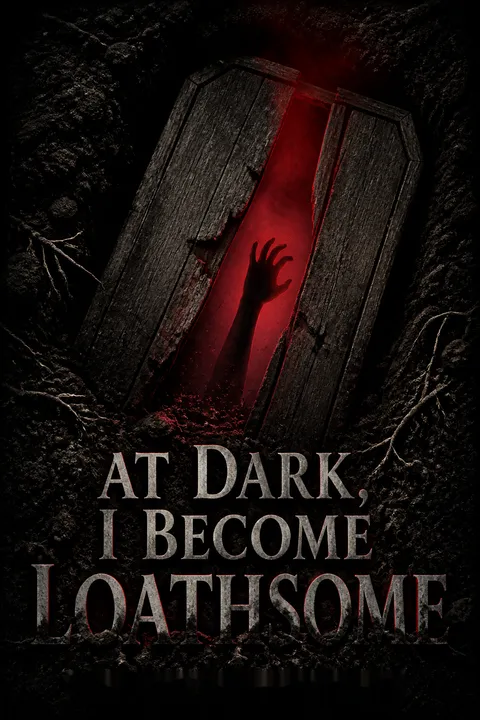
The narrator, Ashley, confesses that darkness changes him, not into a violent criminal, but into someone unrecognizable, loathsome, and misunderstood. He works as a facilitator of "fake death" rituals, burying clients alive for thirty minutes to help them confront their own mortality and pain. His appearance—piercings, horn implants, and elfin ears—marks him as an outsider, a living symbol of his internal alienation. The night is when desires and guilt surface, and Ashley's clients, seeking transformation, never see his true self. He is both caretaker and secret-keeper, haunted by the knowledge that, at dark, he becomes something monstrous, a secret to be hidden away.
Rituals of the Living Dead
Ashley guides a young woman through his ritual: she is buried alive in a coffin, equipped with an oxygen tank, for thirty minutes. The process is clinical yet intimate, designed to simulate death and offer a chance at psychological rebirth. Aftercare is essential—some clients need to be held, others want to be left alone. The ritual is Ashley's way of giving meaning to his own pain and to the pain of others. The woman emerges changed, grateful, and Ashley, despite his own emotional distance, feels a fleeting connection. Yet, the encounter is brief, and both return to their separate, lonely lives, forever altered by the darkness.
Grief's Unbearable Weight
Ashley's rituals are rooted in his own grief: the disappearance of his son, Bailey, and the death of his wife, Pema. He recalls the night Bailey vanished, a moment that fractured his world and left him adrift. The rituals he performs for others are a way to distract himself from his own emptiness, but the relief is temporary. He is haunted by stories of loss and the idea that heaven is "a dark room"—a place of nothingness. Ashley's pain is cyclical, returning each night, and he wonders if he is destined to be alone, loathsome, and irreparably broken.
Losses and Local Legends
The town of Henley's Edge is still reeling from Bailey's disappearance. Detective Cloade brings Ashley news: Bailey's hat and blood have been found, likely confirming his death. The community's sympathy only deepens Ashley's isolation, as he becomes a figure of pity and suspicion. He turns to online forums, connecting with others on the fringes, including a mysterious man named Jinx. The narrative weaves in stories of other outsiders, like Tandy, whose arousal at his husband's illness mirrors Ashley's own complicated relationship with suffering. The town's tragedies become a backdrop for Ashley's descent into darkness.
The Art of Aftercare
Ashley's "fake death" ritual is meticulously structured, with stages of pre-care, aftercare, and the writing of a last will. The process is designed to build trust, strip away defenses, and create a space for vulnerability. Aftercare is divided into "begging, borrowing, and stealing"—each stage representing a deeper exchange between client and caregiver. Ashley knows that every ritual changes both parties, leaving them altered and diminished. The rituals are both a service and a penance, a way for Ashley to atone for his own failures as a father and husband, even as he remains trapped in his own suffering.
The Old Woman's Testament
An elderly woman seeks Ashley's ritual, driven by the loss of her daughter. She writes her last will, offering only her heart, the one thing she has left. Ashley prepares her for burial, bathing her and dressing her in a white robe. As he digs her grave, he is consumed by thoughts of Bailey's possible fate. The woman's vulnerability and trust unsettle him, and he contemplates ending her suffering permanently. The ritual becomes a test of Ashley's own morality, as he weighs the value of mercy against the horror of murder.
Burying Hope, Burying Guilt
Ashley decides to bury the old woman alive, not as a ritual, but as an act of "mercy." He rationalizes his decision as a release from suffering, but the act is fraught with guilt and self-loathing. He covers the grave, ignoring any possible pleas from within, and disposes of her car to cover his tracks. The experience leaves him numb, questioning whether he has truly helped her or simply indulged his own darkness. The line between savior and monster blurs, and Ashley is left to confront the consequences of his actions.
The Monster in the Mirror
Ashley is haunted by visions of Pema and Bailey, their apparitions confronting him with his failures and guilt. Pema challenges his justifications, reminding him that his actions cannot be undone. Bailey's ghost, dressed in Pema's wedding gown, embodies Ashley's unresolved shame and fear for his son's identity. The piercings and self-mutilation that mark Ashley's body are both a shield and a scar, a way to externalize his pain. The darkness within him is mirrored in the world around him, and he wonders if he can ever be redeemed.
Bailey's Birthday, Bailey's Ghost
On Bailey's birthday, Ashley is tempted by suicidal thoughts but is stopped by a vision of his son, who urges him not to give up. The encounter rekindles Ashley's sense of purpose, leading him to seek another coffin for his next ritual. He visits the mortician, Restarick, and fabricates a story about holding funerals for his son as a way to grieve. The act of repeating his own name becomes a lifeline, a way to remember who he is amid the chaos of loss. The day is a painful reminder of what has been lost and what cannot be recovered.
Coffins and Confessions
Ashley secures a new coffin and prepares for his next client, Jinx. The narrative is interspersed with the story of Tandy and Victor, a couple whose relationship is twisted by illness and desire. Tandy's confession—that he loved his husband's cancer more than his husband—serves as a dark mirror to Ashley's own obsessions. The rituals, the coffins, and the confessions all converge on the idea that suffering is both inescapable and, in some perverse way, cherished. Ashley is drawn to Jinx, sensing that their encounter will be different, perhaps even redemptive or damning.
The Ordeal of Victor and Tandy
The story of Tandy and Victor is a grotesque parable of love corrupted by suffering. Tandy is aroused by Victor's cancer, sabotaging his recovery to prolong the illness that excites him. Their relationship becomes a battleground of lust, guilt, and self-loathing, culminating in Victor's eventual cure and Tandy's loss of love. Tandy's confession that he loved the disease more than the man echoes Ashley's own entanglement with pain and grief. The tale serves as a meditation on the ways in which suffering can become an identity, a source of meaning, and a prison.
Jinx: The Final Client
Jinx, Ashley's new client, is charismatic, challenging, and refuses to be a passive participant. He forces Ashley to swallow a marble as proof of trust, disrupting the usual power dynamic. Their interaction is charged with sexual tension, envy, and mutual recognition of darkness. Jinx's willingness to share his name and his story—about a dog his father killed—creates an unexpected intimacy. Ashley, in turn, reveals his own secrets, including his guilt over Bailey and his self-loathing. The ritual becomes a confrontation between two damaged souls, each seeking something from the other.
Truths Unearthed, Wounds Exposed
Ashley buries Jinx alive, but before closing the coffin, Jinx confesses to knowing Bailey and claims responsibility for his disappearance. The shock forces Ashley to unearth Jinx, desperate for answers. Jinx survives the ordeal, and the two return to the schoolhouse, where Ashley demands the truth. Jinx's confession is ambiguous, mixing fact and provocation, and he taunts Ashley with details about Bailey's suffering. The encounter escalates to violence, with Ashley attacking Jinx in a frenzy of grief and rage. The boundaries between victim and perpetrator, truth and lie, blur in the darkness.
The Confession and the Hammer
Ashley, armed with a hammer, interrogates Jinx about Bailey's fate. Jinx alternates between confession and evasion, describing Bailey's struggles with gender and identity. The confrontation is brutal, both physically and emotionally, as Ashley is forced to confront the possibility that his own actions and words contributed to Bailey's suffering. Jinx's provocations push Ashley to the brink, but a vision of Bailey's ghost intervenes, reminding Ashley of his humanity. The cycle of violence is interrupted, and Ashley is left with the unbearable weight of not knowing, of having failed to protect his son.
Mercy, Memory, and Monstrosity
Jinx, wounded and dying, begs Ashley to kill him, but Ashley refuses, instead wishing him a long life of suffering. The act is both merciful and cruel, a refusal to grant the release that Jinx seeks. Ashley is left alone with his memories, haunted by the ghosts of those he has lost and those he has harmed. He returns to the grave of the old woman, desperate to undo his crime, but finds her dead. The realization that he cannot reverse his actions, that he is truly loathsome, overwhelms him. The dawn brings no comfort, only the knowledge that some wounds never heal.
Dawn's Reckoning
As daylight breaks, Ashley cradles the old woman's corpse, mourning the irreversible harm he has caused. The silhouettes of Pema and Bailey appear on the horizon, but Ashley cannot face them. He is left with the knowledge that his attempts to help others have only deepened his own monstrosity. The cycle of darkness and self-loathing continues, and the promise of transformation remains unfulfilled. The novel ends with Ashley alone in the field, the morning light exposing the truth that, at dark, he becomes loathsome—and that some darkness cannot be dispelled.
Analysis
A modern horror of grief, guilt, and the monstrous selfAt Dark, I Become Loathsome is a harrowing exploration of the ways in which grief, guilt, and self-loathing can transform and consume us. Through the lens of horror, Eric LaRocca interrogates the boundaries between healing and harm, mercy and monstrosity, love and violence. The novel's structure—layered rituals, confessions, and stories-within-stories—mirrors the complexity of trauma and the difficulty of finding redemption. Ashley's journey is both deeply personal and universally resonant, capturing the agony of loss and the desperate search for meaning in a world that offers none. The book challenges readers to confront uncomfortable truths about suffering, desire, and the limits of empathy, ultimately suggesting that some darkness cannot be dispelled, only witnessed and endured. In a culture obsessed with transformation and self-improvement, LaRocca's novel is a stark reminder that not all wounds can be healed, and that sometimes, at dark, we all become loathsome.
Review Summary
At Dark, I Become Loathsome received mixed reviews, with some praising LaRocca's disturbing and provocative writing style while others found it overly gratuitous. Many readers appreciated the exploration of grief, trauma, and dark human impulses, but some felt the book tried too hard to shock. The unique premise and lyrical prose were highlights for many, though the repetitive use of certain phrases and disjointed storytelling were criticized. Trigger warnings for graphic content were frequently mentioned. Overall, the book polarized readers, with some hailing it as brilliant horror and others finding it repulsive.
Characters
Ashley Lutin
Ashley is the protagonist, a man shattered by the disappearance of his son, Bailey, and the death of his wife, Pema. His grief manifests in self-mutilation—piercings, implants, and body modifications that mark him as an outsider. Ashley's work as a facilitator of "fake death" rituals is both a service to others and a form of self-punishment, a way to distract from his own pain. He is introspective, self-loathing, and deeply empathetic, yet capable of monstrous acts when pushed by despair. His relationships are defined by loss, guilt, and a desperate search for meaning. Ashley's psychological arc is a descent into darkness, punctuated by moments of tenderness and horror.
Bailey Lutin
Bailey is Ashley's missing son, whose absence haunts every aspect of the narrative. He appears as a ghostly presence, a reminder of innocence lost and the consequences of parental failure. Bailey's struggles with gender identity and his father's inability to accept him add layers of guilt and regret to Ashley's grief. Bailey's memory is both a source of hope and a wound that never heals, driving Ashley's actions and shaping his descent into self-loathing. Bailey's spectral appearances serve as moments of reckoning, forcing Ashley to confront the truth about himself.
Pema Lutin
Pema, Ashley's late wife, appears as a ghostly figure, challenging and comforting him in equal measure. Her death from cancer is a foundational trauma for Ashley, and her presence in his visions serves as a moral compass, questioning his justifications and reminding him of his humanity. Pema's acceptance of Ashley's queerness and her encouragement of Bailey's imagination contrast with Ashley's own fears and failures. She embodies the possibility of forgiveness and the pain of irreparable loss.
Jinx (masterjinx76)
Jinx is Ashley's final client, a young man whose confidence, beauty, and darkness unsettle Ashley. Jinx refuses to be a passive participant, challenging Ashley's authority and forcing him to confront his own desires and guilt. His confession to knowing—and possibly harming—Bailey turns the ritual into a confrontation with the past. Jinx's own suffering and terminal illness mirror Ashley's, and his request for death becomes a test of mercy and justice. Jinx is both victim and perpetrator, a mirror for Ashley's own monstrosity.
Detective Margaret Cloade
Cloade is the detective assigned to Bailey's case. She is persistent, compassionate, and unafraid to confront Ashley with painful truths. Her discovery of Bailey's hat and blood forces Ashley to confront the likelihood of his son's death. Cloade represents the outside world's judgment and the limits of empathy, serving as a reminder that some wounds cannot be healed by ritual or denial.
The Old Woman
The elderly woman who seeks Ashley's ritual is driven by the loss of her daughter and a lifetime of accumulated pain. Her vulnerability and trust unsettle Ashley, and her burial becomes a turning point in his journey from healer to killer. The old woman's story and her willingness to surrender her heart in her last will reflect the universal longing for release from suffering. Her death is both a mercy and a crime, forcing Ashley to confront the consequences of his actions.
Tandy
Tandy is the protagonist of a story-within-the-story, a man aroused by his husband's cancer. His confession that he loved the disease more than the man serves as a dark reflection of Ashley's own relationship with pain and loss. Tandy's actions—sabotaging his husband's recovery, reveling in his suffering—are both horrifying and deeply human, illustrating the ways in which love and monstrosity can coexist.
Victor
Victor is Tandy's husband, whose cancer becomes the focal point of Tandy's obsession. Victor's suffering is both real and symbolic, representing the ways in which illness can transform relationships and identities. His eventual recovery and the dissolution of his marriage to Tandy highlight the destructive power of desire and the impossibility of returning to innocence.
Norman Restarick
Restarick is the funeral director who provides Ashley with coffins for his rituals. He is one of the few characters who treats Ashley with kindness and respect, offering practical advice and a sense of continuity amid chaos. Restarick's presence is a reminder that compassion can exist even in the darkest circumstances, and his advice to repeat one's name serves as a lifeline for Ashley.
Keane Withers
Keane is the protagonist of a grotesque tale told by Jinx, a young man exploited and abused in a world of sexual violence and power games. His story, involving blackmail, murder, and cannibalism, serves as a parable of the ways in which suffering can be commodified and consumed. Keane's fate is a warning and a reflection of the novel's central themes of power, vulnerability, and the hunger for connection.
Plot Devices
Ritual as Transformation and Descent
The "fake death" ritual is the central plot device, serving as both a literal and metaphorical journey into darkness. Each stage—pre-care, burial, aftercare—mirrors Ashley's own psychological descent and the transformations of his clients. The ritual is a means of confronting mortality, grief, and the desire for release, but it also becomes a vehicle for violence and self-destruction. The repetition of the ritual, with variations for each client, creates a matryoshka-doll effect, layering stories within stories and blurring the boundaries between healer and killer.
Stories Within Stories
The novel employs stories-within-stories—Tandy and Victor, Keane Withers, and others—to reflect and amplify the main narrative's themes of suffering, desire, and monstrosity. These embedded tales serve as mirrors and warnings, offering alternative perspectives on the central questions of the novel. The use of online forums, chat logs, and confessions creates a sense of intimacy and voyeurism, drawing the reader into the characters' darkest secrets.
Haunting and Hallucination
The apparitions of Pema and Bailey function as both literal ghosts and psychological projections, confronting Ashley with his failures and unresolved guilt. These hauntings blur the line between reality and delusion, forcing Ashley to question his own sanity and the morality of his actions. The ghosts serve as catalysts for self-reflection and, ultimately, for Ashley's inability to escape his own darkness.
Confession and Catharsis
The novel is structured around confessions—clients' last wills, Ashley's admissions of guilt, Jinx's provocations. These moments of revelation are both cathartic and destructive, offering the possibility of understanding but also deepening the wounds they expose. The act of telling the truth becomes a double-edged sword, capable of both saving and damning those who speak and those who listen.
Foreshadowing and Repetition
The repeated phrase "At dark, I become loathsome" serves as a mantra, foreshadowing Ashley's descent and the inevitability of his actions. The motif of burial—literal and metaphorical—recurs throughout the novel, reinforcing the themes of entrapment, transformation, and the impossibility of escape. The structure of the novel, with its cyclical return to darkness, creates a sense of inescapable fate.
Download PDF
Download EPUB
.epub digital book format is ideal for reading ebooks on phones, tablets, and e-readers.








































