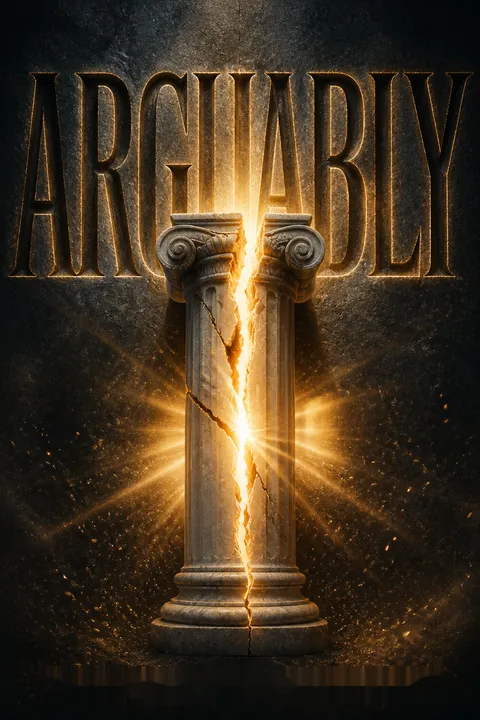

Summary Unavailable
This book is not suitable for a summary (it may be a textbook, workbook, cookbook, reference book, or collection). However, you can still explore the FAQs, about author, and other metadata below!
Key Takeaways
1. The Enlightenment's Enduring Legacy: A Secular Republic
The essential point—that a religiously neutral state is the chief guarantee of religious pluralism—is the one that some of today’s would-be theocrats are determined to miss.
Founding Fathers' skepticism. The architects of the U.S. Constitution, despite living in an era of limited scientific understanding, were remarkably irreligious, often leaning towards deism or outright atheism. Figures like John Adams, Thomas Jefferson, and Benjamin Franklin deliberately insulated faith from politics, recognizing that a profusion of religious factions could best be managed by a state that favored none. This foresight ensured religious pluralism, preventing any single sect from dominating, a lesson often lost on modern proponents of a "Christian nation."
Jefferson's strategic neutrality. Thomas Jefferson and James Madison masterfully exploited the mutual fear among Christian sects of persecution by rivals to establish religious freedom. Their Virginia Statute for Religious Freedom, a precursor to the First Amendment, made it easier for squabbling factions to agree on no tithes than on tithes that might benefit doctrinal opponents. Jefferson's famous "wall of separation" letter, assuring Baptists of freedom from Congregationalist oppression, exemplifies this tactical brilliance, demonstrating that a neutral state is the bedrock of religious liberty.
Washington's quiet secularism. Even George Washington, while attending church, conspicuously avoided communion on "sacramental Sundays," later ceasing attendance altogether on those days to avoid "an ostentatious display of religious zeal." This quiet defiance of religious performance, alongside Ethan Allen's explicit rejection of the Incarnation and John Adams's reliance on reason over miracles, reveals a deep-seated commitment to secular principles among the Founders. Their actions underscore the belief that liberty of conscience is incompatible with religious compulsion, a wisdom that remains vital in confronting modern theocratic fanaticism.
2. Totalitarianism's Protean Forms: A Constant Threat
The tremendous power of the Reflections lies in this, the first serious argument that revolutions devour their own children and turn into their own opposites.
Ideology's seductive dangers. Totalitarianism, whether in the guise of Stalinism, Nazism, or religious extremism, consistently reveals a core hostility to human nature, individual liberty, and truth. Victor Serge, an early critic of Bolshevism, observed how the Soviet regime's secret police, the CHEKA, became "perverted men tending to see conspiracy everywhere," leading to a self-inflicted death of the revolution. This pattern of internal purges and self-destruction, where "the enemy is everywhere, and everyone," is a recurring motif in the history of absolutist ideologies.
The "total" state's reach. Regimes like North Korea exemplify the ultimate totalitarian ambition: a "slave state" where every person is property, private life is abolished, and the population is stunted by famine and fear. B. R. Myers's analysis reveals North Korea as a pathological right-wing system built on "military first" mobilization, slave labor, and unapologetic racism, where even aid from the outside is re-spun as "tribute" to the Dear Leader. This extreme control, extending to thought and even physical stature, demonstrates how totalitarianism seeks to remake humanity itself.
The banality of evil's collaborators. The rise of figures like Hitler, initially dismissed as a "roach" or "ordinary bore," highlights how seemingly mundane prejudices can be incubated and weaponized by cynical elites. Pat Buchanan's argument that the Holocaust was a "consequence of war" rather than Nazi racism is a dangerous example of minimizing ideological evil. Similarly, the Baader Meinhof Complex shows how a "Red" critique of society could devolve into a petri dish for the bacilli of both National Socialist and Stalinist dictatorship, demonstrating that the will to power, even when cloaked in revolutionary rhetoric, often leads to the same brutal outcomes.
3. The Crucial Role of Language: Truth, Propaganda, and Euphemism
The confession was in any case merely part of a more or less inevitable process. When it was their turn to be purged, former interrogators (and all other Chekists) immediately called with a flourish for the pen and the dotted line.
Language as a tool of control. Totalitarian regimes, from Orwell's Newspeak to the LTI (Lingua Tertii Imperii) of Nazi Germany, understand that controlling language is paramount to controlling thought. Victor Klemperer's meticulous documentation of Nazi jargon, where "fanatical" became a positive and "the Jew" a collective entity, reveals how words are twisted to normalize atrocity and erase individuality. This deliberate corruption of language is a hallmark of systems that seek to impose a single, unchallengeable truth.
The power of euphemism. Euphemisms serve to sanitize brutal realities, making the unspeakable palatable. The "color-coded" chemical weapons in Vietnam (Agent Orange, Agent Pink) masked the horror of ecocide and its devastating human cost, as Admiral Elmo Zumwalt Jr.'s family tragically discovered. Similarly, the term "waterboarding" is a deliberate misnomer, falsely suggesting a "simulation" rather than the reality of being drowned under controlled conditions. Such linguistic deceptions are crucial for regimes and policies that wish to avoid moral accountability.
Dissent through linguistic clarity. Conversely, clarity of language can be a powerful act of resistance. William Tyndale's translation of "ecclesia" as "the congregation" rather than "the church" challenged institutional authority, making the Bible accessible and fostering independent thought. Martin Amis's critique of Stalin's "rhythms of thought" exposes the dictator's catechistic style and the chilling banality of his pronouncements like "Death solves all problems. No man, no problem." By insisting on precise, unvarnished language, writers and dissidents fight against the "fuddled with a theoretical intoxication" that characterizes totalitarian discourse.
4. Skepticism Towards Sentimentality and False Equivalence
But only a moral cretin thinks that anti-Semitism is a threat only to Jews.
Challenging emotional appeals. Hitchens consistently critiques sentimentalism and emotional reasoning, especially when they obscure uncomfortable truths or justify morally dubious positions. He dismisses the notion that despair alone drives suicide bombing, pointing out that such attacks are strategically directed at civilians in pre-1967 Israel, serving a political agenda rather than mere desperation. This challenges the "liberal" tendency to romanticize the motives of those who commit atrocities, as seen in the widespread sympathy for those who "lit the powder trail" in the Danish cartoon controversy.
Exposing false equivalences. The author vehemently rejects attempts to draw spurious moral equivalences between fundamentally different actors or actions. He condemns the "sickly babble about 'respect'" that demands deference to religious sensibilities while ignoring the incitement to violence and the violation of diplomatic immunity, as in the Danish cartoon affair. He argues that equating critics of Islam with "Enlightenment fundamentalists" or calling a woman threatened with violence a "Bombthrower" is a "bogus equivalence" that ultimately blames the victim and shields the aggressor.
The dangers of moral relativism. Hitchens warns against the "absolutist in their ahistoricism" view that "a war is a war is a war," where all participants are morally equivalent. He argues that this perspective, often adopted by pacifists, underestimates the "radical evil of Nazism and fascism" and ignores the crucial distinctions between defending civilization and exploiting its freedoms. His critique of Nicholson Baker's Human Smoke highlights how such a stance can lead to the perverse implication that the Second World War, and even the Holocaust, might have been avoided if the Allies had been less "belligerent."
5. The Complexities of Empire and Intervention: A Moral Minefield
The true term for this is “betrayal,” as Auden so strongly suggests, because the only thinkable justification for the occupation of someone else’s territory and the displacement of someone else’s culture is the testable, honorable intention of applying an impartial justice, a disinterested administration, and an even hand as regards bandits and sectarians.
Colonialism's enduring scars. The legacies of British imperialism, particularly the arbitrary "scratching" of borders across the hearts of nations, continue to fuel conflict and instability. The Durand Line, the Sykes-Picot Agreement, and the Radcliffe Line are stark examples of how "strangers with a calm, judicial pen" created divisions that led to enduring strife, from the Pashtun question to the partition of India and the Israeli-Palestinian conflict. These "fault lines" demonstrate that the "civilizing mission" often devolved into "divide and rule," leaving behind a complex web of unresolved grievances.
The dilemmas of intervention. While acknowledging the dangers of "entangling alliances," Hitchens argues that the United States has a moral responsibility to intervene in certain humanitarian crises, especially when its own interests are at stake. He points to the Greek struggle against the Ottoman Empire and the international solidarity with the Union during the American Civil War as historical precedents for justified intervention. However, he also critiques the "sick, choking nightmare of betrayal" in Iraq, where American forces became committed to a government "both enriched and bankrupt at the same time," leading to a "rancid, resentful official hypocrisy."
The "banana republic" syndrome. Client states like Pakistan exemplify the perils of a parasitic relationship with a superpower. Despite receiving billions in U.S. aid, Pakistan's "bought-and-paid-for pretense" of fighting terrorism masks its support for the Taliban and its nuclear program aimed at India. This "shameless" duplicity, where Osama bin Laden was sheltered in a garrison town, makes the U.S. a "prisoner of the shame," violating its own sovereignty. The author argues that such enabling of "diseased and rotten" regimes ultimately undermines American values and endangers its own forces, suggesting a shift in alliances towards multi-ethnic democracies like India.
6. Human Nature's Darker Side: Cruelty, Stupidity, and Self-Deception
Given total power over another, the human being will find that his thoughts turn to torture.
The ubiquity of cruelty. Hitchens frequently exposes the human capacity for cruelty, often intertwined with stupidity and self-deception. The L.R.A. in Uganda, a "Christian Khmer Rouge," exemplifies this, abducting and brainwashing children, forcing them to commit atrocities, and justifying it with a twisted interpretation of the Ten Commandments. This "deranged gang" demonstrates how "children who have known pain know how to inflict it," perpetuating a cycle of horror.
The banality of self-deception. Individuals and systems often engage in elaborate self-deception to rationalize their actions. The "tumbril remark" of the privileged, like Lady Diana Cooper's advice to a starving man to "force yourself" to eat, reveals a profound myopia and arrogance. Similarly, the "faith-based" justifications for cruelty, such as Captain Segura's belief in "torturable" classes based on religion, highlight how dogma can be twisted to excuse the most heinous acts, demonstrating a "third-rate Grand Inquisitor, in a church gone bad."
The allure of the grotesque. The author notes a recurring fascination with the grotesque and the macabre in human behavior. J. G. Ballard's stories, often featuring "morbid and almost loving accounts of 'wound profiles,' gashes, fractures," explore the intersection of Eros and Thanatos, where collisions and ejaculations are vigorously mixed. This fascination, whether in fiction or in the real-world "ghoulish coverage" of celebrity deaths, suggests a deeper, often repressed, human attraction to the darker aspects of existence, revealing a "sudden flood of repressed spite."
7. The Indispensable Value of Dissent and Individual Conscience
Be willing to renounce any god or any religion if any holy commandments should contradict any of the above.
Standing against the current. Hitchens champions individuals who defy prevailing orthodoxies, whether political or religious, often at great personal cost. Victor Serge, who campaigned against the CHEKA and the death penalty from within the Bolshevik Party, exemplifies this courage, recognizing that "the death of the revolution... was a self-inflicted one." His refusal to confess during Stalin's purges, a "distinct rarity," ultimately saved his life, demonstrating the power of unwavering individual conscience against totalitarian pressure.
The moral imperative of truth-telling. The author argues that true moral courage lies in speaking truth to power, even when it is unpopular or dangerous. Peter Galbraith, the UN official fired for exposing widespread fraud in the Afghan elections, is celebrated as a "main whistle-blower" who dared to challenge institutional complicity. Similarly, Ayaan Hirsi Ali, who escaped sexual chattelhood and now lives under threat for critiquing Islam, is praised for her "Enlightenment fundamentalism" and "absolutist" stance against oppression, despite being derided by "pseudo-liberals" and the media.
The fight for intellectual freedom. The struggle for free expression is a constant battle against censorship, both overt and subtle. Hitchens defends the right to use "the N-word" in an objective, historical context, arguing that taboos, even well-intentioned ones, can stifle intellectual inquiry and lead to "soft censorship." He insists that "the meaning of the verb 'to discriminate' is of some importance and seems to me to be worth fighting over," highlighting that linguistic precision is essential for clear thought and moral clarity, especially when confronting the "stupid party" of prejudice.
8. America's Contradictory Ideals: A Nation in Perpetual Tension
The United States, while they wish for war with no nation, will buy peace with none.
The tension of founding principles. America, born of Enlightenment ideals, constantly grapples with its own contradictions, particularly the gap between its stated principles and its actions. Thomas Jefferson, who sent the U.S. Navy to fight Muslim pirates to ensure free navigation, also harbored "famous ambivalences about slavery," resolving them by taking Sally Hemings as his concubine. This tension between revolutionary ideals and pragmatic compromises, between "physical liberty" and moral emancipation, is a recurring theme in American history.
The burden of global leadership. The United States, despite its early isolationist tendencies, has become inexorably committed to upholding international standards of human rights and democracy. However, this role is often undermined by its own "banana republic" tendencies, such as the collusion between the state and favored monopolistic concerns, where "profits can be privatized and the debts conveniently socialized." The author critiques the "utter contempt" shown by financial panjandrums for deliberative bodies, and the "tribal and cultish elements" that flourish at the expense of reason, as seen in the "witch doctors" consulted by a wide-eyed president during financial crises.
The military's moral compass. Paradoxically, in a nation often plagued by political and financial corruption, the American armed forces frequently embody the professionalism and integrity that its rulers lack. The military's role as an "engine for assimilation and integration," abolishing segregation long before wider society, stands in stark contrast to the "theocratic absurdity" of top brass who seek to "Christianize the 'heathen'" and subvert the Constitution. This internal struggle, where "foxhole atheists" bravely resist proselytization, highlights the ongoing battle for America's soul, even within its most disciplined institutions.
9. The Writer as a Moral Cartographer: Mapping the Human Condition
The raw material of life interested Powell, as it had to; its slow refinement into the finished product of culture and society and language absorbed him far more.
Literature's enduring power. Great writers, from Dickens to Orwell, possess a unique ability to distill complex social realities and human motivations into compelling narratives. Charles Dickens, despite his personal flaws and "exiguous chapter on slavery," captured the "attraction of repulsion" in childhood misery and incarceration, making his characters live "with an actuality greater than that of the men and women whose external forms we see around us." This capacity to evoke universal truths from specific experiences is a hallmark of enduring literature.
The writer's moral responsibility. Authors are often called to be moral witnesses, exposing hypocrisy and injustice. Upton Sinclair's The Jungle, intended to expose the inhuman conditions of immigrant labor, inadvertently sparked a consumer revolution by graphically depicting the filthy production of food, proving that "his realism, indeed, got in the way of his socialism." Similarly, Rebecca West's Black Lamb and Grey Falcon serves as a powerful "meditation on the never-ending strife between the secular and the numinous," demonstrating that "there are things worth fighting for, and dying for, and killing for."
The art of observation and insight. Writers like Anthony Powell, with his "omnivorous curiosity" and "almost invisible writing about the most palpable of questions," meticulously map the nuances of social reality. His creation of Kenneth Widmerpool, a "monster of arrogance and conceit, but entirely wanting in pride," is a "certain ticket to literary immortality" because it captures a universal type of "tirelessly ambitious, sexless, and charmless mediocrity." This keen observation, whether of social climbing or the "ghastly, sanguinary struggles" of history, allows literature to illuminate the human condition with precision and depth.
10. Humor as a Weapon and a Shield: Facing Life's Absurdities
Humor, if we are to be serious about it, arises from the ineluctable fact that we are all born into a losing struggle.
The gender of humor. Hitchens provocatively argues that men are, on average, funnier than women, attributing this to evolutionary pressures where men must impress the opposite sex, and to women's "higher calling" of reproduction, which imbues them with a seriousness that makes them less prone to frivolous humor. He suggests that male humor often stems from a "childish" appreciation for "gross stuff" and a recognition that "life is quite possibly a joke to begin with—and often a joke in extremely poor taste," contrasting this with women's preference for a "fair, and even sweet" existence.
Wit as a defense mechanism. Humor serves as "armor-plate" against life's inherent absurdities and suffering. P. G. Wodehouse, the "laureate of repression," created a "lost and dreamy world of English innocence" in Blandings Castle and the universe of Jeeves, offering an escape from the "squalid atmosphere" of reality. His deadpan humor, even when trapped by Nazis, and his ability to find levity in internment, demonstrate how wit can be a stoic response to overwhelming circumstances, making the "unbearable" bearable.
Satire's cutting edge. Satire, a sharp instrument of humor, exposes pretension and folly. Iraj Pezeshkzad's My Uncle Napoleon, a "cheerful satire" of Iranian paranoia about foreign machinations, became a beloved work of fiction precisely because it ridiculed the "micro-megalomaniac" who embodied the country's self-deception. Similarly, Evelyn Waugh's Scoop and Decline and Fall use "breezy, heartless spirit" and "hilarious rudeness" to lampoon the absurdities of the press and the upper classes, proving that "the most celebrated opening line of any Fleet Street war correspondent was that of the hack in the Congo who yelled: 'Anyone here been raped and speaks English?'"
Last updated:
Report IssueReview Summary
Arguably is a massive collection of over 100 essays by Christopher Hitchens, primarily published in Vanity Fair, The Atlantic, and Slate. Reviewers praise Hitchens' vast erudition, sharp wit, and elegant prose, particularly his literary criticism and pieces on totalitarianism. Many appreciate his fearless defense of free speech and Western values, though his support for the Iraq War remains controversial. The infamous "Why Women Aren't Funny" essay draws criticism, as does his occasional tone-deafness. Readers admire his generosity toward fellow writers and his ability to challenge assumptions, though some essays feel dated. Overall, it's considered a provocative, intellectually stimulating collection showcasing Hitchens at his best.
People Also Read




About the Author
Christopher Hitchens was a British-American author, journalist, and literary critic renowned for his polemical writing and fearless intellectual combat. A prolific essayist for The Atlantic, Vanity Fair, and Slate, he became a leading figure in the New Atheism movement with his bestseller God Is Not Great. Originally a socialist aligned with the left, Hitchens broke from that tradition after 9/11, controversially supporting the Iraq invasion. He championed secular humanism, opposed totalitarianism, and wrote extensively on Orwell, Jefferson, and Marx. His memoir Hitch-22 chronicled his ideological evolution. Diagnosed with esophageal cancer in 2010, he continued writing until his death in 2011, leaving a legacy of sharp reasoning and unwavering commitment to truth.
Other books by Christopher Hitchens


Download PDF
Download EPUB
.epub digital book format is ideal for reading ebooks on phones, tablets, and e-readers.








































