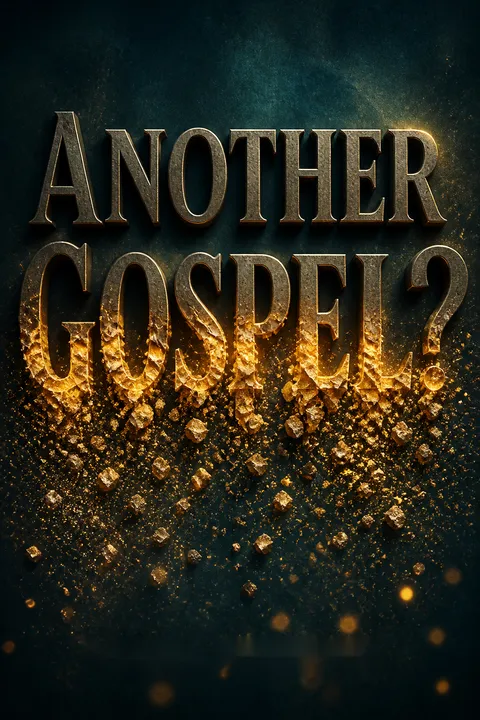

Key Takeaways
1. A Crisis of Faith Can Lead to Deeper Truth
You never know how much you really believe anything until its truth or falsehood becomes a matter of life and death to you.
Personal upheaval. The author, Alisa Childers, a lifelong devout Christian and former member of a popular Christian music group, found her faith profoundly shaken after joining an exclusive discussion group led by a "hopeful agnostic" progressive pastor. This experience, which she later identified as "deconstruction," systematically dismantled her core beliefs about God, Jesus, and the Bible, leaving her in a spiritual blackout. She felt like a tiny human head peeking above a skyscraper-sized wave before disappearing into the depths.
Unanswered questions. The pastor challenged fundamental tenets like the Virgin Birth, the Resurrection, the Atonement, and biblical inerrancy, often dismissing "fundamentalists" as fearful dimwits. Childers, despite her deep personal faith, lacked the intellectual tools to defend her beliefs, realizing she had never truly questioned why she believed. This crisis forced her to confront her assumptions and seek concrete answers beyond mere feeling or tradition.
Seeking a lifeline. Plunged into doubt, Childers desperately prayed for a "lifeboat." This led her to devour apologetics and theology books, audit seminary classes, and meticulously research Christian history. Her journey of deconstruction ultimately became a path to reconstruction, where she rediscovered the "solid Rock" of historic Christianity, finding hope and sound reasons for faith rooted in reality and Scripture.
2. Historic Christianity is Anchored in Ancient Creeds
These were the convictions they lived and died for.
Early foundations. Before the New Testament was fully compiled, early Christians relied on simple, memorable creeds to summarize and communicate their essential beliefs. These weren't just theological statements but core convictions that believers were willing to die for, serving as a vital form of communication to keep the first-century church unified in faith.
Core beliefs. The earliest creed, found in 1 Corinthians 15:3-5 and dating back just 2-7 years after Jesus' resurrection, outlines foundational truths:
- Jesus died for our sins (Atonement).
- He was buried and raised on the third day.
- His death, burial, and resurrection were "in accordance with the Scriptures" (Old Testament).
- These events were verified by numerous eyewitnesses (Cephas, the twelve, over five hundred others, James, all apostles, and Paul himself).
Other early creeds also affirmed Jesus' deity, a belief supported by non-Christian historical accounts like Pliny the Younger's.
Refuting "diverse" origins. The idea that early Christianity was a chaotic mix of contradictory sects, with the New Testament merely a collection chosen by "winners," is challenged by historical evidence. The core canon was established by the end of the first century, predating most non-canonical "Gnostic Gospels" which emerged in the second and third centuries. These later texts presented a "different Jesus" and a "divergent gospel," easily recognized as false by early believers.
3. Progressive Christianity Presents a "Different Gospel"
Progressive Christianity is not simply a shift in the Christian view of social issues. It’s not simply permission to embrace messiness and authenticity in Christian life. It’s not simply a response to doubt, legalism, abuse, or hypocrisy. It’s an entirely different religion—with another Jesus—and another gospel.
Emergent roots. Progressive Christianity evolved from the early 2000s Emergent movement, which sought to adapt Christianity to postmodernism's rejection of absolute truth. While initially focused on social activism and community, it gradually shifted to re-examining and casting doubt on essential Christian doctrines, moving beyond mere methods to question core beliefs.
Core doctrinal shifts. Progressive Christianity, though lacking a formal creed, unites around distinct views on three key topics:
- The Bible: Seen as a human book, an "archaic travel journal" documenting ancient beliefs, not God's authoritative, inerrant Word. Readers decide which parts "work for them."
- The Cross: Jesus' death is viewed not as a payment for sin (penal substitutionary atonement), but as an example of love and forgiveness, or a demonstration of humanity's violence. God didn't require sacrifice.
- The Gospel: Redefined from God's plan to redeem humanity from sin and death to a message of social justice, solidarity with suffering, and reconciliation on earth, often denying original sin and eternal judgment.
A new identity. This movement, now mainstream, offers a "new kind of Christianity" that redefines fundamental concepts. The author argues that this isn't just a nuanced interpretation but a departure from historic Christian faith, presenting "another Jesus" and "another gospel" that cannot offer the same hope or salvation.
4. Valid Concerns Drive Many Towards Progressive Ideas
As a result, they were ready to chuck the whole thing and trade it in for a new set of beliefs.
Legitimate grievances. Many individuals turn to progressive Christianity due to genuine pain and disillusionment within conservative evangelical circles. These "rocks in their shoes" include:
- Abuse of power: Scandals, spiritual bullying, and hypocrisy by church leaders.
- Dismissal of doubt: Churches failing to provide safe spaces for honest questions, leading youth to abandon faith.
- Moral demands: Historic Christianity's stance on issues like sexuality, which some find too burdensome or unloving in modern culture.
- Biblical difficulties: Struggles with violent Old Testament passages or perceived contradictions, leading to questioning Scripture's moral authority.
Cultural influences. The rise of critical theory, which views the world as a struggle between oppressed and oppressors, offers an attractive framework for addressing societal brokenness like racism and poverty. This ideology, prioritizing "lived experience" over rationality, can subtly erode a Christian worldview by shifting focus from sin and redemption to activism and the overthrow of oppressive systems.
The problem of suffering. Personal tragedies, like the author's nephew's death, challenge faith, making the idea of a good God allowing evil difficult to reconcile. Progressive Christianity, with its softened views on hell and judgment, can seem to offer comfort, but the author argues it ultimately provides an "impotent deity" unable to truly cure evil or offer lasting hope.
5. The Bible's Textual Reliability Withstands Scrutiny
Our New Testament has been copied with an astounding degree of accuracy.
Personal conviction challenged. Childers, having based her life on the Bible, realized she lacked intellectual reasons for her belief in its truth when a progressive pastor questioned its divine inspiration. This prompted her to investigate the Bible's reliability, specifically asking: "Do we have an accurate copy of what was originally written?" and "Do those records tell the truth about Jesus?"
Textual criticism. She delved into textual criticism, the scholarly discipline of reconstructing ancient texts from existing manuscripts. Key facts agreed upon by both conservative and skeptical scholars include:
- Over 5,000 Greek New Testament manuscripts exist.
- The earliest fragment (John's Gospel) dates to within 50-100 years of the original.
- The New Testament has far more copies and earlier copies than any other ancient classical work.
Meaningful variants. While there are hundreds of thousands of differences (variants) among manuscripts, the vast majority are minor spelling errors or insignificant changes that don't alter the text's meaning. Crucially, the small percentage of "meaningful variants" (like the story of the woman caught in adultery in John 7:53–8:11 or the "long ending of Mark" in Mark 16:9-20) are identified and footnoted in modern Bibles. Importantly, scholars widely agree that none of these variants change any core Christian doctrine.
6. Gospels Offer Authentic Eyewitness Testimony
I recognized that they were historical narratives. I’d been steeped in folklore, fantasy, legend, and myth ever since I was a child, and had studied these literary genres as an adult; I knew their cadences, their flavor, their rhythm. None of these stylistic fingerprints appeared in the New Testament books that I was reading.
Beyond accurate copies. After confirming the textual reliability of the New Testament, the author sought to determine if the Gospels were accurate accounts of historical events or merely well-preserved lies. She learned that historians look for specific elements to distinguish real events from fiction, and the New Testament documents possess an "overabundance" of these.
Eyewitness evidence. Scholars generally date the Gospels to the end of the first century (AD 65-95), placing them within the timeframe of reliable memory. The writers demonstrated precise knowledge of:
- Obscure local geography
- Popular personal names of the era
- Botanical terms, financial norms, and local customs
These details strongly suggest the writers were eyewitnesses or were informed by them, rather than random individuals writing decades later from distant locations.
Criterion of embarrassment. A key indicator of authentic eyewitness testimony is the inclusion of embarrassing details about the authors or their subjects. The Gospels are replete with such details:
- Disciples are portrayed as dim-witted, cowardly, and often misunderstanding Jesus.
- They fall asleep, are scolded, fiercely disagree, run away during Jesus' arrest, and disown him.
- Women, whose testimony was inadmissible in court at the time, are the first witnesses to the Resurrection.
- Jesus' own family called him crazy, and he was called a "drunkard" and "mad."
These unflattering portrayals argue against fabrication, as fabricators would typically present themselves and their leader in the best possible light.
7. Jesus Himself Affirmed Biblical Authority
It is . . . clear that Jesus understood ‘It is written’ to be equivalent to ‘God says.’
Redefining inspiration. The progressive pastor's redefinition of "divinely inspired" to mean merely on par with works by C.S. Lewis or his own sermons revealed a fundamental disagreement on biblical authority. Progressives view the Bible as a human book, a "spiritual travel journal" reflecting ancient people's limited understanding of God, not an inerrant, authoritative Word.
Jesus' unwavering stance. Childers turned to Jesus' own words to understand Scripture's authority. Jesus consistently affirmed the Old Testament as God's inspired Word:
- He declared he came to "fulfill" the Law and the Prophets (Matthew 5:17), affirming the entire Old Testament.
- He sealed the fate of the Pharisees by referencing the first and last martyrs in the Jewish canon (Abel to Zechariah), validating the whole Old Testament.
- He fought Satan's temptations by repeatedly stating, "It is written," quoting Deuteronomy, demonstrating Scripture's ultimate authority.
- He explicitly stated, "God commanded" and "what was said to you by God" when referencing Old Testament passages, equating Scripture with God's direct commands.
Divine breath. The historic understanding of "inspiration" (from 2 Timothy 3:16-17) means "breathed out by God," signifying Scripture as the very breath of God, carrying divine authority. Jesus also promised the Holy Spirit would guide his apostles into "all truth" (John 14:25-26, 16:12-13), predicting the divine inspiration of the New Testament writings. This demonstrates that biblical authority is not "bibliolatry" but obedience to God's revealed truth.
8. Hell is a Necessary, Just, and Loving Reality
Though I used to complain about the indecency of the idea of God’s wrath, I came to think that I would have to rebel against a God who wasn’t wrathful at the sight of the world’s evil. God isn’t wrathful in spite of being love. God is wrathful because God is love.
Challenging universalism. The author's childhood fear of eternity and hell was compounded by a simplistic understanding of eternal torment. Progressive Christianity, exemplified by Rob Bell's Love Wins and Nadia Bolz-Weber's "Christo-centric universalism," often redefines hell as metaphorical, a rehabilitation program, or simply the experience of evil on earth, suggesting all will eventually be reconciled to God.
Biblical depiction of hell. While some imagery may be metaphorical (e.g., fire and darkness coexisting), the Bible consistently describes hell as:
- An actual, eternal place of conscious torment.
- "Everlasting destruction" and "banishment from the presence of the Lord."
- "Eternal punishment" (Matthew 25:46), a "blazing furnace" with "weeping and gnashing of teeth."
Jesus spoke of hell more than anyone, using terms like "Gehenna" (Valley of Hinnom), which first-century Jews understood as a place of post-judgment punishment.
Correcting misconceptions. The author addresses common misunderstandings:
- Repentant souls: "Gnashing of teeth" in Scripture signifies rage and defiance, not sorrowful repentance. Hell is for those who reject God, a consequence of their ongoing rebellion.
- Devil in charge: Hell was created for the devil and his angels (Matthew 25:41), where they will be tormented, not ruling.
- Equal punishment: Jesus taught varying degrees of punishment based on knowledge and actions (Luke 12:42-48), reflecting God's perfect justice.
Ultimately, hell is necessary because God is holy and just; it quarantines sin and evil, ensuring a heaven free from corruption.
9. Atonement is Redeeming Love, Not "Cosmic Child Abuse"
That God needed to be appeased with blood is not beautiful. It’s horrific.
Progressive rejection. The progressive pastor's assertion that the Old Testament sacrificial system was merely human mimicry, and that Jesus "came to end it," directly challenged the core doctrine of atonement. Progressive leaders like Michael Gungor, William Paul Young, and Steve Chalke denounce penal substitutionary atonement as "cosmic child abuse," arguing that a loving God wouldn't require a blood sacrifice or punish his Son.
Biblical truth. The Bible consistently presents Jesus' death as a substitutionary and penal atonement:
- Human depravity: Humans are sinners, separated from a holy God, deserving death.
- Jesus' sacrifice: As God incarnate, Jesus willingly died in our place, as our substitute, paying the penalty for our sins.
- God's wrath satisfied: His sacrifice satisfied God's righteous wrath against sin, allowing reconciliation.
This is foreshadowed from Genesis (God covering Adam and Eve with animal skins) to Revelation (Jesus as "the Lamb" whose blood purchased people for God). The Old Testament sacrificial system, including the Passover lamb, explicitly pointed to Jesus.
God's righteous wrath. Progressives often create a "straw man" by mischaracterizing God's wrath as petty or abusive. Biblically, God's wrath is his controlled, righteous judgment against anything that opposes his perfect nature and love. It ensures justice for evil and ultimately quarantines sin, making heaven possible. Jesus' anguish in Gethsemane was about drinking this "cup of God's wrath."
Jesus' own teaching. Jesus validated Moses and the sacrificial system. He explicitly linked his death to the Old Testament prophecies (Isaiah 53) and the institution of a "new covenant in my blood" (Luke 22:19-20), confirming his role as the ultimate sacrificial lamb. This doctrine is not "horrific" but "the greatest news" for desperate sinners.
10. Progressive Ideas Often Echo Ancient Heresies
What has been is what will be, and what has been done is what will be done, and there is nothing new under the sun.
Recycled errors. The author discovered that many "new" progressive Christian ideas are, in fact, ancient heresies repackaged. Jesus' parable of the wheat and tares (Matthew 13:24-30) illustrates that true and false believers, and true and false teachings, will coexist until the harvest. The New Testament itself is filled with warnings against "wolves in sheep's clothing" who "secretly bring in destructive heresies."
Historical parallels:
- Judaizers (Jesus + circumcision): Early church heresy that added Jewish customs to the gospel. Progressive Christianity's "Jesus + social justice" similarly adds human works as a requirement for salvation or defines the gospel primarily through them.
- Gnostics (Jesus + new knowledge): Believed salvation came through secret knowledge, not sin atonement. They saw themselves as "enlightened" and reinterpreted Scripture. Progressive Christianity, with its emphasis on a "higher and wiser view of God" and judging Scripture by modern cultural assumptions, mirrors this "chronological snobbery."
- Marcionites (Jesus - judgment): Rejected the Old Testament God as wrathful and removed uncomfortable parts of Scripture. Progressive Christianity's discomfort with God's wrath, hell, and penal substitutionary atonement, and its focus on a purely loving, non-judgmental God, resembles Marcionism.
Discernment is key. The apostle Paul warned against "a different gospel" (Galatians 1:6-8). Recognizing these patterns from church history provides comfort and equips believers to discern truth from error. The author emphasizes that God has not left us unarmed against these attacks on his truth, providing his Word as the ultimate standard.
11. Reconstruction Builds a Stronger, Costlier Faith
The insane beauty of the whole experience is that God led me to the class with the progressive pastor. He knew the end from the beginning.
Finding the lifeboat. Childers' journey of deconstruction found its "lifeboat" in apologetics, logic, and rigorous study of Scripture and church history. This intellectual pursuit, initially daunting, became exhilarating as she found robust evidence and impenetrable logic supporting historic Christianity. This process, though slow and challenging, rebuilt her faith on a foundation stronger than before.
Essential building blocks. Just as a LEGO set needs foundational blocks, faith has essentials. While not all doctrines are equally important for salvation, certain core beliefs are non-negotiable. Dr. Norman Geisler's list of essentials for salvation includes:
- Human depravity (I am a sinner)
- God's unity (There is one God)
- Necessity of grace (I am saved by grace)
- Christ's deity (Christ is God)
- Christ's humanity (Christ is man)
- Christ's atoning death (Christ died for my sins)
- Christ's bodily resurrection (Christ rose from the dead)
- Necessity of faith (I must believe)
These are not mere "intellectual propositions" but truths about reality that lead to salvation and reconciliation with God.
Costly grace. The author's reconstructed faith, though marked by a "limp" from past doubts, is now deeply rooted in truth. She embraces "costly grace," as defined by Dietrich Bonhoeffer, which requires repentance, discipleship, and embracing the cross, contrasting it with "cheap grace" that offers forgiveness without these demands. This journey transformed her understanding, making the gospel more precious and the Cross more beautiful, affirming that God's grace, though free, demands everything.
Review Summary
Reviews of Another Gospel? reveal a polarized readership. Conservative Christians widely praise the book as an accessible, well-researched defense of historic Christianity against progressive theology, appreciating Childers' personal storytelling woven with apologetics. Critics, however, argue she misrepresents progressive Christianity through oversimplification, cherry-picked quotes, and false generalizations. Some note her failure to distinguish between first and second-order doctrines, while others appreciate her as a helpful starting point for Christians navigating faith questions. Overall, supporters find it an invaluable resource, while detractors see it as a flawed, one-sided critique.
People Also Read






Download PDF
Download EPUB
.epub digital book format is ideal for reading ebooks on phones, tablets, and e-readers.








































