
Key Takeaways
1. Born into Appalachian Music Royalty
Valerie June Carter was born on June 23, 1929, in Maces Springs, Virginia, into what would become known as the First Family of Country Music.
Mountain heritage. June Carter Cash's life began in the rugged Clinch Mountains of Virginia, a region deeply steeped in music, tradition, and strong family bonds. Her grandparents, Ezra and Maybelle Addington Carter, and her great-aunt and great-uncle, Sara and A.P. Carter, formed the Original Carter Family, pioneers of country music. This environment instilled in June a profound connection to her roots and a lifelong love for Appalachian culture.
Musical beginnings. The Carter Family's music, a blend of ballads, hymns, and whimsical verses, was a daily soundtrack in June's childhood home. Her mother, Maybelle, was a gifted guitarist, and her cousin Sara possessed a beautiful voice. June, though not a natural singer initially, was immersed in this rich musical tapestry, which laid the foundation for her future career.
- The Carter Family gained continent-wide fame through radio broadcasts on XERA from Del Rio, Texas.
- Their music transcended the station's controversial owner, Dr. John Romulus Brinkley.
- June's first solo performance was at age ten, singing "Old Engine 143" on the autoharp.
Family unity. Despite the eventual divorce of Sara and A.P., the family's musical unit remained strong, with Ezra Carter taking over management of "Mother Maybelle and the Carter Sisters." This period emphasized the importance of family collaboration and perseverance, shaping June's understanding of loyalty and collective effort.
2. Forging a Unique Path as an Entertainer
Mom learned to use beautifully and appealingly the gifts God had given her.
Beyond singing. While her sisters Helen and Anita possessed natural musical talent, June, the middle child, compensated for her initial lack of vocal prowess with an effervescent personality and quick wit. She developed a unique comedic stage persona, making audiences laugh with down-home humor and engaging antics. This ability to connect with people became her signature.
Early career development. From performing on border radio stations in Texas to joining the Grand Ole Opry, June honed her craft. She learned to:
- Sing all parts of a song
- Take up tickets at the door
- Drive across the USA for shows
- Master the discipline of performance, often doing five shows a day.
Her "Country Girl" act, filled with corny jokes and character portrayals, charmed audiences and fellow performers alike.
Work ethic and resilience. June's devout work ethic, instilled by her parents, was evident in her unwavering commitment to "the show must go on." This dedication was famously demonstrated when she confronted Johnny Cash, urging him to perform despite his struggles, prioritizing their professional responsibility above all else. This period solidified her reputation as a tenacious and indispensable performer.
3. Resilience Through Personal Heartbreak
When your heart’s broken, you gather the pieces together, take your little girl, and catch a plane to New York City.
Marital challenges. June experienced two failed marriages before finding lasting love with Johnny Cash. Her first marriage to Opry star Carl Smith ended after the birth of their daughter, Carlene, due to differing career paths and June's burgeoning aspirations beyond Nashville. The second marriage to stockcar driver Rip Nix, with whom she had daughter Rosey, also dissolved after six years, leaving June feeling ashamed and at a low point.
Seeking new horizons. Following her first divorce, June, with baby Carlene, moved to New York City to attend acting school. This bold move reflected her determination to "always move forward" and pursue her dreams of acting, even as she continued to perform at the Opry on weekends. She studied with Sandy Meisner and made lifelong friends, including Robert Duvall and Rosemary Edelman.
Unwavering spirit. Despite the personal pain and societal stigma of divorce in her era, June refused to be defined by her setbacks. She channeled her energy into her career and personal growth, demonstrating a remarkable resilience. Her time in New York, though not leading to a major acting career, broadened her perspective and reinforced her independent spirit, preparing her for the complex relationship that lay ahead.
4. An Unbreakable Love with Johnny Cash
Her love filled every room he was in, lighted every path he walked, and her devotion created a sacred, exhilarating place for them to live out their married life.
A destined meeting. June first met Johnny Cash backstage at the Opry in the mid-fifties, and he reportedly declared he would marry her someday. Their professional paths intertwined as June became a regular member of The Johnny Cash Show in 1961, forming a powerful stage charisma that captivated audiences. This professional partnership gradually blossomed into a deep, personal connection.
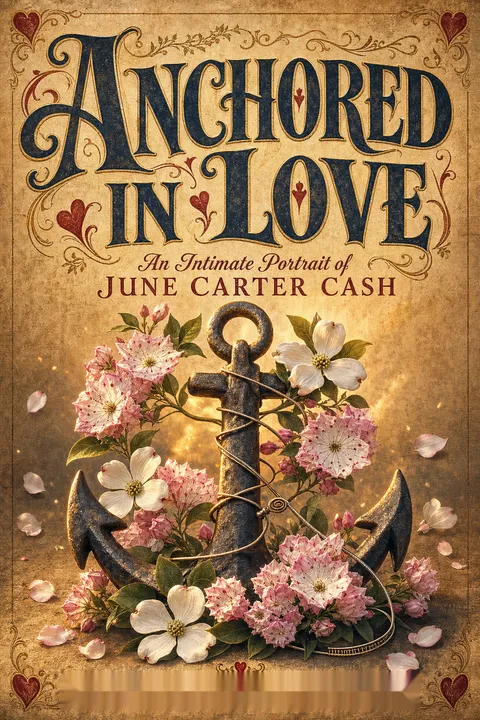
Overcoming obstacles. Their love story was fraught with challenges, including both being married to other people and Johnny's severe drug addiction. June became Johnny's steadfast anchor, tirelessly trying to help him overcome his demons, flushing pills, and making excuses for his erratic behavior. Her unwavering support was crucial during his darkest times, culminating in his decision to seek sobriety after a near-death experience in a cave.
A public proposal and lasting union. Johnny's public proposal on stage in London, Ontario, in 1968, marked a turning point. They married shortly after, and June adopted the name June Carter Cash, signifying her commitment. Their marriage, though tested by addiction and infidelity, was founded on profound love, mutual respect, and a shared Christian faith, becoming one of country music's most iconic and enduring partnerships.
5. The Shadow of Addiction and Unconditional Love
Your real father is hidden away behind this lost person we are going to approach today. I pray that the real man inside will come out and do what he must do to change.
Johnny's battle. Johnny Cash's severe drug addiction cast a long shadow over the family, particularly during John Carter's childhood. His unpredictable behavior, physical deterioration, and emotional unavailability caused immense pain and fear. John Carter vividly recalls nights spent listening to his father's labored breathing, terrified he might die, and the emotional toll of witnessing his parents' frequent arguments.
June's tireless efforts. June relentlessly fought Johnny's addiction, often acting as his primary caretaker and the emotional backbone of the family. She organized interventions, flushed countless pills, and provided unwavering support, even when it meant enduring his volatility. Her love for him was so profound that she chose to believe in the good man hidden beneath the addiction, constantly praying for his recovery.
Family impact. The addiction affected everyone, leading to:
- John Carter's early exposure to the harsh realities of addiction.
- His own developing coping mechanisms, including emotional suppression.
- The family's collective struggle to maintain a semblance of normalcy amidst chaos.
Despite the pain, June's unconditional love and forgiveness were central to their survival, allowing them to navigate these difficult years together.
6. Finding Strength in Unwavering Faith
I can love John for the man he is inside. I can accept him whether he is stoned or not. What matters is that I keep my heart close to God. Jesus will keep me safe.
A spiritual foundation. June Carter Cash's deep Christian faith was the bedrock of her life, providing her with unwavering strength and purpose. Raised by God-fearing parents, she experienced a born-again conversion at fourteen, which renewed her commitment to Jesus. This faith enabled her to navigate immense personal and professional challenges, always seeking God's guidance.
Forgiveness as a way of life. One of June's most remarkable traits was her boundless capacity for forgiveness, especially towards her husband and children struggling with addiction. She chose to see beyond their destructive behaviors, focusing on the inherent goodness within them. This radical acceptance, though sometimes enabling, allowed her to maintain relationships and offer continuous support, embodying the grace she believed in.
Spiritual guidance. June and Johnny shared a profound spiritual connection, evident in their dedication to projects like the "Gospel Road" film and their close friendship with Billy and Ruth Graham. June's journal entries reveal her constant prayer and reliance on God for strength, believing that "God has a plan for you" and that "this too shall pass." Her faith was a beacon, guiding her through the darkest times and inspiring those around her.
7. A Late-Career Renaissance and Grammy Triumph
She had worked long and hard for this recognition, and while she still might not technically be the greatest singer, she had tremendous character and charisma.
Stepping into the spotlight. After decades of supporting Johnny Cash, June embarked on a late-career renaissance, releasing her solo album "Press On" in 1999. This marked the first time she headlined her own shows, with Johnny proudly joining her as a special guest. The album, co-produced by her son John Carter, showcased her unique blend of humor, storytelling, and heartfelt performance.
Critical acclaim and recognition. "Press On" earned June a Grammy Award for Best Traditional Folk Album in 2000, a significant achievement that validated her individual artistry. This recognition was a testament to her enduring talent and charisma, proving that her ability to charm and connect with audiences was as strong as ever, even without being the primary vocalist.
- The album featured a memorable duet with Johnny, "Far Side Banks of Jordan."
- Her performances were characterized by spontaneity and a "ball of fire" energy.
- She often shared comical anecdotes and personal stories between songs.
Enduring spirit. Despite her own struggles with pain and, later, addiction, June's spirit remained vibrant during this period. She approached her work with dedication and joy, transforming any perceived shortcomings into endearing qualities. This phase of her career highlighted her resilience and her ability to shine brightly, even as her physical health began to decline.
8. The Virginia Home: A Sacred Anchor
Of all her many homes, the house in Maces Springs was the most important to her. It was here in the mountains of Virginia that she could be her uncomplicated and tender self.
Return to roots. The old family home in Maces Springs, Virginia, at the foot of Clinch Mountain, remained June's true sanctuary throughout her life. It was the place where she was born, where her family's musical legacy began, and where she could shed the complexities of stardom to be her "uncomplicated and tender self." This home served as a constant anchor, drawing her back to her origins.
A place of peace and memory. The Virginia house was filled with "klediments" (mountain treasures) and memories, from the bridge she built over Maces Stream to the evergreens planted by her father. It was a place where she found solace, whistled to birds, and shared family folklore, like the tale of her uncle being bitten by an alligator gar in the Holston River.
- The house was a gathering place for the extensive Carter-Cash clan.
- It hosted annual events like the Carter Fold, celebrating traditional Appalachian music.
- June often sat on the porch, reflecting and connecting with her heritage.
Musical inspiration. In 2002, June chose this sacred space to record her album "Wildwood Flower," gathering family and musicians in Grandma Maybelle's living room, where the Original Carter Family had rehearsed decades earlier. This project was a profound return to her musical roots, capturing the authentic spirit of Appalachian music and solidifying her connection to her family's enduring legacy.
9. A Tearful Farewell and Enduring Legacy
On May 15, 2003, June Carter Cash, born Valerie June Carter in Maces Springs, Virginia, went on to join her spirit.
Final struggles. In her last months, June's health deteriorated significantly, marked by heart issues and increasing reliance on medication. Despite her physical decline, her spirit remained strong, but her body was giving out. Her family, including John Carter, witnessed her gradual fading, a painful echo of Johnny's earlier struggles with addiction.
A poignant goodbye. Following heart surgery, June suffered cardiac arrest and fell into a coma. The family, including Johnny, gathered at her bedside, praying for a miracle but eventually making the difficult decision to discontinue life support. John Carter describes the profound impact of her unspoken message in her eyes: "No, son, I won't be leaving here alive. I'll be dancing, all right, but not on this earth."
A grand send-off. June's funeral was a testament to her beloved status, held at the First Baptist Church in Hendersonville, filled with music from friends like Sheryl Crow and Emmylou Harris. Her sister Rosanne's eulogy beautifully captured June's essence:
- Her love for flowers, leading to the obituary request: "In lieu of donations, send flowers."
- Her ability to love everyone, even strangers.
- Her unique "June blue" shade of blue.
The service celebrated her life, her faith, and her enduring impact, leaving a lasting impression on all who attended.
10. The Circle Completed: Love Beyond Life
Your mother and I were more in love when she died than we had ever been.
Johnny's inconsolable grief. June's death left Johnny Cash utterly heartbroken and inconsolable. He described missing her "as the body misses lost blood," constantly talking to her and seeing her every day. Despite his own failing health and near blindness, his spirit remained determined, finding solace and purpose in continuing to make music, a testament to their shared life and work ethic.
A final act of love. In his grief, Johnny began to clear out June's extensive collection of "klediments" from their home, a poignant act of letting go, though he barely began before his own passing. This reflected his simpler tastes and the overwhelming weight of memories without her. Their home, once a vibrant "Camelot," became a quiet space filled with the echoes of their love.
An enduring legacy. June and Johnny's love story, forged in struggle and strengthened by faith, became a powerful example of unconditional forgiveness and acceptance. Their lives, though marked by challenges, demonstrated that the spirit can grow stronger even as the body gives out. Their music, their faith, and their profound connection continue to inspire, leaving a legacy of love that transcends death, a circle unbroken.
Review Summary
People Also Read

Download PDF
Download EPUB
.epub digital book format is ideal for reading ebooks on phones, tablets, and e-readers.








































