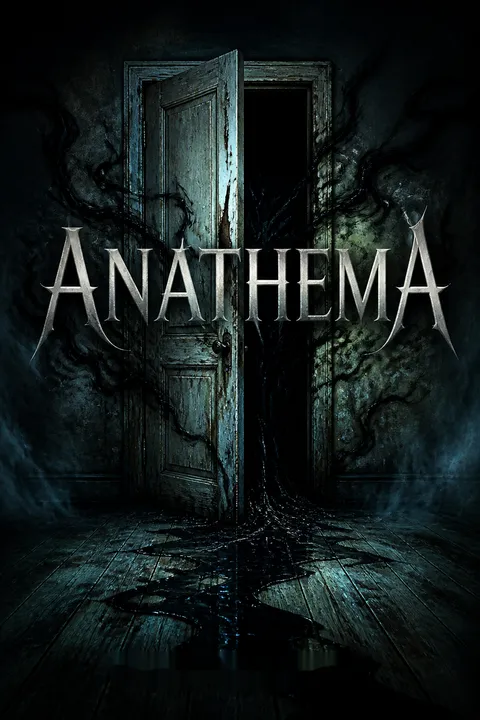

Plot Summary
Midnight Scream in River's Edge
Twelve-year-old David Russell's late-night walk home in the River's Edge subdivision is shattered by a man's agonized screams from a nearby townhouse. David, paralyzed by fear, becomes the sole witness to a horrifying scene: a bloodied, desperate man, mutilated and broken, stumbles from the house, discarding a blood-soaked bag. David's curiosity leads him to discover human testicles in the trash, a grotesque echo of his health class lessons. Before he can escape, he's ambushed—drugged and silenced by a pale hand. The prologue sets the tone: beneath the suburban calm, something monstrous and inexplicable is at work, and innocence is the first casualty.
Stockton Family's New Beginning
Bryan, Ellie, and their son Derrick move into River's Edge, hoping to leave behind a troubled past. The family dynamic is loving but fragile, shaped by past infidelity and addiction. Their new home seems idyllic, with friendly neighbors and a sense of community, but the shadow of a recent child's drowning lingers. The Stocktons are introduced to their reclusive neighbor Maren, rumored to suffer from a degenerative brain disorder. The family's optimism is tinged with unease, as subtle hints of darkness—strange silhouettes, whispered warnings—begin to intrude on their hope for peace.
Shadows of the Past
As the Stocktons settle in, memories of past trauma resurface. Bryan's infidelity and Ellie's relapse into addiction nearly destroyed their marriage, leaving scars on them and Derrick. The narrative delves into their cycle of anger, violence, and self-destruction, witnessed by their young son. Their hard-won recovery is fragile, and the move is both a symbol of hope and a reminder that the past is never far behind. The chapter explores the psychological cost of betrayal and the struggle to rebuild trust, setting the stage for the family's vulnerability to the darkness lurking in their new home.
Dinner, Meetings, and Gifts
A visit from Ellie's brother Scottie brings warmth and tension. Over dinner, Scottie gifts the family a haunting painting depicting faces in torment and transformation—a metaphor for their own journey. Ellie attends a recovery meeting, reaffirming her commitment to sobriety and the support of her sponsor, Barb. The chapter contrasts moments of domestic joy with the undercurrent of unresolved trauma. The painting becomes a silent witness to the family's struggle, its shifting faces mirroring their own battle between despair and hope.
The Neighbor Next Door
Ellie's late-night encounter with Maren's uncle, Ron, is unsettling—his demeanor is off, his story inconsistent. Maren herself is a spectral figure, glimpsed only through windows, her house cold and foul-smelling. When Clark, the family dog, destroys Maren's flowers, Bryan's apology is met with Maren's eerie, lifeless smile and cryptic words that hint at knowledge of Bryan's past sins. The Stocktons' sense of safety erodes as Maren's boundaries blur, and the possibility that she is more than just a sick, reclusive neighbor begins to take hold.
Clark Disappears
Clark vanishes, and Ellie's search is fruitless. Derrick is heartbroken, and the family's anxiety mounts. Ellie hears Clark's bark from Maren's house, but her fears are dismissed as paranoia. The missing dog becomes a symbol of the family's unraveling sense of control. Derrick's therapist notes his new imaginary friend, Daisy, who claims Clark is dead. The therapist reassures the parents, but the reader senses that Daisy is more than a coping mechanism. The boundaries between reality and imagination begin to blur, and the Stocktons' isolation grows.
Daisy Arrives
Derrick's imaginary friend, Daisy, takes on a life of her own, knowing things she shouldn't—family secrets, the fate of the drowned boy, and the details of Bryan's and Ellie's past. Objects go missing, and Daisy is blamed. The family's attempts to rationalize Daisy as a product of trauma are undermined by increasingly inexplicable events. Derrick's nightlight disappears, and he insists Daisy took it. The sense of an unseen presence in the house intensifies, and the Stocktons' grip on reality weakens as Daisy's influence grows.
Secrets and Suspicion
Bryan and Ellie discover a hidden crawlspace connecting Derrick's closet to Maren's house, confirming their worst fears: Maren has been entering their home. The realization that Maren is Daisy, and that she has been manipulating Derrick and targeting the family, shatters their sense of safety. The family's attempts to confront the threat are complicated by their own mistrust and the resurgence of old wounds. The storm outside mirrors the chaos within, as the Stocktons are drawn into a psychological and supernatural siege.
The Closet Door
The discovery of the crawlspace door in Derrick's closet is a turning point. Ellie and Bryan realize that Maren has been using it to invade their home, steal personal items, and torment their son. The physical connection between the houses becomes a metaphor for the psychological invasion of the family's most intimate spaces. The Stocktons' efforts to secure the door are futile, as Maren's influence proves insidious and pervasive. The sense of being watched, of boundaries violated, escalates the family's terror.
Storms and Unraveling
A torrential storm floods River's Edge, isolating the Stocktons as Maren and her accomplices—Ron and Holly—close in. Scottie's attempt to confront Maren ends in his brutal death. Barb, Ellie's sponsor, is murdered and her body disposed of. Ellie is drugged, framed for relapse, and attacked by Holly. Bryan, wounded and desperate, kills Ron in self-defense and sets fire to the evidence. The family is torn apart by violence, betrayal, and the supernatural malice of Maren, who orchestrates their destruction with demonic cunning.
Into the Dark
Ellie and Derrick are captured and subjected to Maren's sadistic rituals. Ellie is tortured, forced to wear Maren's clothes, and painted to resemble her tormentor. Derrick, manipulated by Daisy/Maren, is convinced to turn against his parents. The family's love is weaponized against them, and the line between victim and perpetrator blurs. The storm outside becomes a flood, mirroring the rising tide of horror within. The Stocktons are forced to confront the darkness within themselves and each other as Maren's endgame unfolds.
The Demon's Game
In a final confrontation, Bryan, believing he is saving his son, kills Ellie, mistaking her for Maren. Derrick, manipulated by Daisy, shoots Bryan. Maren's true nature is revealed—a force of absolute evil, feeding on the family's pain and guilt. As the floodwaters rise, the Stocktons' tragedy is complete: love twisted into violence, hope drowned by despair. Derrick, the sole survivor, is left traumatized and alone, his innocence shattered by the evil that invaded his home.
Flood and Reckoning
The flood washes away evidence and bodies, leaving only questions and rumors. Derrick is found, traumatized but alive, and taken in by his grandparents. The community is left to speculate about the horrors that unfolded in River's Edge. The narrative shifts to the aftermath, exploring the psychological scars left on Derrick and the impossibility of closure. The evil that destroyed the Stocktons is both supernatural and all too human—a reflection of trauma, addiction, and the darkness that can take root in any family.
The Aftermath
Years later, Derrick, now a teenager, returns to therapy, seeking understanding and closure. He grapples with the legacy of his family's destruction, the nature of evil, and the possibility of healing. The story ends on a note of ambiguity and hope: Derrick is not defined by what happened to him, but by how he chooses to respond. The cycle of trauma is not easily broken, but the possibility of light remains, even in the aftermath of anathema.
Epilogue: The Light Beyond
Derrick's therapy session with Dr. Strobel offers a final reflection on the meaning of his ordeal. The question of why evil exists is left unanswered, but the importance of resilience, compassion, and the choice to seek light in darkness is affirmed. The story closes with a memory of family, love, and the bittersweet nature of survival. Derrick's journey is ongoing, but the possibility of redemption and healing endures.
Analysis
Anathema is a harrowing exploration of how evil—both supernatural and psychological—can infiltrate the most intimate spaces of family life. Nick Roberts uses the horror genre to examine the legacy of trauma, addiction, and betrayal, showing how the wounds of the past can make us vulnerable to new forms of destruction. The novel's supernatural antagonist, Maren/Daisy, is less a traditional monster than a personification of the forces that corrode trust and love from within. The Stockton family's struggle is both a battle against an external threat and a journey through the darkness of their own hearts. The story's structure, with its interwoven timelines and shifting perspectives, mirrors the confusion and fragmentation of trauma. The flood that engulfs River's Edge is both a literal disaster and a metaphor for the overwhelming tide of pain and guilt that threatens to drown the survivors. In the end, Anathema offers no easy answers—evil is not explained or defeated, only endured. The possibility of healing lies not in vanquishing the darkness, but in the choice to seek light, to respond with compassion and resilience, and to refuse to let suffering define one's future. The novel is a powerful meditation on the fragility of hope and the enduring strength of the human spirit.
Review Summary
Anathema receives mixed reviews, averaging 3.98/5 stars. Readers praise Nick Roberts' visceral horror writing and the terrifying antagonist Maren, who appears in his previous work. Many found it gripping and unputdownable, with shocking twists and intense psychological horror. Common criticisms include pacing issues, unexplained plot elements, excessive trigger warnings (abuse, violence against animals), and questions about whether it matches the quality of The Exorcist's House. Some readers struggled with the disturbing content, while horror fans appreciated the realistic, atmospheric terror and emotional depth.
People Also Read

Characters
Bryan Stockton
Bryan is a man desperate to protect his family from both external threats and the consequences of his own past mistakes. His infidelity and anger issues have left deep scars, and his efforts to atone are sincere but often misguided. Bryan's love for Ellie and Derrick is genuine, but his inability to trust, his quickness to violence, and his need for control make him vulnerable to manipulation. As the supernatural threat intensifies, Bryan's psychological unraveling mirrors the family's physical peril. His tragic arc culminates in the ultimate failure: mistaking his wife for the enemy and destroying the very thing he sought to save. Bryan embodies the struggle between love and rage, hope and despair, and the devastating cost of unresolved trauma.
Ellie Stockton
Ellie is the emotional heart of the family, her journey marked by addiction, recovery, and the constant battle to reclaim her sense of self-worth. Her relapse, triggered by betrayal and isolation, is both a personal tragedy and a symptom of the family's collective wounds. Ellie's relationship with her son is nurturing, but her guilt over past failures leaves her vulnerable to self-doubt and manipulation. Her bond with her sponsor, Barb, and her commitment to recovery meetings provide moments of strength, but ultimately, Ellie is overwhelmed by forces beyond her control. Her final acts are those of love and sacrifice, offering Derrick the hope of light even as she succumbs to darkness.
Derrick Stockton
Derrick is the lens through which the family's suffering is most acutely felt. Sensitive, imaginative, and eager to please, he becomes the unwitting target of Maren's supernatural malice. His creation of Daisy as an imaginary friend is both a coping mechanism and a gateway for evil. Manipulated into turning against his parents, Derrick's innocence is shattered, and he is left to bear the weight of guilt and loss. His survival is bittersweet, marked by resilience but also by the scars of witnessing and participating in violence. Derrick's journey is a meditation on the vulnerability of children and the long shadow of trauma.
Maren / Daisy
Maren is both a tragic figure and a monstrous force. Her outward appearance as a sick, reclusive neighbor masks her true nature as a supernatural entity feeding on pain, guilt, and fear. As Daisy, she infiltrates Derrick's imagination, exploiting his need for comfort and turning him against his family. Maren's methods are psychological as much as physical—she invades, seduces, and destroys from within. Her origins are ambiguous, but her impact is absolute: she is the anathema, the curse that cannot be reasoned with or redeemed. Maren's character is a chilling exploration of evil as both a personal and cosmic force.
Ron
Ron presents himself as Maren's uncle and caretaker, but is in fact her willing servant, mutilated and emasculated by his devotion. His shifting stories and eerie presence unsettle the Stocktons, and his complicity in Maren's crimes is revealed in his final confrontation with Bryan. Ron's character is a study in the dangers of blind worship and the ways in which evil can corrupt and consume those who serve it.
Holly
Holly begins as a friendly, gossipy neighbor, but is gradually revealed as another of Maren's manipulated followers. Her own history of trauma and resentment makes her susceptible to Maren's influence, and she becomes an active participant in the family's destruction. Holly's transformation from concerned neighbor to axe-wielding enforcer is a testament to the seductive power of evil and the fragility of sanity.
Scottie
Scottie's journey from troubled addict to supportive family member is cut short by his attempt to confront Maren. His death is brutal and symbolic—the destruction of the family's last line of defense. Scottie's painting, left behind as a gift, becomes a haunting metaphor for the family's journey through darkness and the possibility of transformation.
Barb
Barb is Ellie's sponsor and confidante, a source of wisdom and stability. Her murder by Holly and Maren is a devastating blow, removing Ellie's last support and underscoring the totality of the family's isolation. Barb's presence lingers as a voice of reason and hope, even after her death.
David Russell
David's experience in the prologue foreshadows the horrors to come. His abduction and presumed death establish the stakes and the nature of the evil at work in River's Edge. David's fate is a reminder that no one is safe, and that innocence is often the first to be sacrificed.
Dr. Lisa Strobel
Dr. Strobel's role is both clinical and compassionate. She provides insight into Derrick's psychological state and the family's dynamics, and her presence in the epilogue offers a framework for understanding the long-term impact of trauma. Dr. Strobel's reflections on good, evil, and the limits of therapy serve as a coda to the story's exploration of suffering and survival.
Plot Devices
Supernatural Infiltration
The novel's central device is the invasion of the Stockton family by a supernatural evil that exploits their psychological wounds. Maren/Daisy's ability to cross physical and mental boundaries—through the crawlspace, through dreams, through secrets—mirrors the way trauma and addiction infiltrate and corrode family bonds. The supernatural is never fully explained, heightening the sense of dread and the impossibility of rational defense.
Unreliable Perception
Characters' perceptions are constantly undermined by stress, drugs, and manipulation. The line between imagination and reality is porous, especially for Derrick, whose imaginary friend becomes a vessel for evil. The adults' attempts to rationalize events as products of trauma or mental illness are repeatedly subverted by the evidence of supernatural malice. This device keeps the reader off-balance and amplifies the horror.
Foreshadowing and Symbolism
From the prologue's mutilation to Scottie's painting, the novel is rich in foreshadowing and symbolic imagery. The painting's journey from darkness to light mirrors the family's arc, while the recurring motif of doors, closets, and hidden passages represents the secrets and vulnerabilities that evil exploits. The storm and flood serve as both literal and metaphorical agents of chaos and destruction.
Psychological Horror
While the novel features graphic violence and supernatural elements, its deepest horror lies in the psychological unraveling of the family. Guilt, shame, and unresolved trauma are as deadly as any demon. The characters' internal struggles are mirrored by the external threat, creating a feedback loop of fear and self-destruction.
Narrative Structure
The story unfolds through multiple viewpoints and timeframes, allowing the reader to experience events from different angles and with varying degrees of knowledge. The use of therapy sessions, flashbacks, and shifting narrators creates a mosaic of trauma and survival, emphasizing the complexity of truth and the difficulty of closure.
About the Author

Download PDF
Download EPUB
.epub digital book format is ideal for reading ebooks on phones, tablets, and e-readers.








































